Have you ever wondered what happens inside a bird’s egg before a chick hatches? Understanding bird egg development can reveal fascinating secrets about nature’s incredible design.
Whether you’re a curious bird lover, a student, or just someone who enjoys learning about life, this topic will grab your attention. You’ll discover how a tiny embryo transforms step by step, turning a simple egg into a living, breathing bird.
Keep reading to unlock the amazing story hidden within every bird egg—you won’t want to miss a single detail!

Credit: en.wikipedia.org
Egg Formation
Bird egg formation is a complex process that starts inside the female bird’s body. The egg develops step by step before it is ready to be laid.
This process includes ovary release, membrane creation, and shell formation. Each part has a special role in making a strong egg.
Ovary And Ovulation
The ovary holds many tiny yolks called ova. Each yolk grows until it is ready to leave the ovary.
Ovulation happens when the yolk is released from the ovary. The yolk then moves into the oviduct to start egg formation.
Shell Membrane Creation
After ovulation, the egg white and membranes form around the yolk. The shell membranes protect the egg and keep it firm.
These membranes help stop bacteria from entering and hold the egg’s shape. They form in the oviduct before the hard shell appears.
- Inner membrane lies close to the egg white
- Outer membrane is just below the shell
- Both membranes are thin but strong
Shell Deposition Process
The shell forms last and takes several hours to complete. It is made mostly of calcium carbonate, which makes it hard.
The shell grows layer by layer around the membranes. Tiny pores in the shell allow air to pass in and out for the growing chick.
- Calcium is absorbed from the bird’s diet
- Shell layers are deposited in the uterus
- Pores help with gas exchange for the embryo
Fertilization And Early Growth
Bird egg development begins with fertilization inside the female bird. This process starts the life of a new chick.
After fertilization, the egg undergoes early growth through several important stages. These stages prepare the embryo for hatching.
Sperm Entry
Sperm enters the egg through a small opening called the micropyle. This is the only place sperm can enter the egg.
Once a sperm penetrates the egg, it triggers changes that stop other sperm from entering. This ensures only one sperm fertilizes the egg.
Zygote Formation
The sperm and egg nuclei join to form a zygote. The zygote is the first cell of the new bird.
- The zygote contains all genetic material from both parents.
- It starts to grow and divide inside the egg.
- The zygote moves to the yolk surface to get nutrients.
Cell Division Stages
The zygote divides many times in a process called cleavage. This creates many smaller cells from one big cell.
| Stage | Description |
| 1-cell stage | Single fertilized cell |
| 2-cell stage | Cell divides into two cells |
| 4-cell stage | Cells divide again to four |
| Morula | Solid ball of cells forms |
| Blastoderm | Cells flatten and form layers |
Embryo Development
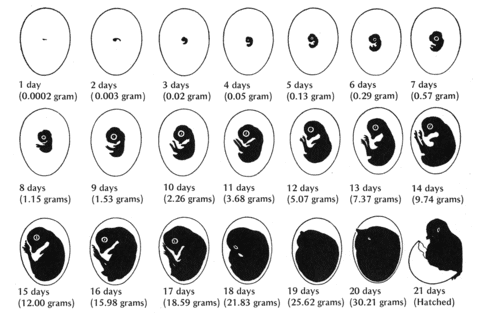
Bird egg development starts soon after fertilization. The embryo grows inside the egg, changing step by step. Understanding this process helps us learn about nature and life.
Embryo development has key stages. Each stage is important for forming a healthy bird. We will look at blastoderm formation, organ development, and growth milestones.
Blastoderm Formation
The blastoderm is the first visible sign of the embryo. It forms as a small layer of cells on the yolk. These cells will divide and start to organize the body plan.
- Fertilized egg starts cell division
- Cells spread over the yolk surface
- Blastoderm forms a thin, flat disc
- This disc has two layers of cells
- It prepares for future tissue development
Organogenesis
Organogenesis is when the embryo’s organs begin to form. This stage shapes the heart, brain, and limbs. Cells change type and arrange into tissues.
| Organ | Start of Development | Function |
| Heart | Day 2 | Pumps blood |
| Brain | Day 3 | Controls body |
| Limbs | Day 4 | Movement |
| Lungs | Day 5 | Breathing after hatching |
Growth Milestones
After organs form, the embryo grows quickly. Its body parts get bigger and stronger. Feathers and bones develop near the end of this stage.
- Heartbeat becomes regular
- Eyes and beak start to show
- Feathers begin to grow
- Skeleton hardens
- Ready for hatching around day 21

Credit: www.tassiebirdandpoultrysupplies.com
Egg Incubation
Egg incubation is the process where bird eggs develop into chicks. It requires careful care and a good environment.
During incubation, eggs need the right warmth and moisture to grow healthy embryos inside.
Temperature Regulation
Keeping eggs warm is very important for the embryo to grow. Most bird eggs need a steady temperature around 99 to 102 degrees Fahrenheit.
If the eggs get too cold or too hot, the embryos may stop growing or die.
- Birds often sit on eggs to keep them warm
- They adjust their body to keep the right heat
- Temperature changes can affect how fast chicks develop
Humidity Importance
Humidity is the amount of moisture in the air around the eggs. It helps keep the eggshell from drying out.
Too much or too little humidity can harm the developing chick inside the egg.
- Proper humidity prevents eggshell cracks
- It helps the embryo get oxygen and release waste
- Humidity levels often range between 40% and 60%
Parent Bird Role
Parent birds play a key role in incubation. They keep eggs warm and turn them regularly.
Turning eggs helps the embryo develop evenly and stops it from sticking to the shell.
- Parents use their body heat to warm eggs
- They protect eggs from predators and bad weather
- Both mother and father may share incubation duties
Hatching Process
Bird egg development ends with hatching. It is an exciting time when the chick breaks free from the egg. The hatching process has several important stages.
Each stage helps the chick prepare to live outside the egg. This process takes time and energy from the growing bird inside.
Pipping Stage
Pipping is when the chick starts to break the eggshell. It uses a small, hard bump on its beak called the egg tooth. This tooth helps crack the shell.
The chick makes a tiny hole to get air from outside. This hole is the first sign that hatching has begun. It can take several hours to finish pipping.
Breaking The Shell
After pipping, the chick works to break the shell more. It pushes and pecks around the hole to make it bigger. The shell starts to crack and split.
This stage needs strength and patience. The chick may rest many times while breaking the shell. This part of hatching can last from a few hours to a whole day.
- Chick uses legs and wings to push out
- Shell breaks into pieces around the chick
- Chick must be careful not to get stuck
Emergence Of Chick
The chick finally comes out of the eggshell. It is wet and tired but ready to start life. The chick will dry and warm up soon after hatching.
Parents often help by keeping the chick warm and safe. The chick begins to breathe fresh air and move on its own.
Factors Affecting Development
Bird egg development depends on many factors. These factors can change how well the embryo grows inside the egg.
Understanding these factors helps us learn more about bird reproduction and survival.
Environmental Influences
The environment around the egg plays a big role in its development. Temperature, humidity, and light affect how the embryo grows.
- Temperature must stay within a certain range for healthy growth.
- Humidity helps keep the egg shell from drying out.
- Light exposure can influence hatching time.
- Pollution and chemicals in the environment may harm the embryo.
Genetic Factors
Genes from the parent birds affect the development of the egg. They decide traits like size, color, and strength of the shell.
| Genetic Trait | Effect on Development |
| Shell Thickness | Protects embryo from damage |
| Embryo Growth Rate | Affects hatching time |
| Resistance to Disease | Improves embryo survival |
Nutrition Impact
The mother bird’s diet affects the egg’s nutrition. Proper nutrients help the embryo develop strong bones and organs.
Key nutrients include:
- Calcium for strong shells
- Proteins for tissue growth
- Vitamins for cell function
- Fats for energy
Comparative Development
Bird egg development varies widely across different species. Each species has unique traits that affect how their eggs grow and hatch.
Studying these differences helps us understand bird evolution and survival strategies better.
Differences Among Species
Bird species differ in egg size, shape, and shell thickness. These differences relate to the bird’s habitat and lifestyle.
For example, larger birds usually lay bigger eggs with thicker shells. Smaller birds lay smaller, lighter eggs.
- Water birds often have eggs with thicker shells to protect from moisture.
- Forest birds may have camouflaged eggs to avoid predators.
- Ground-nesting birds lay eggs that blend with soil or sand colors.
Adaptations In Egg Design
Eggs show special designs to help birds survive in their environments. Shape and color help eggs stay safe.
Some eggs are pointed to stop them from rolling away. Others have rough surfaces to keep them in place.
- Pointed eggs reduce rolling on cliff nests.
- Spotted eggs hide well among leaves or rocks.
- Thick shells protect eggs from rough weather or predators.
Variation In Incubation Periods
Incubation time varies a lot between bird species. It depends on egg size and temperature needs.
Smaller eggs usually hatch faster, while bigger eggs take longer. Some birds keep eggs warm for weeks.
| Bird Type | Typical Incubation Period |
|---|---|
| Small songbirds | 10-14 days |
| Waterfowl | 25-35 days |
| Large birds (eagles, hawks) | 35-45 days |

Credit: www.birdfy.com
Frequently Asked Questions
What Are The Stages Of Bird Egg Development?
Bird egg development includes fertilization, incubation, embryo growth, and hatching. The embryo forms organs and limbs inside the egg. Incubation temperature is crucial for proper development. Hatching occurs when the chick breaks the shell using its egg tooth.
How Long Does Bird Egg Incubation Take?
Incubation varies by species, typically lasting 10 to 30 days. Small birds hatch faster, while larger birds take longer. Temperature and humidity affect incubation speed. Parents usually incubate eggs consistently to ensure healthy embryo growth.
What Factors Affect Bird Egg Development Success?
Temperature, humidity, and parental care impact egg development success. Proper warmth and moisture are vital for embryo survival. Disturbances or infections can cause failure. Nutrition of the mother also influences egg quality and embryo health.
How Do Birds Keep Eggs Warm During Development?
Birds use body heat by sitting on eggs, called brooding. Feathers and skin regulate temperature efficiently. Some species use nest insulation for warmth. This consistent heat is essential for embryo growth and successful hatching.
Conclusion
Bird egg development is a fascinating natural process. Each stage reveals unique wonders. From fertilization to hatching, every moment counts. Eggs need warmth and care to grow. Birds’ instincts guide them through this journey. Understanding these stages helps us appreciate nature’s complexity.
It deepens our connection to wildlife. Watching these processes is both educational and awe-inspiring. Nature’s cycles remind us of life’s miracles. Learning about them enriches our knowledge. It also fosters respect for all living creatures. Observing bird egg development can inspire curiosity and wonder in everyone.
A simple yet profound natural marvel.