Have you ever wondered which birds lay the largest eggs in the world? Imagine holding an egg so big it almost feels like a small melon!
Knowing about these giant eggs can surprise you and spark your curiosity about nature’s incredible diversity. You’ll discover the top bird species that produce the biggest eggs and learn fascinating facts that will make you see birds in a whole new light.
Keep reading to find out which egg truly takes the crown!

Credit: www.wildlifenomads.com
Largest Bird Eggs In Nature
Birds lay eggs of many sizes. Some eggs are tiny, while others are huge. The biggest eggs come from large birds found in nature.
This article looks at three birds that lay the largest eggs: ostriches, emus, and cassowaries. Each has unique eggs with special features.
Ostrich Eggs: The Biggest Of Them All
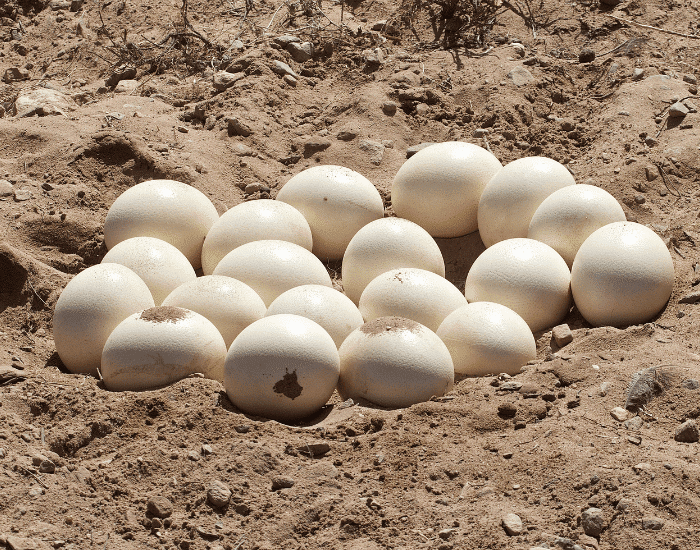
Ostrich eggs are the largest eggs laid by any living bird. They can weigh about 3 pounds and measure up to 6 inches in length. The shell is thick and strong.
These eggs are tough but can hold a lot of air inside. The large size helps protect the growing chick. People sometimes use them as containers or decorations.
Emu Eggs: Size And Color
Emu eggs are smaller than ostrich eggs but still very large. They weigh about 1.5 pounds and are dark green or blue. This color helps hide the eggs in the wild.
- Weight: Around 1.5 pounds
- Color: Dark green to blue
- Shell: Thick and strong
- Shape: Oval and smooth
Emu eggs have a strong shell to protect the chick inside. Their color helps keep them safe from predators.
Cassowary Eggs: Exotic Giants
Cassowary eggs are large and very colorful. They weigh about 2 pounds and have a shiny, bright blue shell. These eggs stand out in the forest floor.
| Bird | Egg Weight | Shell Color | Egg Length |
| Ostrich | 3 pounds | Off-white | 6 inches |
| Emu | 1.5 pounds | Dark green to blue | 5 inches |
| Cassowary | 2 pounds | Bright blue | 5.5 inches |

Credit: www.birdfy.com
Why Egg Size Varies
Birds lay eggs of different sizes for many reasons. Egg size depends on the bird’s body and the environment.
Understanding why egg sizes vary helps us learn about bird life and survival.
Bird Size And Egg Proportion
Larger birds usually lay bigger eggs, but the egg size is not always proportional to the bird’s body. Some small birds lay relatively large eggs compared to their size.
| Bird Species | Average Body Length (cm) | Egg Length (cm) | Egg to Body Ratio |
| Ostrich | 250 | 15 | 0.06 |
| Emu | 170 | 13 | 0.08 |
| Kingfisher | 20 | 2 | 0.10 |
| Hummingbird | 8 | 1 | 0.13 |
Environmental Influences
Climate and food availability affect egg size. Birds in colder places may lay larger eggs to help chicks keep warm.
- Cold weather leads to bigger eggs with more yolk.
- Warm climates usually have smaller eggs.
- Food-rich areas encourage larger eggs for better chick growth.
- Scarce food may cause birds to lay smaller eggs.
Nesting And Survival Strategies
Egg size links to how birds protect their young. Birds with safe nests often lay bigger eggs.
| Strategy | Egg Size Effect | Reason |
|---|---|---|
| Hidden nests | Large eggs | Chicks have more food to grow before leaving |
| Open nests | Small eggs | Birds lay more eggs to increase survival chances |
| Long incubation | Large eggs | More energy stored for longer development |
| Short incubation | Small eggs | Faster hatching helps avoid predators |
Record-breaking Eggs From Extinct Birds
Some birds that lived long ago laid the biggest eggs ever found. These eggs were much larger than any eggs from birds alive today.
We study these eggs to learn about the sizes and lives of these extinct birds. Two famous examples are the eggs of the Elephant Bird and the Moa.
Elephant Bird Eggs
The Elephant Bird lived in Madagascar and is now extinct. It was one of the heaviest birds ever.
Its eggs were the largest ever discovered. One egg could be over 13 inches long and hold about 2 gallons of liquid.
- Egg length: up to 13 inches (33 cm)
- Egg volume: about 2 gallons (7.5 liters)
- Thicker shells than most bird eggs
- Weighs about 10 times more than an ostrich egg
Moa Eggs
The Moa lived in New Zealand and is now extinct. It was a large flightless bird.
Moa eggs were large but smaller than Elephant Bird eggs. They measured around 9 inches long.
- Egg length: about 9 inches (23 cm)
- Egg shape: oval and thick-shelled
- Found in many fossil sites in New Zealand
- Help scientists study Moa nesting habits

Credit: www.birdfy.com
Egg Size Vs. Bird Behavior
Birds lay eggs of many sizes. Some eggs are small, while others are very large. The size of eggs often relates to the bird’s behavior and lifestyle.
Understanding how egg size connects to bird care and flight helps us learn more about these amazing animals.
Parental Care And Incubation
Birds with larger eggs usually spend more time caring for them. Large eggs need longer incubation. Parents often stay close to keep eggs warm and safe.
- Big eggs mean fewer eggs laid at once.
- Parents must protect large eggs from predators.
- Longer incubation helps chicks grow strong before hatching.
- Some birds share care duties between mom and dad.
Flight Ability And Egg Size
Birds that fly well tend to lay smaller eggs. Heavy eggs can make flying harder. Flightless birds often lay bigger eggs because they do not need to stay light.
| Bird Type | Flight Ability | Egg Size |
| Albatross | Strong Flyer | Medium |
| Ostrich | Flightless | Largest |
| Hummingbird | Excellent Flyer | Small |
| Emu | Flightless | Large |
Collecting And Studying Large Eggs
Birds that lay the largest eggs fascinate scientists and collectors. These eggs can tell us much about the bird’s life and environment.
Collecting large eggs requires care and knowledge to keep them safe. Studying these eggs helps us learn about bird species and their habits.
Egg Preservation Techniques
Preserving large eggs is important for long-term study. People use special methods to keep eggs from breaking or rotting.
Cleaning eggs gently and storing them in the right place helps preserve them. Some eggs are kept dry, while others are sealed to stop air from entering.
- Use soft brushes to clean eggs
- Keep eggs in cool, dry places
- Seal eggs with wax or varnish to protect them
- Handle eggs with care to avoid cracks
Scientific Insights From Egg Studies
Scientists learn about bird health and development by studying large eggs. The size and shape of eggs give clues about the bird’s biology.
Eggshells show how birds adapt to their environment. Researchers also study the chemicals inside eggs to understand bird nutrition and threats.
- Egg size relates to bird size and species
- Shell thickness helps protect the embryo
- Egg chemicals reveal bird diet and health
- Study of eggs aids in bird conservation
Frequently Asked Questions
Which Bird Lays The Largest Egg In The World?
The ostrich lays the largest egg globally. Its eggs can weigh up to 1. 4 kilograms and measure about 15 centimeters long.
How Big Are Eggs Of The Extinct Elephant Bird?
Elephant bird eggs were enormous, about 34 centimeters long. They are the largest eggs ever found, much bigger than ostrich eggs.
Do Large Bird Eggs Mean Bigger Baby Birds?
Generally, larger eggs contain more nutrients, supporting bigger chicks. However, egg size varies by species and does not always mean larger adults.
Why Do Some Birds Lay Bigger Eggs Than Others?
Egg size depends on bird species, habitat, and reproductive strategies. Larger eggs provide more nutrients, aiding chick survival in harsh environments.
Conclusion
Birds amaze with their diverse egg sizes. Ostriches lay the largest eggs. These eggs are like nature’s wonders. Emus and cassowaries follow with sizable eggs too. Egg size reflects a bird’s life and habitat. Understanding these differences adds to our appreciation of nature.
Each egg holds a new life and story. Fascinating, isn’t it? Bird eggs connect us to nature’s wonders. Keep exploring, learning, and marveling at the avian world. Nature never ceases to surprise. Discover more about these incredible creatures and their unique eggs.
Happy birdwatching!