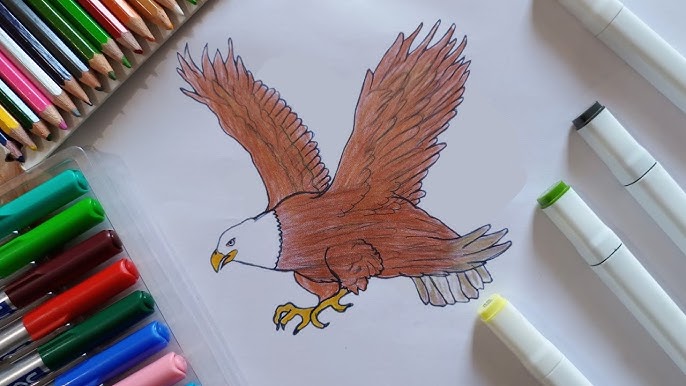
Have you ever wanted to capture the powerful beauty of a desert eagle on paper? Drawing this majestic bird might seem tricky at first, but with the right steps, you can create an impressive piece that shows off its strength and grace.
This guide will walk you through simple, clear instructions that anyone can follow—whether you’re a beginner or just looking to improve your skills. By the end, you’ll have a striking desert eagle drawing you’ll be proud to share. Ready to bring this stunning bird to life?
Let’s get started!

Credit: m.youtube.com
Materials Needed
Drawing a Desert Eagle bird can be fun and relaxing. You need some basic materials to get started.
Using the right tools helps you create clear and beautiful drawings. Here are the materials you will need.
Pencils
Pencils are essential for sketching the basic shapes of the bird. Use different hardness for details.
Start with a light pencil to outline, then use a darker one for final lines.
- HB pencil for sketching
- 2B or 4B pencils for shading
- Eraser pencil for fine corrections
Paper
Choose good quality paper that holds pencil marks well. Avoid very thin paper that tears easily.
A smooth surface paper works well for detailed drawings like the Desert Eagle bird.
- Sketchbook paper
- Drawing paper with medium texture
- Size around A4 or larger
Erasers
Use erasers to fix mistakes and lighten areas for highlights. Different types serve different purposes.
Soft erasers work well for gentle corrections. Kneaded erasers help lift graphite without damage.
- Regular rubber eraser
- Kneaded eraser
- Precision tip eraser for small details
Colored Pencils Or Markers (optional)
If you want to add color to your drawing, use colored pencils or markers. Choose colors that match the bird.
Colored pencils give more control for shading. Markers offer bright and solid colors.
- Colored pencils set
- Fine-tip markers
- Blending tools for smooth color transitions
Sharpener
Keep your pencils sharp for detailed work. A sharp pencil helps draw fine lines and textures.
Use a good quality sharpener that does not break the pencil tips.
- Manual pencil sharpener
- Electric sharpener (optional)
Basic Shapes And Guidelines
Drawing a Desert Eagle bird starts with simple shapes. These shapes help form the bird’s body and features.
Using guidelines keeps your drawing balanced and realistic. They show where each part fits.
Draw The Body Shape
Begin with an oval to make the bird’s main body. This shape is the base for the chest and back.
Place the oval slightly tilted to show the bird’s natural posture.
Add The Head Shape
Draw a smaller circle above the body oval. This circle forms the bird’s head.
Connect the head to the body with a short neck line to show the bird’s stance.
Sketch The Wing Guidelines
Use long, curved lines from the body to mark the wings. These lines help shape the wing feathers.
Keep the lines smooth to show the wing’s natural curve.
Mark The Tail Feathers
Draw a fan shape at the back of the oval for the tail feathers. This shows the bird’s tail spread.
The tail helps balance the bird’s body in your drawing.
Add Guidelines For The Beak And Eyes
Draw a small triangle at the front of the head circle for the beak. It points slightly down.
Place a small circle inside the head circle for the eye. Position it near the beak.
Sketching The Head And Beak
Drawing the head and beak of a Desert Eagle bird starts with simple shapes. These shapes help you get the right size and position.
Pay close attention to the bird’s sharp eyes and strong beak. These parts give the Desert Eagle its fierce look.
Outline The Head Shape
Begin by sketching a rough oval for the head. The oval should tilt slightly forward to show the bird’s alert posture.
Draw light lines to mark the top of the head and the lower jaw. This helps keep the shape balanced and natural.
- Use an oval tilted about 30 degrees forward
- Mark the top curve for the skull
- Draw a small curve below for the lower jaw
- Keep lines light for easy changes
Sketch The Beak Structure
Start the beak by drawing a small hook shape at the front of the head oval. The beak is strong and curved downward.
Add a line to separate the upper and lower parts of the beak. Make sure the upper beak is larger and curves over the lower one.
- Draw a sharp, curved hook for the upper beak
- Sketch a smaller curve for the lower beak
- Add a line to show the beak opening
- Position the beak near the front center of the head oval
Add Eye Placement And Details
Place the eye slightly above and behind the beak. Use a small circle to mark its position.
Draw a slight curve above the eye for the brow ridge. This gives the Desert Eagle a fierce expression.
- Mark the eye near the top front of the head oval
- Use a circle to show the eye shape
- Add a curved line above the eye for the brow
- Keep these lines light for later shading

Credit: www.youtube.com
Drawing The Eyes
The eyes give life to your Desert Eagle bird drawing. They show its sharp focus and alertness.
Focus on shapes, details, and shading to make the eyes look realistic and full of character.
Outline The Eye Shape
Start by drawing the basic shape of the eye. Desert Eagles have round eyes with a slight oval tilt.
Keep the outline light so you can adjust it later if needed.
Draw The Iris And Pupil
The iris is the colored part, and the pupil is the dark center. Draw the pupil smaller to show focus.
- Make the pupil a small circle inside the iris.
- Use smooth lines for the iris to keep it round.
- Leave a small white spot for the light reflection.
Add Details And Texture
Details make the eye look alive. Draw tiny lines for texture around the iris.
| Detail | Effect |
|---|---|
| Light Reflection Spot | Makes eye look shiny and wet |
| Small Veins | Adds realism to the eye |
| Shading Around Pupil | Gives depth and roundness |
Shade The Eye For Depth
Use light and dark shading to show the eye’s round shape. Darken the pupil fully.
- Shade the iris lightly around the pupil.
- Add darker shading under the eyelid.
- Blend shading softly for a smooth look.
Outlining The Body
Drawing the body of a Desert Eagle bird starts with simple shapes. These shapes help you build the bird’s form step by step. Outlining is the first and important part of the drawing process.
Focus on the main parts of the body: the head, chest, wings, and tail. Keep your lines light so you can erase and adjust them later.
Start With Basic Shapes
Begin by drawing an oval for the chest area. Add a smaller circle for the head above the oval. Connect these shapes with smooth lines to form the neck.
Add Wing And Tail Guidelines
Draw two long, curved lines extending from the body to mark the wings. For the tail, sketch a fan-shaped outline at the back of the body. These guidelines show the bird’s posture and balance.
Refine The Outline
Use your basic shapes to create a smooth outline of the bird’s body. Erase unnecessary lines. Shape the chest, head, and wings carefully. Make sure the proportions look natural.
- Keep the chest oval slightly tilted forward
- Shape the head with a gentle curve on top
- Draw wings wide and slightly curved
- Make the tail fan wide and pointed
- Connect all parts with smooth, flowing lines
Use A Table To Track Body Part Sizes
| Body Part | Shape | Size Compared to Body |
| Head | Circle | Small |
| Chest | Oval | Medium |
| Wings | Curved lines | Large |
| Tail | Fan shape | Medium |
Adding The Wings And Feathers
Drawing the wings and feathers of a Desert Eagle bird adds life to your artwork. These parts show the bird’s strength and grace.
Focus on shapes and feather layers to make the wings look realistic. Take your time to add details carefully.
Sketch The Basic Wing Shape
Start by drawing the outline of the wings. Use long curved lines to show the wing’s length and shape.
Make sure to draw both wings symmetrically if the bird is facing forward. Keep the lines light for easy changes.
Draw The Primary Feathers
Primary feathers are the longest feathers at the wing’s edge. Draw them as thin, pointed shapes that fan out.
Space these feathers evenly. They should overlap slightly to look natural and strong.
- Draw about 8-12 primary feathers per wing
- Make tips sharp and narrow
- Overlap feathers for depth
Add The Secondary Feathers
Secondary feathers are shorter and sit closer to the bird’s body. Draw them below the primary feathers.
Shape these feathers wider and rounder. They help fill the wing and show the bird’s power.
- Draw 10-15 secondary feathers per wing
- Make them overlap the primary feathers
- Keep their shape slightly curved
Detail The Feather Texture
Add small lines inside each feather to show texture. These lines follow the feather’s shape and direction.
Use short, light strokes. This step makes the feathers look soft and natural.
- Draw lines from feather base to tip
- Keep strokes thin and close
- Vary line length for realism
Shape The Wing Coverts
Wing coverts are small feathers that cover the base of bigger feathers. Draw them as small rounded shapes.
Place coverts near the bird’s body and under the secondary feathers. They add detail and depth to the wing.
- Draw several rows of small coverts
- Overlap coverts with larger feathers
- Keep shapes rounded and soft
Detailing The Legs And Talons
The legs and talons of a Desert Eagle bird are strong and sharp. These parts help the bird catch and hold its prey.
Paying attention to the shape and details of the legs and talons will make your drawing look more real and powerful.
Shape And Position Of The Legs
Start by drawing the legs as thick and muscular. The legs should bend slightly at the joints. Show the scales by adding small, curved lines all over the legs.
Drawing The Talons
The talons are sharp and curved. Each foot has four toes: three facing forward and one backward. Make the claws long and pointed.
- Draw thick bases for the toes.
- Add sharp points at the end of each claw.
- Show the texture with tiny lines on the claws.
- Keep the claws slightly curved to look natural.
Adding Texture And Details
Use shading to show the roundness of the legs and claws. Darken areas under the joints and behind the toes.
| Part | Details to Include |
| Legs | Scales, muscle shapes, bends at joints |
| Toes | Thick bases, direction of toes |
| Claws | Sharp tips, curved shape, texture lines |
| Shading | Darken under joints, behind toes |
Final Touches And Shading
Adding final touches and shading brings your Desert Eagle bird drawing to life. It adds depth and a realistic look.
Careful shading highlights the bird’s feathers and body shape. Final details make your drawing clear and detailed.
Refining The Feather Details
Look closely at the feather shapes. Use thin lines to add texture and show individual feathers.
Shade lightly along the edges to give feathers a layered effect. Darken some areas to show shadows.
- Use a sharp pencil for fine feather lines
- Shade softly to avoid harsh edges
- Darken areas under wings and near the body
Adding Depth With Shading
Shade parts of the bird that are farther from the light. This makes your drawing look three-dimensional.
Use different pencil pressures to create light and dark tones. Blend the shading smoothly for a natural look.
- Press lightly for soft shadows
- Press harder for darker shadows
- Blend with a tissue or blending stump
- Leave some areas white for highlights
Final Line Work And Clean-up
Go over important lines to make them clear. Use a fine-tip pen or a sharpened pencil.
Erase any extra sketch marks gently. This keeps your drawing neat and focused on the bird.
- Trace main outlines carefully
- Remove stray pencil marks
- Check for balance in shading and details
Tips For Improving Your Drawing
Drawing a Desert Eagle bird can be fun and rewarding. You can improve your art by practicing simple tips.
These tips help you see details better and make your drawing look more real and lively.
Observe The Bird Carefully
Look closely at pictures or real Desert Eagle birds. Notice their shape, feathers, and colors. Try to understand how their body parts fit together.
Start With Basic Shapes
Use simple shapes like circles and ovals to draw the bird’s head and body. This helps you get the right size and position before adding details.
Use Light And Shadow
Shading adds depth to your drawing. Study where the light hits the bird and where shadows fall. Use soft pencil strokes to show light and dark areas.
Practice Feather Texture
Feathers have different shapes and patterns. Practice drawing short, curved lines for small feathers and long strokes for big ones. Layer the lines to create texture.
- Draw feathers in the direction they grow
- Vary the length and thickness of lines
- Use eraser to add highlights
Keep Your Proportions Correct
| Body Part | Proportion Tip |
| Head | Smaller than the body, round shape |
| Beak | Sharp and curved, about one-third head length |
| Wings | Long and wide, cover most of the body |
| Tail | Short and fan-shaped |
Use References And Keep Practicing
Look at many photos or videos of Desert Eagle birds. Draw often to improve your skill and confidence. Each drawing will get better than the last.

Credit: www.youtube.com
Frequently Asked Questions
How Do I Start Drawing A Desert Eagle Bird?
Begin by sketching the basic shapes of the bird’s head and body. Use simple ovals and circles to outline proportions. This helps create an accurate foundation before adding details like feathers and beak shape.
What Materials Are Best For Drawing A Desert Eagle?
Use pencils for initial sketches and fine liners for details. Colored pencils or markers work well for adding realistic colors. Choose smooth paper to enhance shading and blending techniques.
How Can I Capture The Bird’s Distinctive Features?
Focus on the Desert Eagle’s sharp beak, fierce eyes, and strong talons. Pay attention to feather patterns and texture. These details make your drawing more lifelike and recognizable.
What Shading Techniques Suit Bird Drawings?
Use light cross-hatching and blending to show feather texture and depth. Vary pressure to create darker shadows and lighter highlights. This adds realism and dimension to your artwork.
Conclusion
Drawing a Desert Eagle bird can be fun and rewarding. Follow these simple steps to create a beautiful artwork. Practice regularly to improve your skills. Use soft pencils for detailed lines. Add color to bring the bird to life. Observe real birds for inspiration and accuracy.
Share your drawings with friends and family. They might love your artistic skills. Keep experimenting with different styles. Remember, practice makes perfect. Enjoy the process and stay creative. Let your imagination fly high with every drawing. Keep sketching and learning.
Your journey as an artist starts here.