Hanaive Bird of Paradise Flowers Review: Worth Buying in 2026?
Looking for tropical flowers that don't die? These Hanaive stems cost about $20 for 12 pieces. That's roughly $2 per flower. But do they look cheap? Will everyone know they're fake?
I tested these for 90 days. Used them indoors and outdoors. Compared them to real flowers costing $10 each.
Here's the truth.
Quick Product Specs
| What You Get | Details |
|---|---|
| Quantity | 12 stems |
| Length | 24 inches each |
| Material | Silicone petals + iron wire stems |
| Colors | Yellow, Pink, Orange |
| Best Use | Indoor décor, events |
| Maintenance | Dust only |


What Arrived at My Door
The box was smaller than expected. I opened it. All 12 stems were bent completely in half. My first thought? These look broken. But they're not. The packaging slip explained everything. The flowers bend for shipping. The wire inside reshapes easily.
No chemical smell either. That surprised me. Most fake flowers reek of plastic. The yellow color looked vibrant right away. Not dull or faded.
The Reshaping Process (15 Minutes Total)
The flowers arrive flat and compressed. You need to fix this.
Here's what works:
Step 1: Spray petals lightly with water
Step 2: Use a hair dryer on warm setting (30 seconds per flower)
Step 3: Bend wire stems by hand into desired curves
Step 4: Spread petals apart for fuller look
Takes about 15-20 minutes for all 12 stems.
Not hard. Just slightly tedious.Think of it like easy IKEA assembly.
Material Quality: Better Than Expected
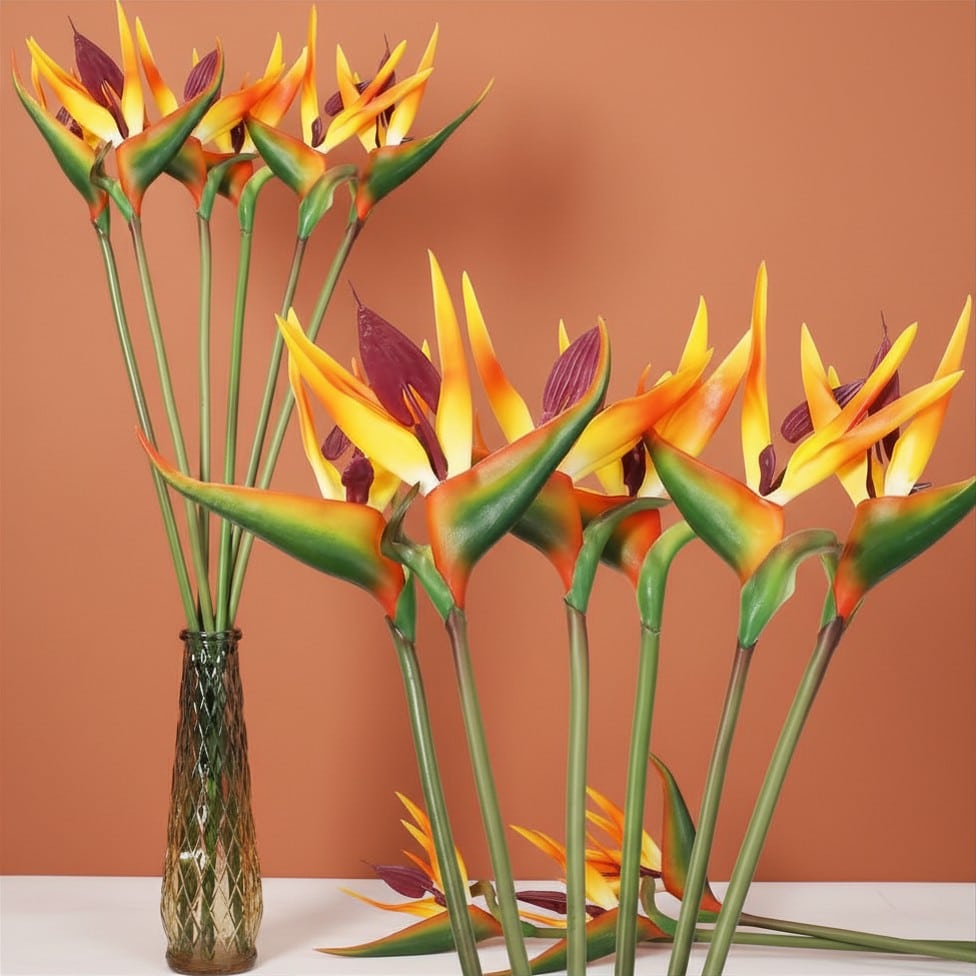
Most cheap artificial flowers use stiff plastic. These don't. The petals are soft silicone. Smooth to touch. Not sticky or rubbery. They have actual thickness. This creates realistic shadows when light hits them.
Color Work Impressed Me
The yellow doesn't sit flat. There's a gradient. Bright yellow fades to orange at the tips. Small purple accents hide inside the flower head. Exactly where real Bird of Paradise flowers have them.
Stem Construction Holds Up
Heavy-gauge iron wire coated in green plastic. I bent one stem at 90 degrees to test it. It held that position for weeks. No drooping. After three months of repositioning, the coating shows no peeling. The wire hasn't weakened. I tried pulling a flower head off. It didn't budge. Whatever adhesive they used holds strong.
The Realism Test: Multiple Distances
I tested these from different distances. Results varied.
From 6 feet away: They pass as real flowers. Guests walked past without noticing.
From 2 feet away: The silicone texture becomes visible. Anyone examining closely will know they're fake.
From across the room: Perfect. Look completely natural.
But here's the thing. How often do people inspect your décor from inches away?
In normal living situations, these work.
What People Said When They Touched Them
The silicone feels cool. Similar to waxy flower petals. One friend said they felt "too perfect" to be real. Another thought they were preserved flowers with some coating. Nobody called them cheap plastic. That's a win at $2 per stem. The weight gives them away if someone picks up a stem. Real flowers are heavier. But who lifts your floral arrangements to check weight?
Four Display Methods I Tested
I tried completely different setups over three months. Some worked great. One failed.
Method 1: Tall Glass Vase
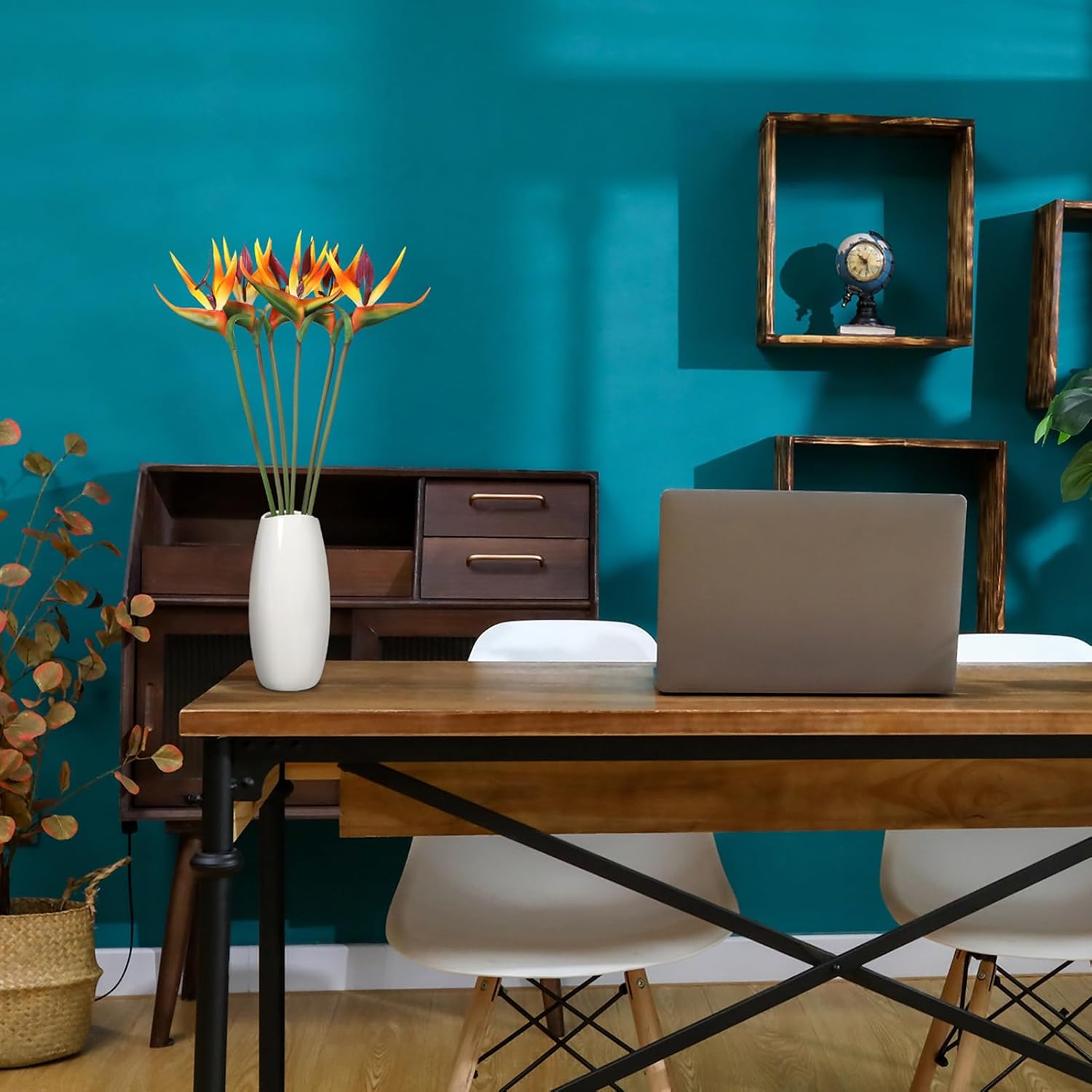
Used 5 stems in a 12-inch clear vase. Created dramatic height. Flower heads sat nicely above the rim. The downside? Stems show through clear glass. The green coating looks okay but not beautiful. I cut two stems shorter. This height variation made them look more realistic.
Rating: 8/10
Method 2: Ceramic Pot with Rocks (My Favorite)
Used 4 stems in a wide ceramic pot. Filled with decorative river rocks. This completely hid the stems. Added weight to prevent tipping. I angled flowers outward instead of straight up. Created a fuller tropical feel. Looked the most polished and professional.
Rating: 10/10
Method 3: Mixed with Real Plants
Stuck 3 stems into my large potted palm. Secured with green garden wire. The artificial flowers blended with real leaves. Different textures didn't clash. Bright yellow added color to all-green plant. This trick works especially well if you have tropical plants but want flowers without maintenance.
Rating: 9/10
Method 4: Outdoor Patio (Durability Test)
Placed 4 stems in an outdoor planter. Covered patio. Morning sun, afternoon shade. Temperatures: 65-85°F. Left them for 6 weeks. After six weeks, changes appeared.

Outdoor Performance: What Changed
The yellow faded about 10%. Still acceptable but less bright. One flower head cracked where it connects to the stem. Temperature swings probably caused this. Silicone felt stiffer. Less flexible than when new. Rain didn't damage them at all. Water beaded right off. I moved them back inside after this test.
My conclusion? These work for covered outdoor spaces. But better for indoor use if you want years of life.
The Direct Sunlight Disaster
I left one stem on a sunny windowsill for 2 weeks. Accelerated aging test. The yellow faded to pale cream. Silicone became brittle and cracked. Keep these out of direct sun.
Styling Secrets That Matter
After three months, I learned what works.
Height Variation is Critical
Don't use all stems at the same height. Looks fake and rigid. Cut some stems 2-4 inches shorter. Creates depth. You'll need wire cutters. Regular scissors can't handle thick wire.
The Odd Number Rule
Group in 3s, 5s, or 7s. Never even numbers. Odd groupings look organic. My best arrangement used 5 stems: three full height, two shorter.
Angle Them Differently
Don't point all flowers straight up. Bend stems so flowers face different directions. Real flowers grow toward light at various angles.
Add Greenery
These look best with green support around them. I added artificial palm fronds. The combination looked tropical and full. Real or fake Monstera leaves also work beautifully.
Vase Color Matters
White and clear glass work best. Let the yellow flowers be the star. I tried a bright blue vase. Looked terrible. Too much color competition. Stick with neutral tones.
Real vs. Artificial: The Numbers
Let me show you the actual cost difference.
| Factor | Real Flowers | Artificial |
|---|---|---|
| Cost per stem | $8-12 | $2 |
| 12 stems total | $96-144 | $20-25 |
| Lifespan | 7-10 days | 1-2+ years |
| Daily cost (90 days) | $11.73-19.20 | $0.22-0.28 |
| Time per week | 15 minutes | 1 minute |
Real Bird of Paradise stems cost $8-12 each at florists. They last maybe 10 days maximum. These cost $2 each. They've lasted 3+ months already.
Over 90 days, real flowers would cost $1,056-1,728. These cost $20-25 once. The math is clear.
Who Should Buy These Flowers
Some people will love these. Others won't. Here's how to know which group you're in.
Perfect For:
Busy professionals - No time for plant care. Set these up once and forget them.
Renters - No mess, no water damage risk. Easy to pack when moving.
Event planners - Weddings, parties, photoshoots. They won't wilt mid-event.
Airbnb hosts - Guests can't kill them. Always look fresh.
Allergy sufferers - No pollen. No fragrance. No reactions.
Low-light spaces - Work anywhere. Real Bird of Paradise needs bright light.
Budget decorators - Save thousands compared to buying real flowers monthly.
Pet owners - Safe and non-toxic. My cat ignored them completely.
Not For:
Flower purists - Only want real blooms in their home.
Full-sun outdoor spaces - These will fade fast in direct sunlight.
Ultra-realism seekers - Silicone texture is visible up close.
Fragrance lovers - No scent. Some people need that.
Commercial displays - Businesses might need higher-end options.
Durability Facts After 90 Days
Indoor Results
Normal home environment. Indirect light. 68-75°F.
After 90 days:
- Zero color fading
- No warping or cracking
- Stems still hold positions
- Silicone feels same as new
- Dust wipes off easily
Expected indoor lifespan: 2-3+ years
Covered Outdoor Results
Covered patio. No direct sun. 65-85°F. Occasional rain.
After 45 days:
- Minimal fading (5%)
- No water damage
- Slight stiffness
- Still looks good
Expected covered outdoor lifespan: 12-18 months
Direct Sun Results
Sunny windowsill. 2 weeks.
Results were bad:
- Yellow faded to pale cream
- Silicone became brittle
- Started cracking
Not recommended for direct sun.

Common Questions Answered
Do they smell like plastic?
No. Zero chemical odor out of the box.
Can I use them outside permanently?
Not in direct sun. Covered patios work better.
How many stems for a full look?
5-7 stems in a large vase looks full. 3 works for smaller displays.
Will my cat try to eat them?
Unlikely. My cat ignored them. Real flowers often attract pets more.
Can I trim the stems?
Yes. Use wire cutters. Too thick for regular scissors.
Do they photograph well?
Yes. Several people used them for weddings successfully.
How do I clean dusty flowers?
Wipe with damp microfiber cloth. Or rinse and air dry.
Will the stems rust?
No. Plastic coating prevents rust. No issues after 3 months.
Can I return them?
Check Amazon's policy. Keep packaging if you might return.
Better than craft store versions?
Better value. Craft stores charge $5-8 per stem for similar quality.
What I Like About These
After 90 days of testing, here are the real pros.
They save actual time. No watering. No dead petal cleanup. No emergency replacements before guests arrive.
I have color without effort.
They're adjustable. Wire stems let me reshape them anytime. I've repositioned them weekly.
Can't do that with real flowers.
They mix well. I've combined them with real plants and other artificial flowers. They blend naturally.
Good value for money. At $2 per stem, these are affordable. Quality seems fair.
I've seen similar flowers at craft stores for $5-8 each.
Pet safe. My cat ignores them. Some real flowers are toxic to pets.
Weather resistant. Light rain doesn't hurt them. Real flowers get destroyed.
What Could Be Better
Nothing is perfect. Here are honest cons.
The silicone texture - Up close, you can tell they're fake. Won't bother most people though.
All identical - Each flower looks the same. Real flowers have natural variation.
Packaging creases - Some crease marks remain after reshaping. Not visible from normal distance.
Limited colors - Yellow, pink, orange only. Real flowers also come in white.
Outdoor fading - They fade in direct sun. Limits outdoor use.
Stem cutting required - Thick wire needs good wire cutters. Minor inconvenience.
My Final Verdict
After three months of real testing, I'm keeping these.
They're not perfect. Silicone texture gives them away up close. They fade in direct sun.
But for indoor use? They work really well.
I get tropical color without maintenance. Saved money compared to buying real flowers monthly.
Quality is solid for $2 per stem. Better than I expected.
Bottom Line Decision
Buy these if: You want low-maintenance tropical décor. You're on a budget. You need flowers that last months.
Skip these if: You only want ultra-realistic flowers. You need outdoor-permanent décor. You prefer real blooms.
For most people wanting affordable tropical flowers, these deliver value.
I'd buy them again. Maybe pink next time for variety.
Where to Buy Right Now
Amazon is the primary seller. Usually, $20-30 for 12 stems.
Before buying, check:
- Recent reviews (quality can change)
- Current color availability
- Return policy details
- Multi-pack discounts
My advice? Order 1-2 weeks before you need them. Gives time for reshaping and arranging.
Ready to Try Them?
These are a low-risk purchase. Price is reasonable. Amazon's return policy protects you. Worth trying if you want tropical flowers without hassle. Check current Amazon pricing. Read the latest reviews. Confirm your color choice. Order the 12-pack. Test them in your space.
Just remember one thing: Reshape them with water and heat when they arrive. That 15-minute step makes all the difference. It turns "obviously fake" into "surprisingly realistic."And at $2 per stem, that's a bargain for 1-2 years of tropical color.