Are birds constantly stealing the fruits from your trees? It’s frustrating to watch your hard work go to waste.
But there’s an easy way to protect your harvest and enjoy more fresh fruit right from your garden. Installing bird netting on your fruit trees can be the simple solution you need. In this guide, you’ll learn step-by-step how to set up bird netting effectively, so you can keep pesky birds away and save your crops.
Keep reading to discover tips that make the process quick, affordable, and reliable—your fruit trees will thank you!

Credit: ourstoneyacres.com
Choosing The Right Bird Netting
Bird netting protects fruit trees from birds that eat the fruit. Picking the right netting helps keep your trees safe and healthy. It is important to know the types, durability, and mesh size options.
This guide explains key points to choose the best bird netting for your fruit trees.
Types Of Bird Netting
There are several types of bird netting used for fruit trees. Each type has benefits based on your needs and budget.
- Polyethylene Netting:Lightweight and affordable. It works well for small gardens.
- Polypropylene Netting:Stronger than polyethylene. It lasts longer under sunlight.
- Nylon Netting:Durable and flexible. It is good for large trees and heavy use.
- Plastic Mesh Netting:Easy to install. It is less breathable but effective for short-term use.
Material Durability
Durability matters for long-term protection. Some materials resist weather better than others.
| Material | UV Resistance | Expected Lifespan |
| Polyethylene | Low | 1-2 years |
| Polypropylene | Medium | 3-4 years |
| Nylon | High | 4-5 years |
| Plastic Mesh | Low | Less than 1 year |
Mesh Size Options
The size of the mesh holes controls which birds can get through. Smaller holes stop small birds but may reduce airflow.
- 1/2 inch mesh:Blocks small birds like sparrows and finches.
- 3/4 inch mesh:Suitable for medium birds like starlings.
- 1 inch mesh:Allows more airflow and light but stops large birds.
Preparing Your Fruit Trees
Preparing your fruit trees is important before installing bird netting. This helps make the netting fit well and keeps your trees healthy.
Two key tasks help you get ready: pruning for accessibility and clearing the surrounding area. These steps make it easier to work around your trees.
Pruning For Accessibility
Pruning opens up your fruit trees. This allows you to place the bird netting without damaging branches or fruit. It also helps air and light reach the tree.
- Remove dead or damaged branches
- Cut back crowded or crossing branches
- Trim low-hanging limbs that block access
- Shape the tree for easy netting coverage
- Use clean, sharp tools to avoid harm
Clearing Surrounding Area
Clear the area around your fruit trees before installing netting. This makes it safer and easier to work. Remove plants or objects that may get in the way.
| Task | Reason |
| Remove weeds and tall grass | Prevents netting from snagging |
| Move garden tools and pots | Creates clear space for installation |
| Check for sharp objects | Protects netting from damage |
| Clear around the tree base | Allows netting to reach the ground |
Measuring And Cutting Netting
Installing bird netting on fruit trees protects your harvest from birds. To do this well, you must measure and cut the netting carefully.
Good measuring and cutting help cover the tree fully. This keeps birds out and fruit safe.
Determining Netting Size
Measure the tree’s height and width. Add extra length to cover the ground around the tree. This stops birds from sneaking in under the net.
Check for branches that stick out. Include space for these in your measurements. This gives full protection without gaps.
- Measure tree height from base to top
- Measure the widest branch spread
- Add 2 to 3 feet extra for ground coverage
- Include space for thick branches
Cutting Techniques
Use sharp scissors or garden shears to cut the netting. Cut slowly to avoid tearing or fraying the edges. Straight cuts make it easier to secure the net.
Cut the netting on a flat surface. This keeps the net stable and helps you measure the cut correctly.
- Lay netting flat before cutting
- Cut in straight lines for neat edges
- Use sharp scissors or shears
- Avoid pulling or stretching netting while cutting
Credit: www.homedepot.com
Installing The Netting
Installing bird netting on fruit trees helps protect your fruit from birds. It is important to install the netting properly to keep birds out.
Follow simple steps to secure the netting on the tree. This will ensure the net stays in place and the fruit stays safe.
Securing The Top
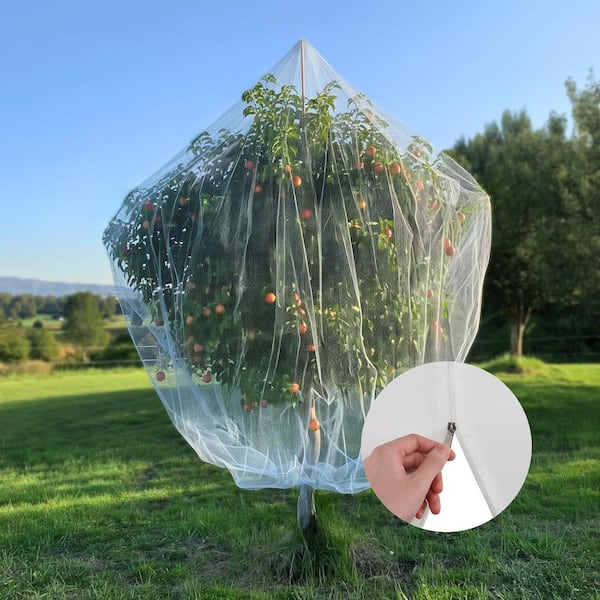
Start by draping the netting over the top of the tree. Make sure the net covers the entire canopy fully.
Gather the netting at the top and tie it tightly. Use strong twine or a zip tie to hold the net in place.
- Check for gaps at the top
- Tie knots firmly to prevent slipping
- Trim extra netting if needed
Wrapping Around The Tree
Pull the netting down around the tree trunk and branches. Make sure it wraps snugly without damaging leaves or fruit.
Adjust the netting to cover all sides of the tree. Smooth out wrinkles to avoid birds finding gaps.
- Cover all fruit-bearing branches
- Avoid tight knots that can harm the tree
- Use clips if needed to hold netting in place
Anchoring The Bottom
Secure the netting at the bottom to stop birds from slipping under. Use weights or stakes to hold the net close to the ground.
You can also bury the net edges slightly into the soil. This creates a tight seal and keeps the net stable during wind.
- Use garden stakes or rocks as anchors
- Check edges regularly for gaps
- Re-tighten if netting loosens over time
Maintaining Bird Netting
Bird netting protects fruit trees from birds. Keeping the netting in good shape helps it last longer.
Regular care stops damage and keeps your fruit safe all season.
Regular Inspections
Check the netting often for holes or loose spots. Birds can find small gaps to get through.
Look closely after storms or strong winds. These weather events can harm the netting.
- Walk around each tree and examine the netting
- Touch the netting to find weak or torn areas
- Check the edges where the netting is attached
- Fix any issues quickly to prevent bigger damage
Repairing Tears
Fix tears as soon as you find them. Small holes let birds in and can get bigger fast.
Use strong thread or zip ties to close the gaps. Replace netting if damage is large or old.
- Cut loose threads around the tear
- Align the torn edges carefully
- Sew or tie the edges together tightly
- Check the repaired spot after a few days
Seasonal Removal And Storage
Take down the netting at the end of the fruit season. This helps prevent damage from weather and animals.
Clean the netting before storing. Store it in a dry place to avoid mold and rot.
- Remove netting gently to avoid tears
- Shake off leaves and dirt
- Wash with mild soap and water if needed
- Let it dry completely before folding
- Store in a cool, dry area away from sunlight
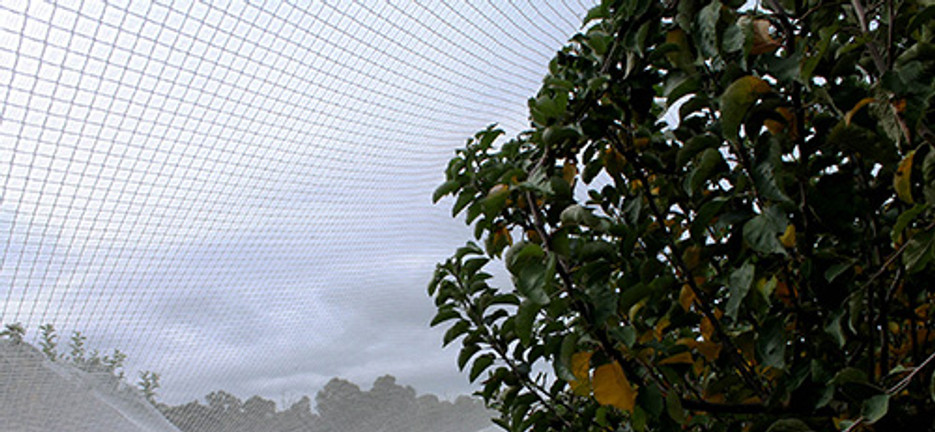
Credit: www.birdbgone.com
Tips For Effective Protection
Bird netting protects fruit trees from birds and pests. Proper installation keeps trees safe and healthy.
Use the right methods to avoid damage and protect wildlife in your garden.
Avoiding Damage To Trees
Install netting carefully to avoid harming branches and bark. Use soft ties and avoid tight knots.
- Check netting size to prevent tearing the tree bark.
- Secure the net without squeezing branches.
- Use poles or frames to hold netting above the tree.
- Remove netting after harvest to let the tree breathe.
Ensuring Wildlife Safety
Choose bird netting that is safe and visible to animals. Avoid thin or loose nets that trap wildlife.
| Netting Feature | Benefit |
| Fine mesh size (1/2 inch) | Keeps birds out without trapping small animals |
| Bright colors or markers | Makes net visible to birds and bats |
| Durable material | Lasts longer and resists damage |
| Quick-release ties | Allows easy removal in case of trapped animals |
Frequently Asked Questions
What Materials Are Needed To Install Bird Netting On Fruit Trees?
You need bird netting, stakes or poles, zip ties or clips, scissors, and gloves. These tools help secure the netting safely around your fruit trees.
How Do You Secure Bird Netting To Fruit Trees Effectively?
Anchor the netting with stakes or poles around the tree base. Use zip ties or clips to fasten the netting tightly, ensuring no gaps for birds to enter.
When Is The Best Time To Install Bird Netting On Fruit Trees?
Install netting early in the fruit development stage. This timing prevents birds from accessing the fruit and causing damage throughout the season.
Can Bird Netting Harm Fruit Trees Or Birds?
Properly installed netting does not harm trees or birds. Avoid loose or torn netting to prevent birds from getting trapped or injured.
Conclusion
Bird netting protects your fruit trees from hungry birds. It ensures a healthy harvest. Installing it is simple with the right tools and steps. Measure your tree and cut the netting to fit. Secure it tightly to avoid gaps. Check regularly for any issues.
With practice, you’ll find the process easy. Your fruit will grow without worry. Enjoy fresh, untouched produce from your garden. Happy growing!