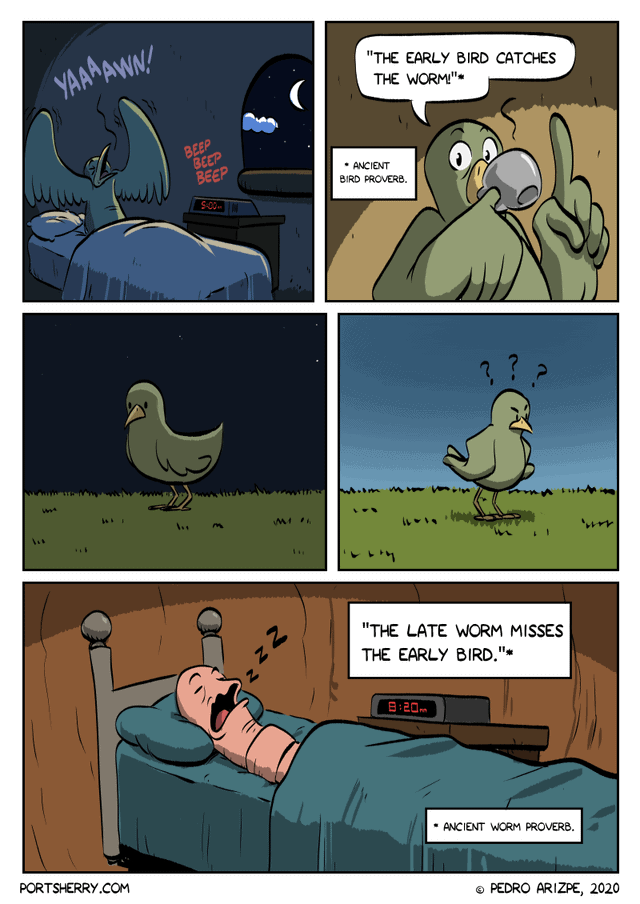
Have you ever heard the saying, “The early bird gets the worm”? It’s a phrase you’ve probably been told since childhood.
But does waking up early really guarantee success? What if there’s more to the story than just being first? You’ll discover surprising truths that might change how you think about timing, productivity, and opportunity. Keep reading to find out if being early is always the key—or if sometimes, waiting could work better for you.
Origins Of The Early Bird Saying
The phrase “The early bird gets the worm” is a popular saying. It means those who start early have an advantage.
This saying has been used for centuries. It encourages people to be prompt and diligent.
Historical Context
The phrase first appeared in English literature in the 17th century. It was a way to teach the value of hard work and punctuality.
- The phrase uses the image of a bird catching a worm early in the morning.
- Worms are easier to catch at dawn before other birds wake up.
- This shows that being early can lead to success.
- Similar ideas are found in old proverbs from Europe.
Cultural Variations
Many cultures have sayings with similar meaning. They all encourage being early or prompt.
| Culture | Saying | Meaning |
| English | The early bird gets the worm | Start early to succeed |
| Chinese | 早起的鸟儿有虫吃 (Zǎo qǐ de niǎo ér yǒu chóng chī) | The early bird gets the worm |
| Spanish | A quien madruga, Dios le ayuda | God helps those who rise early |
| German | Der frühe Vogel fängt den Wurm | The early bird catches the worm |
Benefits Of Waking Up Early
Waking up early can change the way you live your day. It gives you quiet time before the world wakes up.
Many people find that early mornings help them feel fresh and ready to work. Let’s look at some benefits.
Boosted Productivity
Early risers often get more done during the day. They start tasks when they feel fresh and focused.
Without distractions, you can complete work faster. This leads to better results and less stress.
- More time for important tasks
- Better focus in the morning
- Less distraction from emails or messages
Improved Mental Health
Waking up early supports a calm and positive mind. It helps lower stress and improves mood.
Morning light can help regulate your body clock. Good sleep and fresh air boost your mental health.
- Reduced anxiety and depression
- More time for mindfulness or meditation
- Better sleep quality at night
Better Time Management
Early waking helps you plan your day clearly. You can set goals and follow a schedule easily.
Having extra hours means less rush. You can balance work, chores, and rest well.
- More control over daily tasks
- Time to prepare for the day calmly
- Less likelihood of rushing or forgetting things
Drawbacks Of Early Rising
Many people believe waking up early is always good. Some think early risers are more successful.
But waking up early can have some problems. It is important to know the drawbacks.
Sleep Deprivation Risks
Getting up early can cause less sleep if bedtime stays the same. This leads to sleep deprivation.
Sleep deprivation causes tiredness, weak focus, and health issues. It lowers the immune system.
- Reduced energy during the day
- Poor memory and concentration
- Higher chance of illness
- Increased stress and mood swings
Reduced Creativity
Early rising may limit creative thinking for some people. Creativity often peaks later in the day.
Forcing early wake-up times can block natural creative flow. This affects problem-solving and ideas.
- Less time for brainstorming in the morning
- More pressure to be productive early
- Creativity may improve with flexible schedules
Individual Differences
Not everyone is made to wake up early. Some people are naturally night owls with different rhythms.
Forcing early rising can harm those with late body clocks. It can cause discomfort and less focus.
- People have different sleep needs
- Night owls perform better later in the day
- Respecting personal rhythms improves wellbeing

Credit: www.cartoonstock.com
Night Owls Vs Early Birds
People have different times when they feel awake and alert. Some wake up early and start their day fast. Others stay up late and feel active at night. This difference is often called being an early bird or a night owl.
Understanding how these types work can help us see if the early bird really gets the worm. Let’s explore the science and effects of being a night owl or an early bird.
Biological Rhythms
Our bodies follow natural cycles called biological rhythms. These rhythms control when we feel sleepy or awake. Early birds have rhythms that make them rise with the sun. Night owls have rhythms that make them active after dark.
These rhythms are based on a 24-hour cycle called the circadian rhythm. It helps control sleep, hunger, and energy levels. Genes and environment both affect these rhythms.
- Early birds often sleep early and wake early.
- Night owls sleep late and wake late.
- Biological rhythms affect mood and focus.
Performance Patterns
People do their best work at different times. Early birds tend to perform well in the morning. Night owls work better in the evening or late night.
Tests show that each type has peak times for thinking and memory. These times match their natural rhythms. This means neither type is better overall. It depends on the task and the time of day.
- Early birds focus well in the morning.
- Night owls improve performance in late hours.
- Sleep quality affects all performance times.
Social Impacts
Social schedules often favor early birds. Schools and jobs usually start early. Night owls may struggle to fit these times. This can cause stress and tiredness for night owls.
Social life and family time can also be affected. Night owls might miss morning events. Early birds may not join late-night activities. Understanding these differences helps improve relationships.
- Early bird schedules match most social activities.
- Night owls face challenges with early start times.
- Flexible schedules support both types better.
Scientific Studies On Sleep And Success
Many people believe that waking up early leads to more success. This idea comes from the saying, “The early bird gets the worm.” Scientists have studied how sleep affects success. They look at sleep habits and how they relate to work, school, and health.
Research shows that not everyone benefits from early rising. Some people do better with different sleep patterns. These studies help us understand how sleep and success connect.
Research Findings
Studies find that early risers often have good habits. They may be more organized and punctual. These traits can help with success in many areas. Early risers sometimes have better mental health and higher grades.
Night owls, people who sleep late, can also be successful. Some research shows they are more creative and perform well in jobs that need thinking and problem-solving.
- Early risers tend to have better moods in the morning
- Night owls may excel in creative tasks
- Sleep quality matters more than sleep time
- Success depends on personal habits, not just wake time
Limitations Of Studies
Many studies have limits. Some use small groups that may not represent all people. Sleep habits also depend on culture, work schedules, and personal needs.
Some research relies on self-reported data, which can be less accurate. The link between sleep and success is complex. Other factors like motivation and environment also play big roles.
- Small sample sizes limit general results
- Self-reported sleep times may be inaccurate
- Success is affected by many factors
- Different jobs and lifestyles need different sleep

Credit: www.teepublic.com
Practical Tips For Better Sleep
Good sleep helps you feel fresh and ready for the day. It supports your health and mood.
Many people wonder if waking up early always helps. Better sleep habits matter a lot too.
Establishing Routines
Going to bed and waking up at the same time helps your body clock. This makes falling asleep easier.
Try to do relaxing activities before bed. Reading or gentle stretching can calm your mind.
- Set a fixed bedtime and wake time
- Avoid screens 30 minutes before sleep
- Create a quiet pre-sleep routine
Creating Sleep-friendly Environments
Your bedroom should feel calm and dark. Light and noise can stop good sleep.
Keep your room cool and comfortable. Use curtains or eye masks to block light.
- Use blackout curtains to reduce light
- Lower room temperature to about 65°F (18°C)
- Remove loud noises or use earplugs
- Choose a mattress and pillow you like
Balancing Work And Rest
Working too much can cause stress and stop sleep. Give yourself time to relax daily.
Try to finish work before bedtime. Use breaks during the day to rest and recharge.
- Set work limits and stick to them
- Take short breaks every hour
- Do calm activities after work
- Keep work out of the bedroom
When Early Rising May Not Be Ideal
Many people believe waking up early is always good. It can help start the day with energy and focus.
Still, early rising is not the best choice for everyone. Some situations make it less helpful or even harmful.
Personal Health Conditions
Some health issues affect how well a person handles waking up early. For example, people with insomnia or chronic fatigue may feel worse if they force themselves to rise too soon.
- Sleep disorders can reduce rest quality.
- Depression may lower morning energy.
- Certain medications cause drowsiness.
- Chronic pain can make mornings hard.
Work Schedules
Not all jobs require early starts. Some shifts begin late or at night. For workers in these roles, waking very early can hurt performance.
| Work Shift | Typical Hours | Early Rising Suitability |
| Day Shift | 8 AM – 4 PM | Good for early risers |
| Evening Shift | 4 PM – 12 AM | Less ideal for early rising |
| Night Shift | 12 AM – 8 AM | Early rising may reduce alertness |
Lifestyle Preferences
People have different habits and preferences. Some enjoy staying up late and feel active at night. Early rising can clash with these natural rhythms.
- Nighttime creativity or work habits
- Social activities that end late
- Family routines that start late in the day
- Personal energy peaks in the afternoon or evening

Credit: www.kengpress.com
Alternative Approaches To Productivity
Many people think waking up early is the best way to be productive. But there are other ways to work well and get things done.
This article explores different methods that suit different lifestyles and preferences. You can find what works best for you.
Flexible Schedules
Not everyone works best in the morning. Flexible schedules let you work when you feel most alert.
- Choose your work hours based on your energy levels.
- Take breaks when needed to avoid burnout.
- Mix work and rest to stay fresh throughout the day.
Task Prioritization
Focusing on the most important tasks helps you use your time wisely. This keeps you from feeling overwhelmed.
| Priority Level | Description | Example |
| High | Must be done today | Finish client report |
| Medium | Important but not urgent | Plan next week’s meeting |
| Low | Can wait or delegate | Organize files |
Mindfulness Practices
Being mindful helps you focus on one task at a time. It reduces stress and improves work quality.
Try these simple mindfulness steps:
- Take deep breaths before starting work.
- Notice your thoughts without judging them.
- Pause and stretch during breaks.
- Focus fully on the task at hand.
Frequently Asked Questions
Why Is The Early Bird Proverb So Popular?
The proverb highlights the benefits of starting tasks early. It encourages proactivity and discipline. Many see early risers as more productive and successful. This saying motivates people to develop better habits and seize opportunities promptly.
Does Waking Up Early Improve Productivity?
Yes, waking up early often boosts focus and energy. Morning hours tend to be quieter, allowing uninterrupted work. Early risers can plan their day better. However, productivity depends on individual lifestyle and work preferences too.
Can Night Owls Succeed Like Early Birds?
Absolutely, success isn’t limited to early risers. Night owls can excel by leveraging their peak energy times. Consistency and effective time management matter more than wake-up time. Everyone should find their optimal routine for best results.
What Are Benefits Of Starting Work Early?
Starting early helps avoid distractions and meet deadlines. It builds a disciplined routine and reduces stress. Early work sessions enhance creativity and decision-making. This habit often leads to improved work-life balance and satisfaction.
Conclusion
The early bird often finds success. But timing isn’t everything. Quality matters too. Some people thrive in the evening. Others, in the morning. Productivity depends on personal rhythm. Knowing your peak hours helps. Adapt to your strengths. Whether early or late, focus is key.
Consistency builds habits. Habits lead to success. It’s not just about starting early. It’s about starting right. Find what works for you. Then stick to it. Balance is crucial. Rest and work go hand in hand. So, choose your time wisely.
Each day offers new opportunities. Embrace them at your own pace.