
Have you ever wondered how birds know exactly when and where to fly during migration? The story behind how we discovered these incredible journeys is as fascinating as the birds themselves.
Understanding the history of bird migration studies will change the way you see these winged travelers forever. By diving into this story, you’ll uncover surprising discoveries and clever methods scientists used to unlock nature’s secrets. Keep reading, and you’ll find out how your curiosity about birds connects to centuries of exploration and knowledge.
Credit: nationalzoo.si.edu
Early Observations
People have watched birds move from place to place for thousands of years. Early thinkers tried to understand why birds travel long distances each year.
This study of bird migration began with simple observations. These ideas grew from stories and natural events seen by ancient cultures.
Ancient Civilizations And Bird Behavior
Many ancient civilizations noticed bird migration. They saw birds flying in large groups at certain times. They linked these movements to seasons and weather changes.
- The Egyptians watched birds near the Nile to predict floods.
- The Greeks wrote about birds flying south for winter.
- The Chinese recorded changes in bird patterns to mark time.
- The Romans observed birds to decide the best times for planting crops.
Myths And Cultural Beliefs
Bird migration inspired many myths. People made stories to explain why birds disappeared and returned. These stories showed respect and fear for nature.
| Culture | Belief About Bird Migration |
| Native American | Birds carry souls to the afterlife |
| Nordic | Birds bring messages from gods |
| Ancient Greek | Birds change into stars or spirits |
| Egyptian | Birds guide the sun god Ra across the sky |
Medieval Insights
Bird migration has fascinated humans for many centuries. In the medieval times, people began to observe and wonder about birds’ long journeys.
These early ideas helped shape how later scientists studied bird migration. The medieval period showed the start of curiosity and basic thinking about why birds travel.
Naturalists And Early Theories
Medieval naturalists watched birds carefully. They made notes about when and where birds appeared and disappeared. Some believed birds hibernated in the mud during winter.
Others thought birds turned into different animals to survive cold seasons. These ideas came from observing nature without modern tools. They showed early attempts to explain bird migration.
- Birds hibernate underwater in winter
- Birds change into other animals
- Birds fly to warmer lands
Challenges In Migration Study
Studying bird migration in medieval times was hard. People lacked maps and clocks to track bird journeys. They could not follow birds for long distances.
Communication was slow, so sharing information was tough. Myths and stories mixed with facts. This made it hard to know what was true about bird migration.
- No tools to track birds’ long flights
- Lack of detailed records and maps
- Mix of myths and facts confused researchers
- Limited sharing of knowledge across regions
Renaissance Discoveries
The Renaissance was a time of new ideas and careful study. People began to look at bird migration in a scientific way.
Scientists and explorers started to gather facts about birds and their travel patterns. This marked the start of real knowledge about migration.
Scientific Approach Emerges
Researchers used observation and experiments to learn about birds. They tried to find reasons for migration instead of guessing.
- Careful note-taking of bird behaviors
- Comparing bird movements across seasons
- Using maps to track migration routes
- Studying changes in weather and nature
- Sharing findings with other scholars
Notable Figures In Migration Research
| Name | Contribution | Time Period |
| Konrad Gesner | Documented bird species and migration | 16th century |
| Ulisse Aldrovandi | Collected data on bird habits and routes | 16th century |
| William Turner | Noted seasonal bird movements in England | 16th century |
These scientists helped change bird migration from myth to study. Their work laid the foundation for future discoveries.
Modern Techniques
Scientists use modern tools to study bird migration. These tools help track birds over long distances.
Modern techniques give detailed information about routes and behaviors of migrating birds.
Banding And Tagging Birds
Banding adds small rings to birds’ legs. Each ring has a unique number. This helps identify the bird later.
Tagging uses small devices attached to birds. These devices record data like location and flight speed.
- Banding is low cost and simple
- Tags provide real-time tracking data
- Both methods need bird recaptures or detections
Radar And Satellite Tracking
Radar detects birds flying at night or in bad weather. It shows bird numbers and directions.
Satellite tracking uses small transmitters on birds. Satellites receive signals to locate birds anywhere on Earth.
- Radar tracks large bird groups
- Satellite tracking follows individual birds
- Both give data on migration timing and paths
Major Migration Routes
Bird migration is a natural journey birds take between breeding and wintering areas. These journeys follow specific paths called migration routes. Understanding these routes helps scientists study bird behavior and protect their habitats.
Major migration routes cover thousands of miles across continents and oceans. Birds use these flyways to find food, rest, and safe shelter during their long travels.
Flyways Around The World
Flyways are the main paths birds follow each year. There are several key flyways worldwide that support millions of birds.
- Atlantic Flyway: Runs along the east coast of North America from Canada to South America.
- Mississippi Flyway: Follows the Mississippi River valley in the United States.
- Central Asian Flyway: Covers Central Asia from the Arctic to the Indian Ocean.
- East Asian-Australasian Flyway: Extends from Siberia to Australia and New Zealand.
- Pacific Flyway: Moves along the west coast of the Americas from Alaska to South America.
Factors Influencing Routes
Several factors affect why birds choose certain routes. These include geography, weather, food supply, and safety.
| Factor | Effect on Migration |
| Geography | Mountains and water bodies shape the path birds take. |
| Weather | Wind patterns and storms can speed up or delay migration. |
| Food Supply | Birds stop where food is available to rest and refuel. |
| Safety | Birds avoid areas with many predators or human disturbance. |

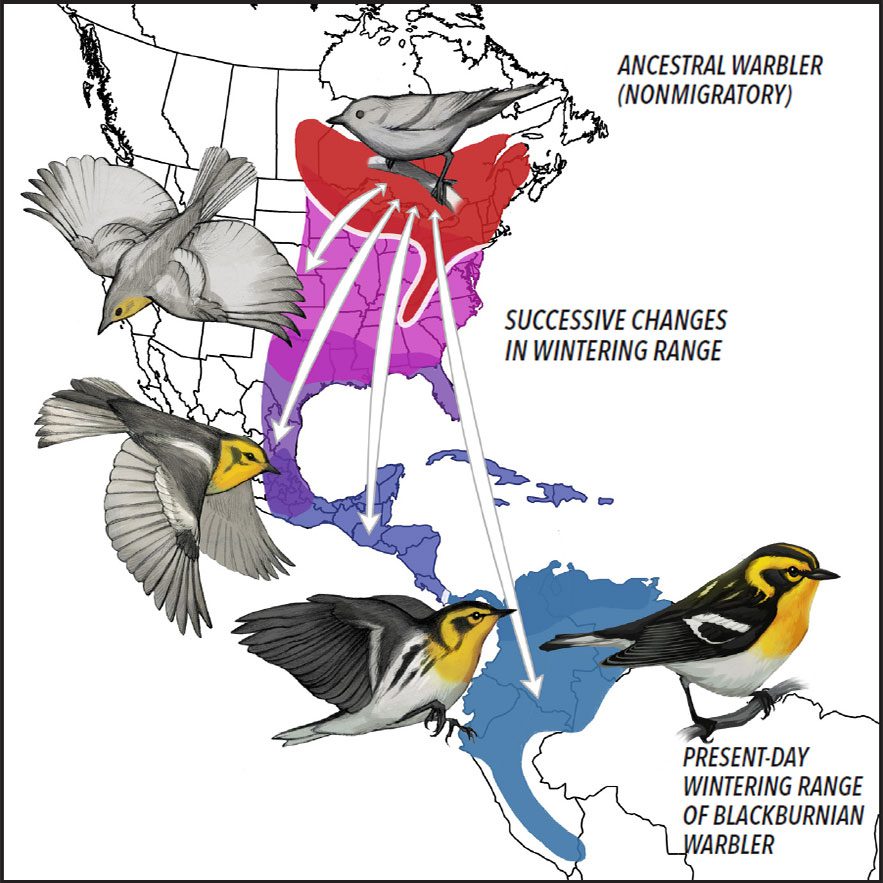
Credit: www.pnas.org
Impact Of Climate Change
Climate change affects bird migration in many ways. Rising temperatures and changing weather patterns disrupt natural behaviors. Scientists study these shifts to understand the long-term effects on birds.
Birds rely on cues like temperature and daylight to migrate. When these signals change, birds may arrive too early or too late. This can affect their survival and breeding success.
Shifts In Migration Patterns
Bird migration routes and timing change as the climate warms. Some species fly shorter distances. Others change their stopover locations or wintering areas. These shifts can cause problems for food and shelter.
- Earlier spring arrivals in northern regions
- Delayed departures in fall
- Shorter migration distances for some species
- New migration paths emerging
Conservation Efforts
Conservation groups work to protect bird habitats affected by climate change. They monitor changes in migration and help create safe areas. Education and policy changes also support bird survival.
| Effort | Description |
| Habitat Protection | Preserving key stopover and breeding sites |
| Research | Tracking migration and climate impacts |
| Policy Changes | Advocating for climate and wildlife laws |
| Public Education | Raising awareness about bird conservation |
Future Of Migration Studies
Bird migration studies have come far since the first observations. Scientists now use new tools and ideas to learn more.
The future of migration studies holds many chances to understand bird journeys better and protect them well.
Technological Innovations
New technology helps track birds with great detail. Tiny GPS devices and sensors give data on where birds fly.
Scientists use drones and satellites to watch birds from above. These tools show migration paths and stop points.
- Lightweight GPS trackers on birds
- Satellite images to follow large groups
- Drones for close-up observation
- Automated sound recorders to detect calls
Citizen Science Contributions
Many people help by watching and reporting bird sightings. This data helps scientists study migration across wide areas.
Apps and websites let bird watchers share their findings. This crowd-sourced data fills gaps in scientific research.
- Bird sighting reports from volunteers
- Data collected through mobile apps
- Community-led bird counts and surveys
- Sharing photos and sounds for ID help

Credit: arushisingh5545.medium.com
Frequently Asked Questions
What Is The History Of Bird Migration Studies?
Bird migration studies began centuries ago, with early observations by naturalists. Scientific methods advanced in the 19th and 20th centuries, using banding and radar. These studies revealed migration routes, timing, and behavior, helping us understand bird ecology and conservation needs.
How Did Early Scientists Track Bird Migration?
Early scientists used bird banding, placing unique rings on birds’ legs. This method allowed recapturing or sighting birds in different locations. It provided crucial data on migration routes, distances, and stopover sites, forming the foundation of modern migration research.
Why Is Studying Bird Migration Important?
Studying bird migration helps us understand ecological patterns and environmental changes. It informs conservation efforts to protect critical habitats and migratory corridors. Migration studies also reveal impacts of climate change on timing and routes, aiding in preserving bird populations worldwide.
What Technologies Advanced Bird Migration Research?
Technologies like radar, satellite tracking, and geolocators revolutionized migration studies. They provide precise data on flight paths, speed, and altitude. These tools enable continuous monitoring over long distances, offering deeper insights into migration behavior and environmental challenges.
Conclusion
Bird migration studies have come a long way. Early observations relied on simple tools. Now, technology helps track birds across vast distances. Scientists learn more each year. Migration patterns reveal much about bird behavior. This knowledge aids in conservation efforts.
Protecting bird habitats becomes easier. People understand the challenges birds face. The history of these studies is rich and fascinating. Every discovery brings new insights. Bird migration remains a vital area of research. Future findings will continue to amaze. Our appreciation for these journeys deepens with each study.
Birds inspire with their remarkable travels.



