Have you ever wondered how a bird can eat whole grains without chewing them like you do? It’s fascinating to think about how your feathered friends digest these tiny, tough seeds so easily.
Understanding this process not only satisfies your curiosity but also helps you care better for birds if you feed them. Keep reading, and you’ll discover the surprising way birds break down whole grains and what it means for their health and your backyard visits.
Bird Digestive Anatomy
Birds have a special digestive system made to handle whole grains. Their bodies break down hard seeds and grains into nutrients. Each part of the digestive system plays an important role.
The process starts from the beak and goes all the way to the intestines. Understanding each part helps us see how birds get energy from grains.
Beak And Crop Functions
The beak is the first tool birds use to eat whole grains. It cracks open seeds and picks up food. The crop is a pouch that stores food temporarily.
The crop softens the grains by moistening them. This makes it easier for the bird to digest the grains later. The crop also controls the flow of food to the stomach.
Role Of The Proventriculus
The proventriculus is the bird’s glandular stomach. It adds digestive juices and enzymes to the food. These chemicals start breaking down the grain’s outer layers.
This process prepares the grains for the next stage. The proventriculus works fast to make digestion efficient.
Gizzard’s Grinding Power
The gizzard is a strong muscle that grinds food. Birds swallow small stones that help the gizzard crush hard grains. This grinding breaks the grains into tiny pieces.
The gizzard acts like teeth. It makes the grain soft and easy to digest. This step is very important for birds that eat whole grains.
- Swallowed stones help crush grains
- Strong muscles grind the food
- Grains become small and soft
Intestinal Absorption
After grinding, food moves to the intestines. The intestines absorb nutrients from the grains. These nutrients enter the bird’s bloodstream.
The intestines have a large surface area to absorb many nutrients. This step gives birds energy and helps them grow strong.
Credit: freerangeparrots.org
Whole Grain Composition
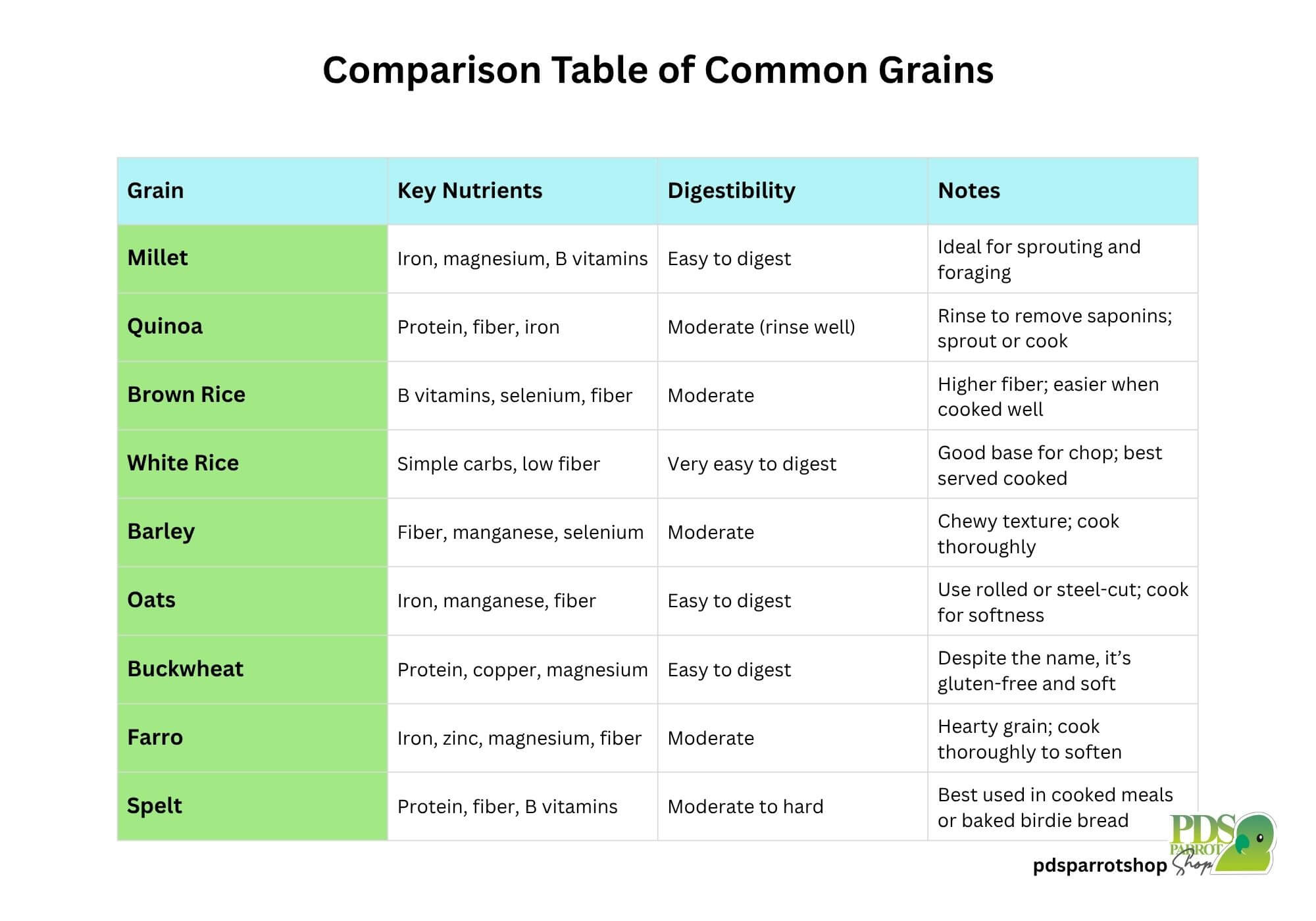
Whole grains are a key part of many birds’ diets. They contain many nutrients that help birds stay healthy.
Understanding the parts of whole grains helps explain how birds digest and use them.
Nutrient Profile
Whole grains have many nutrients like vitamins, minerals, and antioxidants. These help birds grow and stay strong.
Birds get energy and important building blocks from these nutrients in the grain.
- Vitamins such as B-complex support metabolism
- Minerals like iron and magnesium aid body functions
- Antioxidants protect cells from damage
Fiber And Its Impact
Fiber is part of the grain’s outer layer. It helps birds digest food slowly and stay full longer.
Fiber supports healthy digestion by moving waste through the bird’s gut.
- Insoluble fiber adds bulk to waste
- Soluble fiber slows digestion and controls sugar release
- Fiber helps keep the bird’s gut healthy
Carbohydrates And Proteins
Carbohydrates in whole grains provide birds with quick and lasting energy. They are the main fuel source.
Proteins in grains help birds build and repair body tissues. They are important for growth.
| Component | Role | Examples |
|---|---|---|
| Carbohydrates | Energy source | Starch, sugars |
| Proteins | Body building | Amino acids |
Mechanical Breakdown
Birds eat whole grains as part of their diet. These grains need to be broken down so birds can digest them. Mechanical breakdown helps birds crush and grind the grains.
This process happens mainly in the bird’s stomach. Birds do not have teeth, so they use other ways to break down food.
How Birds Grind Grains
Birds use a special stomach part called the gizzard to grind grains. The gizzard has strong muscles that squeeze and crush food.
Inside the gizzard, the food is ground into smaller pieces. This helps the bird digest the grains better and get more nutrients.
- The gizzard works like teeth but inside the body.
- Muscles in the gizzard contract to crush grains.
- Grinding food increases digestion efficiency.
Importance Of Grit
Grit is small, hard particles like sand or tiny stones. Birds eat grit to help their gizzard grind food.
Grit stays in the gizzard and works like grinding tools. Without grit, birds would have a hard time breaking down whole grains.
- Grit helps the gizzard crush tough grains.
- It keeps the grinding process effective and smooth.
- Birds often look for grit naturally in their environment.
Chemical Digestion
Chemical digestion breaks down whole grains into smaller nutrients. Birds use special chemicals to digest food.
This process happens mainly in the bird’s stomach and intestines. It prepares nutrients for absorption and use.
Enzymes Involved
Enzymes are proteins that speed up digestion. Birds produce enzymes that break down starch and protein.
Amylase breaks starch into simple sugars. Protease breaks proteins into amino acids.
- Amylase: digests carbohydrates in grains
- Protease: digests proteins in the grain
- Lipase: digests fats found in grains
Role Of Stomach Acids
Stomach acids help break down food and kill germs. They create an acidic environment for enzymes to work well.
The acid softens the grain’s outer layer. This helps enzymes reach nutrients inside the grain.
Nutrient Absorption
Birds eat whole grains to get energy and nutrients. Their bodies break down the grains to absorb the nutrients they need.
The process of nutrient absorption happens mainly in the small intestine. This is where the food is changed into smaller parts.
Small Intestine Processes
The small intestine has special walls that absorb nutrients from digested grains. Enzymes help break down starch, protein, and fat.
Villi and microvilli inside the small intestine increase the surface area. This helps the bird absorb more nutrients quickly.
- Enzymes break down grains into sugars, amino acids, and fatty acids
- Villi and microvilli absorb these smaller molecules
- Nutrients pass through the intestinal walls into the blood
Transport Of Nutrients To Cells
After absorption, nutrients enter the blood vessels in the small intestine. The blood carries nutrients to different body cells.
Cells use these nutrients for energy, growth, and repair. This process keeps the bird healthy and active.
- Blood transports glucose, amino acids, and fats to cells
- Cells convert nutrients into energy and building blocks
- Unused nutrients are stored for later use

Credit: grubblyfarms.com
Adaptations For Whole Grain Diets
Birds that eat whole grains have special body parts. These parts help them break down hard grains. Their bodies work well to get nutrients from grains.
Besides body parts, birds also use smart behaviors. These actions help them eat and digest grains better. Both traits keep them healthy.
Specialized Digestive Traits
Birds have strong gizzards. These muscles grind the grain into small pieces. Birds also swallow small stones called grit. Grit stays in the gizzard and helps crush grains.
| Digestive Trait | Function |
| Strong Gizzard | Grinds hard grains into digestible bits |
| Grit | Helps crush grains in the gizzard |
| Enzymes | Break down starch and fiber in grains |
| Long Intestines | Absorb nutrients from grains efficiently |
Behavioral Adaptations
Birds show behaviors to improve grain digestion. They pick grains carefully and eat small amounts at once. They also use water to help break down food.
- Choosing grains that are easier to digest
- Eating grit to aid grinding in the gizzard
- Bathing to keep feathers clean for better food handling
- Drinking water to soften grains before digestion
Health Benefits Of Whole Grains For Birds
Whole grains are a natural food source for many birds. They contain important nutrients that help birds stay healthy and strong.
Birds digest whole grains differently than processed foods. The grains provide energy, vitamins, and fiber needed for their daily activities.
Energy And Vitality
Whole grains give birds steady energy. They are rich in carbohydrates that break down slowly in the bird’s body.
This slow digestion keeps birds active longer. It helps them fly, find food, and stay alert throughout the day.
- Provides long-lasting energy
- Supports muscle strength
- Maintains alertness and activity
Digestive Health Support
Whole grains contain fiber that helps birds digest food well. Fiber moves food smoothly through their digestive system.
This fiber also supports good bacteria in the gut. Healthy digestion means birds absorb more nutrients from their food.
- Improves gut health
- Prevents digestive issues
- Helps nutrient absorption

Credit: www.reddit.com
Frequently Asked Questions
How Do Birds Digest Whole Grains Efficiently?
Birds use their gizzards to grind whole grains with small stones. Enzymes then break down nutrients for absorption in the intestines. This process allows birds to extract energy and nutrients effectively from whole grains.
What Role Does The Gizzard Play In Grain Digestion?
The gizzard acts like a mechanical stomach. It crushes and grinds whole grains using ingested grit. This physical breakdown makes it easier for digestive enzymes to access nutrients in the grains.
Can Birds Digest All Parts Of Whole Grains?
Birds can digest the endosperm and germ easily. The bran is tougher but partially broken down in the gizzard. Overall, birds utilize most parts of whole grains for nutrition.
How Long Does It Take Birds To Digest Whole Grains?
Digestion time varies but generally takes several hours. The gizzard grinds grains slowly, allowing enzymes to break them down. This slow process ensures maximum nutrient absorption from whole grains.
Conclusion
Birds have a unique way to digest whole grains. Their specialized organs, like the crop and gizzard, help break down food. This process ensures they get essential nutrients. Understanding bird digestion can help us better care for them. It also highlights nature’s incredible adaptations.
Next time you see a bird pecking at grains, remember its complex digestion. Birds are fascinating creatures with remarkable digestive systems. Observing them can teach us a lot about nature. Appreciate these small yet complex beings in their natural habitat.
They truly are nature’s wonders.