Have you ever wondered how a bird can spot a tiny worm hiding under the soil? It seems almost like magic, doesn’t it?
But there’s more to it than just luck. Your curiosity about this natural skill is about to be satisfied. Understanding how birds find worms can change the way you see nature around you. Keep reading, and you’ll discover surprising facts that will make you appreciate these little hunters even more.
Credit: www.chesapeakebay.net
Birds’ Hunting Instincts
Birds find worms using a mix of natural skills and learning. Their hunting instincts help them survive.
Some behaviors are built-in, while others come from experience. Both guide birds to their food.
Innate Behaviors
Birds have natural instincts that tell them how to search for worms. These instincts help them act quickly.
- Sense vibrations in the soil
- Spot worm movements on the surface
- Use sharp eyesight to find tiny signs
- Follow scents that indicate worm presence
Learning From Experience
Birds improve their hunting by practicing and watching others. They remember where worms hide.
| Learning Method | How It Helps |
| Trial and Error | Finding best spots to dig |
| Observation | Copying successful hunting |
| Memory | Returning to worm-rich areas |

Credit: www.willyswilderness.org
Sensory Tools For Finding Worms
Birds use special senses to find worms hidden underground. They rely on their eyes and touch to discover moving worms.
These senses help birds find food quickly and avoid wasting energy searching in the wrong places.
Vision And Movement Detection
Birds have sharp eyesight that helps them see small movements in the soil. They watch for tiny signs that show where worms might be.
Even small movements made by worms under leaves or soil can catch a bird’s attention. This helps birds know exactly where to search.
- Birds spot small soil movements caused by worm activity
- Sharp vision allows birds to see through grass and leaves
- Movement detection helps birds avoid empty spots
Touch And Vibration Sensitivity
Birds feel tiny vibrations in the ground using their beaks and feet. These vibrations come from worms moving underground.
Touch sensitivity lets birds detect worms even when they cannot see them. This sense guides their pecking to the right spot.
- Beaks sense vibrations from worm movements
- Feet can feel soil shaking caused by worms
- Vibration detection helps birds find hidden worms
Environmental Clues
Birds use many environmental clues to find worms. These clues help birds decide where to search for food.
Worms stay hidden underground, but birds can sense where they might be. The soil and weather play important roles.
Soil Conditions And Worm Activity
Birds look at soil softness to guess if worms are near the surface. Soft soil makes it easier for worms to come out.
Worms are more active in moist, loose soil. Birds watch for these conditions to find food.
- Soft soil means worms can move up easily
- Wet soil attracts more worm activity
- Hard or dry soil keeps worms deep underground
Weather Impact On Worm Availability
Weather affects when and where worms appear. After rain, worms come out to avoid drowning.
Birds watch for rainy days or wet ground. These signs tell birds worms are closer to the surface.
- Rain pushes worms above ground
- Dry weather makes worms stay underground
- Warm temperatures increase worm movement

Credit: www.britannica.com
Special Adaptations In Birds
Birds have many special features that help them find food. They use their bodies and brains in unique ways. These adaptations make them skilled hunters.
One common question is how birds know where worms are hiding. The answer lies in their beak shape and brain power. These traits guide them to their prey.
Beak Shape And Function
Birds have different beak shapes for catching worms. Thin, pointed beaks help birds reach into soil. Strong, curved beaks can pull worms out easily.
- Long, thin beaks act like probes to find worms underground.
- Sharp beaks allow quick grabbing and pulling of worms.
- Flexible beaks help birds handle slippery worms with care.
- Beak size matches the bird’s hunting style and environment.
Neural Processing And Brain Power
Birds use their brains to sense where worms are. They process signals from sight and touch very fast. This helps them decide where to dig.
| Brain Area | Function |
| Optic Lobes | Process visual information to spot worm movements |
| Somatosensory Cortex | Sense touch and vibration in the beak |
| Hippocampus | Help remember worm locations and hunting spots |
Examples Of Skilled Worm Hunters
Birds use sharp senses and clever tricks to find worms underground. They know where worms hide by listening and looking carefully.
Different birds have different ways to catch worms. Some use sight, others use sound or movement to detect worms.
Robins And Their Techniques
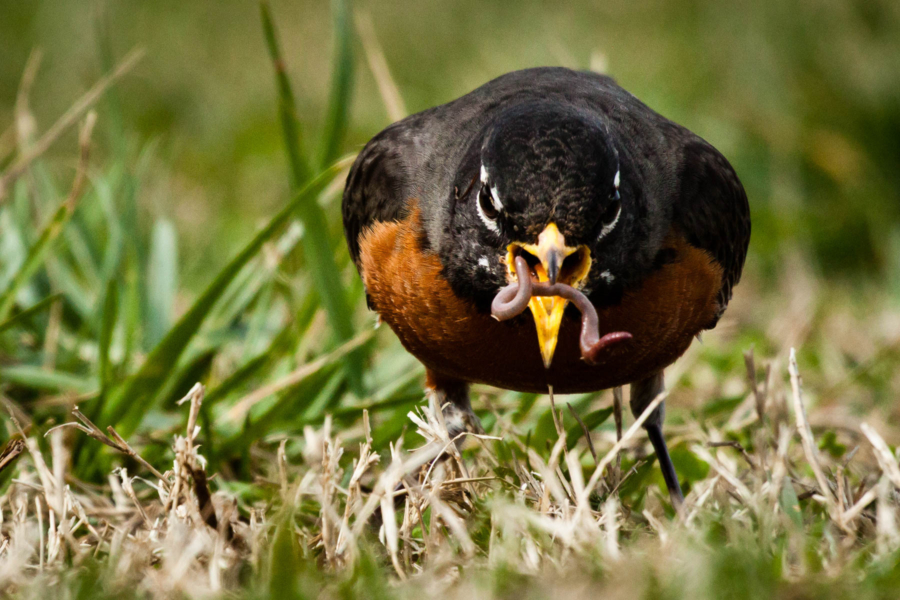
Robins are famous for hunting worms in lawns. They watch the ground closely and listen for worm movements.
When a robin sees a small movement or hears a sound, it quickly pecks the ground to catch the worm. They can also sense the worm’s vibrations.
- Look for worm shadows or movement on soil
- Use hearing to detect worm activity underground
- Peck quickly where they sense worms
Other Notable Species
Other birds like thrushes and starlings also hunt worms well. Thrushes tap the ground to find worm movements.
Starlings use their sharp eyesight to spot worms and then dig them out with their beaks. Some birds even watch for worm castings on soil.
- Thrushes tap ground to detect worms
- Starlings watch for worm casts and dig fast
- Woodpeckers sometimes listen for insect or worm sounds
Human Influence On Bird Hunting
Birds find worms using their natural skills. People change the places birds live and hunt. This affects how birds find food.
Human actions can help or harm birds. We will look at two ways humans change bird hunting: urbanization and conservation.
Urbanization Effects
Cities and towns grow quickly. This changes the land where birds live. Birds must find new ways to hunt worms.
- Soil gets covered by roads and buildings.
- Worms may be fewer in city soil.
- Birds might eat other foods in cities.
- Light and noise can confuse birds.
- Some birds adapt and find food in parks or gardens.
Conservation And Support Efforts
People work to help birds keep hunting worms. They create safe spaces and improve habitats for birds and worms.
| Effort | Description |
| Planting Native Trees | Provides shelter and food for birds |
| Creating Bird-Friendly Gardens | Offers safe hunting areas |
| Reducing Pesticides | Keeps worms and insects healthy |
| Building Nest Boxes | Supports bird breeding and safety |
Frequently Asked Questions
How Do Birds Locate Worms Underground?
Birds use their keen eyesight and sense of vibration to find worms. They detect subtle ground movements and shadows. Some birds even sense moisture and temperature changes in the soil, helping them identify worm-rich areas quickly and efficiently.
Can Birds Smell Worms Beneath The Soil?
Certain bird species have a well-developed sense of smell. They can detect the scent of worms and other insects underground. This ability helps them pinpoint worm locations even when the soil covers them, improving their hunting success.
Do Birds Use Hearing To Find Worms?
Yes, birds listen for the tiny movements worms make underground. Their sensitive hearing picks up vibrations and sounds caused by worm activity. This auditory skill aids birds in locating worms hidden beneath leaves and soil.
What Role Does Bird Eyesight Play In Finding Worms?
Birds rely heavily on sharp eyesight to spot worms on or near the surface. They look for subtle changes in soil color or texture. Their excellent vision allows quick identification of potential feeding spots.
Conclusion
Birds have impressive skills to find worms. Their keen sense of hearing plays a key role. They listen carefully for movements underground. This helps them locate food. Their sharp eyesight also aids in spotting subtle ground changes. Birds have evolved these abilities over time.
This is vital for survival. Nature provides them with these instincts to thrive. Next time you see a bird pecking, remember their incredible skills. They are truly nature’s expert hunters. Fascinating, isn’t it?