
If you love watching birds visit your feeder, keeping it clean is key to their health and happiness. But how often should you clean your bird feeders to make sure they stay safe and inviting?
You might be surprised to learn that a dirty feeder can harm the very birds you want to attract. You’ll discover simple, effective tips on how often and why you need to clean your feeders. By the end, you’ll know exactly how to protect your feathered friends and enjoy their visits even more.
Keep reading to find out how a little care goes a long way!
Importance Of Cleaning Bird Feeders
Cleaning bird feeders is important for keeping birds safe and healthy. Dirty feeders can cause many problems for birds.
Regular cleaning helps keep the feeder fresh and inviting. It also protects birds from harmful germs and mold.
Preventing Disease Spread
Diseases can spread quickly among birds using the same feeder. Germs grow on old seed and droppings left behind.
Cleaning stops disease from spreading. It keeps birds from getting sick and spreading illness to others.
- Remove old seeds and debris
- Use hot water and mild soap to wash feeders
- Rinse feeders well and dry before refilling
- Clean feeders at least once every two weeks
Maintaining Food Quality
Old seed can become moldy or stale. Birds may avoid feeders with bad food.
Cleaning the feeder keeps seeds fresh and safe to eat. This ensures birds get the nutrition they need.
- Check seed for mold or clumps
- Throw away wet or spoiled seed
- Keep feeders dry to prevent mold growth
Attracting Healthy Birds
Clean feeders attract more birds. Healthy birds are more likely to visit a clean feeding spot.
Bird watchers can enjoy watching a variety of birds if feeders are well cared for and clean.
- Clean feeders look neat and inviting
- Fresh food encourages birds to return
- Healthy birds help keep the ecosystem balanced

Credit: green-backyard.com
Recommended Cleaning Frequency
Cleaning bird feeders regularly keeps birds healthy and safe. Dirty feeders can spread diseases among birds.
Knowing how often to clean feeders depends on several factors. These include the season, weather, and feeder type.
Seasonal Variations
Bird feeders need more cleaning during busy seasons. Spring and summer bring many birds feeding often.
In fall and winter, fewer birds visit feeders. You can clean feeders less often during these months.
- Spring and summer: clean weekly
- Fall and winter: clean every two weeks
Impact Of Weather Conditions
Wet and hot weather can make seeds mold quickly. Clean feeders more often in these conditions to prevent mold.
Dry and cold weather slows mold growth. You can extend cleaning time a little during dry, cold days.
- Rainy weather: clean twice a week
- Hot weather: clean weekly
- Dry/cold weather: clean every two weeks
Type Of Bird Feeder
Different feeders need different cleaning schedules. Feeders that hold wet food need faster cleaning.
Tube feeders with dry seeds stay clean longer. Platform feeders and suet feeders can get dirty fast.
| Feeder Type | Cleaning Frequency |
|---|---|
| Tube feeders (dry seeds) | Every 2 weeks |
| Platform feeders | Weekly |
| Suet feeders | Weekly or after rain |
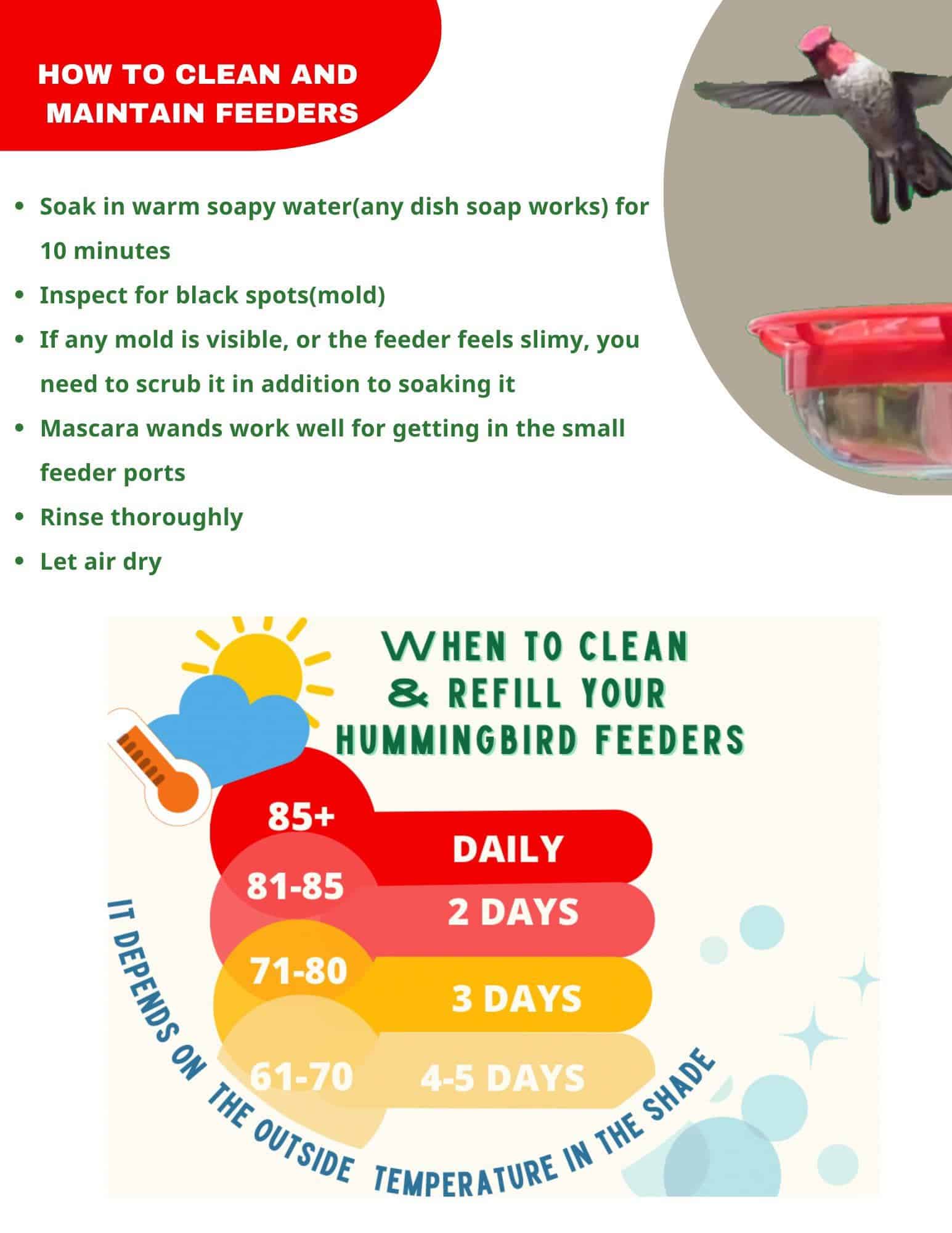
| Nectar feeders | Every 3-4 days |
Cleaning Methods And Supplies
Bird feeders need regular cleaning to keep birds healthy. Dirt and mold can build up quickly on feeders.
Using the right cleaning methods and supplies makes the job easier. Clean feeders often to prevent disease.
Safe Cleaning Solutions
Use gentle cleaners to avoid harming birds. Harsh chemicals can leave dangerous residues on feeders.
Simple solutions like mild soap or vinegar work well. These kill germs without risking bird safety.
- Warm water with mild dish soap
- One part white vinegar to nine parts water
- Unscented bleach diluted with water (use carefully)
- Soft brushes or cloths for scrubbing
Step-by-step Cleaning Process
First, remove all seeds and debris from the feeder. Disassemble parts if possible to clean better.
Soak feeder parts in the cleaning solution for at least ten minutes. Scrub all surfaces to remove dirt and mold.
- Empty the feeder completely
- Disassemble parts carefully
- Soak parts in cleaning solution
- Scrub with a soft brush
- Rinse thoroughly with clean water
Drying And Reassembling Feeders
Dry all parts fully before putting the feeder back together. Moisture can cause mold to grow again quickly.
Use a clean towel or air dry in the sun. After drying, reassemble the feeder and refill with fresh seed.
- Dry parts with a clean cloth
- Leave parts in sunlight to air dry
- Reassemble feeder carefully
- Refill with fresh, dry seed

Credit: www.reddit.com
Signs Feeders Need Cleaning
Bird feeders need regular cleaning to keep birds healthy. Dirty feeders can spread diseases and scare birds away.
Knowing when to clean helps protect your feathered visitors. Watch for clear signs that show your feeder needs attention.
Visible Mold And Dirt
Mold grows on feeders when they stay wet or dirty too long. Dirt and grime can build up on seed trays and perches.
- Look for fuzzy or slimy patches on the feeder.
- Check for dark stains that do not wipe off easily.
- Notice if the feeding ports are clogged with dirt.
- Watch for bird droppings on or around the feeder.
Clumped Or Spoiled Seed
Seed that sticks together or smells bad means it is spoiled. Moisture causes seeds to clump and rot inside the feeder.
| Seed Condition | What to Look For |
| Fresh Seed | Dry, loose, and smells neutral |
| Clumped Seed | Seeds stuck together in hard lumps |
| Spoiled Seed | Musty or sour smell with dark spots |
Unusual Bird Behavior
Birds may avoid feeders that are dirty or unsafe. Watch for changes in their normal feeding habits.
Signs of unusual bird behavior include:
- Birds landing briefly then flying away
- Fewer birds visiting than usual
- Birds picking at the feeder but not eating
- Birds showing signs of illness like ruffled feathers
Preventive Measures For Feeder Hygiene
Keeping bird feeders clean is important to stop disease spread. Dirty feeders can harm birds and reduce visits.
Regular cleaning and smart habits help keep feeders safe. This guide covers easy ways to keep feeders clean.
Choosing Easy-to-clean Feeders
Pick feeders made from smooth materials like plastic or metal. These surfaces are easier to wash and dry.
Feeders with simple shapes and fewer parts reduce places for dirt and mold to hide.
- Choose feeders with removable trays or parts
- Avoid feeders with many crevices or small openings
- Look for feeders designed for easy disassembly
Location Tips To Reduce Contamination
Place feeders where rain can reach them. Rain helps wash away dirt naturally.
Keep feeders away from areas with bird droppings or standing water to lower contamination risk.
- Set feeders under light cover but not fully shaded
- Avoid placing feeders near feeders or birdbaths that stay wet
- Move feeders to new spots if mold or dirt builds up quickly
Regular Maintenance Routines
Clean feeders at least once a week with warm, soapy water. Rinse well and dry before refilling.
During wet or hot weather, clean feeders more often to prevent mold and bacteria growth.
- Empty old seed before cleaning
- Use a brush to scrub hard-to-reach areas
- Disinfect feeders monthly with a mild bleach solution
- Let feeders dry completely before adding fresh seed

Credit: www.youtube.com
Frequently Asked Questions
How Often Should Bird Feeders Be Cleaned?
Bird feeders should be cleaned every two weeks to prevent mold and bacteria buildup. During wet or humid weather, clean them weekly to protect bird health.
Why Is Cleaning Bird Feeders Important?
Cleaning bird feeders prevents disease spread among birds. It also keeps the feeder attractive and safe for visiting wildlife.
What Is The Best Method To Clean Bird Feeders?
Use a solution of one part bleach to nine parts water. Rinse thoroughly and let the feeder dry completely before refilling.
Can Dirty Feeders Harm Birds?
Yes, dirty feeders can spread harmful bacteria and fungi, causing illness or death in birds. Regular cleaning reduces this risk.
Conclusion
Cleaning bird feeders often keeps birds healthy. It prevents disease spread. Clean feeders every two weeks. Weekly cleaning in rainy seasons is better. Warm water and soap work well. Consider using a brush for deep cleaning. Rinse thoroughly. Dry completely before refilling.
This keeps seeds fresh and birds happy. Regular checks for mold are important. Discard moldy seeds immediately. Your efforts support bird health and happiness. Enjoy watching vibrant, chirping visitors. They’ll thank you with lively melodies. Happy bird watching!



