If you love watching birds visit your garden, making bird seed balls is one of the easiest and most fun ways to attract them. Imagine turning simple ingredients into tasty treats that bring colorful birds right to your window.
You don’t need any special skills or tools—just a few minutes and a little creativity. In this guide, you’ll discover How to Make Bird Seed Balls step-by-step. By the end, you’ll not only have a new hobby but also a happy flock of feathered friends enjoying your homemade snacks. Ready to get started? Let’s dive in!

Credit: www.firefliesandmudpies.com
Materials Needed
Making bird seed balls is a fun and easy project. You need a few simple materials to get started. These materials help create tasty and safe snacks for wild birds. Gathering the right ingredients ensures your homemade bird seed balls hold together well. This guide covers types of bird seed, binding ingredients, and extra supplies you may need.
Types Of Bird Seed
- Sunflower seeds – favorite for many birds
- Millet – small seeds loved by finches
- Cracked corn – good for larger birds
- Safflower seeds – less attractive to squirrels
- Nyjer seeds – ideal for small songbirds
Choose a mix of seeds to attract different birds. Avoid seeds with shells that are hard to eat.
Binding Ingredients
Binding ingredients hold the seed balls together. Use natural items safe for birds and the environment.
| Ingredient | Purpose |
| Flour (all-purpose or whole wheat) | Creates a sticky base |
| Water | Mixes with flour to form dough |
| Peanut butter (optional) | Adds extra binding and fat |
| Gelatin (optional) | Strengthens the ball in wet weather |
Additional Supplies
Besides ingredients, prepare these tools to follow this bird seed ball recipe:
-
A large mixing bowl
-
Spoons or spatulas for stirring
-
Gloves to keep hands clean
-
Wax paper or tray for drying
-
String or netting to hang the balls
Preparing The Mixture
Making bird seed balls starts with preparing the right mixture. This mixture holds the seeds together and helps birds eat easily. Use simple ingredients and mix them well. This will create strong seed balls that last outside. If you follow a quality bird seed ball recipe, the mixture will be much easier to handle.
Measuring Ingredients
Carefully measure each ingredient to get the best results. Too much or too little can affect how well the balls hold together.
Use a kitchen scale or measuring cups for accuracy. Common ingredients include bird seed, clay, and water.
- 1 cup bird seed
- ½ cup natural clay powder
- ¼ cup water (add slowly)
Mixing Techniques
Mix ingredients gently but thoroughly. This helps the clay coat the seeds evenly, so the balls hold their shape.
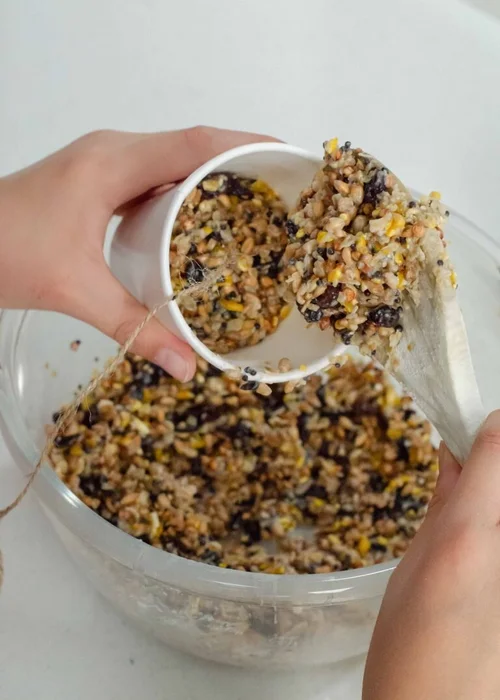
Start by combining the dry ingredients, then add water little by little. Stir well until the mixture feels like damp dough.
- Use a large bowl for mixing
- Stir with a spoon or your hands
- Add water slowly to avoid a wet mix
- Mix until the dough sticks when pressed
Shaping Seed Balls
Shaping bird seed balls is a fun and simple way to create bird feeders. You only need a few materials and some patience. This guide explains how to form and dry seed balls for the best results.
Making seed balls helps feed birds during cold months. Proper shaping and drying keep the seed balls intact and ready for outdoor use.
Forming The Balls
Start by mixing birdseed with clay and water until the mixture feels like dough. Use your hands to shape the mixture into small balls about the size of a walnut. Make sure the balls are firm but not too hard.
- Take a small amount of the mixture in your hand
- Roll it gently between your palms
- Press lightly to compact the seeds
- Shape into round balls about 1 to 1.5 inches wide
- Set the formed balls on a tray or plate
Drying Tips
Drying seed balls properly ensures they hold together well. Place them in a warm, dry area with good air circulation. Avoid direct sunlight, as it can make the balls crack.
| Drying Condition | Recommended Time | Notes |
|---|---|---|
| Room Temperature | 24 to 48 hours | Keep away from moisture |
| Well-Ventilated Area | 24 hours | Speeds up drying |
| Direct Sunlight | Not recommended | May cause cracks |
Credit: www.sbfprize.org
Choosing Locations
Choosing the right spot to place your bird seed balls helps birds find food easily. It also keeps the seed balls safe from weather and animals. Good location choices assist in attracting wild birds and make your garden a friendly place for wildlife. Think about the place carefully before putting seed balls there.
Ideal Spots In Your Garden
Pick quiet, sheltered spots that protect seed balls from rain and wind. Look for places where birds like to visit and feel safe.
- Hang seed balls on tree branches away from strong wind.
- Place them near bushes for cover and quick escape.
- Avoid spots close to busy pathways or pet areas.
- Choose sunny or partly shaded areas to keep seeds dry.
- Keep seed balls at least 4 feet off the ground to avoid pests.
Safety For Wildlife
Safety is important to protect birds and other animals that may visit your seed balls. Avoid harmful locations and materials.
| Safety Tip | Reason |
| Avoid placing seed balls near roads | Reduces risk of bird accidents |
| Keep away from areas with heavy pet traffic | Prevents disturbance and harm to birds |
| Use natural ingredients only | Protects birds from toxins |
| Place seed balls out of reach of rodents | Prevents seed loss and rodent harm |
| Check seed balls regularly | Removes mold or spoiled seeds |
Maintaining Seed Balls
Seed balls need care to stay useful for birds. Proper maintenance helps seeds grow well.
Check seed balls often to keep them fresh and safe for wildlife.
Replacing Old Seed Balls
Seed balls can get old and lose their seeds. Replace them to keep feeding birds. Look for seed balls that are cracked or moldy. These should be taken away and replaced to continue attracting wild birds effectively.
-
Remove seed balls that look dry or broken
-
Put new seed balls in the same spots
-
Use fresh seeds to make new seed balls
-
Keep seed balls away from wet areas to prevent mold
Monitoring Wildlife Activity
Watch how birds and animals use the seed balls. This helps you know if they work well. Note which birds visit and how often. This shows if you have achieved your goal of attracting wild birds to your yard.
-
Check seed balls daily or weekly
-
Note bird types and numbers
-
Look for signs of seed eating or damage
-
Adjust seed ball placement if needed

Credit: www.youtube.com
Benefits For Birds And Environment
Bird seed balls are small, easy-to-make treats for birds. They help birds find food, especially in winter. Making seed balls also helps the environment by supporting plant growth and wildlife.
These seed balls provide food and shelter for many bird species. They also promote a healthy ecosystem by encouraging natural habits in birds and plants.
Supporting Local Wildlife
Bird seed balls give local birds a reliable food source. This helps birds survive during harsh weather and food shortages. Feeding birds supports their health and energy.
Providing food also attracts different bird species to your area. This helps keep local wildlife active and balanced.
- Helps birds find food in winter
- Supports bird health and energy
- Attracts various bird species
- Encourages natural bird activity
Encouraging Biodiversity
Seed balls can contain native seeds that grow into plants. These plants provide food and shelter for many animals. This helps increase the variety of plants and animals in the area.
More plant types mean more habitats for insects, birds, and small animals. Biodiversity helps nature stay strong and balanced.
- Promotes growth of native plants
- Provides habitats for insects and animals
- Increases variety of local species
- Supports a balanced ecosystem
Frequently Asked Questions
What Ingredients Are Needed To Make Bird Seed Balls?
To make bird seed balls, you need bird seed, flour, water, and peanut butter. Mix these well to bind the seeds. Optional ingredients include cornmeal or gelatin to improve shape and durability.
How Do You Form And Dry Bird Seed Balls?
Shape the mixture into small balls using your hands. Place them on wax paper or a tray. Let them air dry for 24-48 hours until firm and dry.
Can Bird Seed Balls Attract Different Bird Species?
Yes, bird seed balls attract many species like finches, sparrows, and chickadees. Using mixed seeds increases variety. Place them in visible, safe locations to attract more birds.
Where Should I Hang Or Place Bird Seed Balls?
Hang seed balls with string from tree branches or place them on feeders. Choose sheltered spots away from predators and harsh weather to protect the balls and birds.
Conclusion
Now that you know How to Make Bird Seed Balls, you can enjoy this simple and rewarding project. Birds enjoy these tasty treats. You help nature by feeding them. Plus, it's a fun activity for all ages. Gather your supplies and start today. Watch the birds flock to your yard. It's an easy way to support local wildlife. And brings joy to your outdoor space. Your efforts make a difference. Remember to hang them in safe spots. Keep cats and other predators away. Enjoy watching the birds feast. Happy birdwatching!