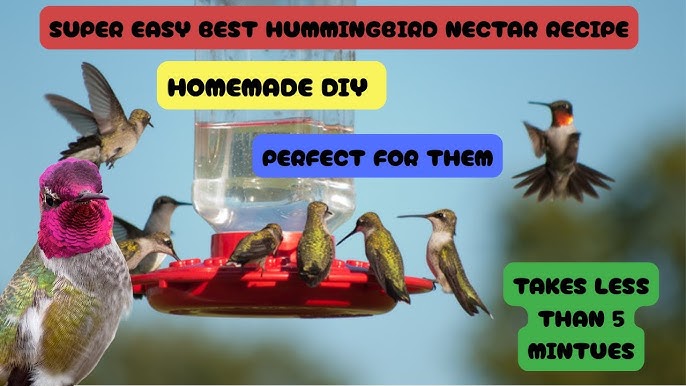
If you love watching hummingbirds visit your garden, you know how magical it feels to see their vibrant colors up close. But have you ever wondered how to keep these tiny birds coming back again and again?
The secret lies in the nectar you offer. Making your own hummingbird nectar is easier than you think, and it can make a huge difference in attracting these beautiful creatures. In this guide, you’ll discover simple steps to create the perfect nectar that hummingbirds can’t resist.
Ready to turn your backyard into a hummingbird haven? Let’s get started!

Credit: www.allaboutbirds.org
Ingredients Needed
Making hummingbird nectar is simple. You only need a few basic ingredients.
These ingredients are safe and easy to find. They help attract hummingbirds to your feeder.
Water
Water is the main ingredient in hummingbird nectar. Use clean, fresh water.
Tap water is fine if it tastes good. Boil the water to remove impurities if needed.
White Granulated Sugar
Use white granulated sugar only. It dissolves well and is safe for hummingbirds.
Do not use honey, artificial sweeteners, or brown sugar. These can harm the birds.
Optional Ingredients
Some people add a pinch of salt or baking soda. These are not necessary for nectar.
Avoid adding red dye or any colorants. Natural nectar does not have added colors.
Choosing The Right Sugar
Making hummingbird nectar is easy with the right sugar. The sugar you use affects the nectar's quality and safety for birds.
Using the correct sugar helps keep hummingbirds healthy and attracts them to your feeder.
White Granulated Sugar
White granulated sugar is the best choice for hummingbird nectar. It dissolves well and is safe for birds.
This sugar provides the right amount of energy hummingbirds need during their flights.
Avoiding Honey And Artificial Sweeteners
Honey is not safe for hummingbirds. It can cause harmful mold growth in the nectar.
Artificial sweeteners do not provide energy. They can harm the birds and should never be used.
Water Quality Tips
Good water quality is important for making hummingbird nectar. Clean water helps keep birds healthy and safe. This guide explains how to choose and prepare water for nectar.
Two key points are whether to use tap or distilled water and how to boil water to make it safe. Follow these tips for the best nectar.
Using Tap Vs. Distilled Water
Tap water is easy to get but may contain chemicals like chlorine or fluoride. Distilled water is pure but costs more and takes effort to buy or make.
- Tap water is usually safe if filtered or left to sit overnight.
- Distilled water has no minerals or chemicals.
- Using distilled water may reduce the chance of mold or bacteria.
- Filtered tap water is a good balance of convenience and safety.
- Avoid using well water if it is not tested for safety.
Boiling Water For Safety
Boiling water kills bacteria and other germs that might harm hummingbirds. Use boiling to make sure your nectar stays fresh and safe.
| Boiling Tip | Details |
| Boil Time | Bring water to a rolling boil for 1 minute |
| Cooling | Let water cool completely before mixing nectar |
| Storage | Store boiled water in a clean, covered container |
| Frequency | Boil fresh water each time you make nectar |
Step-by-step Nectar Preparation
Making hummingbird nectar at home is simple and safe. You only need two ingredients. This guide shows you how to prepare the nectar correctly.
Follow the steps carefully to keep the nectar fresh and healthy for hummingbirds.
Measuring Ingredients
Accurate measuring helps keep the nectar healthy. Use clean measuring cups or spoons for best results.
- Measure 1 part white granulated sugar.
- Measure 4 parts clean water.
- Do not use honey, artificial sweeteners, or red dye.
Mixing And Cooling Process
Mix the sugar and water carefully. Heat helps dissolve the sugar faster but cool the mixture before use.
| Step | Action | Details |
|---|---|---|
| 1 | Boil Water | Bring 4 cups of water to a boil to kill impurities. |
| 2 | Add Sugar | Stir in 1 cup of sugar until fully dissolved. |
| 3 | Cool | Let the nectar cool to room temperature before filling feeders. |
| 4 | Store | Keep extra nectar in the refrigerator up to one week. |
Storing Hummingbird Nectar
Proper storage keeps hummingbird nectar fresh and safe. Good storage prevents mold and bacteria growth.
Learn how to store nectar in the right containers. Also, understand its shelf life and refrigeration needs.
Best Containers
Use clean, airtight containers to store hummingbird nectar. Glass jars or plastic bottles with tight lids work well.
Avoid metal containers because they can react with the nectar. Make sure containers are easy to clean.
- Glass jars with screw-on lids
- Plastic bottles designed for food storage
- Containers that seal tightly to prevent spills
Shelf Life And Refrigeration
Hummingbird nectar lasts about 3 to 5 days at room temperature. After that, it can spoil quickly.
Store nectar in the refrigerator to extend its shelf life up to one week. Cold slows bacteria and mold growth.
- Keep nectar refrigerated if not used within 1 day
- Discard nectar if it looks cloudy or smells bad
- Make fresh nectar every few days for best results

Credit: www.youtube.com
Cleaning Feeders Regularly
Keeping hummingbird feeders clean is important for the birds' health. Dirty feeders can grow mold and bacteria. These can make birds sick and stop them from visiting.
Regular cleaning helps keep the nectar fresh. It also protects hummingbirds from harmful germs. You should clean feeders often to keep them safe.
Preventing Mold And Bacteria
Mold and bacteria grow fast in sweet nectar. Warm weather makes this worse. To stop this, clean all feeder parts well. Use hot water and a brush to scrub inside.
- Empty the feeder before cleaning
- Use a mild soap or vinegar solution
- Rinse feeders thoroughly to remove soap
- Dry all parts completely before refilling
- Check for cracks or damage that hold mold
Recommended Cleaning Frequency
| Condition | Cleaning Frequency |
| Hot, humid weather | Every 2 to 3 days |
| Cooler weather | Once a week |
| If nectar looks cloudy | Clean immediately |
| Before refilling | Always clean |
Common Mistakes To Avoid
Making hummingbird nectar is simple, but some errors can harm the birds. Avoid these common mistakes to keep hummingbirds safe and healthy.
Using the right ingredients and mixing the nectar properly helps attract hummingbirds without causing harm.
Overly Concentrated Nectar
Too much sugar in the nectar can hurt hummingbirds. It makes the nectar hard for them to digest and can cause health problems.
Stick to the right sugar-to-water ratio for safe nectar. The usual mix is four parts water to one part sugar.
- Use plain white granulated sugar
- Do not add more than one part sugar
- Mix well until sugar dissolves completely
- Never use honey or artificial sweeteners
Using Unsafe Ingredients
Some ingredients can harm hummingbirds. Avoid anything besides white granulated sugar and water.
Do not use honey, artificial sweeteners, or food coloring. These can cause illness or attract dangerous insects.
- Do not use honey because it promotes harmful bacteria
- Avoid artificial sweeteners; they have no nutrition
- Skip red food coloring; it is not needed and can be toxic
- Use clean water to prevent mold and bacteria growth
Tips For Attracting More Hummingbirds
Hummingbirds love fresh nectar and safe places to feed. You can help attract more hummingbirds by offering the right food and placing feeders correctly.
Simple changes in how and where you put feeders make a big difference. Adding extra food sources also draws these tiny birds to your yard.
Placing Feeders Correctly
Place hummingbird feeders in a shady spot to keep nectar fresh longer. Avoid direct sunlight, which can spoil the nectar quickly.
Hang feeders where hummingbirds can easily see them. Near flowers or plants they like is best. Also, keep feeders away from windy areas to prevent spills.
- Use hooks or branches to hang feeders at eye level.
- Keep feeders 10 to 15 feet apart to reduce fighting.
- Clean feeders every few days to stop mold and bacteria.
Additional Food Sources
Planting flowers that produce nectar is a natural way to attract hummingbirds. Choose native, brightly colored flowers like red, orange, or pink.
Offer insects as a protein source by letting some garden areas grow wild or adding a small water source for bugs. Hummingbirds need insects for a balanced diet.
- Plant tubular flowers such as trumpet vine and bee balm.
- Include a variety of bloom times for constant nectar supply.
- Keep a small pond or birdbath for insects and drinking water.

Credit: www.youtube.com
Frequently Asked Questions
What Is The Best Sugar For Hummingbird Nectar?
The best sugar for hummingbird nectar is plain white granulated sugar. It closely mimics the natural sugars found in flower nectar. Avoid using honey, brown sugar, or artificial sweeteners. These can harm hummingbirds and lead to health issues.
How Often Should I Change Hummingbird Nectar?
Change hummingbird nectar every 2-3 days, especially in hot weather. Fresh nectar prevents mold and bacteria, ensuring the health of hummingbirds. If temperatures are cooler, changing it every 4-5 days is acceptable.
Can I Use Tap Water For Hummingbird Nectar?
Yes, you can use tap water for hummingbird nectar. Boil it to kill impurities and dissolve the sugar. Boiling also helps to mix the sugar evenly and ensure a safe and inviting nectar solution for the birds.
Is Red Dye Necessary In Hummingbird Nectar?
Red dye is unnecessary and potentially harmful in hummingbird nectar. Most feeders already have red parts to attract birds. Providing plain nectar is safer for their health and avoids any potential risks associated with artificial dyes.
Conclusion
Making hummingbird nectar is simple and quick. Just mix sugar and water in the right amount. Avoid using honey or artificial sweeteners. Clean feeders often to keep birds safe and healthy. Fresh nectar attracts hummingbirds to your garden. Watching these tiny birds brings joy and calm.
Enjoy the beauty and help nature thrive nearby. Keep your feeder filled, and hummingbirds will visit. Try it today and see the magic unfold.