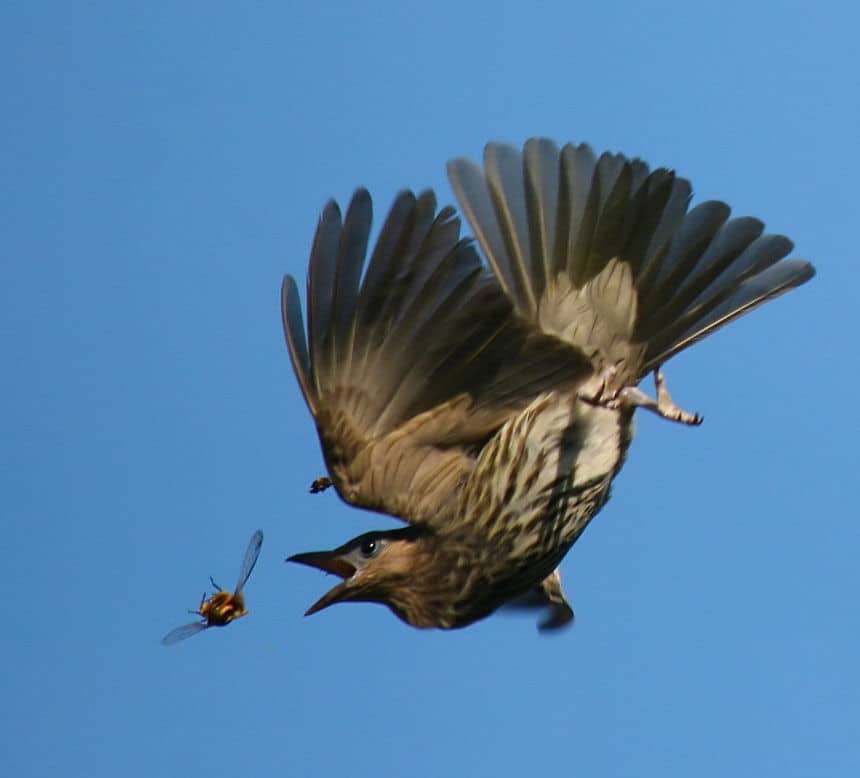
Have you ever watched a bird dart out from a branch, snatch an insect midair, and then quickly return to its perch? If you’re curious about which bird uses this clever hunting style called “sallying,” you’re in the right place.
Understanding this behavior can change the way you see birds and nature around you. Keep reading to discover the fascinating bird that loves to sally for insects, and learn how this skill helps it survive and thrive. Your next birdwatching adventure might just get a lot more exciting!

Credit: vocal.media
Birds That Hunt By Sallying
Sallying is a hunting method used by many birds to catch insects in the air. These birds wait on a perch and quickly fly out to catch flying insects. This behavior helps them catch food efficiently.
Birds that use sallying often have sharp eyesight and quick reflexes. They watch for insects and then fly out just long enough to grab their prey before returning to their perch.
What Is Sallying Behavior
Sallying is a hunting style where birds launch from a perch to catch insects midair. After catching the insect, they usually return to the same perch. This is different from birds that hunt on the ground or in foliage.
- Bird stays still on a perch
- Spot flying insects nearby
- Fly quickly to catch the insect
- Return to the perch to eat or rest
Advantages Of Sallying For Insect Hunting
Sallying allows birds to conserve energy by staying in one spot. They only fly short distances to catch food. This method also helps them catch fast-moving insects that other hunting styles might miss.
| Advantage | Explanation |
| Energy Efficient | Birds fly short distances from perch, saving energy. |
| Better Insect Capture | Quick flights allow catching fast or flying insects. |
| Good Visibility | Perch gives clear view to spot prey easily. |
| Safety | Birds avoid long flights, reducing exposure to predators. |
Flycatchers: Masters Of The Air
Flycatchers are birds that catch insects while flying. They are expert hunters in the sky. Their quick moves help them catch food easily.
These birds use sharp eyesight and fast wings. They often sit on a branch and wait for prey. Then they fly out to grab insects in midair.
Types Of Flycatchers
There are many kinds of flycatchers. Some live in forests, others in open fields. Each type has unique features and habits.
- Pygmy Flycatchers: Small and quick, found in woodlands.
- Kingbird Flycatchers: Larger, known for bold colors and loud calls.
- Pewee Flycatchers: Medium size, often found near water.
- Elaenia Flycatchers: Tropical birds with soft songs.
- Great Crested Flycatchers: Notable for their crest and strong flight.
Hunting Techniques And Flight Patterns
Flycatchers use special ways to catch insects. They often sally, which means flying out from a perch to catch prey. Then they return to the same spot.
| Technique | Description |
| Sallying | Fly from a perch to catch flying insects, then return. |
| Hovering | Stay in one place in the air to grab insects on leaves. |
| Gleaning | Pick insects off leaves or bark while perched. |
| Flycatching | Quick aerial chase to catch insects in flight. |
Flight patterns vary by species. Some fly in short bursts, others glide slowly. These moves help them spot and catch insects efficiently.
Swallows And Their Aerial Feats
Swallows are small birds famous for flying skillfully in the sky. They catch insects while flying fast and turning quickly.
These birds use their speed and sharp movements to catch insects in the air. They are experts at flying and hunting.
Adaptations For Agile Flight
Swallows have long, pointed wings that help them fly fast and change direction quickly. Their bodies are slim to reduce air resistance.
They have strong chest muscles for quick wing beats. Their tails are forked, which helps them balance and steer while flying.
- Long, pointed wings for speed
- Slim body to cut through air
- Strong chest muscles for fast wing beats
- Forked tail for steering and balance
Diet And Hunting Strategy
Swallows eat mostly flying insects like flies, mosquitoes, and beetles. They catch insects while flying high or low over fields and water.
They hunt by flying with wide open mouths to scoop insects. Swallows also chase insects in quick dives and sharp turns.
- Eat flying insects such as flies and mosquitoes
- Catch insects with open mouths during flight
- Use quick dives and sharp turns to catch prey
Credit: owlcation.com
Warblers That Use Sallying
Some warblers catch insects by sallying. Sallying means flying out from a perch to catch bugs in the air.
This hunting style helps warblers find food quickly. They often return to the same perch after each catch.
Common Warbler Species
Many warblers use sallying to catch insects. The Yellow Warbler and Black-and-white Warbler are good examples.
The Tennessee Warbler and the Northern Parula also use sallying. Each warbler has a favorite perch and flight style.
- Yellow Warbler: bright yellow with some streaks
- Black-and-white Warbler: striped black and white feathers
- Tennessee Warbler: gray-green with white underparts
- Northern Parula: small with blue-gray back and yellow throat
Insect Prey And Foraging Style
Warblers catch flying insects like flies, moths, and mosquitoes. They watch carefully from their perch.
When they spot an insect, they fly out quickly to grab it. Then, they return to the perch to eat or look for more.
- Flies
- Moths
- Beetles
- Gnats
- Mosquitoes
Other Notable Sallying Birds
Many birds use sallying to catch insects in the air. Sallying means they fly out from a perch to grab prey.
This hunting style helps birds catch flying insects fast and easy. Some birds are very skilled at sallying.
Swifts And Their Speed
Swifts are among the fastest birds in the sky. They sally out quickly to catch insects while flying.
They have long, narrow wings that help them glide and turn fast. Swifts spend most of their time in flight.
- Swifts rarely land on the ground
- They catch insects mid-air at high speeds
- Swifts use their speed to outmaneuver prey
Phoebes And Their Perch Hunting
Phoebes are small birds that hunt by sallying from low perches. They watch for insects from a branch or wire.
When a phoebe spots an insect, it flies out to catch it in the air. Then it returns to its perch to eat or watch again.
- Phoebes prefer open areas with good perches
- They catch flies, beetles, and other flying bugs
- Perch hunting helps phoebes save energy
How Environment Affects Sallying
Sallying is when birds catch insects in the air by flying out from a perch. Many birds use this method to find food. The environment plays a big role in how well they can sally.
Birds that like to sally depend on the types of habitats and the number of insects available. These factors change with the seasons and affect their hunting success.
Habitat Preferences
Birds that sally for insects prefer habitats where they can easily spot and catch flying insects. Open areas with some trees or shrubs are common choices. These spots give birds good perches and clear airspace for hunting.
Different species have different habitat needs. Some like forests, while others prefer wetlands or grasslands. The right habitat helps birds find more food and stay safe from predators.
- Open woods with tall trees
- Edges of forests and clearings
- Wetlands with plenty of insects
- Grasslands with scattered shrubs
Seasonal Changes In Insect Availability
Insects are more active in warm months. Birds that sally have more food during spring and summer. Cold seasons bring fewer flying insects, which makes hunting harder.
Birds may change their hunting style or move to different areas when insect numbers drop. Some migrate to find better food sources. Seasonal changes affect how often and how far birds sally.
- Spring and summer: many insects flying
- Fall: insect numbers start to drop
- Winter: few flying insects available
- Birds may migrate or change diet in cold seasons
Tips For Spotting Sallying Birds
Sallying birds catch insects in mid-air by flying out from a perch. Watching them can be fun and rewarding.
To spot these birds, you need to know where and when to look. Also, watch their flight patterns closely.
Best Locations And Times
Look for sallying birds near open spaces with scattered trees. Parks, forest edges, and gardens are good spots.
- Early morning and late afternoon are the best times to see them.
- Warm days increase insect activity, attracting sallying birds.
- Near water bodies, you may find more insects and birds hunting.
- Quiet areas help you notice the birds’ quick flight movements.
Identifying Flight Patterns
Sallying birds fly out in short bursts from a perch to catch insects. Their flight is quick and direct.
| Flight Pattern | Description |
| Short Dash | Bird flies out quickly, grabs insect, and returns to perch. |
| Hover and Snatch | Bird hovers briefly before catching insects in the air. |
| Looping Flight | Bird makes curved flights to follow insect movements. |

Credit: www.dmackdimages.co.uk
Frequently Asked Questions
What Bird Species Sally For Insects In The Air?
Flycatchers are the primary birds that sally for insects mid-air. They catch flying insects by darting from a perch. This behavior is common among many flycatcher species worldwide.
Why Do Birds Sally Out For Insects?
Birds sally to catch fast-moving insects that are hard to grab on the ground. This hunting method is energy-efficient and helps them feed quickly during active insect periods.
How Do Sallying Birds Catch Insects?
Sallying birds perch and watch for flying insects. They then quickly fly out, snatch the insect mid-air, and return to their perch to eat it.
Which Habitats Support Sallying Insectivorous Birds?
Woodlands, forests, and gardens with abundant perches and insect populations support sallying birds. These habitats provide ideal conditions for hunting and nesting.
Conclusion
Birds that sally for insects offer an amazing spectacle. Their quick movements and keen eyes make them masters of the sky. Observing these birds can teach us about nature’s balance. They play a vital role in controlling insect populations. This behavior highlights their adaptability and survival skills.
Witnessing their aerial acrobatics connects us to the natural world. Next time you’re outside, watch for these lively hunters. Appreciate their skill and beauty as they dance through the air. Understanding their habits enriches our connection to nature. And it reminds us of the delicate balance of ecosystems.