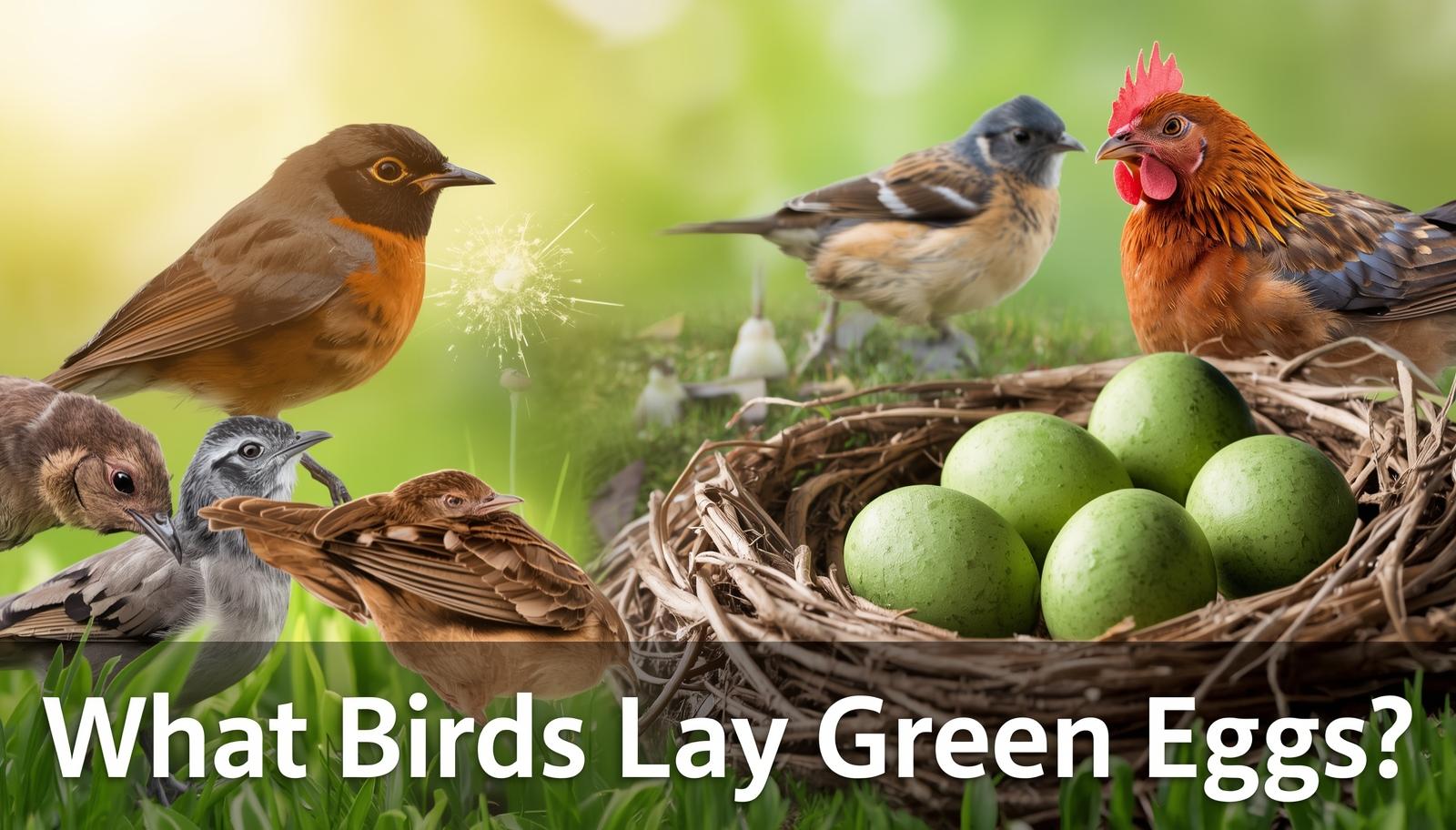
Have you ever stumbled upon a bird’s nest and noticed eggs that aren’t the usual white or brown, but a striking green? It might surprise you to learn that several species of birds lay green eggs, each with its own story and reason behind this unusual color.
If you’re curious about what birds lay green eggs and why, you’re in the right place. Keep reading, and you’ll discover fascinating facts that will change how you see bird nests forever. Your next backyard birdwatching experience will never be the same!
Birds That Lay Green Eggs
Some birds lay eggs that are green in color. These eggs can range from light blue-green to dark green shades. The green color helps protect the eggs from sunlight and predators.
Egg color depends on the bird species and environment. Green eggs are less common than white or brown eggs but are found in many bird families.
Common Species With Green Eggs
Many common birds lay green eggs. These birds live in various habitats like forests, gardens, and wetlands. Their green eggs blend well with leaves and nests.
- American Robin – Their eggs are light blue-green and speckled.
- Eastern Phoebe – Lays pale green eggs in sheltered spots.
- Emu – Lays dark green, almost black eggs.
- Greenfinch – Their eggs have a greenish tint with spots.
- Australian Dollarbird – Known for bright green eggs.
Field ornithologists use a common descriptor: “The eggs of the American Robin (Turdus migratorius) are perhaps the most famous example of a colored egg in North America. Their unique, uniform light blue-green shade is so distinctive that it has its own colloquial name in the birding community: ‘Robin’s Egg Blue.’ This hue is almost entirely derived from the pigment biliverdin, with very little influence from brown protoporphyrin, resulting in a cleaner, brighter color than most other green-tinted eggs.”
Rare Birds And Their Unique Eggs
Some rare birds lay green eggs that are unique in shade and size. These eggs are often found in remote places or special habitats. They may have patterns or unusual colors mixed with green.
- Kakapo – A rare parrot from New Zealand with pale green eggs.
- Leafbird – Lays green eggs that match the leaves around the nest.
- Broad-billed Roller – Their eggs have a greenish-blue tint.
- Green Heron – Lays olive-green eggs in dense marshes.
Reasons Behind Green Egg Color
Some birds lay eggs with a green color. This color is not common. It comes from special pigments in the eggshell.
Green eggs help birds in different ways. They can protect the eggs and help them survive better.
Pigments Responsible For Green Hue
The green color comes from pigments called biliverdin and protoporphyrin. Biliverdin gives a blue-green shade. Protoporphyrin adds brown tones. Together, they create green eggs.
- Biliverdin: A pigment made from breaking down hemoglobin.
- Protoporphyrin: A red-brown pigment that mixes with biliverdin.
- Pigment Amount: The mix and amount decide the shade of green.
Evolutionary Benefits Of Green Eggs
Green eggs give birds certain advantages. These benefits help protect eggs from predators and the environment.
| Benefit | Description |
| Camouflage | Green eggs blend with leaves and grass. This hides them from predators. |
| Thermal Regulation | Green shells can reflect heat, keeping eggs cooler in sunlight. |
| Shell Strength | Pigments may help make eggshells harder and less likely to crack. |
| Signaling | Color may signal the health of the mother bird to mates. |
Egg Color And Nesting Habits
Many birds lay green eggs, which serve specific purposes in nature. These eggs often blend with their surroundings.
Understanding egg color and nesting helps explain how birds protect their young from predators.
Camouflage And Predation
Green eggs help birds hide their nests from predators. The color matches leaves and moss.
- Green eggs are less visible in leafy nests.
- Some birds lay speckled green eggs for extra camouflage.
- Egg color reduces the risk of predation by blending in.
- Predators like snakes and crows find it harder to spot green eggs.
Nest Location And Egg Visibility
Birds that lay green eggs often choose hidden or shaded nest sites. This lowers egg visibility further.
| Bird Species | Nest Location | Egg Color |
| American Robin | Tree branches with leaves | Blue-green |
| Green Heron | Dense shrubs near water | Greenish-blue |
| European Starling | Tree cavities or nests | Light green |
| House Finch | Bushes or building ledges | Green-tinted |

Credit: www.headfamilyfarm.com
Variations In Egg Color Shades
Many bird species lay green eggs, but the color can vary widely. These shades range from light green to deep olive.
The differences in egg color come from pigments and other factors. These changes help eggs blend into their environment.
From Pale Green To Deep Olive
Some birds lay eggs with a very light green shade. These pale green eggs look almost pastel or mint.
Other birds lay eggs that are dark green or olive. These eggs have a richer, deeper color that can look almost brown.
- Pale green eggs are common in birds like the American Robin.
- Medium green eggs can be found in species such as the Eastern Bluebird.
- Deep olive eggs are laid by birds like the European Starling.
Factors Influencing Color Intensity
The green color in eggs comes from pigments called biliverdin. The amount of biliverdin affects how dark the egg looks.
Other factors also change egg color. These include the bird’s diet, environment, and genetics.
- More biliverdin leads to a darker green or olive color.
- Birds eating certain foods may produce more pigment.
- Genetic differences cause variations within the same species.
- Eggs exposed to sunlight may fade or change color slightly.
Cultural Significance Of Green Eggs
Green eggs are rare and often surprise people. Different cultures see them in special ways.
These eggs appear in stories and art. They carry meanings beyond just being bird eggs.
Folklore And Symbolism
Many old stories use green eggs as symbols of new life and hope. They show nature’s mystery.
Some cultures believe green eggs bring good luck. They can mean health, growth, or magic.
- Green eggs represent renewal and spring in some tales
- They are symbols of fertility and abundance
- Some legends say green eggs protect homes from harm
Green Eggs In Art And Literature
Artists use green eggs to show nature’s beauty and mystery. They add color and meaning to their work.
Writers include green eggs in stories to create wonder. They often symbolize something special or rare.
- Green eggs appear in children’s books to spark imagination
- They feature in paintings about life and growth
- Poets use green eggs as a metaphor for hope and change

Credit: www.reddit.com
How To Identify Green Egg Birds
Some birds lay green eggs, which helps protect the eggs in their natural environment. Identifying these birds can be fun and educational.
Green eggs come from specific bird species. Learning about their looks and behavior makes spotting them easier.
Field Identification Tips
Birds that lay green eggs often have unique features. Look closely at their size, color, and habitat.
Many green egg birds live near water or in wooded areas. Watch for nests in bushes or trees.
- Check the bird’s beak shape and size.
- Note the color patterns on feathers.
- Observe the bird’s usual resting spots.
- Look for nests with greenish eggs inside.
Behavioral Traits To Watch
Birds that lay green eggs often show specific behaviors. These help protect their eggs and young chicks.
Many green egg birds are shy and stay close to their nests. They may become quiet to avoid drawing attention.
- Watch for birds that sit low in the nest to hide eggs.
- Notice if the bird is active during early morning or late evening.
- Observe feeding habits near water or dense foliage.
- Look for birds that fiercely protect their nesting area.

Credit: www.birdfy.com
Frequently Asked Questions
Which Bird Species Lay Green Eggs?
Several bird species lay green eggs, including American Robins, Eastern Bluebirds, and some parrot species. The green color helps camouflage eggs in nests.
Why Do Some Birds Lay Green Eggs?
Birds lay green eggs mainly for camouflage. The green color helps protect eggs from predators by blending with leaves and surroundings.
Are Green Eggs Stronger Than White Eggs?
Green eggs are not stronger than white eggs. Eggshell strength depends on calcium content, not color. Green eggs have similar durability to others.
Do All Parrots Lay Green Eggs?
Not all parrots lay green eggs, but many species do. The shade of green varies from pale to dark depending on the bird.
Conclusion
Green eggs truly intrigue bird enthusiasts worldwide. Birds like emus, cassowaries, and some ducks lay them. These unique eggs offer a glimpse into nature’s diversity. Observing them can spark curiosity and wonder. Birdwatchers might find these eggs in specific habitats.
Learning about birds’ nesting habits enhances appreciation. Nature’s mysteries continue to fascinate us. Green eggs are just one example. Each bird species has its own story. Exploring these stories enriches our understanding of wildlife. The vibrant world of birds never ceases to amaze.
Keep exploring, and discover more wonders in nature.