
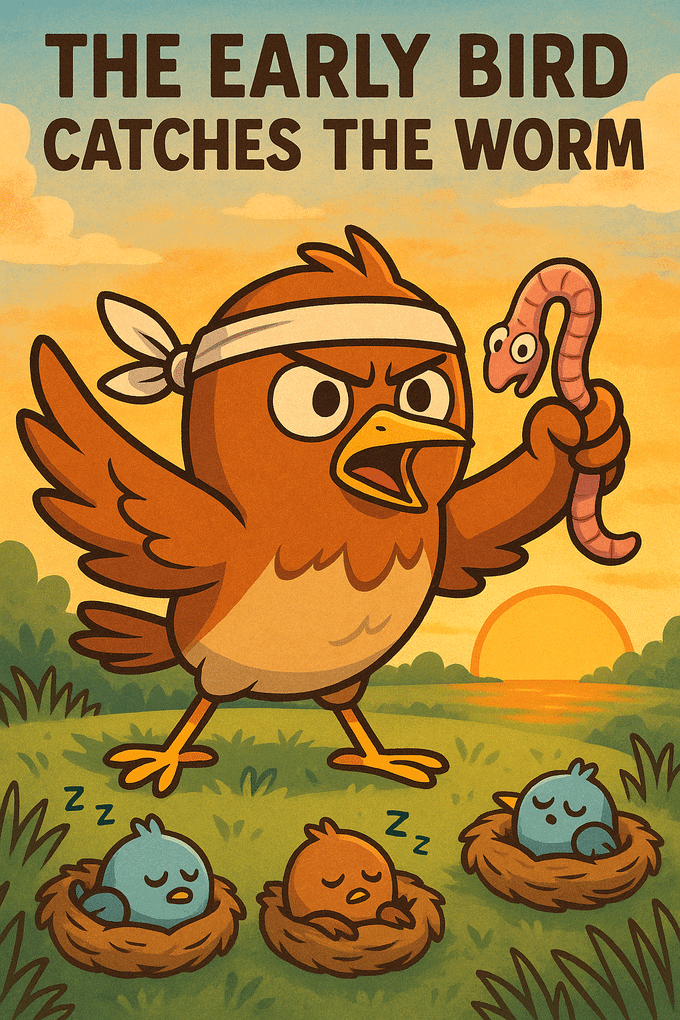
Have you ever heard the saying, “The early bird gets the worm,” and wondered where it actually comes from? It’s a phrase you’ve probably used or heard countless times, especially when talking about being on time or taking advantage of opportunities.
But do you know why this simple sentence has stuck around for so long? Understanding its origin can change how you see the idea of being early and why it matters for your success. Keep reading, and you’ll discover the surprising story behind this popular saying—and how it can inspire you to take action in your own life.
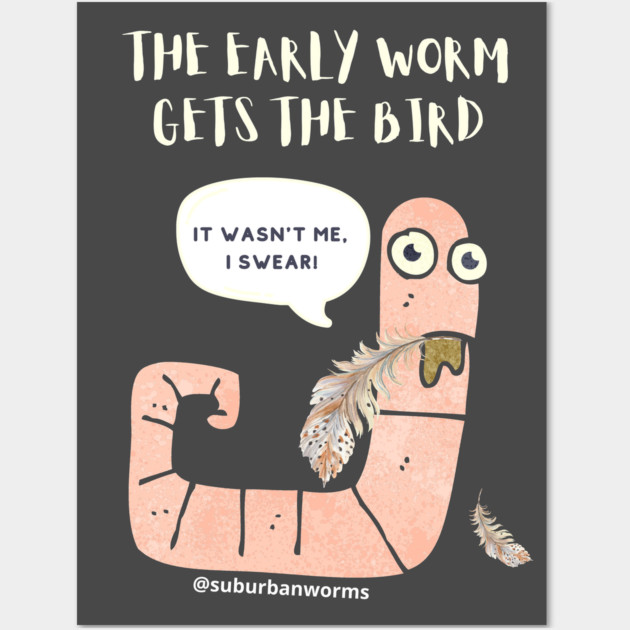
Credit: www.teepublic.com
Origins Of The Phrase
The phrase “The early bird gets the worm” means people who act early have an advantage. It suggests success comes to those who start tasks before others.
This saying has been used for many years in English-speaking countries. Its origin shows a connection to nature and hard work.
Historical Context
The phrase comes from the idea that birds who wake up early catch worms first. Worms are easier to find at dawn, so early birds get food first.
Farmers and workers noticed this behavior and used it as a lesson. They linked early rising with success and productivity.
- Birds search for worms early in the morning
- Worms are less hidden at dawn
- Early workers get more done during the day
Earliest Recorded Uses
The phrase first appeared in print in the 17th century. It was used in English books and proverbs to teach good habits.
One of the earliest known uses is in John Ray’s collection of proverbs from 1670. It showed the value of starting work early.
- 1670: John Ray’s “A Collection of English Proverbs”
- Early 18th century: Common in English speech
- 19th century: Popular in American and British cultures
Meaning Behind The Saying
The phrase “The early bird gets the worm” is a well-known saying. It teaches an important life lesson about time and effort.
This phrase encourages people to act quickly and be on time to gain rewards or advantages.
Literal Interpretation
Literally, the saying means that a bird that wakes up early catches more worms. Worms are a food source for birds, and they are easier to find early in the morning.
Birds that start their search for food early have a better chance of finding worms before other birds.
- Birds hunt worms mainly in the morning.
- Worms are more active and near the surface early in the day.
- Early birds avoid competition for food with others.
Figurative Significance
The phrase is often used to teach people the value of being early or prompt in life. It means those who start tasks early often succeed more.
| Action | Result |
| Wake up early | More time to complete work |
| Start projects soon | Better chances of success |
| Be prepared ahead | Avoid last-minute problems |
Cultural Impact
The phrase “The early bird gets the worm” is a popular saying about being early and gaining advantages. It has affected many cultures and is used worldwide. People use it to encourage hard work and punctuality.
This saying has roots in English-speaking countries but has spread to many places. It teaches the value of starting tasks early to succeed.
Use In Literature And Media
The phrase appears often in books, movies, and TV shows. Writers use it to show characters who work hard or act quickly.
It also appears in children’s stories and cartoons to teach lessons about effort and timing.
- In literature, it highlights characters’ discipline and success.
- Movies use it to show quick thinking or early action.
- TV shows mention it during advice or moral lessons.
Global Variations
Different cultures have similar sayings with the same meaning. They often use local animals or objects instead of birds and worms.
These variations show how the idea of early effort is valued worldwide.
- In German, “Morgenstund hat Gold im Mund” means “The morning hour has gold in its mouth.”
- In Spanish, “A quien madruga, Dios le ayuda” means “God helps those who wake early.”
- In Chinese, “早起的鸟儿有虫吃” translates directly to “The early bird has worms to eat.”
Modern Usage
The phrase “The early bird gets the worm” still holds value today. It means that people who act quickly get advantages.
This saying appears in many parts of life. People use it to encourage being on time and working hard.
In Everyday Language
People use this phrase to remind others to start early. It often refers to small daily activities.
- Waking up early to finish tasks
- Arriving on time for appointments
- Being the first to try new things
- Planning ahead for better results
In Business And Motivation
In work and motivation, the phrase means acting fast leads to success. Businesses use it to inspire employees.
| Context | Meaning |
| Start projects early | Gain competitive edge |
| Respond quickly to clients | Build trust and loyalty |
| Meet deadlines ahead of time | Show reliability |
| Take initiative | Open new opportunities |
Similar Proverbs Worldwide
The phrase “The early bird gets the worm” means people who act quickly have an advantage. Many cultures have similar sayings that teach the value of being early or prompt.
These proverbs often encourage hard work, punctuality, and seizing opportunities before others do. Let’s look at some examples from different parts of the world.
Comparisons From Different Cultures
In Japan, a similar saying is “The early riser catches the worm.” It also stresses the benefit of starting early. In Germany, people say, “Whoever rises early, finds gold.”
- Spanish: “The one who wakes up early, God helps.”
- Chinese: “The early bird gets the meat.”
- Russian: “God helps those who rise early.”
- Swahili: “The early bird catches the worm.”
Each proverb uses local images but shares the same message. Acting early leads to success or rewards.
Common Themes
Most proverbs focus on being early or prepared. They remind people to avoid laziness and take action quickly.
- Start work early
- Be ready for chances
- Work hard to succeed
- Seize opportunities before others
These ideas show how important time and effort are in many cultures. The message is clear: success often comes to those who act first.

Credit: www.reddit.com

Credit: www.amazon.com
Frequently Asked Questions
What Is The Origin Of “the Early Bird Gets The Worm”?
The phrase dates back to the 17th century and first appeared in English literature. It highlights the benefits of starting tasks early to gain advantages.
Why Does “early Bird Gets The Worm” Matter Today?
It encourages punctuality and proactiveness. Being early often leads to better opportunities and success in many areas of life.
How Did The Phrase Become Popular Worldwide?
The proverb spread through literature, speeches, and education. Its simple message resonates globally, promoting productivity and diligence.
What Is The Meaning Behind “the Early Bird Gets The Worm”?
It means those who act promptly have better chances to succeed. Early effort often leads to rewards others miss.
Conclusion
The phrase “The early bird gets the worm” teaches valuable lessons. It encourages waking up early and being proactive. Originating from old English proverbs, it highlights the benefits of seizing opportunities. Starting your day early can lead to success and productivity.
This timeless saying remains relevant in today’s fast-paced world. So, rise early and take advantage of the chances life offers. Remember, early action often leads to great rewards. The next time you hear this phrase, think of the wisdom it carries.
Embrace it and see positive changes in your life.



