Are you curious about which bird loves snacking on seeds and nuts the most? If you’ve ever watched birds at your feeder or in your backyard, you might have wondered why some birds seem to prefer these crunchy treats.
Knowing which birds enjoy seeds and nuts can help you attract more feathered friends and create a lively, colorful space right outside your window. Keep reading, and you’ll discover the top seed and nut eaters in the bird world—and how you can welcome them to your garden!
Seed And Nut Diets In Birds
Many birds eat seeds and nuts as a key part of their diet. These foods provide energy and nutrients that help birds stay healthy. Different bird species prefer different types of seeds and nuts.
Seeds and nuts are often found in natural habitats and bird feeders. Understanding why birds eat these foods helps us learn about their habits and nutrition.
Why Seeds And Nuts Matter
Seeds and nuts are important for birds because they offer a rich source of energy. Birds need energy for flying, staying warm, and finding food. Seeds and nuts have fats, proteins, and carbohydrates that support these needs.
- Provide energy for daily activities
- Help birds build fat for cold weather
- Support growth and feather development
- Are easy to store for later use
Nutritional Benefits For Birds
Seeds and nuts contain many nutrients birds need. These include healthy fats, proteins, vitamins, and minerals. Each nutrient plays a role in keeping birds strong and healthy.
| Nutrient | Benefit for Birds |
| Fats | Energy and insulation |
| Proteins | Muscle repair and growth |
| Vitamins | Immune system support |
| Minerals | Bone strength and metabolism |

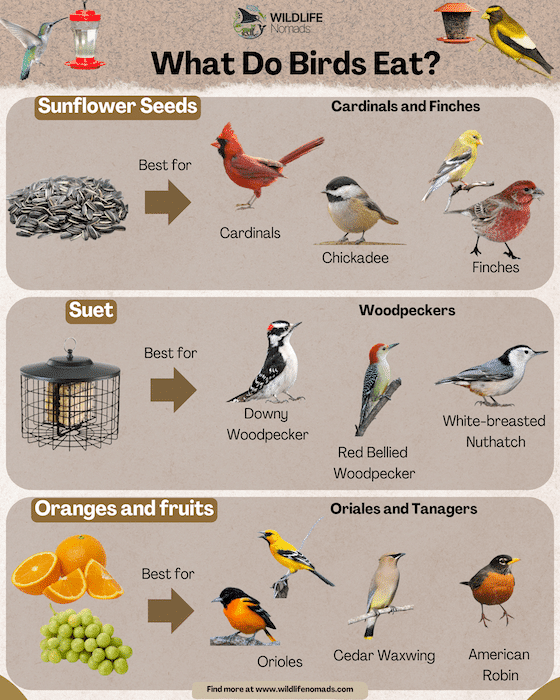
Credit: www.wildlifenomads.com
Common Seed-eating Birds
Many birds eat seeds and nuts as a main part of their diet. These birds have strong beaks to crack open hard shells.
Seed-eating birds are found in many places. They help spread seeds and keep plants growing.
Finches And Their Preferences
Finches love small seeds like sunflower and millet. Their thick, strong beaks help them break tough shells easily.
- House finch prefers sunflower seeds
- Goldfinch likes nyjer and thistle seeds
- Grosbeak eats sunflower and safflower seeds
Sparrows And Seed Choices
Sparrows eat a variety of seeds. They are not very picky and will eat what is available.
| Species | Favorite Seeds |
| House Sparrow | Millet, cracked corn |
| Song Sparrow | Grass seeds, weed seeds |
| Chipping Sparrow | Grass seeds, sunflower |
Doves And Their Diet
Doves mainly eat seeds and small grains. They have soft bills made for picking seeds from the ground.
Common seeds doves eat include:
- Millet
- Sorghum
- Sunflower seeds
- Corn kernels
Top Nut-loving Birds
Many birds enjoy eating seeds and nuts. Some species rely on these foods more than others. They have special habits to find and store nuts.
This guide covers three common nut-loving birds. Learn how woodpeckers, nuthatches, and jays eat and store nuts.
Woodpeckers And Nut Consumption
Woodpeckers use their strong beaks to crack open nuts. They often look for insects inside trees but also eat nuts in fall and winter. These birds help spread tree seeds.
Nuthatches And Their Feeding Habits
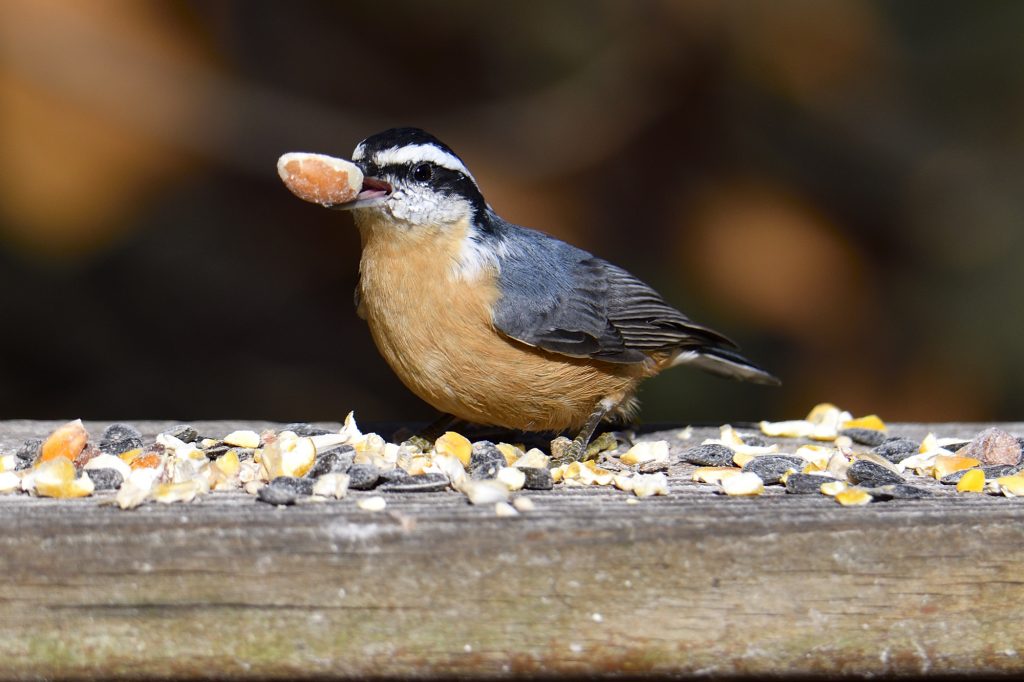
Nuthatches are small birds that climb tree trunks headfirst. They store nuts for later use. Their memory helps them find hidden nuts during cold months.
- Climb down trees to find nuts
- Hide nuts in tree bark crevices
- Remember nut locations for weeks
- Eat seeds and small insects too
Jays And Their Nut Stashes
Jays are smart birds that collect many nuts. They hide nuts in different places to save food. This behavior helps new trees grow when some nuts are forgotten.
| Nut Type | Preferred by Woodpeckers | Preferred by Nuthatches | Preferred by Jays |
|---|---|---|---|
| Acorns | Yes | Yes | Yes |
| Walnuts | Yes | No | Yes |
| Beechnuts | No | Yes | Yes |
| Pine Nuts | Yes | No | Yes |

Credit: www.wildlifenomads.com
Adaptations For Eating Seeds And Nuts
Many birds eat seeds and nuts as part of their diet. They have special features that help them open hard shells and get the food inside. These adaptations make it easier for birds to survive and find energy.
Two main ways birds adapt to eating seeds and nuts are through their beak shapes and their behavior. Each helps them handle tough seeds in different ways.
Beak Shapes And Functions
Birds that eat seeds and nuts usually have strong, thick beaks. These beaks are shaped to crack open hard shells. Some beaks are short and wide, which helps birds crush seeds easily. Others have sharp edges to split nuts.
| Beak Shape | Function |
| Short and thick | Crushes small seeds |
| Strong and hooked | Splits tough nuts |
| Wide and flat | Holds seeds firmly |
Behavioral Techniques
Birds use different behaviors to eat seeds and nuts. Some drop nuts from high places to crack them open. Others use their feet to hold seeds while they peck at them. These techniques help birds get food faster and with less effort.
- Dropping nuts on rocks to break shells
- Using feet to hold seeds steady
- Pecking repeatedly to open shells
- Storing seeds to eat later
Feeding Habits Across Seasons
Birds that eat seeds and nuts change their eating habits with the seasons. Their diet depends on what food is available during different times of the year.
Understanding these changes helps us learn how birds survive and adapt through the year. Some birds rely on seeds and nuts more in certain seasons than others.
Winter Diet Changes
In winter, many birds eat more seeds and nuts. Insects and other foods are hard to find in cold months. Seeds and nuts provide good energy and fats to keep birds warm.
- Birds store seeds in hidden spots to eat later.
- Some birds switch from fruit to nuts in winter.
- Seeds like sunflower and millet are popular winter foods.
- Birds may visit feeders more often to find seeds.
Seed And Nut Availability
Seeds and nuts are more or less available depending on the season. Trees and plants drop seeds and nuts mainly in fall. Birds take advantage of this food supply before winter.
| Season | Seed and Nut Supply | Bird Feeding Behavior |
| Spring | Low | Eat more insects and berries |
| Summer | Moderate | Mix of insects, seeds, and fruit |
| Fall | High | Gather and store seeds and nuts |
| Winter | Moderate to Low | Rely heavily on stored seeds and nuts |
Attracting Nut-loving Birds To Your Garden
Many birds love eating seeds and nuts. These foods give them energy and help them stay healthy. You can invite these birds to your garden by offering the right foods.
Setting up feeders and choosing the best seeds and nuts will bring many colorful birds close to your home. It is fun to watch them feed and interact.
Best Seeds And Nuts To Offer
Different birds like different types of seeds and nuts. Here are some popular choices that attract nut-loving birds:
- Sunflower seeds: black oil sunflower seeds are easy to eat and popular.
- Peanuts: offer shelled or unshelled peanuts for woodpeckers and jays.
- Millet: small birds like sparrows and finches enjoy millet.
- Suet with nuts: suet mixed with nuts attracts woodpeckers and nuthatches.
- Hazelnuts and almonds: some birds enjoy these in small pieces.
Make sure seeds and nuts are fresh and clean. Avoid salted or flavored nuts as they can harm birds.
Setting Up Bird Feeders
Choose the right feeder to hold seeds and nuts safely. Tube feeders work well for seeds. Hopper feeders can hold larger nuts.
Place feeders where birds feel safe. Near trees or shrubs is best. Clean feeders often to stop mold and disease.
- Use squirrel-proof feeders to protect food.
- Fill feeders regularly to keep birds coming back.
- Place feeders at different heights to attract more bird types.
Credit: feederwatch.org
Frequently Asked Questions
Which Bird Most Likely Eats Seeds And Nuts?
The bird most likely to eat seeds and nuts is the Blue Jay. They have strong beaks to crack nuts and consume various seeds. Other common seed and nut eaters include finches, sparrows, and chickadees.
Why Do Some Birds Prefer Seeds And Nuts?
Seeds and nuts provide birds with essential fats, proteins, and energy. These foods are nutrient-dense and help birds survive winter and breeding seasons. Birds with strong beaks are adapted to crack hard shells of nuts and seeds.
How Can I Attract Seed-eating Birds To My Garden?
To attract seed-eating birds, offer a variety of seeds like sunflower, millet, and safflower. Use bird feeders designed for small to medium-sized birds. Providing water and shelter also encourages these birds to visit your garden.
Are Seed And Nut Diets Healthy For Birds?
Yes, seeds and nuts are healthy for birds when given in moderation. They supply vital nutrients and fats necessary for energy. However, a varied diet including fruits and insects is important for balanced nutrition.
Conclusion
Birds like finches, sparrows, and parrots love seeds and nuts. They find these foods both delicious and nutritious. These birds use strong beaks to crack open shells. Nature provides them with the tools they need. Observing these birds can be a joy for anyone.
Feeders filled with seeds attract them to your garden. This close interaction with wildlife enriches our lives. Understanding their diet helps us care for them better. Next time you see a bird eating, watch closely. You might learn something new about their eating habits.
Enjoy watching these delightful creatures in action!