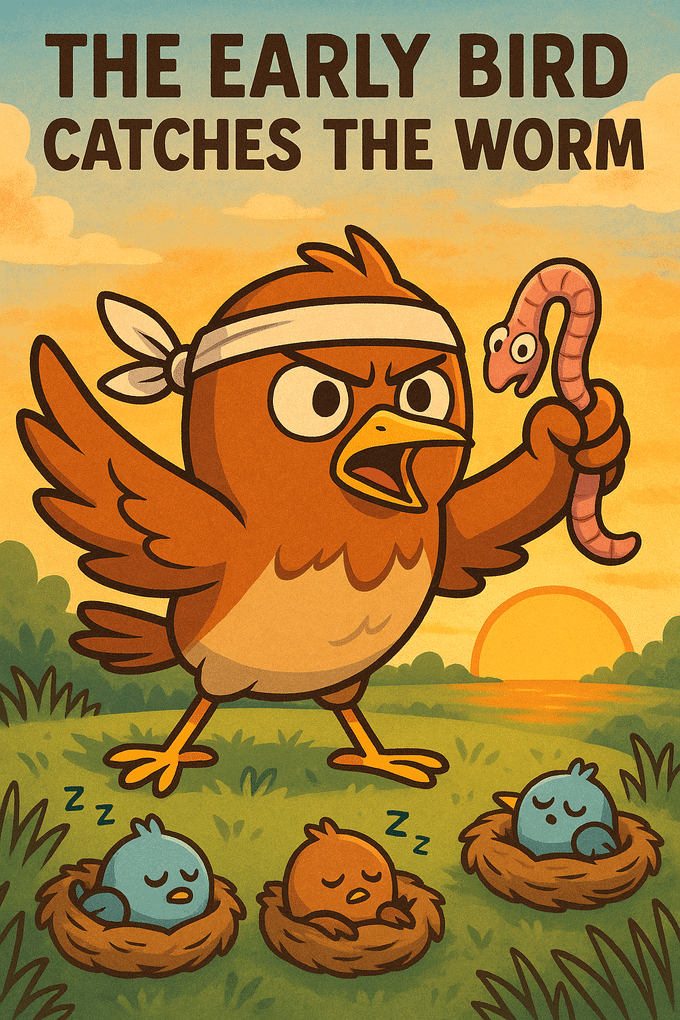
Have you ever wondered who first said, “The early bird catches the worm”? It’s a phrase you’ve probably heard since childhood, encouraging you to get up early and seize the day.
But where did this catchy proverb come from? Who wrote it, and why has it stuck around for so long? You’ll discover the surprising history behind this popular saying and how it can truly change the way you approach your daily routine.
Keep reading—you might just find the motivation you need to become an early bird yourself.
Origin Of The Proverb
The proverb “The early bird catches the worm” means that people who start early have an advantage. It tells us to act quickly to get good results.
This saying has been used for many years. It comes from old English and has appeared in books and stories long ago.
Early Appearances In Literature
One of the first times this proverb appeared was in the 17th century. It showed up in collections of English proverbs around that time.
In 1605, John Ray included a similar phrase in his book of English proverbs. This helped spread the saying across England and beyond.
- 1605: John Ray’s collection of English proverbs
- Early 18th century: Phrase used in various poems and writings
- Common in English-speaking countries by the 19th century
Possible Authors
The exact author of “The early bird catches the worm” is unknown. It likely comes from folk wisdom passed down orally.
John Ray is often credited for recording the proverb, but he did not create it. The phrase grew from common speech used by many people.
- Unknown original author
- John Ray: First to write it down in 1605
- Proverb evolved from everyday language and farming life

Credit: www.youtube.com
Meaning Behind The Saying
The proverb “The early bird catches the worm” is a popular saying. It teaches the value of starting early to gain an advantage.
This phrase encourages people to act quickly and be prompt. It suggests rewards come to those who prepare and begin ahead of others.
Literal Interpretation
Literally, the saying means a bird that wakes up early finds food first. Worms are easier to catch in the morning before others come.
- Birds that start hunting early get more worms.
- Worms are more active on the ground at dawn.
- Early activity increases chances of finding food.
Figurative Use In Daily Life
This proverb applies to many daily situations. It means acting early can lead to success.
| Situation | Benefit of Acting Early |
| Job Applications | Higher chance of getting an interview |
| School Projects | More time for review and improvement |
| Shopping Sales | Access to best deals and stock |
Historical Context
The proverb “The early bird catches the worm” means people who act quickly get rewards. It encourages being prompt and ready.
This saying dates back many centuries. The exact author is unknown, but it appeared in English in the 1600s.
Cultural Significance Over Time
The proverb has been used to teach children the value of being early and prepared. It often appears in stories and lessons.
In work and school, it reminds people to start tasks early. It has kept its meaning across generations and cultures.
Variations Across Regions
Different cultures have similar sayings with the same meaning. The words and animals may change but the lesson stays the same.
- In German: “Morgenstund hat Gold im Mund” (Morning hour has gold in its mouth)
- In Spanish: “Al que madruga, Dios le ayuda” (God helps the early riser)
- In Chinese: “早起的鸟儿有虫吃” (The early bird has worms to eat)

Credit: medium.com
Famous Uses In Literature And Media
The proverb “The early bird catches the worm” has been used in many stories and shows. It teaches the value of being early and prepared.
This saying appears in classic books and modern movies. It often shows how acting quickly leads to success.
Classical References
The phrase dates back to ancient times. Writers used it to show the benefits of prompt action.
- John Ray, a 17th-century naturalist, included it in his collection of English proverbs.
- Benjamin Franklin mentioned similar ideas about being early in his writings.
- Shakespeare’s plays include themes about being quick to act, though not this exact phrase.
Modern Adaptations
Today, the saying appears in movies, TV shows, and books. It often encourages characters to be ready and proactive.
| Media | Example | Meaning |
| Film | “The Early Bird” (1965) | Shows how being early helps solve problems. |
| TV | “Friends” | Used to remind characters to act fast in daily life. |
| Books | Children’s stories | Teaches kids about the rewards of waking up early. |
Impact On Productivity And Motivation
The proverb “The early bird catches the worm” means acting early brings success. It encourages people to start tasks quickly and avoid delay.
This saying motivates individuals to be proactive. Starting work early often leads to better results and more opportunities.
Proverb In Business And Education
In business, this proverb teaches the value of being ahead of competitors. Early planning and action often result in higher profits and growth.
In education, students who begin studying early tend to perform better. Preparing ahead helps reduce stress and improves understanding.
- Business leaders plan projects early to meet deadlines
- Students start homework promptly to avoid last-minute rush
- Teachers encourage early revision for exams
Psychological Effects
This proverb promotes discipline and time management. It builds a mindset focused on seizing opportunities quickly.
People who follow this idea often feel more confident. Early action reduces anxiety about unfinished tasks.
- Increases motivation to start work early
- Reduces procrastination habits
- Improves focus and goal setting

Credit: www.reddit.com
Frequently Asked Questions
Who Originally Wrote The Proverb “the Early Bird Catches The Worm”?
The proverb was first recorded by John Ray, an English naturalist, in 1670. He included it in his collection of English proverbs, popularizing the phrase that rewards early action.
What Does “the Early Bird Catches The Worm” Mean?
This proverb means that people who act promptly and start early have an advantage and are more likely to succeed or gain opportunities.
How Old Is The Proverb “the Early Bird Catches The Worm”?
The proverb dates back over 350 years. It was documented in the 17th century and has remained widely used since then.
Why Is “the Early Bird Catches The Worm” Still Popular Today?
The saying remains popular because it encourages punctuality and proactivity, traits valued in both personal and professional success.
Conclusion
Discovering the author of “The early bird catches the worm” intrigues many. This timeless saying encourages prompt action. Its origins remain uncertain. Yet, its wisdom is clear. Acting early leads to success. People have used it for centuries. It teaches valuable life lessons.
Patience, perseverance, and initiative. Embrace its message today. Apply it in daily life. Stay ahead and seize opportunities. This proverb’s power continues to inspire. Its simplicity resonates with all. So, be the early bird. Catch the worm. Make your mark in the world.