Sometimes what we think is a bird isn’t really one at all. From soaring bats to gliding squirrels, the animal world is full of surprises that challenge our assumptions. Even some ancient creatures and modern flightless birds blur the lines between what is truly avian and what only seems like it. This curious exploration asks, What Bird is Not a Bird, and takes you through creatures that look, move, or behave like birds—but aren’t—and reveals the fascinating biology, evolution, and unique skills that make the real bird kingdom so extraordinary.
The Curious Case of Creatures That Aren't Birds
Ever think about an animal you thought was a bird, but it isn't? This might sound strange, but it happens. It challenges what we believe about the animal world.
Imagine seeing a creature soaring above. You assume it is an avian. But actually, it’s an imposter! This subject makes us check our first ideas. It asks us to uncover the real facts. How does this confusion start? Which creatures fit this odd description?
We will explore this puzzle together. By the end, you will know what truly makes a bird. Get ready for a fresh, eye-opening view!
Birds That Stay Grounded
Flightless birds are simple: they cannot fly. They have wings, but these wings are not for air travel.
These animals live on the ground or in water. They use other skills to move and survive.
Examples of Flightless Birds
Many birds lost the ability to fly over time. Common examples include the ostrich, penguin, and kiwi.
-
Ostrich: The world's largest bird. It is famous for its fast running speed.
-
Penguin: Lives in cold areas. It swims well instead of flying.
-
Kiwi: A small bird from New Zealand. It has very tiny wings.
-
Emu: A tall runner from Australia. It can move very fast.
-
Rhea: Found in South America. It is much like the ostrich.
Built for Life on the Ground
Flightless birds have strong legs. These legs help them run or walk away from danger. They also use them to find food.
Their bodies are heavier. Their wings are much smaller. This helps them keep their balance on the earth.
-
Strong legs are used for running or swimming.
-
Large bodies offer better protection.
-
Small wings are not needed for flight.
-
Great eyesight helps them see threats.
-
Their feathers camouflage them in nature.
Animals Often Mistaken for Birds
Some animals look like birds, but they are not. They might fly or have fur. Still, their basic body structure is different.
This explains why people mistake these creatures for birds. We will look at two clear cases: the bat and the flying squirrel.
Why We Get Confused
Many animals can fly or glide. People often call them birds just because they can fly.
Feathers and wings are key bird features. But some animals have wings made of stretched skin or fur.
-
Flying animals with feathers are birds.
-
Animals with skin wings are not birds.
-
Gliding animals only look like birds.
Case Study: The Bat
Bats can fly. However, they are mammals, not birds. Their wings are thin skin stretched over bones.
Bats have soft fur. They give birth to live babies. Birds have feathers. They lay eggs.
-
Wings are skin, not feathers.
-
They are covered with fur.
-
They deliver live young.
-
They use echolocation to find food.
Case Study: The Flying Squirrel
Flying squirrels do not fly. They glide instead. They use skin flaps between their legs.
They have fur and live in trees. They glide from tree to tree. They never flap their wings.
-
They glide with skin flaps. They have no feathers.
-
They have fur.
-
They do not flap their wings.
-
They live mostly in trees and forests.
Evolution's Bird-like Wonders
Some ancient creatures looked like birds. They were not true birds. They share bird-like features, but they belong to other animal groups. These animals teach us about evolution.
Bird-like features appeared in many animals long ago. Many lived long before modern birds existed. Let's look at a few examples.
Dinosaurs With Bird Features
Some dinosaurs had feathers and wings. They were like birds. These dinosaurs belong to the theropods group. They show how birds might have evolved.
Examples include small, quick dinosaurs. They had sharp claws and hollow bones. These traits helped them move fast. They may have led to flight later.
-
Velociraptor had feathers and bird-like feet.
-
Archaeopteryx is a famous fossil. It had wings and teeth.
-
Microraptor had four wings for gliding.
Feathered Reptiles
Not every animal with feathers is a bird. Some reptiles had feathers. They could not fly at all. These animals lived millions of years ago.
Feathers may have helped them control heat. Or they were for show. These reptiles prove feathers existed before real birds.
-
Some pterosaurs may have had feather-like structures.
-
Certain dinosaurs used feathers for warmth, not flying.
-
Feathers first appeared in reptiles.
Credit: www.amazon.com
Birds With Unique Skills
Some birds have traits that seem unusual. These traits help them survive. They help them in their unique habitats.
We will look at two interesting skills: mimicry, camouflage, and unique sounds.
Copying and Hiding
Mimicry means copying other sounds or looks. Some birds use this to fool predators. They can also use it to catch prey.
Camouflage helps birds hide in their surroundings. This keeps them safe from enemies. It also aids them in hunting.
-
The lyrebird can copy many sounds. It copies camera clicks and chainsaws.
-
The potoo bird looks like a broken tree branch when resting.
-
The common cuckoo copies other birds' eggs to trick them.
Special Sounds
Some birds make sounds that are strange. These calls are far from normal bird songs. These sounds help them talk to each other. They also use them to warn off danger.
These sounds can be loud or complex. They show the amazing creativity of birds.
-
The lyrebird’s song has many parts. It can last for minutes.
-
The bellbird makes a loud, clear bell-like sound.
-
The oilbird uses echolocation. It finds its way in dark caves.
Common Mistakes About Birds
Some animals are called birds, but they are not. People often misunderstand what a bird is. This leads to simple mistakes.
Learning about these mistakes helps us learn more. It corrects our wrong ideas about birds.
Calling Mammals "Birds"
Some mammals look like birds. They might even have "bird" in their name. People think they are birds, but they are not. For example, bats fly, but they are mammals.
The platypus is another example. It lays eggs. Still, it is a mammal. These animals show not all egg-layers are birds.
-
Bats have fur. They feed milk to their young.
-
Platypus has a bill. It breathes air and has fur.
-
Both are warm-blooded. Both are mammals.
Misusing the Word "Bird"
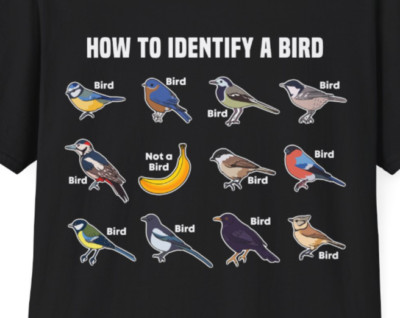
People sometimes call non-birds by the word "bird." They might use it for insects. They might even use it for airplanes. This is not correct. It causes confusion.
The word "bird" describes an animal. That animal must have feathers and wings. True birds have beaks. They lay eggs.
-
Flying insects like dragonflies are not birds.
-
Airplanes are machines. They are not living things.
-
A bird is an animal with feathers and wings.
Credit: www.ebay.com

Credit: www.reddit.com
Frequently Asked Questions
What does "a bird that is not a bird" mean?
This refers to creatures that look like birds but are not. Bats or flying insects are examples. It shows classification differences.
Are bats birds or mammals?
Bats are mammals. They have fur, give birth, and nurse their young. Bats do not have feathers.
Can flying insects be mistaken for birds?
Yes, insects like dragonflies can seem like birds because they fly. But insects have a hard shell and many legs. Birds do not.
Why do some animals look like birds but aren't?
They developed similar features for flying. This is called convergent evolution. Unrelated species get similar traits.
Final Thoughts
Birds that are not truly birds can certainly surprise us. Some animals may look like a bird, but they belong to other groups. This proves that nature can be tricky. Knowing these facts changes how you think. Next time you see a creature flying, stop and ask questions.
Curiosity helps us know the world better. Keep exploring. Enjoy finding new secrets about animals every day.