Metal Window Bird Feeder: Is the Nature Gear Feeder Worth Buying? (Honest Review)
I have broken three window bird feeders in two years. Not from mishandling. From the same thing every time — the seed tray cracking, a perch snapping off, or the whole thing sliding down the window after one bad rainstorm. Most window feeders look solid in photos. In real use, cheap plastic does not hold up. It yellows. It cracks. It falls apart the moment a squirrel lands on it or the temperature drops below freezing. That is why I started looking specifically for a metal window bird feeder — something with real structural support, not just acrylic walls held together by hope and glue. The Nature Gear Window Bird Feeder uses a metal perch, weather-resistant acrylic construction, and strong suction cups. It is ranked #1,218 in Wild Bird Feeders on Amazon with a 4.6-star rating from over 5,100 buyers. I wanted to know if the durability claims held up in real use. Here is my full honest review.
Why Durability Is the Real Issue with Window Bird Feeders
Most people focus on suction cups when shopping for a window feeder. Will it stay up? That is the obvious question. But the real durability problem is the feeder body itself. Thin acrylic cracks under temperature swings. Seed trays that slot in and out eventually warp or shatter when dropped. Perches made from hollow plastic snap the first time a heavy bird — or a squirrel — lands on them. A metal perch changes one of those weak points. Metal does not snap under bird weight. It does not warp in heat. It does not become brittle in cold. The rest of the feeder body still needs proper materials and construction to last, but a metal perch is a meaningful upgrade over the hollow plastic rods on cheaper feeders.
Nature Gear Window Bird Feeder: Full Review

→ Check the latest price on Amazon
First Look and Build Quality
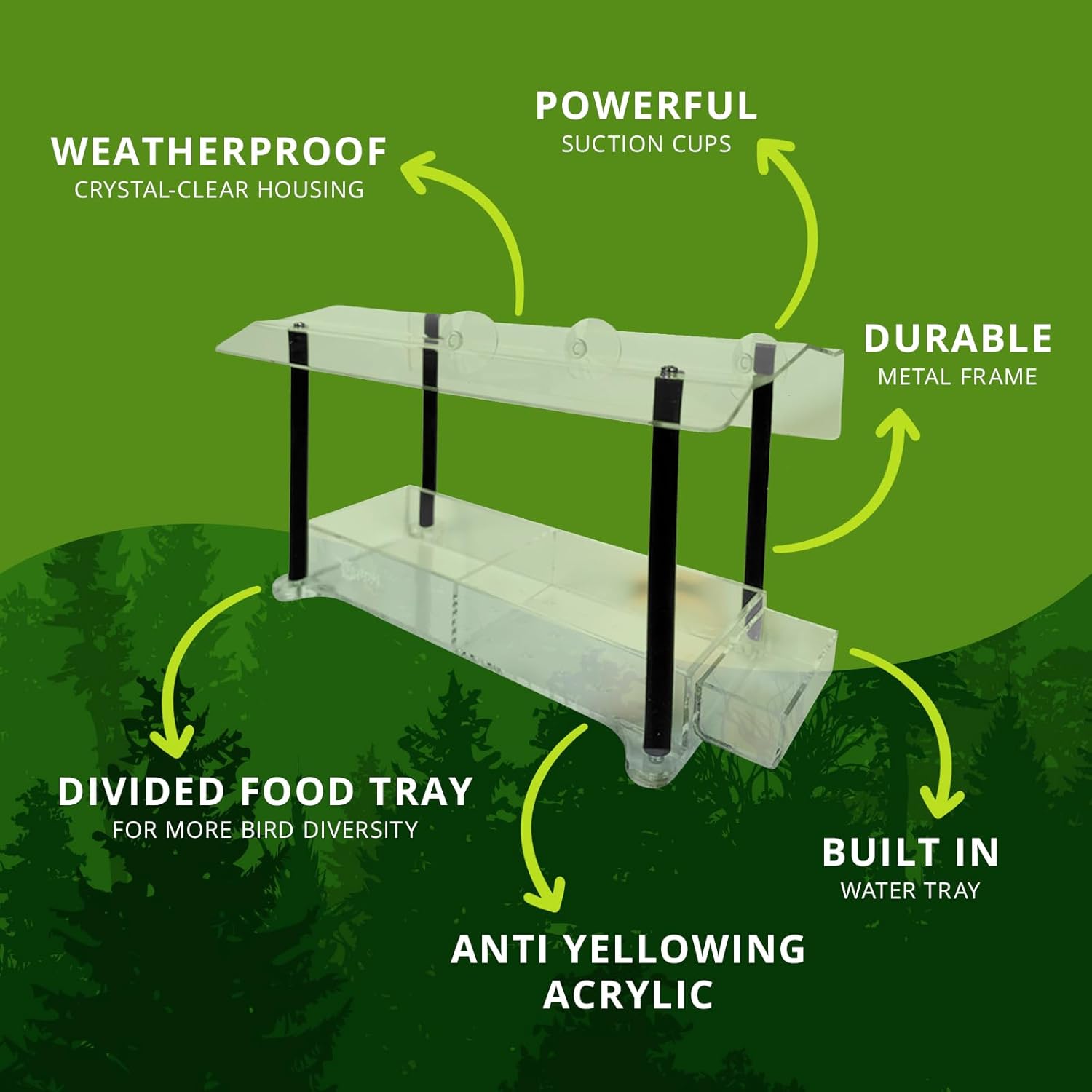
The feeder arrived well packaged. The acrylic body is thicker than most budget feeders I have tried — you can feel the difference when you handle it. Clear and clean, with no cloudy sections or visible mold lines from cheap manufacturing. The metal perch runs across the front of the feeder. It feels solid. No flex, no rattle. This is the component most likely to fail on similar feeders, and on the Nature Gear version it is the strongest part of the whole unit. The suction cups are large. Three of them. They attach to the back of the feeder through slotted holes, which means you can remove the feeder body without pulling the suction cups off the window every time. That is a small design detail that saves real frustration when you are cleaning or refilling.
Suction Cup Performance
I cleaned the window first with glass cleaner, let it dry fully, and pressed each cup firmly from the center outward. All three locked in tight. The feeder has held through rain, wind, and the daily activity of multiple birds landing and taking off. I also applied a small amount of Vaseline around the rim of each cup — a tip that multiple experienced buyers confirmed, and it works. The cups have not shifted. One thing to watch: if you need to reposition the feeder, wet suction cups grip fast. Plan your placement before you press them on. Trying to slide the feeder sideways after pressing it down is difficult.
The Sliding Seed Tray
The seed tray is the component I paid closest attention to, based on problems I have seen with other feeders. On the Nature Gear feeder, the tray slides out completely from the bottom. This matters because seed residue, wet hulls, and moisture build up in the bottom corners of most fixed trays and are impossible to clean without removing everything. With a fully removable tray, cleaning takes about two minutes. Slide it out, rinse it, wipe it dry, slide it back. The tray has built-in drainage holes so rainwater passes through without pooling under the seed. The tray fits snugly when seated correctly. One real concern: if a squirrel lands on the feeder and jumps off with force, it can dislodge the tray. I placed a small piece of clear tape across the tray joint — invisible from the outside, and it keeps the tray locked in place even under impact.
What Birds Visit
Within about two weeks of installation, I had regular visitors. House finches came first. Chickadees followed. A pair of cardinals found it in the third week and now return daily. The dual seed compartments let me put different seeds in each side — sunflower seeds on one side for finches and chickadees, and shelled peanuts on the other for blue jays. The birds sorted themselves out based on preference without competition. The generous seed capacity means I refill every four to five days with average bird traffic. More active periods require more frequent refills, but nothing excessive.
Squirrel Reality Check
I want to be direct about this. The Nature Gear feeder is marketed with a squirrel-resistant design. The peaked roof makes it harder for squirrels to land and get comfortable. That is true — squirrels find it less convenient than a flat-top feeder. But it is not squirrel-proof. Squirrels with motivation and time will find a way to access the seed. The peaked roof slows them down. Placement is what actually stops them. Mount the feeder at least 10 feet from any branch, railing, ledge, or surface a squirrel can jump from. Do both, and squirrel visits drop to almost zero. Rely on the design alone without smart placement, and squirrels will treat it as a challenge they will eventually win. One more honest note: the feeder is described as a “metal window bird feeder” in its listing, but the body is acrylic. The metal component is the perch. The frame and body are clear acrylic with metal reinforcement at key stress points. For most buyers this is fine — acrylic is weather-resistant and the metal perch is the component most likely to take impact. But if you expected an all-metal body, that is worth knowing upfront.

Quick Specs
| Feature | Details |
|---|---|
| Brand | Nature Gear |
| Material | Acrylic body, metal perch |
| Mounting | 3 suction cups, window mount |
| Dimensions | 11.8″ L × 5.1″ W × 8.7″ H |
| Target birds | Bluebird, Cardinal, Chickadee, Hummingbird |
| Seed tray | Removable sliding tray with drainage holes |
| Compartments | Dual seed compartments |
| Special feature | Long lasting, weather-resistant |
| Amazon rank | #1,218 in Wild Bird Feeders |
| Rating | 4.6/5 (5,130+ reviews) |
Honest Pros and Cons
Pros
- Metal perch does not snap or flex under bird or squirrel weight
- Thick acrylic body — noticeably sturdier than budget feeders
- Three large suction cups hold firmly on clean glass
- Slotted suction cup holes let you remove feeder without pulling cups off
- Fully removable sliding seed tray — easy to clean in two minutes
- Drainage holes keep seed dry after rain
- Dual compartments let you offer two types of seed at once
- Peaked roof makes squirrel access harder than flat-top feeders
- Clear acrylic maintains visibility over time without yellowing
- Works well for cats as indoor entertainment
- Good seed capacity — refill every 4–5 days with normal bird activity
Cons
- Not fully squirrel-proof — placement matters more than design
- Seed tray can dislodge if squirrels land with force — fix with clear tape
- Acrylic body (not all-metal) despite the metal perch
- Birds take 2–3 weeks to find a new feeder — patience required
- Small water dish fills with seed from bird activity — not very useful in practice
- Column version is smaller than it looks in product photos — check dimensions before buying
Who Should Buy This Feeder
Buy it if you:
- Have had plastic perches snap on previous feeders
- Want a durable acrylic feeder with a metal perch that handles daily bird and squirrel impact
- Need a feeder that is genuinely easy to clean and refill
- Want to attract multiple bird species including cardinals, finches, chickadees, and blue jays
- Have indoor cats who will benefit from close-up bird entertainment
- Are buying a gift for an elderly parent or grandparent who watches birds from a window
Skip it if you:
- Expect it to be all-metal construction — the body is acrylic
- Have very active squirrels and no way to place the feeder 10+ feet from a jumping surface
- Want a permanently sealed tray that cannot dislodge — the sliding design requires the tape fix in high-squirrel areas
How to Set It Up for Best Results
Step 1: Clean the window thoroughly
Use glass cleaner and let it dry completely. Any dust, grease, or moisture between the cup and the glass weakens the seal. This single step prevents 80% of suction cup failures.
Step 2: Apply Vaseline to the suction cup rims
A thin layer around the edge of each cup creates an airtight seal that lasts significantly longer than dry cups alone. Do this every time you remount the feeder after cleaning.
Step 3: Choose placement carefully
Position the feeder at least 10 feet from trees, branches, fence posts, and railings. Check the view from inside — you want it centered in a window you look at often. Kitchen windows are popular for a reason.
Step 4: Cover the interior window with paper for the first two weeks
Birds see movement through the glass. Early on, human activity near the window startles them before they have built confidence with the new feeder. A sheet of paper taped to the inside of the glass removes this problem during the first two weeks. Remove it once birds are visiting regularly.
Step 5: Tape the tray joint
Before birds and squirrels find the feeder, add a small strip of clear tape across the tray slot on each side. This prevents the tray from being knocked loose. It is invisible from outside and takes 30 seconds.
Step 6: Use pre-shelled sunflower seeds
No-mess seed produces almost no debris. Hull-free seeds mean less to clean from the tray, less mess below the window, and less weed growth under the feeder.
Best Seeds to Use in This Feeder
| Seed Type | Birds Attracted |
|---|---|
| Black oil sunflower seeds | Cardinals, finches, chickadees, nuthatches |
| Pre-shelled sunflower (no mess) | All of the above, with almost no cleanup |
| Shelled peanuts | Blue jays, woodpeckers, titmice |
| Nyjer (thistle) | Goldfinches, house finches |
| Safflower seeds | Cardinals — squirrels tend to avoid these |
Start with black oil sunflower seeds. They attract the widest variety of birds and work in both compartments. Once you see which species visit regularly, adjust to feature seeds for your most common visitors.

Frequently Asked Questions
Is this truly a metal bird feeder?
The perch is metal. The body is weather-resistant acrylic. The listing describes it as having metal components for durability — which is accurate — but the outer body is not all-metal. For most buyers, the combination of acrylic and metal perch is exactly the right balance of weight, clarity, and durability.
How do I stop the seed tray from falling out?
Add a small strip of clear tape across the tray joint on each side. This keeps it seated under impact. Do not glue it permanently — you still need to remove it for cleaning. The tape fix takes 30 seconds and works well.
Will squirrels ruin this feeder?
Not if you place it correctly. Mount it at least 10 feet from any surface a squirrel can jump from. On a smooth glass window, squirrels cannot climb up to reach it. The peaked roof makes landing on top uncomfortable for them. Placement does more work than any squirrel-resistant design feature.
How long before birds find the new feeder?
Expect 2–3 weeks. Some buyers see visitors within hours; others wait longer. Sprinkle a small amount of seed on the windowsill nearby to help birds locate it. Cover the inside of the glass with paper during the first two weeks to reduce startling from human movement.
Is this good for watching birds with cats?
Yes. This is one of the best setups for indoor cats. Birds land just inches from the glass. Cats press their faces to the window. Multiple buyers describe it as better entertainment than television for their pets.
Final Verdict
The Nature Gear Window Bird Feeder is the most durable suction-cup window feeder I have used at this price point. The metal perch solves the most common breakage point. The thick acrylic body handles weather without yellowing. The sliding tray makes cleaning fast. And with smart placement, the squirrel problem is manageable. Fix the tray with clear tape. Apply Vaseline to the suction cups. Cover the window glass for the first two weeks. Wait patiently for birds to find it. After that, it just works — day after day, season after season.