If you love watching birds visit your feeder, you want to keep them safe and healthy. But did you know that your bird feeder can quickly become a hotspot for harmful germs?
Knowing how to disinfect a bird feeder properly is the key to protecting your feathered friends from illness. You’ll learn simple, effective steps to clean your feeder so it stays fresh and inviting all year round. Keep reading to discover easy tips that will make a big difference for your backyard birds.

Credit: valleyfarms.shop
Why Clean Bird Feeders Matter
Keeping bird feeders clean is important for bird health. Dirty feeders can spread germs and cause illness.
Regular cleaning helps birds stay safe and enjoy the food you provide.
Health Risks For Birds
Birds can get sick from dirty feeders. Bacteria, mold, and fungi grow on old seeds and droppings.
These germs cause diseases like salmonella and avian pox. Sick birds may lose feathers or stop eating.
- Spread of bacteria and fungi
- Birds catching harmful diseases
- Weak or dead birds in your yard
Preventing Disease Spread
Cleaning feeders stops diseases from spreading. Use warm water and mild soap to wash feeders.
Rinse well and dry before refilling. Clean feeders every two weeks or more often in wet weather.
- Remove old seeds and debris
- Scrub all surfaces carefully
- Use a bleach solution for deep cleaning
- Rinse and dry completely before use
Credit: www.michiganaudubon.org
When To Clean Your Feeder
Keeping your bird feeder clean is important to protect birds from illness. Dirt and germs can build up quickly. Knowing when to clean helps keep feeders safe and healthy.
Regular cleaning prevents disease and keeps birds visiting your feeder. Watch for signs that tell you it is time to clean.
Signs Of Contamination
Look for these signs that show your feeder needs cleaning:
- Mold or fungus growing on the seeds or feeder parts
- Seeds are clumped or wet from moisture
- Bird droppings build up around feeding areas
- Unusual bird behavior, like avoiding the feeder
- Dead birds found near the feeder
Spotting these signs means germs may be growing. Clean your feeder right away to stop spread of disease.
Cleaning Frequency Tips
The cleaning schedule depends on weather and feeder use. Follow these tips to decide how often to clean:
| Condition | Cleaning Frequency |
|---|---|
| Hot and humid weather | Clean once a week |
| Cold or dry weather | Clean every two weeks |
| Heavy bird activity | Clean once a week or more |
| Light bird activity | Clean every two weeks |
| Visible contamination | Clean immediately |
Safe Cleaning Materials
Cleaning your bird feeder keeps birds healthy and safe. Using the right materials stops germs and mold. Choose cleaning products that do not harm birds or the environment.
Safe cleaning means using disinfectants and tools that remove dirt and kill germs. Avoid strong chemicals that can leave harmful residues.
Choosing The Right Disinfectants
Use mild disinfectants that are effective and safe for birds. A simple bleach solution works well when diluted properly. You can also use vinegar, which is natural and non-toxic.
- Mix one part bleach with nine parts water for a disinfecting soak
- White vinegar can clean and kill some bacteria without chemicals
- Rinse the feeder well after cleaning to remove any residue
- Do not use ammonia, harsh detergents, or pesticides
Tools You’ll Need
| Tool | Purpose |
| Soft brush or sponge | Scrub away dirt and debris |
| Bucket | Hold cleaning solution |
| Gloves | Protect your hands from germs and chemicals |
| Clean water | Rinse the feeder after disinfecting |
Step-by-step Cleaning Process
Cleaning your bird feeder regularly keeps birds safe and healthy. Dirt and old seeds can spread germs. A clean feeder invites more birds to visit.
Follow these simple steps to disinfect your bird feeder properly. This helps stop diseases from spreading among birds.
Disassembling The Feeder
Take apart your bird feeder before cleaning. Remove all parts like trays, perches, and seed containers. This lets you clean every area well.
Check for any broken pieces and throw them away. Clean feeders work better and keep birds safer.
Washing With Soap And Water
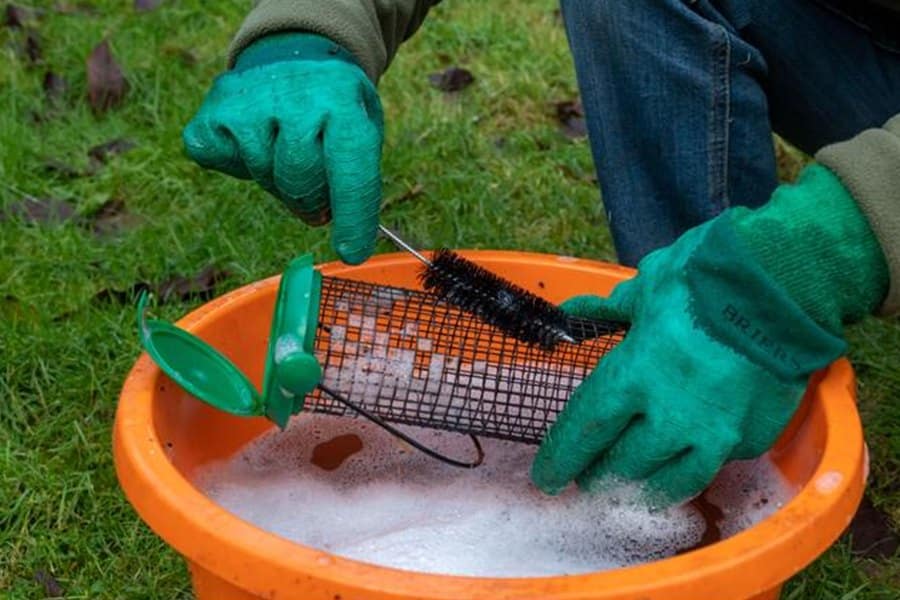
Use warm water and mild dish soap to wash all parts. Scrub with a brush to remove dirt and old seed remains. Clean every corner and crevice carefully.
- Fill a basin with warm soapy water
- Use a soft brush for scrubbing
- Wash inside and outside of feeder parts
- Remove all visible dirt and debris
Disinfecting Properly
Mix one part household bleach with nine parts water. Soak the feeder parts in this solution for 10 minutes. This kills harmful bacteria and fungi.
Do not use undiluted bleach. Always wear gloves and work in a well-ventilated area while disinfecting.
- Prepare bleach solution: 1 part bleach, 9 parts water
- Soak feeder parts for 10 minutes
- Wear gloves to protect your skin
- Keep area ventilated during soaking
Rinsing And Drying
Rinse all parts with clean water to remove bleach. Make sure no bleach remains on the feeder. This keeps birds safe from chemicals.
Let the feeder dry completely in the sun or air dry indoors. Only refill the feeder when it is fully dry to avoid mold growth.
Extra Tips For Feeder Maintenance
Keeping your bird feeder clean helps keep birds healthy. Regular care stops germs and mold from growing. These tips will help you maintain your feeder well.
Check your feeder often and place it in safe spots. This care keeps birds safe and happy as they visit.
Regular Inspections
Look at your feeder closely at least once a week. Check for dirt, mold, or broken parts. Clean or fix any problems right away.
- Remove old or wet seeds to stop mold
- Check for cracks or sharp edges
- Clean feeder parts with warm soapy water
- Dry all parts fully before refilling
- Use a mild bleach solution for deep cleaning
Safe Placement Of Feeders
Put your feeder where birds feel safe from predators. Avoid places near windows to stop bird crashes. Keep feeders away from places that collect water.
| Placement Tip | Reason |
| Near shrubs or trees | Birds hide from cats and hawks |
| Away from windows | Prevents bird collisions |
| Off the ground | Reduces risk from rodents |
| In a shaded area | Keeps seed fresh longer |
Encouraging Healthy Bird Visits
Cleaning and disinfecting your bird feeder helps keep birds safe. Healthy birds visit more often and stay longer.
Good feeder habits prevent diseases and support local wildlife. Let’s explore how to use quality birdseed and avoid overfeeding.
Using Quality Birdseed
Choose fresh, clean birdseed to attract healthy birds. Old or moldy seed can harm birds and spread illness.
High-quality seed offers good nutrition and helps birds stay strong. Store seed in a dry, cool place to keep it fresh.
- Buy seed from trusted sources
- Check seed for mold or insects before use
- Use seed mixes suited to local bird species
- Keep seed dry and sealed between uses
Avoiding Overfeeding
Feed birds only the amount they can eat in a day. Too much food causes waste and attracts pests.
Overfeeding can lead to dirty feeders and sick birds. Clean feeders often and remove leftover seed.
- Fill feeders with small amounts daily
- Clear uneaten seed to prevent mold
- Watch bird activity to adjust feeding amounts
- Keep feeding areas clean and dry

Credit: green-backyard.com
Frequently Asked Questions
How Often Should I Disinfect My Bird Feeder?
Disinfect your bird feeder every two weeks to prevent disease spread. Clean more frequently during wet or humid weather. Regular cleaning keeps birds healthy and reduces mold or bacteria buildup.
What Disinfectants Are Safe For Bird Feeders?
Use a diluted bleach solution (one part bleach to nine parts water). Rinse thoroughly and let dry completely before refilling. Avoid harsh chemicals that can harm birds or leave toxic residues.
Can I Use Vinegar To Clean My Bird Feeder?
Yes, vinegar is a safe and natural disinfectant. Mix equal parts vinegar and water, scrub the feeder, then rinse well. Vinegar kills many bacteria without harmful chemicals, making it ideal for bird feeders.
Why Is Disinfecting Bird Feeders Important?
Disinfecting prevents the spread of harmful diseases among birds. Dirty feeders can harbor fungi, bacteria, and viruses. Regular cleaning protects bird populations and ensures your feeder attracts healthy wildlife.
Conclusion
Regular cleaning keeps bird feeders safe and inviting. It prevents harmful bacteria. Birds stay healthy when feeders are clean. A clean feeder attracts more birds. Enjoy watching them in your garden. Cleaning only takes a few minutes. Use mild soap and water.
Rinse well and let it dry. This simple task makes a big difference. Happy birds, happy garden! Remember, a clean feeder shows you care. Keep your feathered friends coming back. Your efforts are worth it. With these steps, birds will flourish.
Embrace the joy of birdwatching.