How to Prevent Aspergillosis in Birds: Complete Guide
Are you worried about your feathered friend's health? If you're a bird lover, the thought of your pet developing an illness is daunting.
Aspergillosis, a common fungal infection in birds, is one of those conditions that can sneak up on you and your avian companion. But don't worry! Understanding how to prevent aspergillosis can make all the difference in keeping your bird healthy and happy.
You'll discover easy-to-follow tips and strategies that can help you safeguard your bird from this silent threat. Let's dive in and ensure your bird's environment is as safe and nurturing as possible.
Causes Of Aspergillosis In Birds
Aspergillosis is a fungal infection that affects birds. The disease mainly comes from exposure to mold spores. Understanding the causes helps in preventing the illness.
This infection happens when birds breathe in spores from the fungus Aspergillus. These spores are common in many places and can be harmful in large amounts.
Fungal Spores In The Environment
Aspergillus spores are found in many environments. These spores grow well in warm, damp places. Birds get infected by breathing in these tiny spores.
- Old or damp bedding materials
- Rotting food or plant matter
- Soil and dust inside bird cages
- Poorly cleaned water or food dishes
Common Risk Factors
Several factors increase the risk of aspergillosis in birds. These factors weaken their immune system or increase exposure to spores.
| Risk Factor | Description |
| Stress | Caused by overcrowding or poor handling |
| Poor Ventilation | Leads to spore build-up in the air |
| Inadequate Nutrition | Weakens the bird’s immune system |
| Recent Illness | Makes birds more vulnerable to infection |
| Old or Dirty Housing | Harbors fungal growth and spores |

Credit: birdsupplies.com
Symptoms To Watch For
Aspergillosis is a fungal infection that affects birds' lungs and airways. Early detection helps protect your bird's health.
Look for changes in breathing and behavior. These signs can show that your bird might have aspergillosis.
Respiratory Signs
Birds with aspergillosis often have trouble breathing. Their breathing may be faster or louder than usual.
Watch for coughing, sneezing, or nasal discharge. These signs can mean your bird's airways are irritated.
- Rapid or labored breathing
- Open-mouth breathing
- Coughing or sneezing
- Nasal discharge or crusting
- Wheezing or clicking sounds
Behavioral Changes
Birds with aspergillosis may act differently. They might be less active or eat less food than usual.
Look for signs of weakness or unusual quietness. These changes can show your bird is feeling sick.
- Reduced activity or energy
- Loss of appetite
- Fluffed-up feathers
- Increased sleeping or hiding
- Weight loss
Maintaining Clean Living Spaces
Keeping your bird’s living area clean helps stop Aspergillosis. This disease grows in dirty, damp places.
Clean spaces lower the chance of mold and spores that cause this infection.
Regular Cage Cleaning
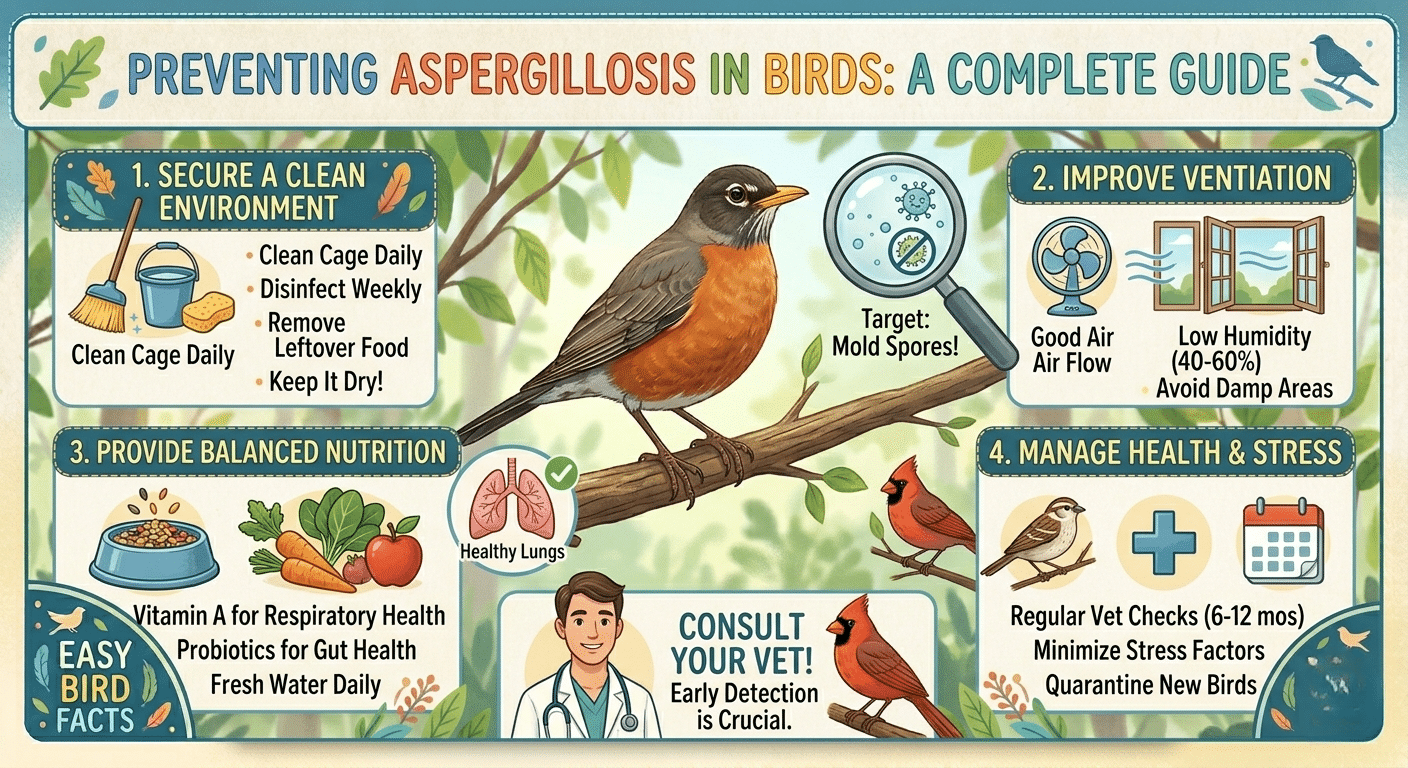
Clean the bird cage every day to remove droppings and food waste. This reduces mold growth.
Wash the cage thoroughly with warm water and mild soap once a week. Rinse well and dry it completely.
- Change cage liners daily
- Remove leftover food promptly
- Disinfect cage parts weekly
- Dry cage fully before use
Proper Ventilation
Good airflow prevents moisture buildup that helps mold grow. Keep the bird’s room well ventilated.
Open windows or use fans to move fresh air. Avoid placing cages in damp or enclosed spaces.
- Ensure air moves around the cage
- Keep humidity levels low
- Do not place cage near water leaks
- Use air purifiers if needed

Credit: birdsupplies.com
Diet And Nutrition Tips
Good diet and nutrition help birds stay healthy. They reduce the risk of infections like aspergillosis. Feeding birds the right food supports their lungs and immune system.
Here are tips on what to feed and how to improve your bird’s diet. These tips focus on balanced nutrition and useful supplements.
Balanced Diet Essentials
Birds need a mix of nutrients to stay strong. A balanced diet includes seeds, fruits, vegetables, and protein. Each type of food gives important vitamins and minerals.
- Provide fresh seeds like millet and sunflower seeds.
- Add fresh fruits such as apples and berries for vitamins.
- Offer vegetables like carrots and spinach for minerals.
- Include a protein source, like cooked eggs or beans, for muscle health.
- Keep clean water available at all times to aid digestion.
Supplements For Immunity
Supplements help birds fight infections and keep their immune system strong. Use them carefully and consult a vet before starting any new supplement.
| Supplement | Benefit | How to Use |
| Vitamin A | Supports respiratory health | Mix in food once a week |
| Probiotics | Improves gut health | Add to water daily |
| Omega-3 Fatty Acids | Reduces inflammation | Use small amounts in diet |
| Vitamin E | Boosts immune system | Give as directed by vet |
Managing Humidity And Temperature
Proper humidity and temperature control help prevent aspergillosis in birds. This fungal infection grows in damp, warm places.
Keeping the bird environment dry and cool reduces fungal spores and protects bird health.
Ideal Environmental Conditions
Birds need stable temperature and humidity to avoid stress and illness. Aim for these conditions:
- Temperature between 65°F and 75°F (18°C to 24°C)
- Humidity levels from 40% to 60%
- Good air circulation without drafts
- Clean and dry bedding materials
Use a thermometer and hygrometer to monitor conditions daily. Adjust heating or cooling devices as needed.
Avoiding Dampness
Damp environments encourage mold and fungal growth. Remove moisture quickly to keep birds safe.
| Source of Dampness | Prevention Tips |
|---|---|
| Spilled water | Clean spills immediately and use absorbent bedding |
| Leaking pipes or cages | Check for leaks weekly and repair promptly |
| High humidity | Use dehumidifiers or improve ventilation |
| Wet food | Remove uneaten food and replace daily |
Safe Handling And Quarantine
Aspergillosis is a fungal infection that affects birds’ respiratory systems. Safe handling and quarantine help prevent its spread among birds.
Careful steps during bird introduction and stress reduction can protect birds from this disease.
Introducing New Birds Safely
New birds may carry spores that cause aspergillosis. Quarantine new birds for at least 30 days before mixing them with others.
Keep the quarantine area clean and dry. Use separate cages, food, and water dishes for new birds.
- Check new birds for signs of illness
- Clean the quarantine cage every day
- Use fresh air and avoid damp places
- Limit contact between new and existing birds
Minimizing Stress
Stress weakens birds’ immune systems and raises infection risk. Handle birds gently and avoid loud noises.
Keep the cage environment comfortable with proper temperature and ventilation. Provide hiding spots to make birds feel safe.
- Feed a balanced diet to support health
- Keep cages clean and dry
- Limit sudden changes in surroundings
- Provide fresh water daily
Regular Health Checks
Regular health checks are key to keeping birds safe from aspergillosis. This disease affects their lungs and breathing.
By checking birds often, owners can spot signs early and get help fast.
Veterinary Visits
Taking birds to the vet regularly helps catch health issues before they get worse. Vets can do tests and exams to find aspergillosis early.
- Schedule vet visits every 6 to 12 months
- Bring any bird that shows breathing trouble or weakness
- Ask the vet about lung health and fungal infections
- Follow vet advice on treatment and care
Early Detection Methods
Early detection is vital to prevent aspergillosis from harming your bird. Watch for these signs and use tests to confirm.
| Signs to Watch | Common Tests |
| Difficulty breathing | Chest X-ray |
| Weight loss | Blood tests |
| Unusual vocal sounds | Fungal culture |
| Fatigue or lethargy | Endoscopy |

Frequently Asked Questions
What Causes Aspergillosis In Birds?
Aspergillosis is caused by inhaling fungal spores from Aspergillus species. These spores thrive in damp, moldy environments. Birds with weak immune systems are more vulnerable. Preventing exposure to moldy feed and dirty cages reduces infection risk.
How Can I Keep My Bird’s Environment Mold-free?
Regularly clean and dry the bird’s cage and surroundings. Avoid damp areas and remove spoiled food promptly. Use good ventilation to reduce humidity. These steps limit fungal growth and protect your bird from aspergillosis.
What Are The Early Signs Of Aspergillosis In Birds?
Look for breathing difficulties, lethargy, loss of appetite, and weight loss. Birds may also show nasal discharge or wheezing. Early detection helps prompt treatment and improves recovery chances.
Can Diet Affect Aspergillosis Prevention In Birds?
Yes, a balanced diet strengthens the bird’s immune system. Fresh, uncontaminated food lowers the risk of fungal infection. Avoid moldy seeds and provide clean water daily for optimal health.
Conclusion
Preventing aspergillosis in birds starts with clean, dry living spaces. Regularly change bedding and remove moldy materials. Good ventilation helps reduce harmful spores in the air. Feed birds fresh, uncontaminated food and clean water daily. Watch your birds closely for signs of illness.
Early care can save their lives. Keeping their environment safe is key to health. Small steps make a big difference in prevention. Healthy birds are happy birds. Stay consistent and protect your feathered friends.