Affordable Bird Cages That Don’t Sacrifice Quality: Buyer’s Guide, Top Picks, and Safety Tips
If you’ve shopped for a bird cage recently, you already know the problem. Cheap cages often bend, rust, or fall apart within a few months. Expensive ones can cost more than the bird itself. Finding the middle ground, a cage that’s genuinely affordable and genuinely well-built, takes some digging.
That’s what this guide is for. We looked closely at cage construction, safety specs, and real feedback from thousands of verified buyers to find an option that holds up. Below, you’ll get a full breakdown of our top pick, a practical framework for comparing any budget cage, and answers to the questions people ask most before buying.
Everything You Need to Know Before Buying an Affordable Bird Cage
How We Evaluated This Cage
Before recommending any product, we look past the marketing copy and into the details that actually affect a bird’s daily life. That means comparing bar spacing against species-specific safety guidelines, checking material specs against known failure points in budget cages, like thin wire, weak welds, and non-removable trays, and reading through a large sample of verified buyer reviews rather than a handpicked few. We also weigh how a cage holds up over months of use, not just how it looks on day one. This cage stood out because its specs and its review pattern lined up: the steel gauge, the tray design, and the door placement all matched what thousands of owners reported experiencing firsthand.
Why Cage Quality Matters More Than Price
A bird cage is not a one-time purchase you can quietly replace if it turns out wrong. It’s your bird’s home for years. Thin wire bends under a curious beak. Cheap paint chips and exposes metal your bird can chew. Poor bar spacing can trap a small bird’s head or let it escape entirely.
Price matters, but it’s not the only variable. The goal is value: getting real durability, real safety, and real usability without paying for features you don’t need. That’s the lens we used to evaluate the cage below.
Our Top Pick: Yaheetech 52″ Bird Cage with Rolling Stand
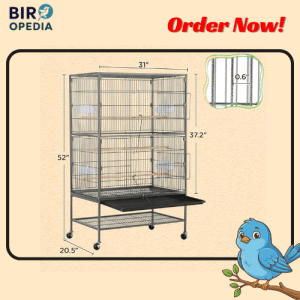
Price: $109.99 (Black) / $122.99 (White) Rating: 4.6 out of 5 stars from 5,398 buyers Best suited for: Cockatiels, lovebirds, parakeets, conures, budgies, and other small to medium birds
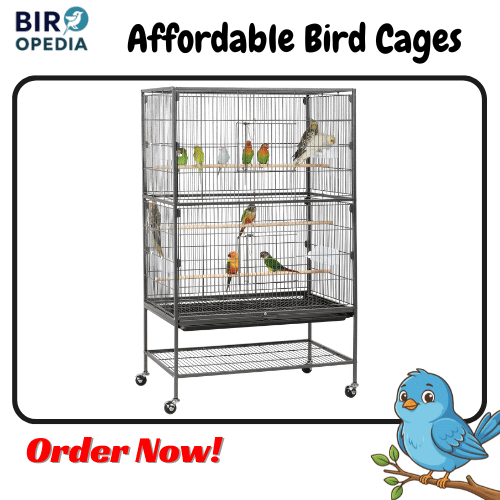
This cage consistently comes up as a strong budget option, and the specs explain why. It pairs a genuinely spacious interior with solid steel construction, practical doors, and a rolling stand, features that usually show up on pricier cages.
Key Specifications
| Spec | Detail |
|---|---|
| Interior dimensions | 31.1″L x 20.5″W x 37.2″H |
| Bar spacing | 5/8″ (15mm) |
| Overall height (with stand) | 52″ |
| Material | Wrought steel, powder-coated |
| Doors | 2 front doors, 10.4″L x 8″W openings |
| Weight | 37.5 lbs |
| Warranty | 1 year manufacturer |
Build Quality and Materials
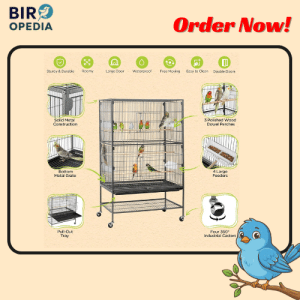
The frame is powder-coated wrought steel with a hammered finish. That finish isn’t just cosmetic. It adds a layer of water resistance, which matters if you clean the cage often or keep it in a humid room. Thinner, painted wire cages tend to chip and rust within a year of regular use. This one is built to handle daily wear without losing structural integrity.
Safety Features and Door Design
Two front doors sit at a height that’s easy to reach without bending or reaching over the top. Each opening measures 10.4 inches by 8 inches, wide enough to swap food dishes, perches, or toys without wrestling with a cramped gap. Secure latches on both doors keep them from swinging open on their own, which matters if you have an especially clever or food-motivated bird.
Cleaning and Maintenance
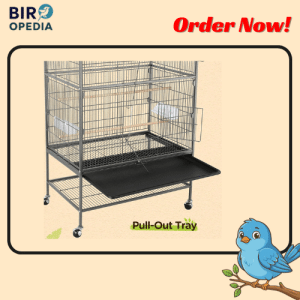
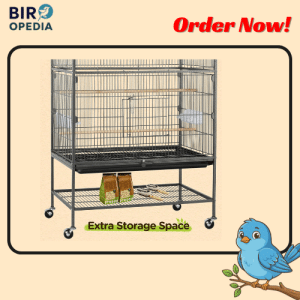
Daily cleaning is where most cheap cages fall short. This one has a slide-out tray beneath a metal grate. The grate keeps your bird up and away from droppings, and the tray pulls out smoothly for quick wipe-downs. You won’t need to disassemble anything to keep the cage sanitary, which realistically means you’ll clean it more often.
Mobility and Placement
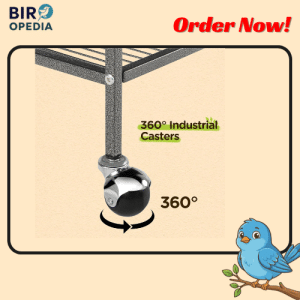
The four-wheel rolling stand is a small addition that solves a real problem. At 37.5 pounds fully assembled, this cage isn’t something you want to lift every time you need to move it. The casters roll smoothly in any direction, so you can shift the cage toward a sunny window in the morning and away from drafts at night, without straining your back.
What Real Owners Say
With 5,398 ratings and a 4.6-star average, this cage has a large enough review base to trust the pattern, not just a handful of outlier opinions. One verified buyer, reviewing the black version in the 31.1″L x 20.4″W x 52.0″H size, <cite index=”2-1″>said it felt sturdy once put together</cite>. That kind of feedback shows up repeatedly across reviews: buyers consistently mention the interior space, the solid feel, and the overall appearance as standout strengths.
Honest Drawbacks
No cage is perfect, and it’s worth knowing the limitations before you order.
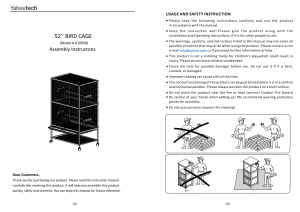
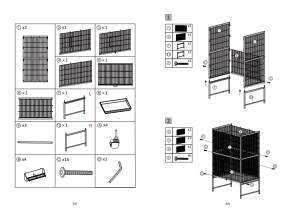
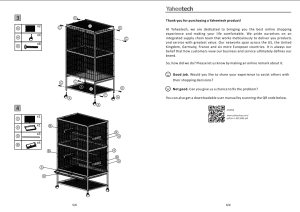
- Assembly is required. Like most cages in this price range, it ships flat-packed. Plan for 30 to 60 minutes of setup.
- Bar spacing has limits. The 5/8-inch spacing works well for small to medium birds, but it’s too wide for finches, canaries, or other very small species.
- Not built for large parrots. This cage suits small and medium birds. African greys, macaws, and similarly large species need a bigger, heavier-duty enclosure.
- The stand height is fixed. At roughly 14.8 inches, the stand isn’t adjustable, so measure your space before deciding where it’ll go.
How to Choose the Right Affordable Bird Cage
If you’re comparing this cage against other budget options, or shopping for a different bird species, these are the factors that actually matter.
Match Bar Spacing to Your Bird’s Species
This is the single most important safety factor, and it’s easy to overlook. Bar spacing that’s too wide lets small birds squeeze through gaps or get their heads stuck. As a general rule, finches and canaries need spacing under half an inch, while cockatiels, lovebirds, and small conures do fine with 5/8-inch spacing like the Yaheetech cage above.
Prioritize Usable Interior Space Over Total Height
Cage listings often lead with the tallest measurement, but birds need horizontal room to move, flap, and climb more than they need vertical height alone. When comparing cages, check the width and depth first, then factor in height as a secondary consideration.
Look for Easy-Clean Features
A slide-out tray with a grate isn’t a luxury add-on. It’s what separates a cage you’ll clean daily from one you’ll dread cleaning weekly. Birds are sensitive to bacteria buildup in droppings, so easy access to the tray directly affects your bird’s health.
Choose Rust-Resistant, Powder-Coated Materials
Thin, painted wire looks fine in photos but wears down fast in real use. Powder-coated steel resists chipping and water damage far better, which extends the cage’s usable life and keeps your bird from chewing on exposed, corroded metal.
Consider Mobility and Placement Needs
A cage on wheels gives you flexibility that a stationary one doesn’t. If you like to reposition your bird for sunlight, temperature, or social time with the household, a rolling stand is worth the extra convenience, even on a budget.
Think About Noise and Household Traffic
Birds are social animals, and most do better with some daily interaction rather than isolation in a quiet back room. At the same time, too much foot traffic or noise near the cage can cause stress. A rolling stand helps here too, letting you find a middle ground: near the family’s daily activity, but out of the busiest walkway in the house.
Factor in Long-Term Costs, Not Just the Sticker Price
An affordable cage that needs replacing in a year isn’t actually a good deal. Look at warranty length, material quality, and review consistency over time. A one-year manufacturer warranty, like the one on this cage, is a reasonable baseline for this price range.
What’s Included and What You Might Need to Add
Most budget cages, including this one, ship with the core structure and a basic feeding setup. Here, that means the frame, the rolling stand, the slide-out tray, and a bowl. What it doesn’t include are perches beyond the basics, toys, or a cage cover. Plan to budget a bit extra for natural wood perches of varying widths, a few rotating toys to prevent boredom, and a breathable cover for nighttime. None of these add-ons are expensive, but factoring them in upfront gives you a more accurate total cost before you check out.
Common Mistakes to Avoid When Buying a Cheap Bird Cage
Even careful shoppers make a few predictable mistakes when hunting for a deal. Knowing these ahead of time can save you a return shipment or, worse, an unsafe setup for your bird.
Buying based on size alone. A cage that looks big in a listing photo can still have bar spacing that’s unsafe for your species. Always check spacing before dimensions. A tall, wide cage with the wrong bar gap is still a hazard, no matter how spacious it looks.
Ignoring the door design. Small, awkwardly placed doors make daily care harder than it needs to be. If a door is too narrow to fit a food dish through comfortably, you’ll be fighting the cage every single day. Wide, well-placed doors save real time over the life of the cage.
Skipping the tray and grate check. Some ultra-budget cages skip the grate entirely, leaving your bird in direct contact with droppings. This isn’t just an inconvenience; it’s a genuine hygiene and health risk that can lead to respiratory issues over time.
Overlooking assembly requirements. Flat-packed cages are normal at this price point, but some require more tools, more time, or more patience than others. Reading assembly notes in verified reviews before you commit can save you an hour of frustration on delivery day.
Assuming all “medium bird” cages fit the same species. Cage sizing terms aren’t standardized across brands. One brand’s “medium bird cage” might suit a cockatiel, while another’s is really built for a much smaller parakeet. Always cross-check interior dimensions and bar spacing against your specific bird’s needs, not just the size label on the listing.
Underestimating long-term cleaning effort. A cage that looks easy to clean in photos can turn out to have awkward corners or a tray that sticks. Look for specific mentions of tray and grate design in reviews, not just general “easy to clean” claims in the product description.
Is This Cage Right for Your Bird? A Quick Species Checklist
Specs only tell part of the story. Here’s a quick reference for how this cage fits some of the most common small and medium pet birds.
Cockatiels: A strong match. The interior height and width give a cockatiel enough room to stretch its wings and move between perches, and the 5/8-inch bar spacing is safe for their size.
Lovebirds and budgies: Also a strong match, especially if you’re housing a pair. The floor space comfortably fits two birds without crowding, as long as you add enough separate perches and toys.
Conures (small to medium): Works well for smaller conure species. Larger conures may still fit but will have less room to spare, so measure your specific bird against the interior dimensions first.
Finches and canaries: Not a good fit. The bar spacing is too wide for these smaller species, and their needs lean toward horizontal flight space rather than vertical height.
Large parrots (macaws, African greys, cockatoos): Not appropriate. These birds need thicker bars, reinforced welds, and significantly more interior space than this cage provides.
Frequently Asked Questions About Affordable Bird Cages
Are affordable bird cages safe for daily use?
Yes, as long as the bar spacing, material, and door latches meet basic safety standards for your bird’s species. Price alone doesn’t determine safety. Specs do.
How often should I clean a cage with a slide-out tray?
Most owners clean the tray daily and do a deeper cage cleaning weekly. Cages with a grate and slide-out tray make this routine faster and less messy.
Can one cage work for multiple small bird species?
Often yes, as long as bar spacing suits the smallest bird in the group and there’s enough interior space for all birds to move freely without crowding.
Is a rolling stand necessary, or just a nice extra?
It’s not strictly necessary, but it adds real convenience. Repositioning a 35-plus-pound cage without wheels is a two-person job. With wheels, it’s effortless.
What’s a reasonable price range for a quality small-to-medium cage?
Based on current market pricing and review quality, cages in the $100 to $150 range, like the Yaheetech model above, tend to offer the best balance of durability and cost.
Do I need a bigger cage if I have more than one bird?
Generally yes. Two birds need more than double the floor space of one, since they need room to avoid each other as well as move freely. Check the manufacturer’s guidance on bird count, and lean toward a larger cage if you’re housing a pair or small flock.
How long should a well-built affordable cage last?
With regular cleaning and no major structural damage, a powder-coated steel cage in this category can reasonably last five years or longer. Rust, chipped paint, or bent bars are the usual signs it’s time to replace one.
Is a cheaper cage ever the wrong choice, even if it fits my bird?
Yes, if it skips basic safety features like a grate, secure latches, or appropriate bar spacing. Affordability should never come at the cost of your bird’s safety. If a listing is missing key specs, treat that as a red flag rather than assuming the best.
Final Verdict: Is This Cheap Bird Cage Worth It?
For the price, the Yaheetech 52″ safe bird cages delivers more than most budget options in its category. The combination of powder-coated steel, a wide interior, an accessible cleaning tray, and a mobile stand covers the essentials most bird owners actually need. It’s a strong fit for cockatiels, lovebirds, parakeets, conures, and similarly sized birds.
If your bird is much smaller, like a finch or canary, look for tighter bar spacing instead. If you’re housing a large parrot, this cage won’t be sturdy or spacious enough, and you’ll want a heavier-duty option built for bigger birds.
At the end of the day, the best affordable cage is the one that matches your specific bird’s size and habits while holding up to daily use without constant repairs or replacements. Reviewing real specs, not just marketing language, and cross-checking them against verified owner feedback is the most reliable way to get that right the first time.