

Have you ever heard your cat making strange sounds that remind you of birds? It’s surprising, right?
You might wonder if your feline friend is actually trying to mimic bird noises. Understanding why cats do this can change the way you see your pet forever. If you’re curious about what’s behind these unusual sounds and what they mean for your cat’s behavior, keep reading.
You’re about to discover fascinating insights that will deepen your connection with your furry companion.

Credit: www.reddit.com
Cat Vocal Abilities
Cats have many ways to use their voices. They can make sounds for different reasons. Some cats even mimic other animals.
Understanding cat sounds helps us know what they want or feel. Their vocal skills are quite special.
Range Of Cat Sounds
Cats use a wide range of sounds. These include meows, purrs, hisses, and chirps. Each sound means something different.
- Meowing: Used mostly to talk to humans.
- Purring: Shows contentment or comfort.
- Hissing: A sign of fear or warning.
- Chirping: Sometimes used when watching birds.
- Yowling: Means distress or mating calls.
How Cats Communicate
Cats communicate with sounds and body language. They may imitate bird noises to get attention or express curiosity.
| Sound | Purpose |
| Meow | Ask for food or attention |
| Chirp | Mimic birds or show excitement |
| Hiss | Warn or scare off threats |
| Purr | Show comfort or calm |
| Yowl | Signal distress or mating |
Bird Sounds And Cat Behavior
Cats often hear many bird sounds outside their windows. These sounds can catch their attention quickly. Bird noises play a role in how cats behave indoors and outdoors.
This article explores common bird calls cats hear and how cats react to these noises. Understanding these responses helps us learn more about cat behavior.
Common Bird Calls Cats Hear
Cats usually hear several types of bird calls near homes and gardens. These calls include songs, alarms, and chatter. Each call sounds different and can mean different things to cats.
- Chirping: short, high-pitched sounds made by small birds.
- Warbling: melodic and varied bird songs often sung by males.
- Alarm calls: sharp, loud sounds warning of danger.
- Chattering: quick, repeated sounds made by some birds.
Cats’ Reactions To Bird Noises
Cats respond to bird noises in many ways. Some may become excited and try to hunt. Others may watch quietly or show curiosity. Their reactions depend on the type of sound and their personality.
| Bird Noise | Cat Behavior |
| Chirping | Alert and focused watching |
| Warbling | Curious but calm |
| Alarm calls | Heightened alertness and possible hiding |
| Chattering | Excited stalking or vocal mimicry attempts |
Evidence Of Cats Mimicking Birds
Cats are known for their unique sounds and behaviors. Some people wonder if cats can mimic bird noises. This topic interests many animal lovers and researchers.
Scientists and pet owners have observed cats making sounds similar to birds. These observations help us understand if cats copy bird calls or use these sounds for hunting.
Recorded Instances
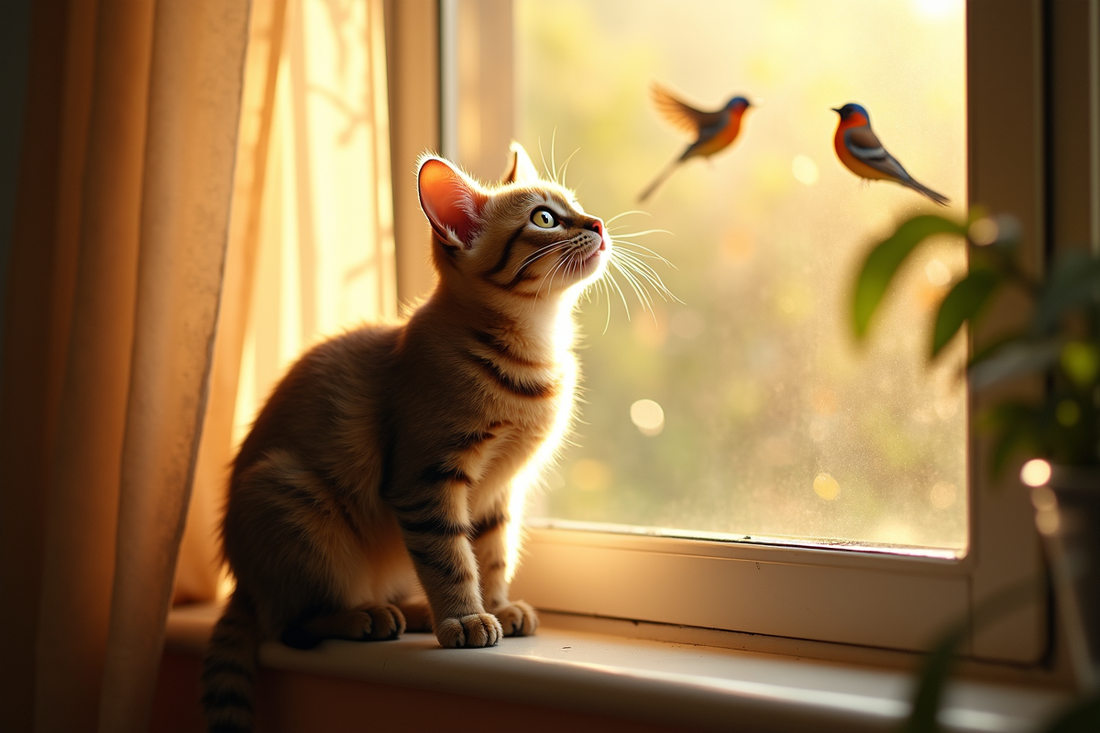
There are many stories of cats making bird-like sounds. Some pet owners say their cats chirp or trill like birds do. These sounds often happen when cats see birds outside.
Videos online show cats making noises that sound like bird calls. These recordings suggest cats try to copy birds. Some cats even use these sounds to attract birds closer.
- Cats chirp or trill near windows with birds outside
- Some cats make short, sharp calls like small birds
- Recorded sounds can match specific bird types
Scientific Observations
Scientists have studied cat sounds to learn if cats mimic birds. They found cats use chirps and trills as hunting tools. These sounds may confuse birds or lure them closer.
Research shows cats do not copy birds perfectly. Instead, cats make similar sounds that help in hunting. This behavior is part of their natural instincts.
- Chirping helps cats focus on prey
- Sounds are not exact bird calls but close
- Vocal mimicry supports hunting success
Credit: artyourcat.com
Reasons Cats Imitate Bird Noises
Cats sometimes make sounds that mimic birds. This behavior can seem strange but has interesting reasons behind it.
Understanding why cats copy bird noises helps us learn more about their nature and instincts.
Hunting Strategy
Cats use bird sounds to trick their prey. By copying these noises, they lure birds closer. This tactic helps cats get ready to catch food quietly and quickly.
- Attracts birds by sounding like them
- Reduces suspicion from the prey
- Improves hunting chances
Social Interaction
Cats may imitate bird noises to communicate or express themselves. Some cats try to join in with sounds they hear around them. This copying can be a way to interact with people or other animals.
| Purpose | Explanation |
| Attention | Get noticed by owners or other pets |
| Curiosity | Explore new sounds and their meanings |
| Bonding | Use sound to connect with others |
Play And Curiosity
Cats enjoy playing with sounds. Imitating bird noises can be part of their fun. It shows their natural curiosity and helps them practice skills.
Reasons cats mimic bird noises during play include:
- Testing their voice abilities
- Entertaining themselves
- Practicing hunting skills in a safe way
How Cats Learn Bird Sounds
Cats sometimes mimic bird noises. They pick up these sounds by listening carefully. This skill helps them understand their surroundings.
Learning bird sounds is part of how cats explore their environment. They use these sounds to communicate or play.
Listening And Repetition
Cats listen to bird calls many times. Repeating the sounds helps them copy the noises better.
- Cats hear bird sounds outdoors or near windows.
- They try to repeat soft chirps and tweets.
- Practice helps cats get closer to real bird sounds.
- Young cats learn faster by copying sounds they hear often.
Environmental Influences
Different environments affect how cats learn bird sounds. Indoor cats may mimic fewer sounds than outdoor cats.
| Environment | Bird Sounds Heard | Effect on Cats |
| Indoor | Limited | Less practice copying sounds |
| Suburban | Moderate variety | Some mimicry possible |
| Rural | Many types | More chances to learn sounds |
Differences Between Cat And Bird Sounds
Cats and birds make very different sounds. These sounds come from different parts of their bodies. Cats use their vocal cords, while birds use a special organ called the syrinx.
Understanding these differences helps us know why cats rarely mimic bird noises exactly. Their sounds serve different purposes and follow unique patterns.
Sound Patterns
Bird sounds often include melodies and repeated phrases. They can sing complex tunes to communicate or attract mates. Cats usually make simple sounds like meows, purrs, and hisses.
Bird calls often have clear rhythm and pitch changes. Cats’ sounds are less musical and more about expressing feelings or needs.
- Birds use repeating notes and whistles
- Cats use short, sharp sounds
- Birds’ sounds have more tone variation
- Cats focus on volume and intensity
Purpose And Context
Birds use sounds to mark territory, find mates, and warn of danger. Their songs are often seasonal and linked to reproduction. Cats use sounds mainly to communicate with humans and other cats.
Cats rarely mimic bird noises because their communication needs differ. Instead, they use sounds suited for hunting, warning, or asking for attention.
- Bird sounds are for social and reproductive signals
- Cat sounds express emotions and needs
- Birds sing mostly during the day
- Cats vocalize to interact with people and animals
Training Cats To Mimic Sounds
Some cat owners wonder if cats can copy bird noises. Cats do hear many sounds daily. Training cats to mimic sounds is an interesting idea.
Cats use meows and purrs to communicate. Teaching them to mimic bird sounds takes patience and care.
Techniques And Tips
Start by playing bird sounds often near your cat. Use clear, short sounds that catch their attention. Repeat the sounds regularly to help your cat learn.
Reward your cat with treats or affection when they try to copy the sounds. This positive feedback helps them want to repeat the behavior.
- Use recordings of simple bird calls
- Play sounds during quiet moments
- Give a treat after any sound attempt
- Keep training sessions short and fun
- Be patient and consistent
Limitations To Expect
Cats are not natural mimics like some birds. Their vocal cords and brain work differently. This limits how well they can copy sounds.
Most cats will not perfectly mimic bird noises. They may try to make similar sounds but not exact copies. It is important to have realistic goals.
- Cats have different voice structures than birds
- They use sounds mainly to communicate with humans
- Mimicking is not a common cat behavior
- Some cats may never attempt to copy sounds
- Training results vary by cat personality

Credit: www.reddit.com
Impact Of Mimicking On Cats And Birds
Some cats can copy bird sounds. This behavior affects both animals in many ways. Understanding these effects helps us learn about animal communication.
Mimicking bird noises may change how cats act and how birds respond. We look at the benefits for cats and the effects on bird behavior.
Benefits For Cats
When cats mimic birds, they may gain several advantages. This skill can improve their hunting and social skills.
- Attracts birds closer for hunting
- Improves their listening and focus
- Helps cats learn new sounds and signals
- May reduce stress by engaging their minds
- Strengthens bonds with humans when they imitate together
Effects On Bird Behavior
Birds may react differently when cats mimic their calls. Some become cautious, while others ignore or investigate the sounds.
| Bird Reaction | Description |
| Alertness | Birds become more watchful and ready to fly away |
| Curiosity | Some birds approach to check the source of sounds |
| Ignore | Birds may ignore repeated or unnatural calls |
| Stress | Frequent mimicry might cause birds to feel unsafe |
Frequently Asked Questions
Do Cats Really Mimic Bird Noises?
Yes, some cats can mimic bird noises. They do this to communicate or attract prey. It’s a natural hunting instinct.
Why Do Cats Imitate Bird Sounds?
Cats imitate bird sounds to lure birds closer. This behavior helps them hunt more effectively. It’s also a form of play or curiosity.
Can All Cats Mimic Bird Noises?
Not all cats mimic bird noises. It depends on the cat’s personality and environment. Some cats are more vocal and curious.
How Do Cats Learn To Mimic Birds?
Cats learn by listening carefully to bird calls around them. They try to replicate these sounds instinctively during hunting or play.
Conclusion
Cats imitating bird sounds is a fascinating behavior. It shows their curiosity and intelligence. These mimicry skills might help them in hunting. Or they might just find it fun. Every cat is unique, and not all will mimic birds. Observing your cat can reveal surprising behaviors.
So, next time your cat chirps, it’s not just random. It’s a glimpse into their playful nature. Understanding these quirks can deepen your bond. Enjoy the mystery and charm of your feline friend. They always keep us guessing, don’t they?



