Have you ever wondered how birds decide where and when to search for food? It turns out that the risk of predators nearby plays a huge role in their choices.
When danger is close, birds don’t just eat—they carefully balance the need to feed with staying safe. Understanding this delicate dance can change how you see these feathered creatures and even inspire you to observe nature more closely. Keep reading to discover how predation risk shapes bird foraging behaviour and what this means for the wild world around you.
Predation Risk And Bird Behavior
Birds change their behavior to stay safe from predators. Predation risk shapes where and how birds look for food.
Understanding this helps us learn why birds choose certain feeding spots and times.
Types Of Predators
Birds face many predators. Some hunt from the air, others from the ground.
Common predators include hawks, snakes, cats, and larger birds.
- Raptors like hawks and falcons attack from above
- Snakes can sneak up on birds on the ground
- Domestic cats hunt small birds near homes
- Crows and larger birds may steal food or attack young birds
Detecting Danger
Birds use sight and sound to detect predators. They watch for movement and listen for unusual noises.
Some birds have sharp eyes to spot threats from far away. Others rely on alarm calls from nearby birds.
- Looking for sudden movements or shadows
- Listening for calls or sounds of predators
- Watching other birds’ reactions
- Using safe vantage points to scan surroundings
Risk Assessment Strategies
Birds balance finding food with staying safe. They pick feeding spots that lower danger.
Some birds feed in groups to watch for predators. Others change feeding times to avoid hunters.
- Choosing open areas to see predators early
- Feeding in groups to increase vigilance
- Foraging more during safe daylight hours
- Quickly fleeing when sensing danger

Credit: www.researchgate.net
Foraging Strategies Under Threat
Birds face constant dangers from predators while searching for food. Their foraging actions change to reduce risk. These changes help birds survive and find enough food despite threats.
Predation risk affects how birds feed, where they feed, and when they feed. Understanding these behaviors shows how birds balance safety and nutrition.
Changes In Feeding Patterns
Birds often change their feeding habits when predators are near. They may eat less or choose safer foods. Some birds eat quickly to reduce time spent exposed.
- Shift to feeding on safer but less nutritious food
- Increase feeding speed to avoid staying too long in one spot
- Use cover like bushes or trees to hide while eating
- Reduce feeding in open areas to lower risk
Habitat Selection
Birds pick habitats that protect them from predators. They prefer places with good hiding spots or quick escape routes. This choice affects where they find food.
| Habitat Type | Protection Level | Foraging Benefit |
| Dense shrubs | High | Good cover, less risk |
| Open fields | Low | More food but higher risk |
| Forest edges | Medium | Balance of food and safety |
| Wetlands | Medium | Food-rich but exposed |
Timing And Duration Of Foraging
Birds often change when and how long they forage. They may feed during safer times or shorten feeding sessions to avoid predators. These changes help them stay alert.
- Feed mostly at dawn or dusk when predators are less active
- Take short feeding breaks instead of long sessions
- Increase vigilance during feeding to spot danger early
- Use quick flights to move between feeding spots
Trade-offs Between Feeding And Safety
Birds must eat to survive, but eating can put them in danger. Predators watch for birds while they search for food.
Birds change how they look for food based on how risky the area feels. They balance getting enough food with staying safe.
Energy Needs Vs. Risk Avoidance
Birds need energy to fly, grow, and stay warm. Sometimes they must take risks to find enough food.
When danger is high, birds may eat less or choose safer but less tasty places. If they are very hungry, they may take bigger risks.
- High hunger can make birds feed in risky spots
- Low hunger leads to safer feeding choices
- Birds change feeding time to avoid predators
Group Foraging Benefits
Birds often feed in groups to reduce danger. Groups can spot predators faster than one bird alone.
Being in a group helps birds feel safer. Each bird spends less time watching for predators and more time eating.
- More eyes to watch for predators
- Shared warning calls alert the group
- Lower chance of any one bird being caught
Use Of Cover And Vigilance
Birds use bushes, trees, or tall grass to hide while feeding. Cover helps them stay safe from predators.
Birds stay alert by looking around often. They stop feeding to scan the area for danger.
- Feed near cover to escape quickly
- Look up or around every few seconds
- Balance feeding time with watching time
Adaptations To Reduce Predation
Birds face many dangers while searching for food. Predators watch them closely. To survive, birds use special skills and behaviors.
These adaptations help birds avoid being caught. They change how they look, how they talk, and how they run away.
Camouflage And Mimicry
Many birds blend into their surroundings. Their feathers match the colors of trees or ground. Some birds copy the look of other animals or objects to confuse predators.
- Color patterns that match leaves or bark
- Shapes that break up the bird’s outline
- Imitating harmless animals or objects
Alarm Calls And Communication
Birds warn each other about danger using sounds. Different calls mean different threats. These signals help birds hide or fly away quickly.
| Call Type | Meaning |
| Sharp chirp | Nearby predator |
| Continuous chatter | Alert group to stay still |
| High-pitched whistle | Call to escape fast |
Escape Tactics
Birds use quick moves to avoid predators. They may fly fast, dive into bushes, or freeze to avoid detection. Some use sudden changes in direction to confuse attackers.
- Flying in zigzag patterns
- Hiding under leaves or branches
- Freezing and staying very still
- Dropping to the ground suddenly
Environmental Factors Impacting Risk
Bird foraging behaviour changes with the risk of being preyed on. Many environmental factors affect this risk. Understanding these helps us learn how birds survive and find food.
This article covers three key factors: habitat complexity, seasonal variations, and human influence. Each factor changes how birds act when searching for food.
Habitat Complexity
Complex habitats give birds more hiding places from predators. Dense bushes, trees, and uneven ground all help reduce predation risk. Birds feel safer and may forage longer in these areas.
- Dense foliage shields birds from view
- Multiple layers of plants slow predators
- Varied terrain offers quick escape routes
- Safe spots let birds rest between feeding
Seasonal Variations
Seasons affect food availability and predator activity. During winter, food is scarce and birds take more risks. In summer, more food means birds can be picky and cautious.
| Season | Food Availability | Predator Activity | Bird Foraging Behaviour |
| Spring | High | Moderate | Active, cautious |
| Summer | High | High | Careful, selective |
| Autumn | Moderate | High | Balanced risk |
| Winter | Low | Low | Risk-taking, fast feeding |
Human Influence
Humans affect bird safety and food sources. Urban areas can be risky but also offer food. Some birds learn to avoid humans, while others use human spaces to hide.
Birds respond to human impact in different ways:
- Using buildings and parks as cover
- Feeding on scraps or bird feeders
- Changing foraging times to avoid people
- Avoiding noisy or busy places

Credit: royalsocietypublishing.org
Case Studies Of Bird Species
Birds change how they search for food when danger is near. Predators make birds careful and alert during foraging. Different species show unique behaviors based on their environments.
This article looks at case studies of ground foragers, aerial feeders, and forest dwellers. Each group shows how predation risk shapes their feeding habits and choices.
Ground Foragers
Birds that feed on the ground face risks from many predators like cats and snakes. They often use quick movements and stay near cover to stay safe.
- American Robin pauses frequently to scan for predators while feeding.
- Killdeer uses distraction displays to protect itself and young while foraging.
- Quail feed in groups to spot danger earlier.
Aerial Feeders
Birds that catch food in the air must balance feeding with watching for fast predators like hawks. They often feed in open spaces for better visibility.
| Species | Predation Risk Behavior |
| Swallows | Feed in large flocks to confuse predators |
| Swifts | Feed near cliffs to escape quickly |
| Kingfishers | Perch quietly before sudden dives |
Forest Dwellers
Birds in forests face danger from predators hiding in trees. They use the dense foliage to hide but must stay alert for snakes and larger birds.
- Woodpeckers tap on trees and listen for predators before feeding.
- Owls hunt at dusk to avoid daytime predators.
- Thrushes feed mostly on the forest floor but stay close to thick shrubs.
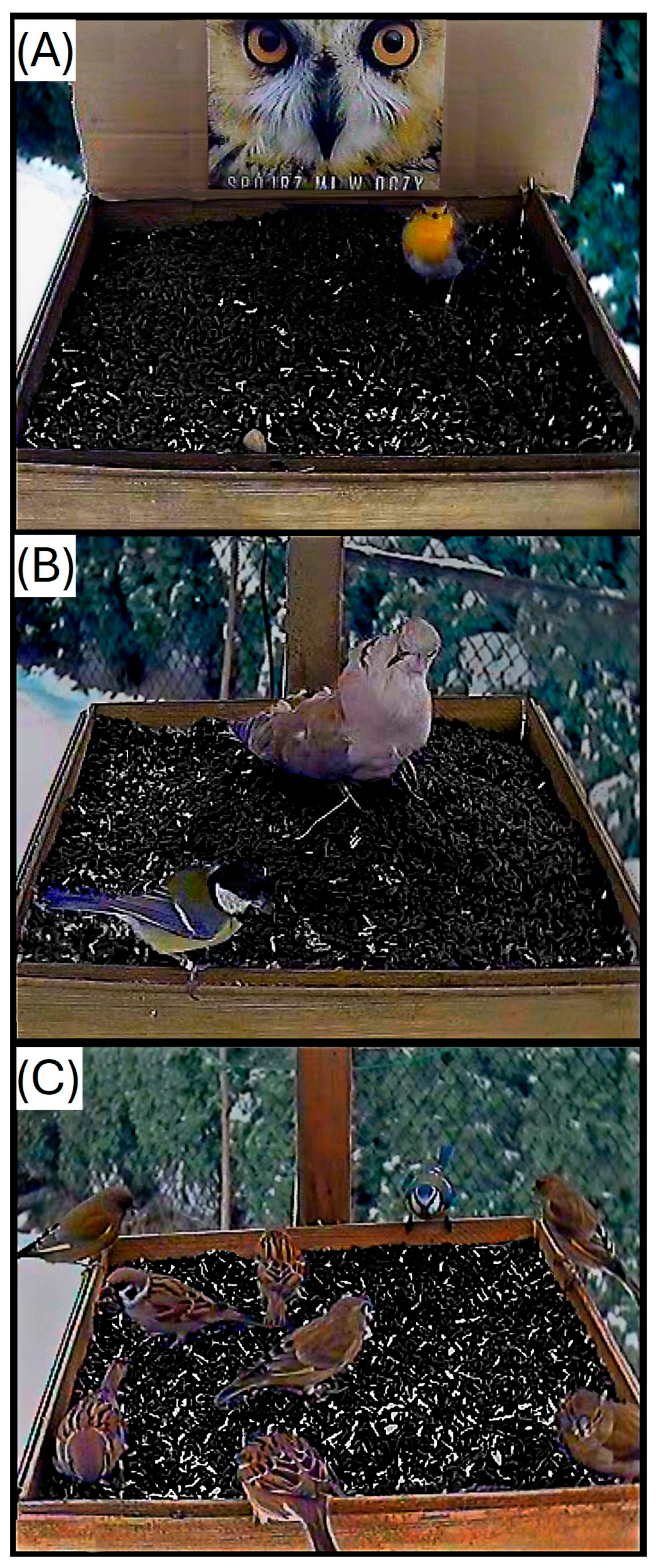
Credit: www.mdpi.com
Frequently Asked Questions
How Does Predation Risk Affect Bird Foraging Choices?
Predation risk makes birds more cautious in choosing feeding spots. They prefer safer areas with good visibility to detect predators early. This behavior reduces their feeding time but increases survival chances.
Why Do Birds Change Foraging Times Under Threat?
Birds often shift foraging to safer times, like dawn or dusk. This minimizes predator encounters. Adjusting feeding times helps balance energy needs and safety.
What Adaptations Help Birds Forage Despite Predators?
Birds develop sharp vision, quick reflexes, and flocking behavior. These traits enhance predator detection and reduce individual risk. Such adaptations allow safer and more efficient foraging.
How Does Group Size Influence Predation Risk During Foraging?
Larger groups reduce individual predation risk through collective vigilance. Birds share predator detection duties, allowing more feeding time. Group foraging enhances safety and food acquisition.
Conclusion
Birds change their foraging behavior to avoid predators. They stay alert and cautious. Choosing safer spots is crucial. Birds eat quickly to reduce time exposed. Group foraging offers safety in numbers. Each bird watches for danger. Predation risk shapes these survival strategies.
Understanding this helps us protect bird habitats. It highlights the delicate balance in nature. Birds adapt to threats around them. Knowing this enriches our appreciation of wildlife. Observing these behaviors in nature can be fascinating. So, next time you see birds, notice their actions.
They tell a story of survival.