How Many Perches Should Every Bird Cage Have – Quantity, Placement, and Types Explained
Are you setting up a new home for your feathered friend? One of the most important things to get right is the number of perches in your bird’s cage.
Too few, and your bird might feel cramped or bored. Too many, and the cage can become cluttered and stressful. So, how many perches should every bird cage have? Keep reading, because the answer will help you create a comfortable, happy space for your bird to play, rest, and explore.
Your bird’s well-being depends on it!
Importance Of Perches In Bird Cages
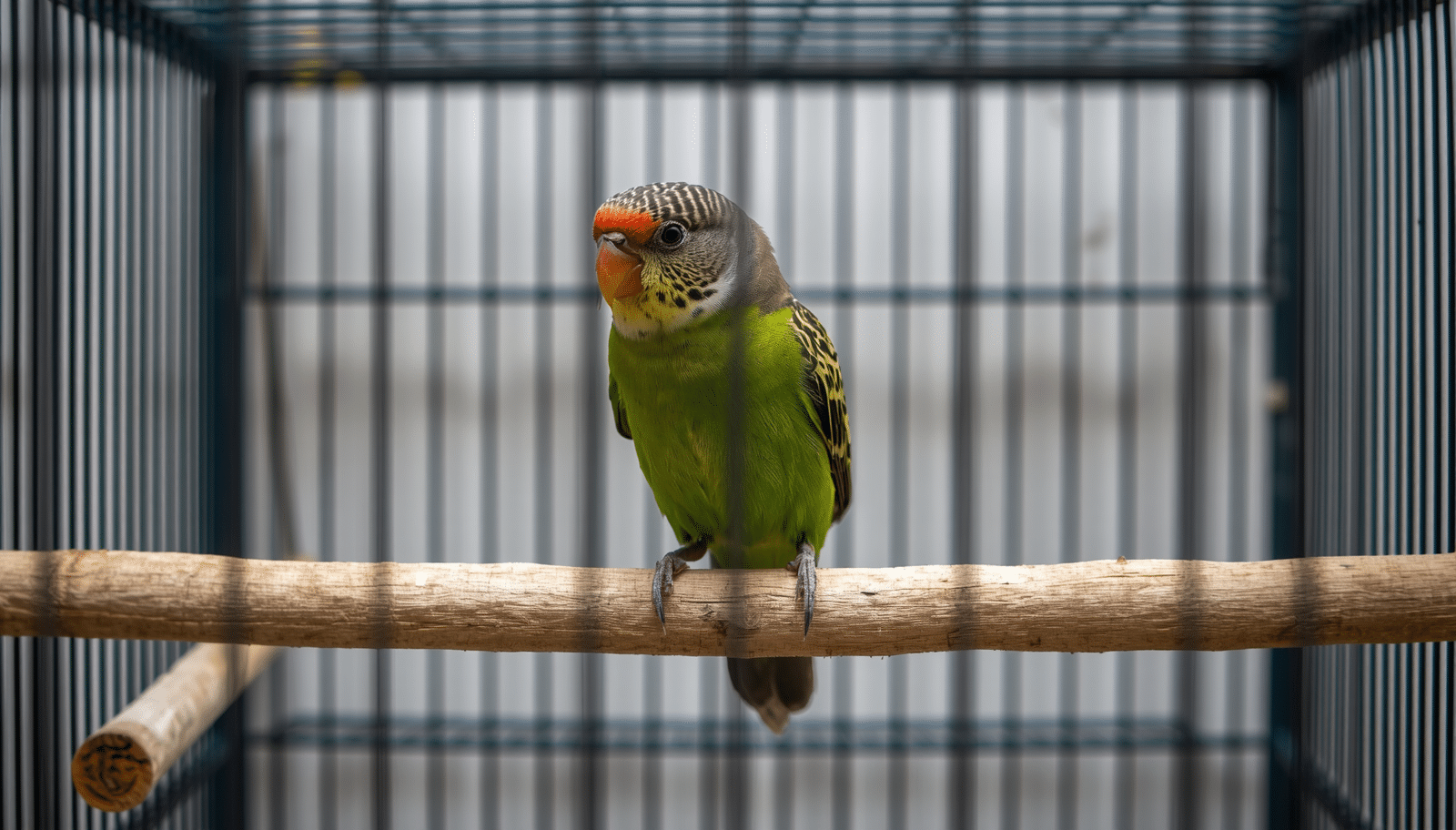
Perches are essential parts of any bird cage. They provide a place for birds to rest, exercise, and stay comfortable. Choosing the right number of perches helps keep birds healthy and happy.
Birds use perches to move around and to grip with their feet. Without enough perches, birds may feel stressed or develop foot problems. It is important to understand how many perches a cage should have and why.
Benefits For Bird Health
Perches help birds keep their feet strong and healthy. They also support good nail and beak condition. Different perch sizes and textures prevent foot sores and arthritis.
- Improve foot muscle strength
- Prevent pressure sores and injuries
- Help maintain nail health
- Provide natural exercise for feet
- Reduce risk of arthritis
Impact On Behavior And Comfort
Birds need perches to feel safe and comfortable. Perches placed at different heights encourage natural movement. This helps reduce boredom and stress inside the cage.
| Perch Placement | Behavioral Impact |
| High perch | Bird feels safe and watches surroundings |
| Low perch | Resting spot and easy access to food |
| Multiple perches | Encourages climbing and exercise |
| Varied textures | Prevents boredom and foot fatigue |
Factors Influencing Number Of Perches
Bird cages need the right number of perches for the bird’s comfort. Too few or too many perches can cause problems.
Several factors affect how many perches a cage should have. These include the bird’s type, cage size, and activity.
Bird Species And Size
Different bird species need different perch setups. Small birds use thin perches, while big birds need thick ones.
Large birds need more space and extra perches to move around. Small birds need fewer perches but more variety.
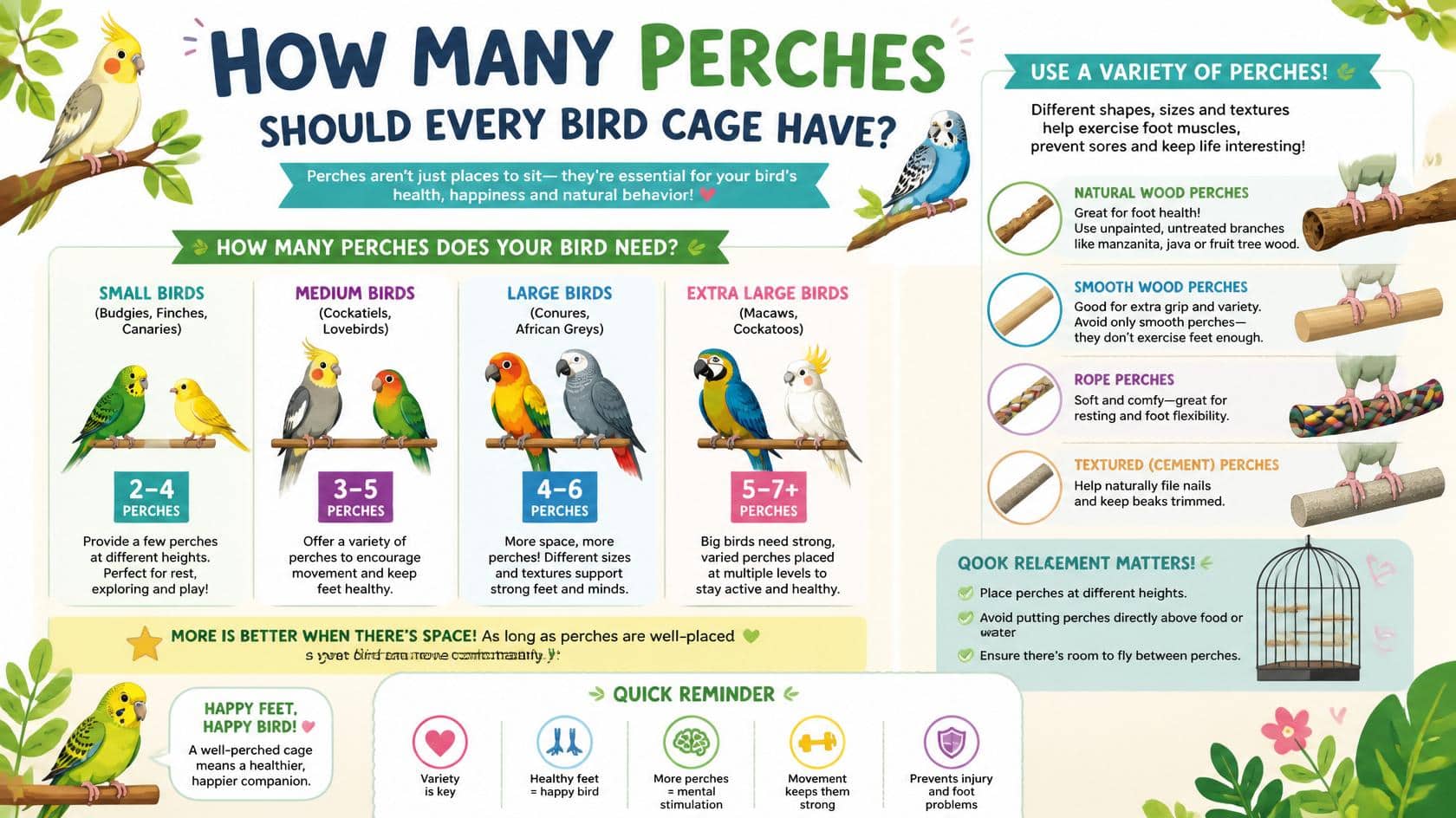
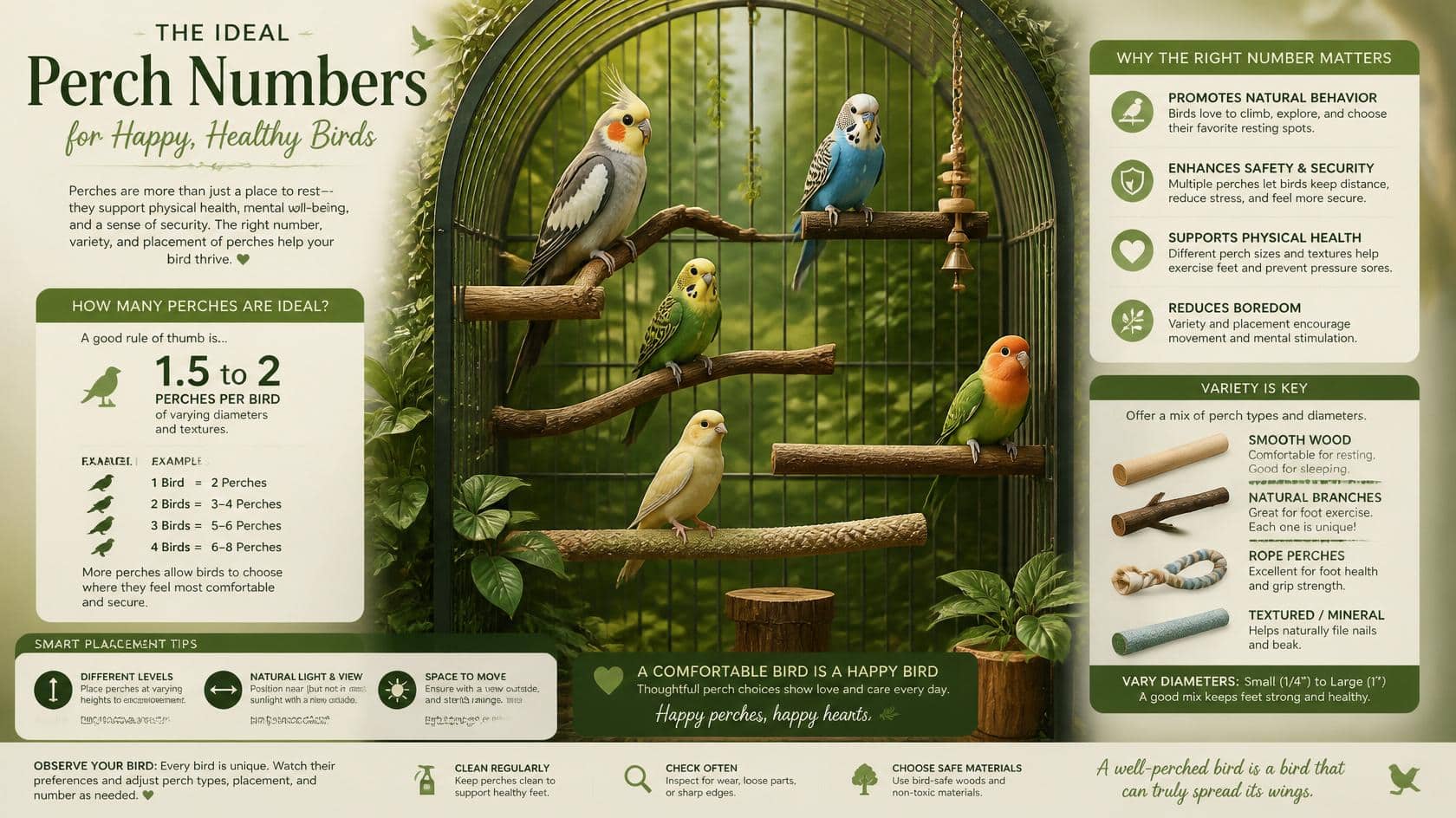
- Small birds like finches need 2-3 perches
- Medium birds like cockatiels need 3-4 perches
- Large birds like parrots need 4 or more perches
Cage Dimensions
The size of the cage affects how many perches fit comfortably. A small cage needs fewer perches to avoid crowding.
Larger cages allow more perches spaced apart. This helps birds move and rest without feeling cramped.
- Small cages: 2-3 perches
- Medium cages: 3-5 perches
- Large cages: 5 or more perches
If your current cage doesn’t provide enough room for the recommended number of perches, explore our Best Bird Cage for Parrots – 10 Top Models Reviewed to find spacious cages designed for healthy movement and enrichment.
Bird Activity Levels
Active birds need more perches for exercise and variety. Less active birds need fewer perches but soft resting spots.
Providing perches at different heights and textures helps keep active birds healthy and happy.
- Active birds: 4 or more perches
- Moderate activity: 3-4 perches
- Low activity: 2-3 perches
Knowing how many perches your bird needs is only part of the equation. Read our How to Place Perches in Bird Cage for Healthy Feet guide to learn the safest way to position them for comfort, exercise, and healthy feet.
Recommended Perch Quantity By Bird Type
Bird cages need the right number of perches for birds to stay healthy. Perches help birds rest, climb, and exercise.
The number of perches depends on the bird’s size and activity level. Different birds need different perch setups.
Small Birds
Small birds like finches and canaries need several perches to move around. They enjoy hopping and flying inside the cage.
Provide at least three perches in different spots. Use varying thicknesses to keep their feet strong.
- 3 to 4 perches per cage
- Use thin perches for small feet
- Place perches at different heights
Medium-sized Birds
Medium-sized birds like parrots and cockatiels need more space and perches. They climb and chew more than small birds.
Offer 4 to 5 perches with varied sizes and textures. This helps exercise their feet and keeps them busy.
- 4 to 5 perches per cage
- Include different perch materials
- Space perches to allow movement
Large Birds
Large birds like macaws and amazons need strong, sturdy perches. They use perches for climbing and resting a lot.
Use 5 or more thick perches made from durable material. Make sure perches can support their weight safely.
- 5 or more perches per cage
- Use thick, strong perches
- Place perches for easy climbing paths
Types Of Perches To Include
Bird cages need different types of perches for birds to stay healthy. Each perch type offers unique benefits. Birds enjoy variety and comfort with multiple perch options.
Choosing the right perches helps keep birds’ feet strong and prevents problems. Make sure to include natural, plastic, rope, and specialty perches in the cage.
Natural Wood Perches
Natural wood perches are made from real tree branches. They have uneven surfaces that help exercise birds’ feet. Birds like to chew on wood, which keeps their beaks healthy.
These perches come in many sizes and shapes. Different wood types provide various textures and hardness levels. Avoid toxic woods like cherry or cedar.
- Help keep feet strong and healthy
- Provide natural chewing material
- Offer different textures and sizes
- Should be cleaned regularly
Plastic And Rope Perches
Plastic perches are smooth and easy to clean. They come in bright colors and fun shapes. Some have ridges to help grip, but they can be hard on feet if used alone.
Rope perches are soft and flexible. Birds like to climb and grip them. These perches add variety but need regular checks for wear and dirt.
- Plastic perches are durable and easy to clean
- Rope perches are soft and good for climbing
- Use plastic and rope perches with natural ones
- Replace rope perches if frayed or dirty
Specialty Perches
Specialty perches include sand-covered and cement types. They help keep bird nails trimmed. Some have unique shapes for foot exercise and stimulation.
Use specialty perches in moderation. Too much rough surface can hurt bird feet. Rotate these perches with softer ones for balance.
- Sand-covered perches help trim nails
- Cement perches provide firm footing
- Unique shapes improve foot strength
- Use sparingly to avoid foot damage
Perch Placement Tips
Placing perches correctly inside a bird cage helps keep birds healthy. Good perch placement reduces stress and encourages natural behavior.
Each bird cage needs well-thought-out perch spots. This guide covers key tips for better perch placement.
Avoiding Crowding
Too many perches close together can crowd the cage. Birds need space to move comfortably without bumping into each other or the cage walls.
- Place perches at different heights to save space.
- Keep enough distance between perches for wings to stretch.
- Avoid blocking the cage entrance or food bowls.
- Leave open areas for flying or climbing.
Encouraging Movement
Birds need to move to stay active and healthy. Proper perch placement helps birds jump and fly between spots inside the cage.
| Perch Feature | Benefit |
| Varied heights | Promotes climbing and flying |
| Different thicknesses | Strengthens feet muscles |
| Non-slip surfaces | Prevents slipping and injuries |
| Strategic spacing | Encourages jumping and exercise |
Ensuring Easy Access To Food And Water
Birds must reach food and water easily from their perches. Place perches so birds can eat and drink without struggle.
- Position perches near food and water dishes.
- Keep perches stable to avoid spills.
- Ensure clear paths so birds don’t block each other.
- Adjust perch heights for easy reach.
Signs Of Perch Problems
Bird perches are important for their health and comfort. If there are problems with the perches, birds will show signs. Recognizing these signs helps keep birds safe.
Check your bird’s behavior and physical condition. These clues tell if the perches are right or need changes.
Behavioral Indicators
Birds show clear behaviors when perches cause discomfort. Watch for changes in how they act on or around the perches.
- Birds avoid using certain perches.
- Repeated foot shaking or lifting a foot while perched.
- Increased biting or chewing on perch material.
- Excessive vocalizing or restlessness.
- Frequent flying or hopping between perches instead of settling.
Physical Issues
Perch problems often cause physical harm. Check your bird’s feet and legs for issues linked to the perches.
| Physical Issue | Possible Cause from Perches | Signs to Watch For |
|---|---|---|
| Sore or swollen feet | Perch too hard or rough | Redness, swelling, limping |
| Foot sores or cuts | Sharp edges or dirty perch | Scabs, bleeding, bird avoids perch |
| Deformed toes | Perch size too small or large | Twisted or bent toes, difficulty gripping |
| Overgrown nails | Perch does not wear nails properly | Long nails curling under feet |
Maintaining Perches For Longevity
Bird perches need care to last a long time. Good maintenance keeps birds healthy and comfortable.
Regular cleaning and timely replacement help keep perches safe and strong.
Cleaning Practices
Clean perches often to remove dirt and droppings. This prevents bacteria build-up and infections.
Use mild soap and warm water. Avoid harsh chemicals that can harm birds.
- Remove perches from the cage before cleaning
- Scrub gently with a soft brush or cloth
- Rinse thoroughly to remove soap
- Dry completely before placing back in the cage
Replacement Guidelines
Replace perches if they show cracks, splinters, or wear. Damaged perches can hurt birds’ feet.
Check perches weekly for signs of damage. Use natural wood or safe materials for replacements.
- Look for cracks or rough spots
- Replace if the perch feels weak or unstable
- Use varied perch sizes for bird foot health
- Keep extra perches on hand for quick replacement
Multiple perches require regular maintenance to stay hygienic. Check out our Easy Clean Bird Cage guide for tips on choosing cages that make cleaning faster and easier.

Frequently Asked Questions
How Many Perches Does A Bird Cage Need?
A bird cage should have at least two to three perches. This provides variety and exercise for your bird’s feet. Multiple perches help prevent foot problems and boredom. The perches should vary in diameter and texture for healthy grip and stimulation.
What Size Perches Suit Different Bird Species?
Small birds need thinner perches, around ¾ inch diameter. Larger birds require thicker perches, between 1 to 2 inches. Correct perch size supports foot health and comfort. Always match perch size to your bird’s species and foot size.
Why Should Perches Be Spaced Apart In Cages?
Spacing perches apart allows birds to move freely and stretch wings. Proper spacing prevents overcrowding and reduces stress. It also encourages natural climbing and exercise behaviors. Aim for enough space so birds don’t feel cramped or restricted.
Can Perch Placement Affect Bird Behavior?
Yes, perch placement influences comfort, activity, and social interactions. Placing perches at varied heights stimulates natural habits. Strategic perch location can reduce aggression and boredom. Proper placement helps birds feel safe and engaged in their environment.
Conclusion
Choosing the right number of perches is essential. Birds need space to move. Too few perches can cause stress. Too many can clutter the cage. Balance is key for a happy bird. Observe your bird’s behavior. Adjust perches as needed.
Variety in perch sizes helps foot health. Natural materials are better for comfort. Clean perches regularly to prevent disease. Your bird’s well-being depends on good perch placement. Always prioritize your bird’s comfort and safety. With thoughtful setup, your bird will thrive.
Happy birds lead to happy owners. Enjoy your time with your feathered friend!