Are you ready for some happy chirps outside your window? How to Hang a Bird House is easier than you think. Putting up a bird house brings nature right to you.
It’s more than just a box, though. You are building a safe home for your feathered friends. This guide shows simple steps. You will hang the house correctly. Birds will feel secure and welcome.
Keep reading. Soon your garden will be full of singing birds. They will be singing just for you.

Credit: www.amazon.ca
Picking the Right Bird House
Choosing a good bird house brings birds to your yard. It keeps them safe and happy.
Different birds need different homes. Think about the size, materials, and airflow.
Materials and Style
Wood is the best choice. It holds a steady temperature. It lasts a long time outside. Do not use plastic or metal. They get too hot or too cold.
-
Use wood like pine or cedar. Do not treat it with chemicals.
-
Pick a simple style with a sloped roof.
-
The entrance hole must fit the bird you want.
-
Do not add a perch. Perches help predators reach inside.
Size is Important
The correct size keeps birds from leaving. Too small or too large keeps them away.
Air and Water Flow
Good airflow keeps birds cool in the heat. Drain holes stop water from sitting inside.
Your bird house must have:
-
Small vents at the top for air movement.
-
Drain holes in the floor for water to get out.
-
A roof that hangs over. This keeps rain away.
Selecting the Perfect Location
The right spot makes birds feel safe. Good placement helps birds visit and stay.
Think about the area around the bird house. Consider height, light, and safety.
Height and Reach
Pick a height that protects birds from people. It must also be easy for you to check. Five to ten feet up usually works best.
-
Put the house where you can reach it easily for cleaning.
-
Avoid very low spots. They attract predators.
-
Keep it away from busy areas. Too many people or pets scare birds.
Sun and Shade
Birds need warmth. They do not need too much heat. Find a spot with morning sun. It needs shade in the afternoon. This keeps the house cool on hot days.
Avoiding Predators
Keep the bird house away from animals. Cats and raccoons are common predators. Do not place it near branches they can use. Fences also let them reach the house.
-
Mount the house on a smooth pole. This stops predators from climbing.
-
Use a metal guard around the pole for better safety.
-
Keep the area around the house clear. Predators need no place to hide.
- The Cornell Lab of Ornithology’s NestWatch program stresses the absolute necessity of predator protection: “A nest box mounted on a pole without a predator baffle is essentially a death trap for the birds inside. We strongly recommend installing a metal stovepipe or PVC baffle that is at least 6 feet off the ground and 4 feet long on any pole-mounted box to effectively deter snakes, raccoons, and cats. Without this defense, nesting success rates are severely compromised.”
Tools and Supplies You Need
Hanging a bird house needs a few simple things. These help you mount it safely.
The right tools make the job easy. They ensure the house stays up for years.
Simple Tool List
You need a few simple tools to hang the house. They help you measure, drill, and secure it.
-
Measuring tape to check height.
-
Drill and drill bits for making holes.
-
Screwdriver for screws.
-
Hammer if you need to use nails.
-
Level to make the house straight.
-
Ladder to reach high spots.
-
Gloves to protect your hands.
Ways to Mount It
Choose the correct hardware to attach the house. Your choice depends on where you mount it.
Some hardware is better for trees. Others work well on walls or poles.
-
Use screws for walls or wood posts.
-
Use straps or bungee cords to tie it to a tree.
-
Use mounting brackets for poles or flat surfaces.
Hanging it Step-by-Step
Hanging a bird house gives birds shelter. Follow these simple steps for a correct setup. This guide helps you hang the house safely.
The right way to do it protects the house. It keeps the birds safe too. Let’s start with getting the house ready.
Getting the House Ready
Check the bird house for damage first. Look for loose pieces. Clean out any old nests or dirt. Make sure the house has good holes for air and drainage.
Pick a size that fits the local birds. Small birds need smaller houses. Larger birds need bigger ones. Painting it with safe paint protects it from the weather.
Mounting Methods
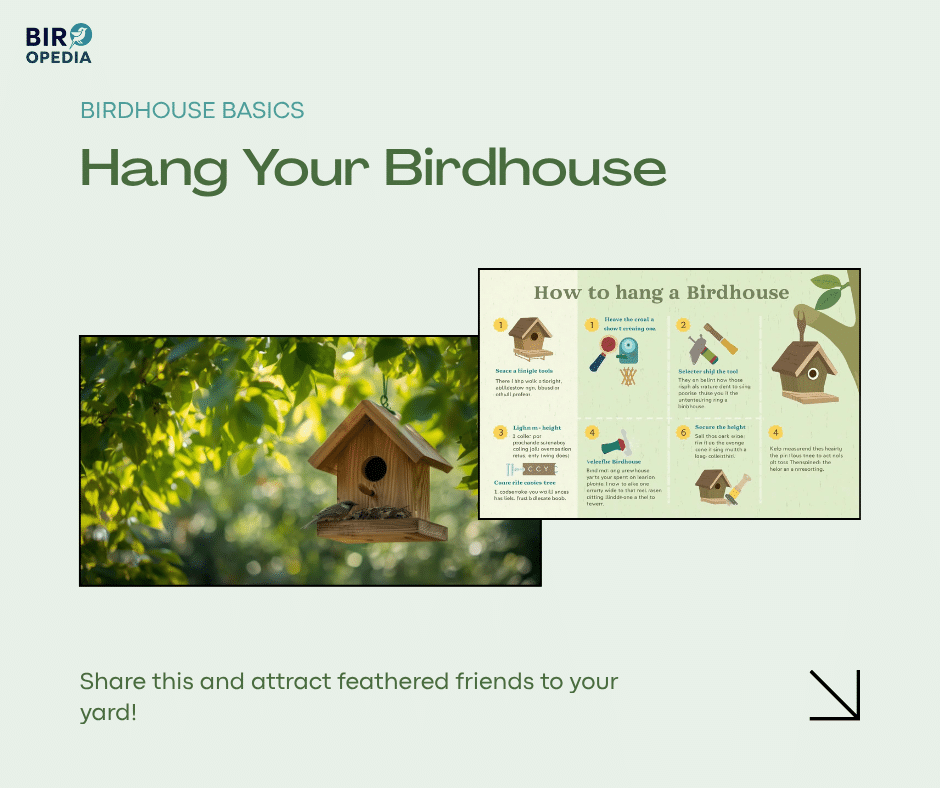
You can mount a bird house in a few ways. Use a strong wire to hang it. Attach it to a tree with screws. Or mount it on a pole. Pick a method that keeps the house steady. It must also keep it safe from predators.
-
Hang the house from a strong branch using rope or wire.
-
Attach the house to a tree with screws or brackets.
-
Mount the bird house on a secure pole base.
Securing the House
Make sure the bird house does not move or swing much. Tighten the screws or wire well. Do not use nails that can hurt the tree.
Put the bird house at least 5 to 10 feet up. This protects the birds from danger. Keep it away from busy spots and hot sun. Check the house often. Make sure it stays secure.
Keeping it Maintained
Hanging the house is the first step. Taking care of it keeps birds safe and happy.
Regular work helps the house last for many years. It stops dirt and damage.
When to Clean
Clean the bird house at least once a year. Do this after nesting ends in the fall.
Remove old nesting material and debris. This stops parasites. It keeps the birds healthy.
-
Always wear gloves for safety.
-
Use a brush to scrub the inside.
-
Rinse with water. Let it dry fully.
-
Do not use strong chemicals.
Fixing Damage
Look for cracks or loose parts often. Fix small damage quickly before it grows.
Use wood glue to repair cracks. Replace broken parts if you must. This keeps the house safe.
-
Look for holes or gaps.
-
Seal gaps so predators cannot get in.
-
Sand rough edges that might hurt birds.
-
Seal or paint the wood if it starts peeling.
Seasonal Changes
Change the house for the seasons. This protects birds from bad weather.
Add insulation in winter. Or move the house to a safe spot. Make sure it gets shade in summer. This keeps it cool.
-
Check the mounting after big storms.
-
Clear away snow or leaves in winter.
-
Trim branches nearby for good sunlight in spring.
-
Keep the ground around the house clean.

Credit: underatinroof.com
Getting Birds to Visit
A bird house is a great way to welcome birds. Birds need safe places to rest and nest.
You can enjoy watching local birds up close. Just make the bird house inviting.
Attracting Local Birds
Each bird type likes different houses. They like different spots too. Learn which birds live in your area.
Put the house where these birds feel comfortable.
-
Check bird guides for your area.
-
Use a bird house with the right size hole.
-
Put the house at the right height for your target birds.
Offering Food and Water
Birds go to places with food and clean water. This helps them stay healthy. It helps them feed their babies.
Put up bird feeders and water near the house. This attracts more birds.
-
Use different feeders for suet or seeds.
-
Keep water fresh in a shallow dish.
-
Refill the food and water often, especially when it is dry.
Avoiding Simple Mistakes
Some errors scare birds away. They can also harm them. Avoid these common problems. Check and fix the house often.
-
Do not put the house near busy areas.
-
Use non-toxic, weather-safe materials.
-
Avoid houses with sharp parts or loose pieces.
-
Keep pets and other predators away from the house.

Credit: www.amazon.ca
Frequently Asked Questions
How high should I hang my bird house?
Hang the house 5 to 10 feet up. This height keeps birds safe. It gives them a clear view. Birds feel secure here. This encourages nesting.
Which way should the entrance face?
Point the entrance away from strong winds. East or southeast usually works best. This protects the birds from bad weather. It keeps the inside dry and warm.
What materials are best for the house?
Use natural wood. Do not use treated wood. Avoid metal or plastic. They can get too hot. Use strong cord or wire to hang it. This keeps it stable and safe.
How do I clean it after birds leave?
Clean the house in late fall or early winter. Take out all the old nest stuff. Scrub it with a mild bleach mix. Rinse it very well. Let it dry fully before hanging it back up.
Conclusion
Putting up a birdhouse is a rewarding job. It brings nature closer to your home. Pick a quiet, safe location. Make sure it is secure and steady. Birds love a good shelter. Check and clean the house often. This keeps it ready for new guests.
Enjoy watching the birds move in. It’s a peaceful experience. You will see nature’s wonders right outside. Hanging a birdhouse is simple. Just follow these steps. You will help your local birds. Happy watching!