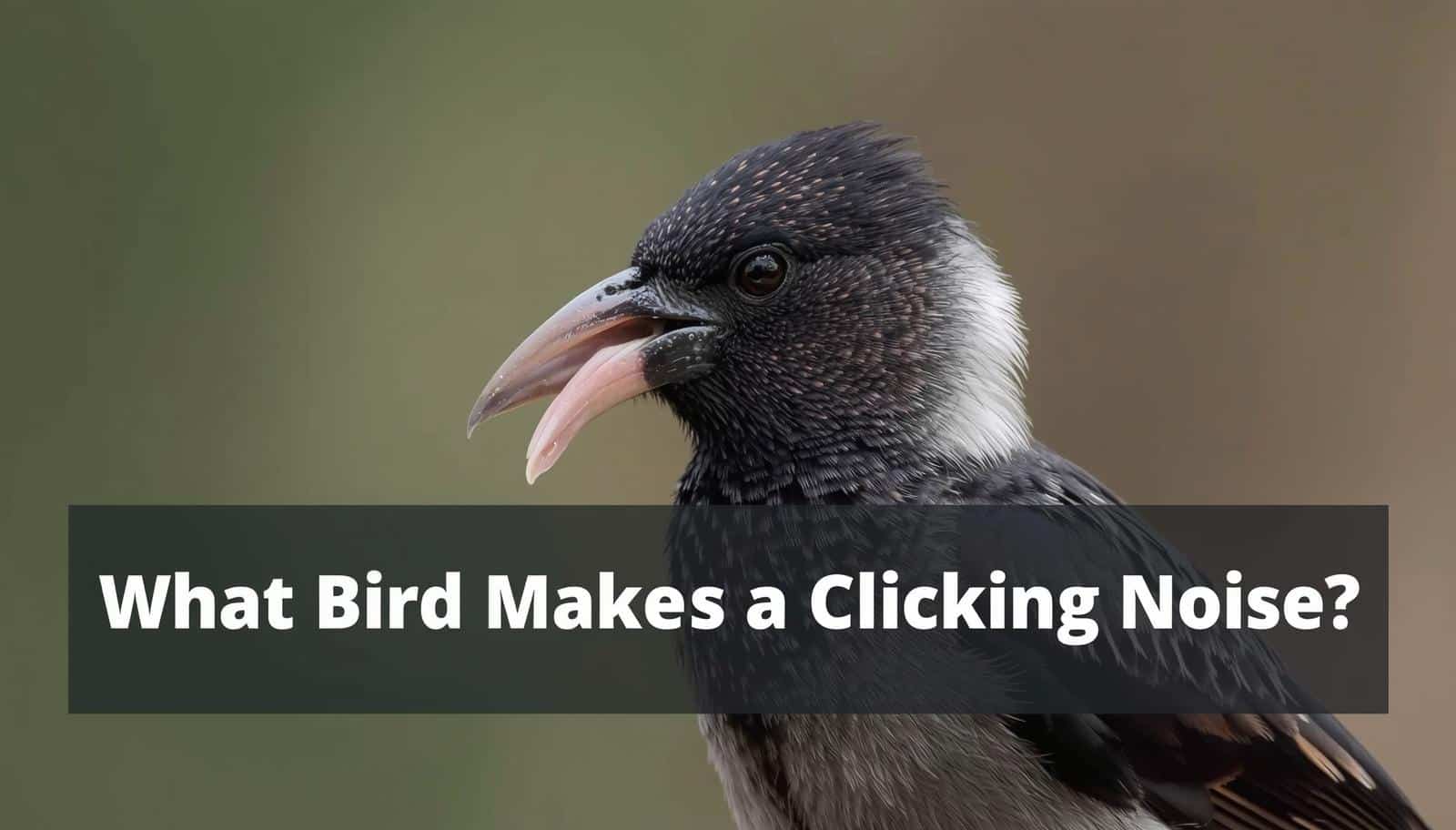
Have you ever heard a strange clicking noise while outside and wondered What Bird Makes a Clicking Noise? That curious sound might be closer than you think.
Understanding What Bird Makes a Clicking Noise can unlock a surprising secret about nature’s communication methods. You’ll discover the specific birds behind those clicks and why they use this unique sound. Keep reading, and you’ll soon recognize these fascinating creatures the next time you hear their distinctive calls.

Credit: www.youtube.com
Birds That Click
Some birds make clicking sounds as part of their calls. These clicks help them communicate or find food. Clicking noises are different from chirps or songs.
Clicking calls are common in many bird species around the world. These sounds can be quick or slow clicks. They often serve unique purposes.
Common Species With Clicking Calls
Several birds use clicking sounds. Woodpeckers tap trees, making a clicking noise. Some parrots click with their bills to talk or show excitement.
- Woodpeckers: tap trunks to find insects and mark territory
- Parrots: click bills for communication and attention
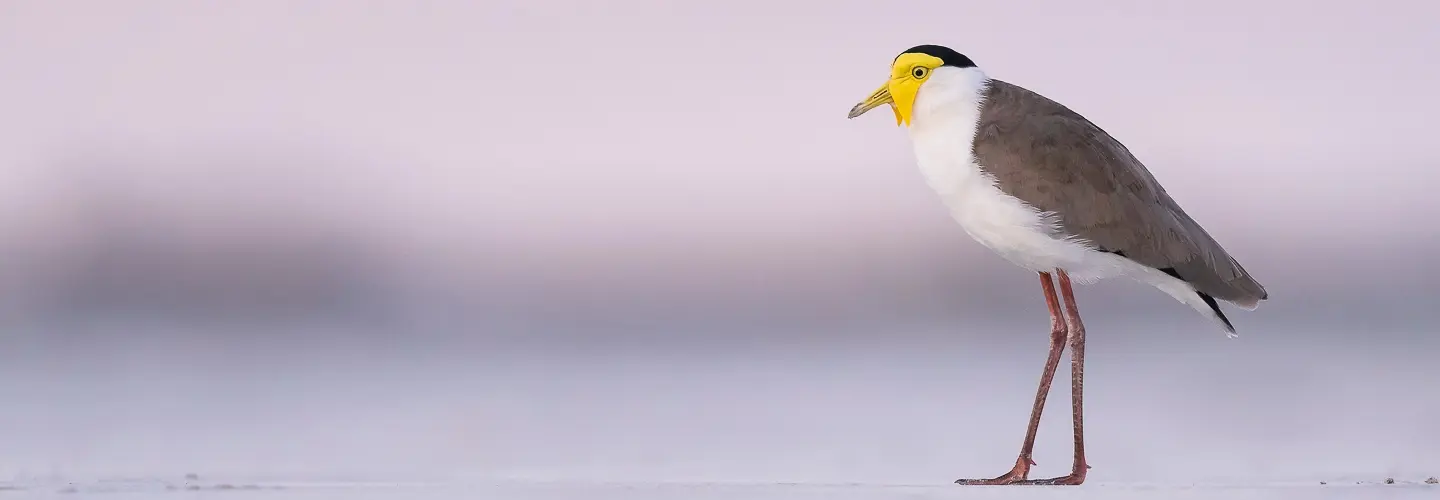
- Jacanas: make clicking calls to warn others
- Kingfishers: use clicks during courtship
- Owls: some species click to signal danger
Unique Behaviors Behind Clicking
Clicking sounds have special uses. Woodpeckers drum on wood to find food and scare rivals. Parrots click to show friendliness or curiosity.
Some birds click to keep in touch with mates or signal alarm. These sounds help birds survive and interact with others in their group.
- Food searching: tapping or clicking to find insects
- Communication: signals to mates or group members
- Territory marking: warning others with sound
- Mating: clicks used in courtship displays
- Alarm: alerting danger with sharp clicks
- Avian behaviorists interpret body language: “In companion parrots, particularly African Grey and Cockatoos, beak clicking (or clacking) is a highly significant social behavior, often signaling a feeling of contentment or satisfaction. It is often observed immediately after eating a favorite food or when relaxing comfortably. It is a non-verbal cue that the bird is not stressed and is actively enjoying its environment.”
Why Birds Click
Birds make many sounds to communicate. Clicking noises are one type of sound they use.
These clicks help birds send messages to others around them. The sounds can mean different things.
Communication Purposes
Birds click to talk with each other. The clicks can help them share simple information.
Clicking sounds can show a bird’s location or help keep in touch with its group.
- Keep contact with family or flock
- Signal presence without being loud
- Help young birds find their parents
Mating And Territory Signals
Birds use clicks during mating to attract partners. These sounds can show strength or health.
Clicks also mark a bird’s territory. They warn others to stay away from their area.
- Attract mates with rhythmic clicking
- Show fitness and readiness to breed
- Claim and defend territory boundaries
Warning And Alarm Calls
Birds click to warn others about danger nearby. These sounds can be quick and sharp.
Clicking alerts the flock to watch out for predators or threats.
- Signal a nearby predator
- Help birds hide or fly away
- Keep the group safe from harm
Surprising Clickers
Some birds make clicking noises that sound strange or unexpected. These sounds help birds communicate or find food.
Clicking sounds are not common in most birds. Yet, a few unusual species use clicks in their calls or behavior.
Unusual Birds With Clicking Sounds
One example is the African wood hoopoe. It uses sharp clicking sounds to talk to other birds in its group.
The lyrebird from Australia can mimic many sounds, including clicks made by other animals and machines.
- Wood hoopoes click to keep track of their family
- Lyrebirds copy clicks to confuse predators or rivals
- Some pigeons make clicking noises with their wings
Clicking In Unexpected Habitats
Clicking sounds appear in places you might not expect. Some desert birds use clicks to communicate over long distances.
In dense forests, certain birds click to help find food or warn others of danger.
- Desert birds use clicks to find mates from far away
- Forest birds click to talk without being seen
- Some seabirds click to signal during hunting
How Birds Produce Clicking
Birds make clicking sounds for many reasons. These sounds help them communicate and find mates.
Clicking noises come from special parts of a bird’s body. These parts work like tiny instruments.
Anatomy Of Sound Production
Birds use their syrinx to make sounds. The syrinx is at the base of their windpipe. It works like vocal cords in humans.
Muscles around the syrinx move to create different sounds. Air passes through the syrinx, causing vibrations. These vibrations produce noises like clicking.
- Air moves from lungs to syrinx
- Muscles tighten or loosen
- Syrinx membranes vibrate
- Different sounds are formed
Different Clicking Mechanisms
Birds use several ways to make clicking sounds. Some use their beaks, while others use their wings or syrinx.
| Mechanism | How It Works |
| Beak Clicking | Birds snap their beaks quickly to make a sharp click. |
| Syrinx Vibrations | Muscles in the syrinx produce rapid sound pulses. |
| Wing Clicking | Some birds snap their wings to create a clicking noise in flight. |
| Tongue Clicking | Rare birds click their tongues against the roof of the mouth. |
Identifying Clicking Birds
Many birds make clicking noises as part of their calls or movements. These clicks help in communication or finding food.
Knowing which birds make clicking sounds can help you identify them in the wild or your backyard.
Listening Tips
Listen carefully to the bird sounds around you. Clicking noises often come from woodpeckers, nuthatches, and some parrots.
- Use quiet moments to focus on small sounds
- Try to notice the rhythm of clicks
- Pay attention to where the sound comes from
- Note the time of day and environment
- Compare the clicks to known bird calls online
Recording And Analyzing Clicks
Recording bird clicks lets you study their patterns later. Use a phone or recorder to capture clear sounds.
| Tool | Purpose | Tips |
| Smartphone | Easy to carry and record | Stay close but keep quiet |
| Handheld Recorder | High sound quality | Use windscreen for noise reduction |
| Audio Software | Analyze sound patterns | Look for repeating clicks and intervals |
- Bioacoustics experts prioritize rhythm: “For birds whose identification relies on non-vocal sounds, the single most useful metric to capture is the clicks per second (CPS) or the duration of the call. For example, when identifying Antbird or Manakin species, which often use wing snaps or tongue clicks, the exact rate of the clicking pattern, which remains genetically fixed, is the definitive fingerprint that separates one species from the next.”
Credit: birdlife.org.au
Conservation And Clicking Birds
Many birds produce clicking sounds as part of their calls. These sounds help them communicate and find mates.
Some clicking birds face threats to their survival. Protecting these birds is important for nature’s balance.
Threats To Clicking Species
Clicking birds often lose their homes due to human activities. Deforestation and pollution harm their habitats.
Some species also face danger from hunting and climate change. These threats reduce their numbers quickly.
- Loss of forest areas
- Pollution of air and water
- Illegal hunting and trapping
- Changes in climate patterns
Protecting Their Habitats
Saving natural habitats helps clicking birds survive. Forest reserves and parks keep their homes safe.
People can also plant trees and reduce pollution. These actions create better places for birds to live.
- Create and support protected areas
- Reduce pollution in forests and wetlands
- Plant native trees and plants
- Educate communities about bird conservation

Credit: en.wikipedia.org
Frequently Asked Questions
What Bird Is Known For Making Clicking Sounds?
The African Grey Parrot is famous for its distinctive clicking noises. These sounds help in communication and mimicry. Clicking can signal curiosity or social interaction within their groups.
Why Do Some Birds Make Clicking Noises?
Birds make clicking sounds to communicate, attract mates, or signal danger. These noises serve as unique calls to identify themselves and maintain social bonds within their species.
How Can I Identify A Bird By Its Clicking Sound?
Listen for the rhythm, pitch, and pattern of the clicks. Different species have unique clicking styles. Using bird sound apps can help match clicks to specific birds.
Are Clicking Noises Common In All Bird Species?
No, clicking sounds are more common in certain species like woodpeckers, parrots, and some songbirds. Not all birds use clicking as a form of communication.
Conclusion
Birds making clicking noises add mystery to nature. Many species produce clicks. Some use it to communicate. Others use it to navigate. Woodpeckers, for instance, create clicks while pecking. Grasshopper Sparrows also make clicking sounds. Listening to these birds enriches our connection to nature.
Next time you hear a clicking sound, pause. Appreciate the bird behind it. Understanding these sounds helps us connect with the world. So, tune in and enjoy the melody of nature’s clicks.