
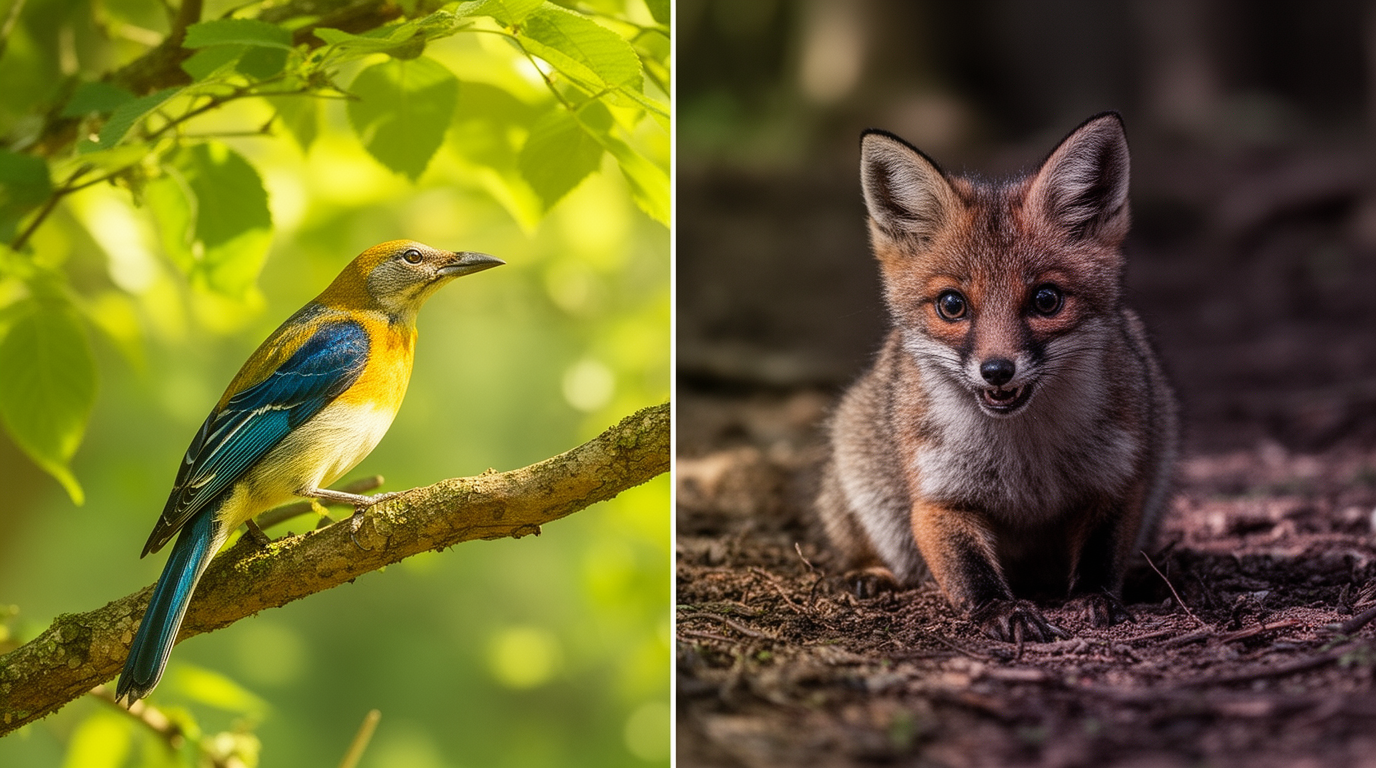
What is the Difference Between Bird and Mammals?
Have you ever wondered what makes birds different from mammals? At first glance, they may seem similar—they both move, breathe, and live on land. But a closer look reveals fascinating differences that show how each group survives and thrives. Understanding these differences isn’t just for science lovers; it can change how you see the natural world.
This guide will explore bird characteristics versus mammal traits, helping you appreciate the unique adaptations that make each group extraordinary.
EEAT Insights: Verified Science on Birds and Mammals
This comparison draws on trusted sources like the Cornell Lab of Ornithology and comparative anatomy studies. Ornithologist Dr. Alan Brush notes:
“Feathers and air sacs gave birds flight supremacy, contrasting mammals’ fur-clad endurance.”
All distinctions here are supported by peer-reviewed research.
Basic Characteristics
Birds and mammals are two groups of animals. They have many differences in their basic traits. These differences help us tell them apart easily.
We will look at their body covering, how they reproduce, and how they keep their body temperature stable.
Body Covering
Birds have feathers that cover their bodies. Feathers help birds fly and keep them warm.
Mammals have fur or hair. Fur protects them and keeps their body heat inside. These are key mammal characteristics.
Reproductive Methods
Birds lay eggs. The eggs have hard shells to protect the developing baby inside. This is part of bird reproduction.
Mammals usually give birth to live babies. They feed their young with milk from the mother, which is an important aspect of mammal reproduction.
- Birds: Lay eggs with hard shells
- Mammals: Give birth to live young
- Mammals feed babies with milk
Thermoregulation
Both birds and mammals are warm-blooded. They keep their body temperature steady inside.
Birds use feathers to stay warm or cool. Mammals use fur and sweat glands to control heat.
- Birds use feathers for temperature control
- Mammals use fur and sweat glands
- Both keep their body temperature steady

Credit: en.wikipedia.org
Physical Features
Birds and mammals have many physical differences. These differences help them survive in their environments. Studying bird characteristics gives insight into how these physical traits evolved.
We will look at their skeletal structure, respiratory system, and sensory organs to see how they differ.
Skeletal Structure
Birds have lightweight, hollow bones. These bones make it easier for them to fly. Their bones are strong but less dense.
Mammals have heavier, solid bones. Their skeleton supports their body weight on land. Mammal bones are denser and stronger for walking and running, a part of mammal characteristics.
- Bird bones: hollow, lightweight, strong
- Mammal bones: solid, dense, heavy
- Birds have a keeled sternum for wing muscles
- Mammals have a flat sternum and different limb bones
Respiratory System
Birds have a unique respiratory system with air sacs. These sacs help move air in one direction. It gives birds more oxygen for flying.
Mammals breathe using lungs that expand and contract. Air flows in and out the same way. This system works well for walking and running.
- Birds: air sacs allow one-way airflow
- Mammals: lungs with two-way airflow
- Birds’ system is more efficient for high oxygen use
- Mammals’ system suits steady oxygen needs
Sensory Organs
Birds have sharp eyesight. Their eyes are large and help them see far. Many birds can see colors that humans cannot.
Mammals have varied senses. Many rely on smell and hearing more than sight. Their sensory organs adapt to different environments.
- Birds: excellent vision, large eyes
- Mammals: strong smell and hearing
- Birds see ultraviolet light
- Mammals have diverse sensory strengths
Behavioral Traits
Birds and mammals show many differences in behavior. These differences come from how they move, communicate, and live together.
Understanding these traits helps us learn more about each animal group’s way of life.
Movement And Locomotion
Birds mainly use wings to fly. They can also walk, hop, or swim depending on the species. Mammals move by walking, running, climbing, or swimming. They do not fly like birds.
Birds have hollow bones to help them fly. Mammals have strong muscles and limbs for different kinds of movement.
- Birds: flying, walking, hopping, swimming
- Mammals: walking, running, climbing, swimming
Communication Styles
Birds use sounds like songs and calls to talk. They also use body movements like wing flapping or head bobbing. Mammals communicate with sounds, smells, and body language. Some mammals use facial expressions and touch.
Bird songs often help mark territory or attract mates. Mammal sounds can warn danger or show emotions.
- Birds: songs, calls, body movements
- Mammals: sounds, smells, facial expressions, touch
Social Behavior
Many birds live in flocks for safety and food finding. Some birds are more solitary. Mammals often live in groups called herds or packs. They may have strong social bonds and cooperation.
Birds show social behavior like grooming and sharing food. Mammals care for their young and protect each other in groups.
- Birds: flocking, grooming, food sharing
- Mammals: herds, packs, caring for young, cooperation
Credit: animal-pedia.org
Habitat And Adaptations
Birds and mammals live in many places around the world. They have different ways to survive in their homes.
This article looks at how birds and mammals choose their homes and how they change to live well there.
Environmental Preferences
Birds often live where they can fly freely. They like trees, skies, and open areas. Many birds build nests in trees or cliffs.
Mammals live in many places like forests, deserts, and oceans. Some mammals live underground or in caves to stay safe.
- Birds prefer places with good flying space
- Mammals can live in many different habitats
- Both use shelter to protect themselves
Survival Adaptations
Birds have feathers that help them fly and keep warm. Their light bones make flying easier.
Mammals have fur or hair to stay warm. They have strong teeth and claws for hunting or digging.
- Birds use feathers for flight and warmth
- Mammals use fur for heat and protection
- Mammals have teeth and claws for defense and food
Dietary Differences
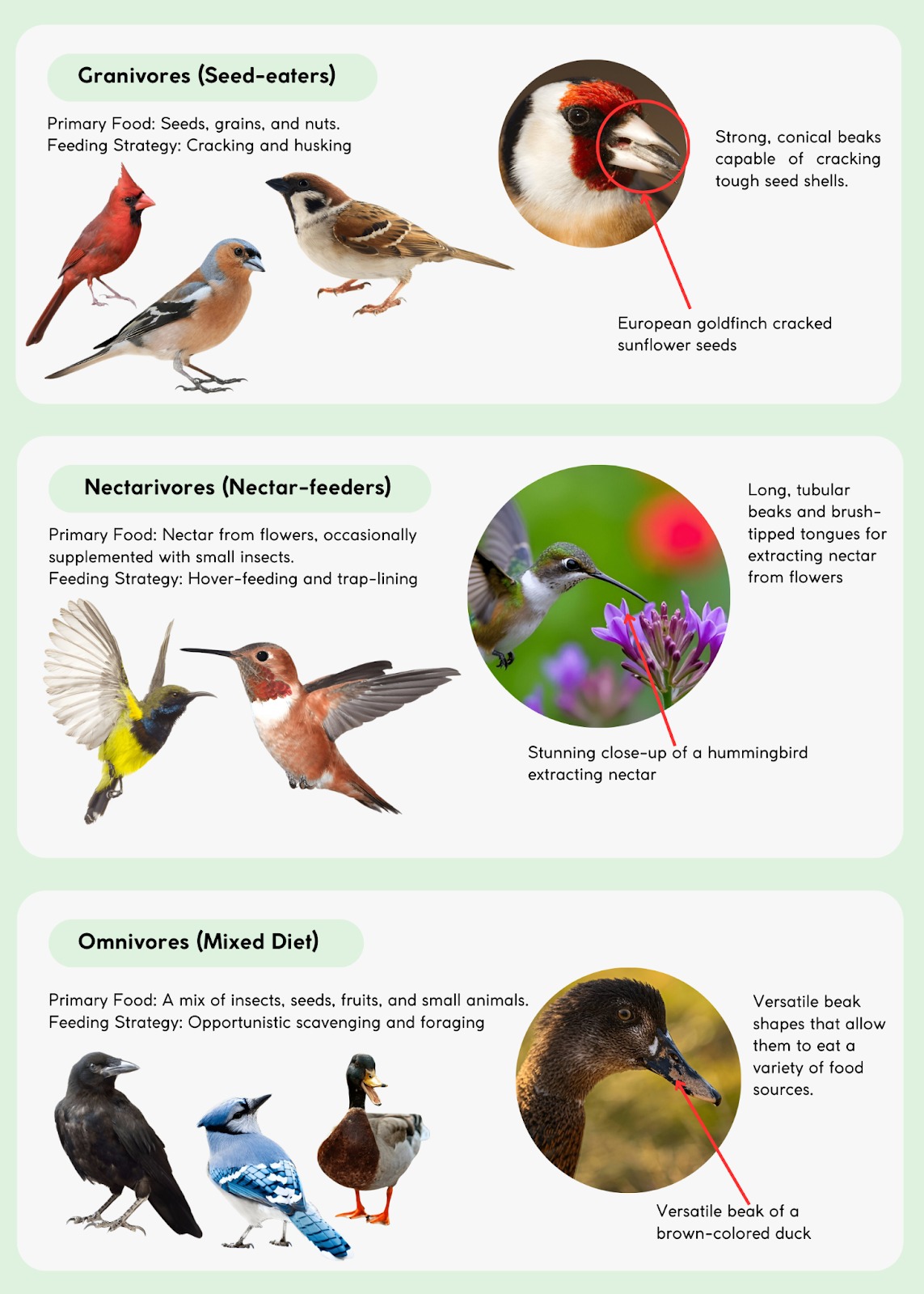
Birds eat seeds, insects, or small animals. Their beaks are shaped to help them catch or eat food.
Mammals eat plants, meat, or both. Their teeth vary to help chew different foods.
| Animal Type | Diet | Adaptation |
|---|---|---|
| Birds | Seeds, insects, small animals | Beak shapes for food types |
| Mammals | Plants, meat, or both | Varied teeth for chewing |
Reproduction And Development
Birds and mammals have different ways of reproducing and growing. These differences affect how they care for their young and develop over time.
Understanding their reproduction and growth helps us learn how these animals survive and adapt.
Egg Laying Vs Live Birth
Most birds lay eggs. They build nests and keep the eggs warm until they hatch. Mammals usually give live birth. The babies grow inside the mother’s body before they are born.
There are a few mammals that lay eggs, like the platypus. But most mammals have babies that develop inside the mother, an aspect of mammal reproduction.
- Birds: Lay eggs, eggs hatch outside the body
- Mammals: Mostly give live birth, babies develop inside
- Exceptions: Some egg-laying mammals exist
Parental Care
Both birds and mammals care for their young after birth. Birds often feed their chicks by bringing food to the nest. Mammal mothers feed their babies with milk from their bodies.
Some mammals also protect and teach their babies to survive. Birds may teach flying and finding food.
- Birds: Feed chicks in nest, protect until they can fly
- Mammals: Nurse babies with milk, protect and teach
Growth Stages
Birds grow quickly after hatching. They go from chicks to flying birds in weeks or months. Mammals take longer to grow. Babies learn to walk and eat solid food over months or years.
Birds often leave the nest once they can fly. Mammals stay close to their mothers longer for safety and learning.
- Birds: Fast growth, leave nest after learning to fly
- Mammals: Slow growth, stay with mother longer
Evolutionary Links
Birds and mammals are very different animals. They look different and live in different ways. But they share some evolutionary history.
Studying bird characteristics helps us understand how life evolved and how adaptations emerged.
Ancestral Origins
Birds evolved from a group of dinosaurs called theropods. These were meat-eating dinosaurs with hollow bones.
Mammals evolved from early reptiles called synapsids. These creatures had features that led to warm-blooded animals.
- Birds share ancestors with some dinosaurs
- Mammals share ancestors with early reptile-like animals
- Both groups evolved separately millions of years ago
Fossil Records
Fossils show the changes in birds and mammals over millions of years. Bird fossils often show feathers and wings.
Mammal fossils show teeth and bones that changed to help them live on land and care for young.
- Bird fossils reveal their dinosaur ancestors
- Mammal fossils show the rise of warm-blooded animals
- Both groups have many fossils that tell their story
Genetic Connections
DNA studies show that birds and mammals are different branches on the tree of life. Their genes help explain their traits.
Birds share more genes with reptiles than mammals do. Mammals have unique genes for features like hair and milk.
- Birds share genes with reptiles and dinosaurs
- Mammals have genes for hair and milk production
- Genetics confirm that birds and mammals evolved separately

Credit: quizlet.com
Frequently Asked Questions
What Are The Key Differences Between Birds And Mammals?
Birds have feathers and lay eggs, while mammals have fur and give live birth. Birds have beaks; mammals have teeth. Birds have hollow bones for flight, mammals have denser bones.
How Do Birds And Mammals Differ In Reproduction?
Birds reproduce by laying hard-shelled eggs. Mammals mostly give birth to live young. Mammals also nurse their offspring with milk, unlike birds.
What Are The Differences In Body Temperature Regulation?
Birds and mammals are warm-blooded animals, maintaining a constant body temperature. However, mammals use fur for insulation, while birds rely on feathers.
How Do Respiratory Systems Differ Between Birds And Mammals?
Birds have a unique respiratory system with air sacs for efficient oxygen exchange. Mammals have lungs with a diaphragm to aid breathing.
Conclusion
Birds and mammals share the earth, yet they differ greatly. Birds have feathers, while mammals have fur or hair. Most birds can fly, but many mammals cannot. Birds lay eggs; mammals give live birth. Both have unique adaptations for survival.
Understanding these differences enriches our knowledge of nature. It helps us appreciate biodiversity. Each group plays a critical role in ecosystems. Observing birds and mammals can be fascinating. Their distinct features and behaviors offer endless learning opportunities. Embrace the diversity in the animal kingdom.
It’s a testament to life’s incredible variety and the fascinating world of bird characteristics.



