What Noise Does a Bell Bird Make: Discover Its Unique…
Have you ever wondered what sound a bell bird makes? If you’re curious about this unique bird’s call, you’re in the right place. Many people search online to learn what Bell Bird Make sound and why it feels so different from other bird calls.
The bell bird’s noise is unlike any other bird you’ve heard before. It’s clear, sharp, and can catch your attention instantly. Understanding this sound can bring you closer to nature and make your outdoor moments more enjoyable. Keep reading to discover the fascinating noise of the bell bird and why Bell Bird Make such a memorable sound in the world of birdcalls.

Credit: www.youtube.com
Bell Bird Species
Bell birds are known for their clear, ringing calls. They belong to different species found mostly in Australia and New Zealand. These birds get their name from the bell-like sound they produce, which helps explain what Bell Bird Make so easy to recognize.
Each bell bird species has unique features and sounds. Learning about their types helps us understand their role in nature and their habitats.
Types Of Bell Birds
There are several species commonly called bell birds. Each has a distinct call and appearance. Here are some key bell bird species:
- New Zealand Bellbird (Anthornis melanura): Known for its sweet, musical call.
- Australian Bell Miner (Manorina melanophrys): Has a sharp, bell-like sound and lives in eucalyptus forests.
- Western Australian Bellbird (Anthornis chloris): Found mainly in southwest Australia with a soft ringing call.
- Green Catbird (Ailuroedus crassirostris): Sometimes called a bell bird due to its bell-like notes mixed with cat-like sounds.
Habitat And Range
Bell birds live in different habitats depending on their species. Their range covers forests, woodlands, and gardens in Australasia.
| Species | Habitat | Range |
| New Zealand Bellbird | Native forests and scrublands | New Zealand islands |
| Australian Bell Miner | Eucalyptus forests and woodlands | Eastern Australia |
| Western Australian Bellbird | Coastal forests and woodlands | Southwest Australia |
| Green Catbird | Rainforests and wet forests | Eastern Australia |

Credit: newatlas.com
Characteristics Of Bell Bird Calls
The bell bird is known for its clear and ringing calls. These calls help the bird communicate and mark its territory.
Understanding the sound features of bell bird calls reveals how they use sound in their daily lives.
Sound Description
Bell bird calls sound like sharp, clear ringing notes. They resemble the sound of small bells or chimes.
- The call is usually loud and carries far.
- It has a metallic and bright tone.
- Calls can repeat in short bursts.
- Each call has a clear start and end.
Frequency And Pitch
The pitch of bell bird calls is high and varies slightly between individual birds. The frequency range lets the calls travel through thick forests.
| Frequency Range (kHz) | Typical Pitch | Purpose |
| 3 to 6 | High | To communicate clearly over distance |
| 6 to 8 | Very High | To attract mates and warn rivals |
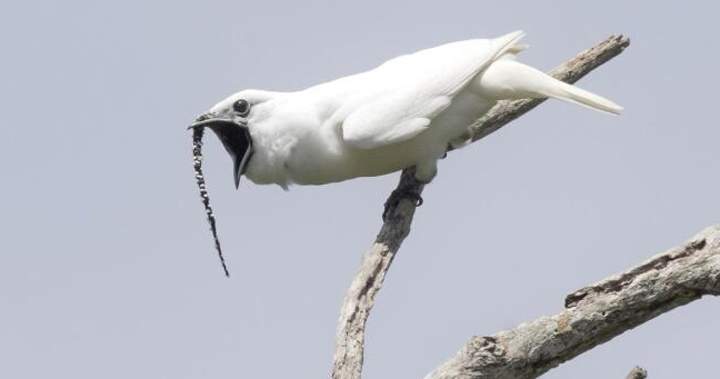
Ornithological Researchers recently confirmed that the White Bellbird ($Procnias albus$) of the Amazon is officially the loudest bird in the world.
“While the Australian Bell Miner sounds like a gentle chime, the White Bellbird produces a call that reaches 125 decibels. To put that in perspective, that is louder than a jackhammer or a symphony orchestra and is technically at the threshold of human pain. Expert Insight: They have evolved exceptionally thick abdominal muscles just to survive the pressure of their own songs, effectively turning their entire torso into a resonance chamber.”
Purpose Of Bell Bird Calls
The bell bird makes a loud, clear bell-like sound. These calls serve many important purposes for the bird.
Bell bird calls help them communicate with others, find mates, and protect their space.
Communication
Bell birds use their calls to share information with other birds. Their loud sounds carry through the forest.
These calls help them stay in touch with their group or warn others about danger nearby.
Mating Signals
Male bell birds sing to attract female birds. Their clear bell-like notes show strength and health.
The louder and clearer the call, the more likely a male is to find a mate.
- Singing shows off the male’s fitness
- Calls help females choose strong partners
- Different calls can attract different mates
Territorial Behavior
Bell birds use calls to mark their territory. The loud sounds warn other birds to stay away.
This helps reduce fights and keeps their food and nesting areas safe.
- Calls signal ownership of an area
- They prevent other birds from entering
- Keep resources for themselves and mates

Credit: www.youtube.com
Comparing Bell Bird Calls to Other Birds
The bell bird is known for its clear and ringing call. It stands out among many birds because of its unique sound. Comparing its calls to other birds helps us understand its special traits.
Bird calls serve many purposes like communication, mating, and warning. Listening carefully to different bird calls shows how they differ in tone, pitch, and rhythm.
Similar Bird Sounds
Some birds have calls that sound like the bell bird. These birds share sharp, clear notes. They often live in similar habitats or have related behaviors.
- The wood thrush has a flute-like song with clear tones.
- The Australian magpie produces sharp whistles and warbles.
- The common loon has a high, bell-like call over lakes.
- The eastern whip-poor-will repeats sharp, ringing notes.
Distinctive Features
The bell bird’s call has unique traits that separate it from others. It is louder and more bell-like. Its rhythm is steady with clear pauses.
| Feature | Bell Bird | Other Birds |
| Call Tone | Clear, ringing, bell-like | Varies: flute, whistle, trill |
| Volume | Loud and sharp | Usually softer or mixed |
| Rhythm | Steady with pauses | Often faster or irregular |
| Purpose | Communication and territory | Communication, mating, warning |
How To Identify Bell Bird Calls
Bell birds have a unique sound that stands out in nature. Learning their call helps you enjoy birdwatching more.
This guide shares tips for listening closely and recording the bell bird’s call clearly.
Listening Tips
Bell birds make sharp, clear sounds like ringing bells. Listen carefully in quiet places early in the morning.
- Find a calm spot away from noise
- Use headphones to catch soft notes
- Pay attention to repeating patterns
- Notice the pitch and sharpness of the call
- Try to spot the bird while listening
Acoustic Ecologists warn that bell birds are natural ventriloquists: “Bell bird calls are so clear and high-pitched that they often lack the ‘directional’ cues our ears use to find things. Trust the physics: The sound waves are so pure that they bounce off leaves and trees perfectly, making it sound like the bird is in three places at once. If you can’t find the bird, stop looking at the tree where you hear the sound and start looking at the thickest branch nearby—they are often hiding in plain sight while their voice ‘travels’ away from them.”
Recording Techniques
Good recordings help study the bell bird’s call later. Use these steps for better sound quality.
| Technique | Tip |
| Choose quiet time | Record early morning or late afternoon |
| Use directional microphone | Focus on the bird’s location |
| Keep distance | Stay at least 10 feet away to avoid disturbance |
| Record in short clips | Capture clear, repeated calls |
| Note location and time | Helps identify the bird’s habits |
Cultural Significance Of Bell Bird Sounds
The bell bird makes a clear, ringing call that sounds like a bell. Many people find its sound unique and beautiful. This bird’s call has been part of stories and culture for a long time.
People listen to bell bird sounds in nature and use them in songs and art. The call connects people to the environment and their traditions.
Folklore And Traditions
In some cultures, the bell bird’s sound is a sign of good luck or a message from nature spirits. Many stories say the bell bird’s call brings peace or guides travelers.
Communities near the bell bird’s home often include its sound in festivals and ceremonies. The bird’s call reminds people of their connection to the land and animals.
Use In Music And Media
Musicians and filmmakers use the bell bird’s sound to add a natural, peaceful feeling. Its clear tone fits well in songs and nature scenes in movies.
Sound artists often record the bell bird to create calming music or background sounds. Its call helps people feel relaxed and close to nature.
Frequently Asked Questions
What Sound Does A Bell Bird Make?
The bell bird produces a clear, metallic, ringing call. It sounds like a loud, bell-like “ding” or “tink. ” This unique sound helps it stand out in the forest environment.
Why Is The Bell Bird’s Call So Distinctive?
Its call is sharp and resonant, resembling a bell’s chime. This distinct tone helps the bell bird communicate and mark its territory effectively.
When Do Bell Birds Usually Sing?
Bell birds mostly sing during early morning and late afternoon. These times are ideal for communication and attracting mates in their natural habitat.
Where Can You Hear Bell Bird Calls?
Bell birds are commonly found in Australian rainforests. Their ringing calls can be heard echoing through dense forest areas and woodlands.
Conclusion
Bell birds create unique and enchanting sounds. Their calls captivate anyone who listens. These fascinating birds use their voices to communicate effectively. Each tone and pitch serves a purpose in their world. Observing these birds can be a delightful experience.
Their melodic sounds enrich the natural environment. Bell birds remind us of nature’s incredible diversity. Their songs add a special charm to the wilderness. Next time you hear a bell bird, pause and enjoy. Appreciate the beauty in their simple, yet complex calls. Nature’s music at its finest.