Have you ever heard a strange, loud call echoing through the trees and wondered, “What noise does a wattle bird make?” If you’re curious about this unique bird and its distinctive sounds, you’re in the right place.
Understanding the wattle bird’s calls can bring you closer to nature and make your outdoor moments more exciting. Keep reading, and you’ll soon recognize their calls like a true bird expert. Your next walk in the wild will never sound the same!
Wattle Bird Calls
Wattle birds make unique sounds that help identify them. Their calls are loud and clear.
These birds use different calls for many reasons. Listening to their sounds reveals much about their behavior.
- Avian Biologists clarify the nomenclature: “The name ‘Wattlebird’ is derived from the fleshy, pendulous wattles—brightly colored skin flaps—that hang from the throat or near the ears of certain species, most prominently the Red Wattlebird (Anthochaera carunculata). These wattles are highly vascularized and are believed to play a role in thermoregulation (heat regulation) and are often displayed during mating and territorial aggression.”
Common Vocalizations
Wattle birds often produce a harsh, cackling call. It can sound like a series of loud, sharp notes.
They also make a long, wavering whistle. This whistle can carry over long distances in the forest.
- Loud cackles and harsh squawks
- Long, clear whistles
- Rapid, chattering sounds
- Ornithological Guides use this simple mnemonic: “The easiest way to remember the Red Wattlebird’s territorial call is by its sound association. It often makes a harsh, guttural sound that Australian birders remember as ‘Cough! Hack! Cough-Off!’ It is one of the most persistent and loudest territorial calls in the Australian bush, and its volume is amplified by the bird’s unique vocal anatomy, allowing it to carry over long distances.”
Purpose Of Calls
Wattle birds use calls to mark their territory. The loud sounds warn other birds to stay away.
Calls also help birds find mates. Singing shows their strength and attracts partners.
- Marking territory
- Attracting mates
- Communicating with others
- Warning of danger
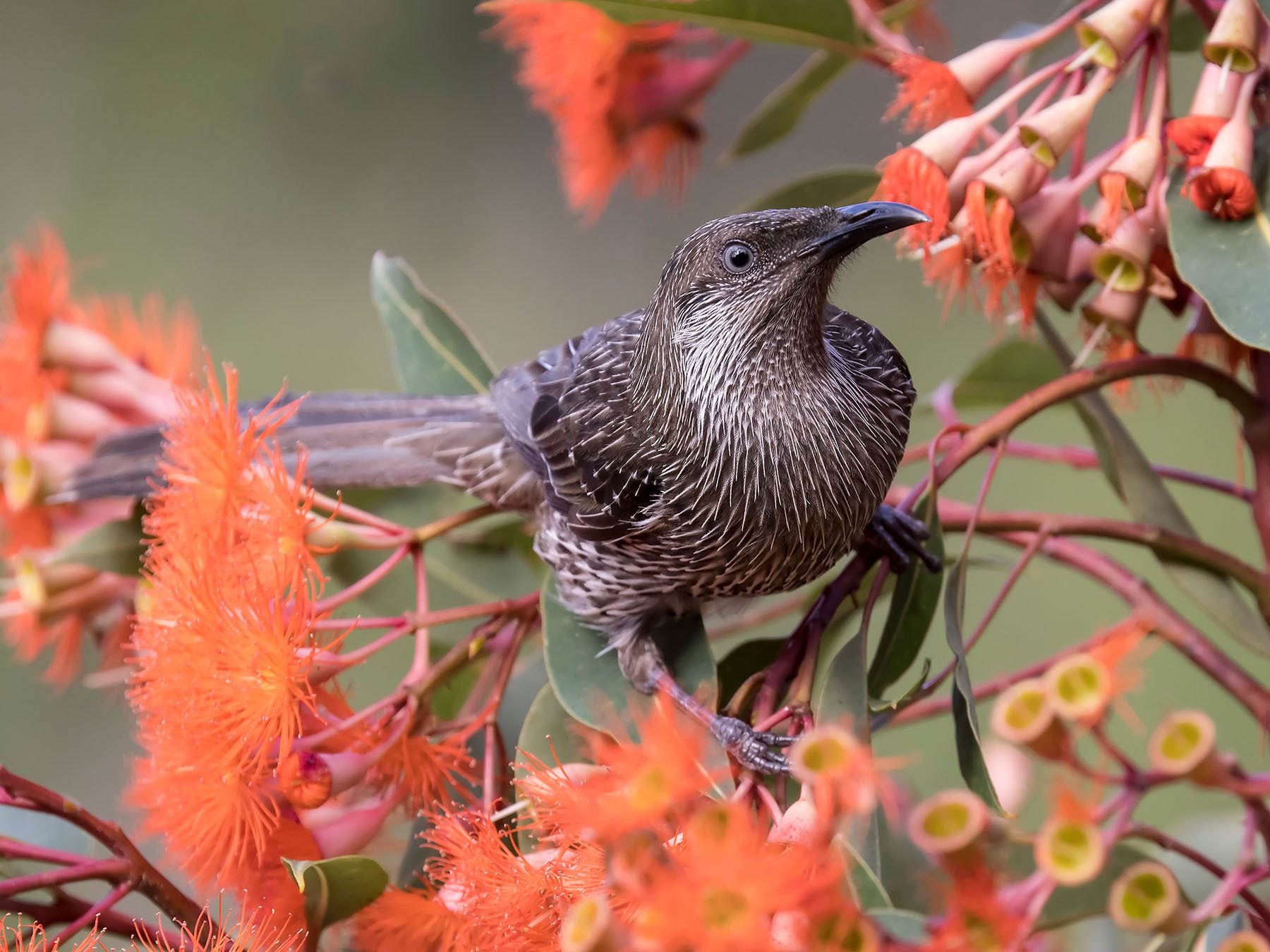
Credit: birdfact.com
Distinctive Sounds
The wattle bird makes unique sounds that help identify it in the wild. These sounds include rattling, chattering, whistles, and trills.
Listening to these sounds can help bird watchers and nature lovers recognize the wattle bird easily.
Rattling And Chattering
The wattle bird often produces a rattling noise. It sounds like a quick, sharp series of clicks or taps.
Chattering is another common sound. It is a fast, repeated call that can be loud or soft depending on the bird’s mood.
- Rattling sounds are short and sharp
- Chattering sounds are fast and repeated
- Both help the bird communicate with others
Whistles And Trills
The wattle bird uses whistles that are clear and musical. These sounds can rise and fall in pitch.
Trills are rapid, vibrating notes. They often sound like a continuous buzzing or warbling.
- Whistles have a smooth and clear tone
- Trills are fast and vibrating sounds
- Both sounds attract mates and mark territory
Communication Patterns
Wattle birds use different sounds to talk to each other. Their calls help them stay safe and find mates.
These birds have special noises for different situations. Listening to their calls reveals their behavior.
Territorial Calls
Wattle birds make loud, sharp calls to mark their territory. These sounds warn other birds to stay away.
The calls are repeated often during the day. This helps keep rivals from entering their space.
- Harsh, raspy sounds
- Repeated short calls
- Used to defend feeding areas
- Signals presence to other birds
Mating Songs
During mating season, wattle birds sing complex songs. These songs attract females and show strength.
The songs include varied tones and rhythms. Males sing loudly to prove they are healthy and strong.
- Melodic and rhythmic patterns
- Longer and more varied than territorial calls
- Used to attract mates
- Signals fitness and readiness to breed

Credit: owlcation.com
Comparing Wattle Birds
Wattle birds are native to Australia and known for their loud calls. Different species make distinct noises that help identify them.
This guide compares sounds of various wattle bird species and similar birds to help you recognize their calls.
Differences Between Species
Each wattle bird species has unique sounds. The Little Wattle Bird has a harsh, rasping call. The Red Wattle Bird’s call is louder and more musical. The Western Wattle Bird produces a series of clear whistles.
- Little Wattle Bird: Rough, grating notes.
- Red Wattle Bird: Loud, melodic calls.
- Western Wattle Bird: Clear, whistle-like sounds.
Similar Birds’ Sounds
Some birds sound like wattle birds but have differences in tone and pattern. The Friarbird is a close match but has sharper calls. The Bell Miner has softer, bell-like sounds that stand out.
| Bird | Sound Description | Difference from Wattle Birds |
| Friarbird | Sharp, nasal calls | More piercing than wattle birds |
| Bell Miner | Soft, bell-like tones | Softer and more musical |
| Wattle Birds | Loud, harsh, or whistle-like | Varies by species but generally louder |
- Avian Ecologists note the key behavior: “The Wattlebird and the Friarbird are both large, loud, and aggressive honeyeaters that frequently chase smaller birds from feeders. However, a trustworthy way to tell them apart when they’re not calling is their flight pattern. Wattlebirds tend to fly with a heavy, undulating, or ‘floppy’ motion due to their large size, while the Friarbirds usually maintain a straighter, more direct flight path with less bounding.”
Wattle Bird Sound Recordings
The wattle bird is known for its loud and varied calls. It makes deep, growling sounds and sharp whistles. These noises help the bird communicate with others.
Listening to wattle bird sounds can be interesting. Many people enjoy hearing their unique voice in nature recordings.
Where To Listen
You can find wattle bird sounds online on many websites. Bird sound libraries often have clear recordings of their calls. Nature parks sometimes offer guided tours where you can hear wattle birds live.
- Online bird sound libraries
- Bird watching apps
- Nature reserves and parks
- Wildlife documentaries
Tips For Recording
Recording wattle bird sounds can be fun but needs patience. Use a good microphone and stay quiet. Early mornings are the best time to hear their calls clearly.
- Choose a quiet spot away from traffic
- Use a directional microphone for clear sound
- Record during early morning or late afternoon
- Stay still to avoid scaring the bird

Credit: birdfact.com
Role Of Sounds In Behavior
Wattle birds use sounds to communicate in many ways. Their calls help them survive and interact with others.
The sounds they make can warn of danger or help in social bonding. Understanding these calls shows how important sound is for them.
Alerting And Warning
Wattle birds give sharp calls to warn others about threats. These sounds alert the flock to stay safe and watch out.
- High-pitched alarm calls signal predators nearby.
- Repeated loud calls help keep the group alert.
- Different call patterns show the type of danger.
- Quick calls can stop other birds from entering risky areas.
Social Interactions
Sounds also play a big role in how wattle birds interact. They use calls to find mates and keep group bonds strong.
| Type of Call | Purpose |
| Soft coos | Attract mates |
| Chatter calls | Keep group contact |
| Territorial calls | Mark area and warn rivals |
| Begging calls | Young birds ask for food |
Frequently Asked Questions
What Sound Does A Wattle Bird Commonly Make?
A Wattle Bird produces loud, harsh, and grating calls. Their vocalizations are often described as loud squawks or screeches. These sounds help them communicate and mark territory in their native habitats.
How Can I Identify A Wattle Bird By Its Call?
Listen for a loud, rasping, and repetitive squawk or screech. The call is distinctively harsh and can be heard over long distances. This vocal pattern is unique to Wattle Birds, aiding in easy identification.
Why Do Wattle Birds Make Loud Noises?
Wattle Birds use loud calls to communicate with mates and warn off intruders. Their vocalizations help establish territory and attract partners during breeding seasons. The noise also serves as an alert to potential threats nearby.
Are Wattle Bird Calls Different During Breeding Season?
Yes, their calls become more frequent and intense during breeding. Males often use louder and more complex calls to attract females. This behavior increases their chances of successful mating and territory defense.
Conclusion
Wattle birds have unique, lively calls that capture attention. Their sounds vary, often loud and distinct. Recognizing these calls enriches nature walks. Listening closely helps identify them. Bird enthusiasts find joy in these vocal patterns. Observing them in their habitat deepens understanding.
Appreciate the beauty of their songs. It’s a delightful experience for everyone. Engaging with nature through sound connects us. Next time, pause and listen for wattle bird melodies. Nature’s soundtrack is fascinating. Enjoy the simple pleasure of birdwatching. Keep exploring the wonders of nature.
Discover more about these amazing creatures. Happy bird listening!