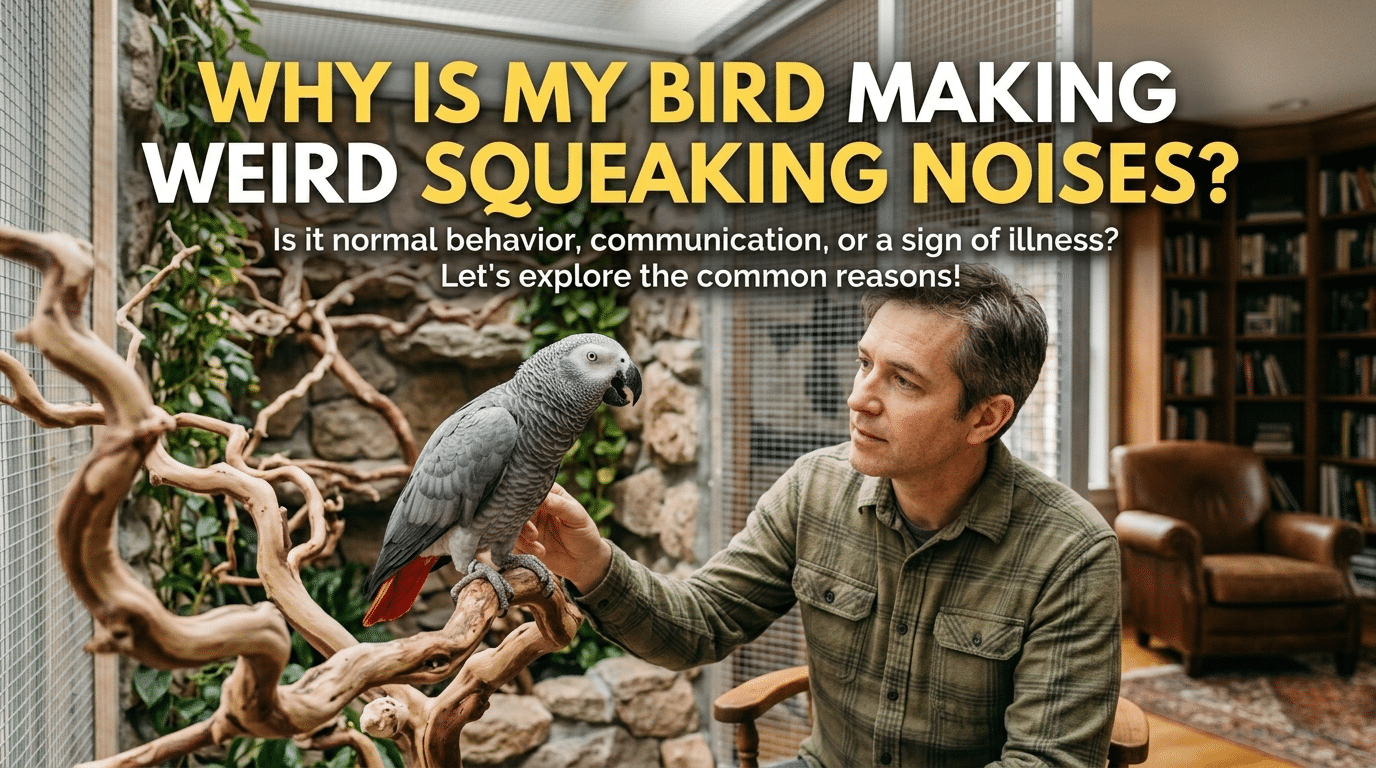
Why is My Bird Making Weird Squeaking Noises Suddenly?
Have you ever been quietly enjoying time with your bird when suddenly it starts making strange squeaking noises? It can catch you off guard and leave you wondering, “Why is my bird making weird squeaking noises?” These unusual sounds might seem confusing or even worrying.
Many bird owners ask themselves, 'Why is my bird making weird squeaking noises?' This common concern relates to various behaviors and feelings that birds express through their vocalizations.
But don’t panic just yet. Understanding what your bird is trying to tell you can help you respond the right way. You’ll discover the common reasons behind these squeaks and learn how to keep your feathered friend happy and healthy.
Keep reading—your bird’s voice has a story, and you’re about to learn how to listen.

Common Causes of Bird Squeaking
Birds make many sounds to communicate with their owners and other birds. Squeaking noises can mean different things depending on the situation.
Understanding why your bird is squeaking helps you meet its needs and keep it happy.
Understanding why is my bird making weird squeaking noises can greatly improve your relationship with your feathered friend.
Communication And Social Interaction
Birds use squeaking to talk to other birds or people. They may want to share their feelings or alert you to something.
Squeaks can show excitement or signal that your bird wants to interact. Birds living with others often squeak to stay connected.
Seeking Attention or Food
If you've ever wondered, 'Why is my bird making weird squeaking noises?' it’s essential to consider their social interactions.
Birds squeak when they want your attention. They may want to play, be petted, or get food.
Squeaking is a way to ask for care, especially if they feel lonely or hungry.
- Calling you for meals
- Requesting playtime or petting
- Trying to get your focus
Expressing Discomfort or Stress
Recognizing that 'Why is my bird making weird squeaking noises?' can lead to identifying stress triggers is key to providing a supportive environment.
Your bird may squeak when it feels scared or uncomfortable. Loud noises or new surroundings can cause stress.
Check for signs of illness or injury if squeaking sounds unusual or constant. Birds show discomfort by changing their sounds.
- Feeling cold or too hot
- Pain or sickness
- Fear from new people or pets
- Changes in their environment
Health Issues Behind Squeaking
When you hear strange sounds from your bird, you might ask yourself, 'Why is my bird making weird squeaking noises?' Observing their behavior is crucial.
Birds use sounds to communicate. Squeaking noises can mean your bird feels unwell.
Not all squeaks are normal. They can signal health problems that need attention.
Respiratory Problems
Birds with breathing troubles often make strange sounds. Squeaking may come from blocked airways.
Dust, smoke, or poor ventilation can cause respiratory issues. These make your bird cough or wheeze.
- Labored breathing with squeaks
- Frequent coughing or sneezing
- Swelling around the nostrils
Infections And Illnesses
Infections can also be a reason for the question, 'Why is my bird making weird squeaking noises?' as they often affect vocalization.
Infections can cause your bird to squeak oddly. Bacterial or viral illnesses affect their voice.
Sick birds may also show changes in behavior or appetite. Squeaking can be an early warning sign.
- Loss of energy or appetite
- Discharge from eyes or beak
- Unusual sneezing or coughing
Pain Or Injury Signals
If you find yourself pondering, 'Why is my bird making weird squeaking noises?' it’s important to assess their health closely.
Birds sometimes squeak to show pain. Injury or discomfort can cause strange vocal sounds.
Look for signs like limping or swelling. Your bird may squeak more when touched or moved.
- Sudden increase in squeaking
- Avoiding movement or touch
- Visible wounds or swelling
Environmental Triggers
Addressing the query, 'Why is my bird making weird squeaking noises?' often leads back to their environmental setup.
Birds often react to their surroundings by making unusual sounds. These noises can be a way to express discomfort or alertness. Understanding environmental triggers helps you care better for your bird.
Some common triggers come from changes in temperature, noisy places, or how the cage is set up. Each factor affects your bird’s behavior differently.
Temperature And Humidity Changes
Birds are sensitive to temperature and humidity shifts. Sudden cold or hot air can make them feel uneasy. This stress might cause them to squeak or chirp more than usual.
- Too cold can cause shivering noises.
- Too hot may lead to panting sounds.
- Low humidity can dry their throat, causing squeaks.
- High humidity might make them restless and noisy.
Noisy Surroundings
Loud or sudden noises can scare birds. They may respond with strange squeaking to warn others or show fear. Common loud sounds include traffic, dogs barking, or loud music.
| Noise Source | Possible Bird Reaction |
| Vacuum Cleaner | Rapid squeaking and hiding |
| Thunderstorm | Continuous loud chirping |
| Children Playing | Short, sharp squeaks |
| Television Volume | Increased vocalization |
Cage Setup And Location
The place and setup of a cage matter. Birds like safe, calm spots with good light. Bad cage location can cause stress noises.
Here are tips to improve your bird’s cage setup:
- Place cage away from direct sunlight and drafts.
- Keep cage in a quiet area with some human activity.
- Use perches of different sizes for comfort.
- Keep the cage clean to avoid discomfort.

Credit: www.youtube.com
Behavioral Factors
Understanding the question, 'Why is my bird making weird squeaking noises?' can help in addressing their needs effectively.
Birds often make strange squeaking noises because of their behavior. Understanding these behaviors can help you know why your bird is vocalizing.
Many bird sounds relate to their feelings or reactions. These include boredom, mating, territory, or new things around them.
Boredom And Loneliness
Bored birds use sounds to get attention. They want to play or interact with you. Loneliness can make them noisy too.
- Birds need toys and activities to stay busy.
- Talking to your bird helps reduce loneliness.
When encountering strange sounds, remember to ask, 'Why is my bird making weird squeaking noises?' and analyze the situation gently.
- Too much quiet can cause birds to squeak loudly.
Territorial Or Mating Calls
Birds use squeaks to mark their space or find mates. This is normal during breeding seasons.
| Call Type | Purpose |
| Territorial Squeaks | Warn others to stay away |
| Mating Calls | Attract a partner |
| Alarm Calls | Signal danger nearby |
Reaction To New Stimuli
Birds react to new things by making noises. New sounds, sights, or smells can cause squeaking.
To help your bird adjust, try these tips:
- Introduce changes slowly.
- Stay calm around new objects.
- Offer treats to create a positive feeling.
- Watch for stress signs and act quickly.
When To Consult A Vet
Birds often make noises that may seem strange to their owners. Some sounds are normal, but others can signal health problems. Knowing when to see a vet is important for your bird’s well-being.
Watch your bird closely and listen to its noises. Changes in sound can tell you if it needs medical help. This guide will help you spot signs that require a vet’s attention.
Signs Of Serious Health Concerns
Look for answers to 'Why is my bird making weird squeaking noises?' as you observe your bird’s behavior closely.
If your bird shows certain signs along with weird squeaking, it may be sick. Look for these health concerns:
- Labored breathing or wheezing
- Loss of appetite or weight
- Swollen eyes or discharge
- Fluffed feathers for long periods
- Weakness or difficulty perching
Any of these signs plus strange noises means you should consult a vet quickly.
Frequency And Intensity Of Noises
| Noise Pattern | What to Watch For | Vet Needed? |
| Occasional soft squeaks | Normal communication | No |
| Frequent loud squeaks | Possible discomfort | Maybe |
| Constant high-pitched squeaking | Possible pain or distress | Yes |
| Squeaking with other symptoms | Serious health risk | Yes |
If your bird’s noises increase in frequency or sound painful, call your vet for advice.
Monitoring Bird’s Overall Behavior
Look beyond the noises. Your bird’s behavior shows a lot about its health. Notice changes such as:
- Less activity or playfulness
- Hiding or avoiding interaction
- Changes in droppings color or consistency
- Difficulty breathing or coughing
- Unusual posture or balance issues
If your bird acts differently and makes strange squeaks, schedule a vet visit to check for problems.
In conclusion, always consider the question, 'Why is my bird making weird squeaking noises?' as you monitor their overall behavior.
Tips To Reduce Unwanted Squeaking
Birds often make squeaking noises to communicate or show feelings. Sometimes, these sounds can be loud or unusual. You can help your bird feel calm and quiet with a few simple changes.
Below are some tips to reduce unwanted squeaking by improving your bird’s environment and care.
Improving Cage Environment
Your bird’s cage should be a safe and comfortable space. A good environment helps reduce stress and noise.
- Place the cage away from loud sounds and busy areas.
- Keep the cage clean and dry to avoid discomfort.
- Add toys and perches to keep your bird busy and happy.
- Use a cover at night to help your bird sleep well.
Enhancing Social Interaction
Birds are social animals. They may squeak if they feel lonely or bored. Spending time with your bird can help reduce these noises.
| Activity | Benefit |
| Talking softly | Makes bird feel safe |
| Playing games | Prevents boredom |
| Offering treats | Builds trust |
| Introducing a companion | Provides social interaction |
Regular Health Checkups
Squeaking can be a sign of health problems. Regular checkups help keep your bird healthy and quiet.
Watch for these signs and visit a vet if your bird:
- Has changes in its voice
- Shows tiredness or weakness
- Breathes with difficulty
- Refuses to eat or drink
Frequently Asked Questions – Bird Squeaking at Night
Why Does My Bird Squeak At Night?
Birds may squeak due to discomfort, fear, or sudden noises. Keep the cage secure in a quiet, safe area.
Is Squeaking A Sign Of A Sick Bird?
Sometimes. Frequent squeaking with symptoms like lethargy or loss of appetite may indicate illness—consult a bird veterinarian.
Can Stress Cause My Bird To Squeak?
Yes, stress from loud noises, predators, or environmental changes can trigger squeaking. Provide a stable, calm habitat.
Do All Birds Make Squeaking Noises?
No, it varies by species and individual behavior. Some birds are naturally more vocal, while others rarely squeak.
Conclusion: Why is My Bird Making Weird Squeaking Noises?
Birds make squeaking noises for many reasons. Sometimes, they want attention or feel excited. Other times, the sounds show discomfort or illness. Watching your bird’s behavior helps you understand its needs. Keep your pet comfortable and safe. If noises change or increase, consider a vet visit.
Ultimately, understanding 'Why is my bird making weird squeaking noises?' can build a stronger bond with your pet.
Knowing why your bird squeaks builds a stronger bond. Stay patient and listen closely. Your feathered friend will thank you.
So, if you're ever in doubt, remember to ask, 'Why is my bird making weird squeaking noises?' Your bird will appreciate your attentiveness.