Are you looking for a simple way to bring more life and color to your winter days? A winter proof window bird feeder could be exactly what you need.
Imagine watching cheerful birds up close, right from the warmth of your home, even when the cold winds blow outside. This easy-to-install feeder not only keeps birds fed during harsh weather but also turns your window into a lively nature show.
Keep reading to discover how you can choose, set up, and maintain the perfect bird feeder that thrives through winter—and make every chilly day a little brighter.
Choosing The Right Window Bird Feeder
Window bird feeders bring birds close to your home. They let you watch birds while staying warm inside. Picking the right feeder helps keep birds safe and happy.
Consider the material, size, design, and how well it sticks to your window. These factors affect durability and bird comfort.
Material Options
Materials affect how long the feeder lasts and how well it holds up in winter. Common materials include plastic, metal, and wood.
- Plastic:Lightweight and easy to clean. Some plastics crack in cold weather.
- Metal:Very strong and weatherproof. Can get cold and slippery for birds.
- Wood:Looks natural and blends with outdoor views. Needs sealing to prevent water damage.
Size And Design
Size affects how many birds can feed at once. Design impacts how easy it is to fill and clean the feeder.
| Feature | Benefit | Consideration |
| Small size | Fits small windows, easy to place | Feeds fewer birds at once |
| Large size | Holds more seed, attracts more birds | Needs strong support and cleaning |
| Simple design | Easy to clean and refill | May not hold seed dry in snow |
| Covered design | Keeps seed dry and fresh | Can be harder to fill |
Suction Cup Strength
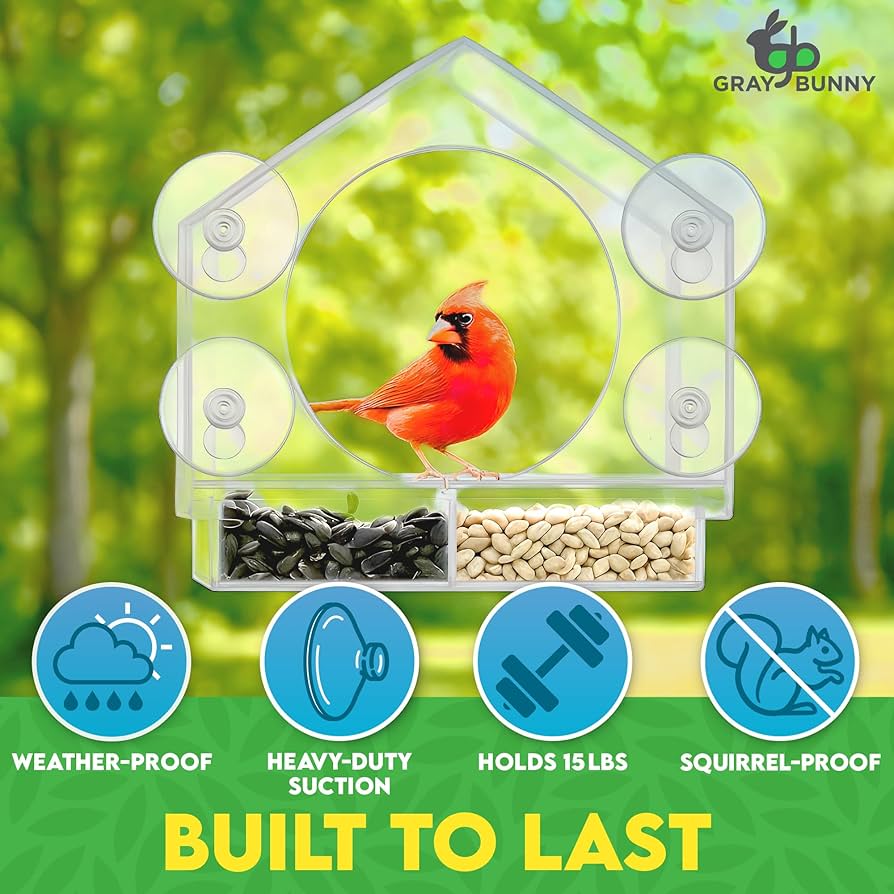
Strong suction cups keep the feeder attached to your window. They must hold the feeder’s weight even in cold weather.
- Choose suction cups made from durable rubber or silicone.
- Check that cups fit your window glass thickness.
- Test suction strength by gently pulling after mounting.
- Clean both window and suction cups before attaching.
- Replace suction cups yearly for best hold.

Credit: www.amazon.com
Preparing Your Feeder For Winter
Winter can be tough for birds and their feeders. Cold weather and snow can damage your window bird feeder. Preparing your feeder helps keep it safe and useful all winter long.
Taking simple steps protects your feeder from harsh weather. This way, birds can enjoy fresh food even in cold months.
Weatherproofing Techniques
Protect your feeder from rain, snow, and wind. Use materials that keep water out and stop damage. Weatherproofing helps your feeder last through winter.
- Apply waterproof sealant to wooden parts
- Use rust-resistant screws and hooks
- Choose durable materials like plastic or metal
- Cover the feeder with a small roof or flap
- Place feeder in a sheltered spot near your window
Insulation Tips
Insulate your feeder to keep bird food dry and fresh. Insulation also helps stop freezing and keeps birds warmer while they eat.
- Wrap the feeder with foam or bubble wrap
- Add a layer of clear plastic around the feeder
- Use weather-resistant fabric as a cover
- Place small straw or pine needle bundles nearby
- Keep the feeder out of direct wind to maintain warmth
Preventing Ice Build-up
Ice can block food and make the feeder slippery for birds. Stop ice by keeping the feeder dry and warm. This helps birds get food safely.
- Check and clear snow or ice daily
- Install a small heater or heat tape near the feeder
- Use feeders with drainage holes to remove water
- Place feeder where sun can melt ice quickly
- Use birdseed mixes that resist moisture
Selecting Bird Food For Cold Months
Birds need extra energy during cold months. Choosing the right food helps them stay warm and healthy. You can attract many birds by picking foods they love in winter.
Feeding birds in winter also supports local wildlife. It is important to select food that keeps birds strong and safe in harsh weather.
High-energy Seeds
High-energy seeds give birds the fuel they need in cold weather. These seeds are rich in fats and calories. Sunflower seeds, safflower seeds, and millet are popular choices.
- Black oil sunflower seeds have thin shells and high fat content.
- Safflower seeds offer good energy and are less liked by squirrels.
- Millet is small and easy for many birds to eat.
- Nyjer seeds attract finches and small birds.
Suet And Fat Balls
Suet and fat balls provide essential fats for birds during winter. These foods keep birds warm and help them build energy reserves. You can buy or make suet at home.
| Type | Main Ingredients | Benefits |
|---|---|---|
| Suet Cakes | Beef fat, seeds, nuts | High energy, lasts long |
| Fat Balls | Rendered fat, grains, seeds | Easy to hang, good fat source |
| Peanut Suet | Peanuts, fat, cornmeal | Rich in protein and fat |
Avoiding Mold And Spoilage
Wet or spoiled food can harm birds. Mold grows fast in cold, damp weather. Clean feeders regularly and use fresh food to keep birds safe.
- Remove old or wet seeds daily.
- Store seeds in a dry, cool place.
- Use feeders that protect food from rain and snow.
- Check suet and fat balls for spoilage often.
- Replace food if it smells bad or looks moldy.
Maintaining Your Feeder In Harsh Weather
Winter can be tough on window bird feeders. Cold, snow, and wind can cause damage or make feeding hard for birds.
Keeping your feeder clean and full helps birds stay healthy during cold months.
Regular Cleaning Practices
Clean your feeder every few days. This stops mold and bacteria from growing. Use warm water and mild soap to scrub all parts.
- Remove old seeds and debris
- Soak feeder in a bleach solution (1 part bleach, 9 parts water) for 10 minutes
- Rinse well with clean water
- Dry completely before refilling
Refilling Strategies
Refill your feeder often to keep food fresh and dry. Wet seeds can spoil quickly in winter cold.
| Time of Day | Reason |
| Morning | Birds are hungry after night cold |
| Late afternoon | Helps birds stock up before night |
| After snow | Clears away wet seeds and adds fresh food |
Protecting Against Snow And Wind
Snow and wind can block access or damage your feeder. Use these tips to keep it safe and usable.
- Place feeder near a wall or sheltered spot
- Install a small roof or cover above the feeder
- Use strong suction cups or mounts to hold it firm
- Clear snow gently from feeder openings
Attracting Winter Birds To Your Feeder
Winter is a tough time for birds to find food. A winter proof window bird feeder can help them survive cold days.
Placing your feeder correctly and adding water and cover can bring many birds to your window.
Ideal Placement
Place the feeder where birds feel safe from predators. Near a window is good for watching them.
Keep the feeder 3 to 6 feet from the window. This distance prevents birds from hitting the glass.
- Choose a quiet spot with little foot traffic
- Avoid placing feeder too close to busy roads
- Near shrubs or trees is best for safety and shelter
Providing Water Sources
Birds need water even in winter. Ice and snow do not always provide enough clean water.
Use a heated bird bath or change water often to keep it from freezing.
- Place water near the feeder but not too close
- Keep water fresh and clean daily
- Use shallow containers to prevent drowning
Using Natural Cover
Birds like to hide from cold wind and predators. Natural cover helps them feel safe.
Plant evergreen bushes or keep leaf piles near the feeder for shelter.
- Evergreens block wind and provide hiding spots
- Brush piles give birds a warm place to rest
- Natural cover near feeders attracts more species

Credit: www.amazon.ca
Safety Tips For Birds And Windows
Winter proof window bird feeders bring birds close to your home. You must keep birds safe near windows. Birds can hurt themselves if you are not careful.
Use smart ways to protect birds and your windows. Follow simple safety tips for a safe bird watching experience.
Preventing Window Collisions
Birds often hit windows because they do not see the glass. This can cause serious injury or death. You can stop collisions by making windows more visible.
Place feeders close to windows, but not too close. This helps birds see the glass and avoid flying fast into it.
- Use decals or stickers on windows to break up reflections
- Install external screens or netting to soften impact
- Move feeders within 3 feet or more than 30 feet from windows
- Close curtains or blinds when feeders are not in use
Avoiding Toxic Materials
Some materials can harm birds if they touch or eat them. Avoid using toxic paints or glues on your bird feeder. Choose safe, natural materials instead.
Clean feeders regularly with mild soap and water. Do not use chemicals that can leave harmful residue. Keep feeders free of mold and dirt.
- Use untreated wood or metal for feeders
- Check that paints and finishes are bird safe
- Do not use lead or zinc parts
- Replace feeders if they show signs of damage or rust
Monitoring Bird Health
Watch birds for signs of illness or injury near your feeder. Sick birds may act tired or have ruffled feathers. Keep the feeder area clean to stop disease spread.
If you see sick birds, remove the feeder for a few days. This helps stop germs from spreading to other birds. Call a wildlife expert if you find injured birds.
- Check feeders for mold or spoiled food
- Replace food often to keep it fresh
- Keep water clean and unfrozen in winter
- Report sick or injured birds to local wildlife groups
Enhancing Your Birdwatching Experience
Using a winter proof window bird feeder lets you watch birds up close. It protects food from snow and cold weather. You can enjoy birdwatching all winter long without going outside.
This type of feeder attaches to your window. It gives a clear view of birds visiting your yard. You will see many types of birds from the warmth of your home.
Best Viewing Spots
Place the feeder where birds feel safe and comfortable. Near trees or bushes is a good idea. Birds like spots that offer quick shelter if needed.
Choose a window with good lighting and little reflection. South-facing windows get more sunlight. Avoid windows with busy backgrounds to see birds clearly.
- Near natural cover like shrubs or trees
- Windows with direct sunlight but no glare
- A spot visible from a cozy chair inside
- Avoid areas with heavy foot traffic or noise
Photography Tips
Use a camera with a zoom lens to capture bird details. Keep the camera close to the window for sharp images. Clean the window to avoid spots in photos.
Turn off your camera flash to avoid scaring birds. Take photos in natural light early in the morning or late afternoon. Use a fast shutter speed to freeze bird movements.
- Use a zoom lens or binoculars for close shots
- Keep the window clean for clear pictures
- Avoid flash to keep birds calm
- Shoot during soft natural light hours
- Use fast shutter speed to capture quick movements
Recording Bird Sightings
Keep a notebook or app to write down bird types and numbers. Note the date, time, and weather conditions. This helps track which birds visit your feeder.
Use simple codes or symbols for quick notes. Add details like bird behavior or unusual colors. Sharing your records can help local birdwatching groups.
- Record bird species seen and their count
- Note date, time, and weather conditions
- Use short codes for quick notes
- Include special behaviors or rare birds
- Share data with local birdwatching clubs

Credit: www.amazon.com
Frequently Asked Questions
How Do I Winter Proof My Window Bird Feeder?
Use weather-resistant materials like acrylic or metal. Seal edges to prevent water damage. Add insulation or a wind shield for extra protection.
What Birds Visit Window Feeders In Winter?
Common visitors include chickadees, nuthatches, finches, and cardinals. These birds seek food and shelter during cold months near feeders.
How Often Should I Clean A Winter Window Feeder?
Clean your feeder every two weeks to prevent mold. Use warm water and mild soap. Rinse thoroughly and dry before refilling.
What Food Is Best For Winter Window Feeders?
Offer high-energy foods like sunflower seeds, suet, and peanuts. These provide essential nutrients and fat for birds to stay warm.
Conclusion
A winter-proof window bird feeder brings joy to your home. Birds stay safe and fed during cold months. You enjoy watching them from the warmth inside. This feeder is easy to set up and maintain. It supports local wildlife and enhances your winter garden view.
A simple way to connect with nature. Consider adding one to your home this season. Create a welcoming spot for birds. Enjoy the beauty and peace they bring. A small change that makes a big difference. Your home becomes a haven for feathered friends.