
Have you ever wondered how birds find their way across thousands of miles without getting lost? It’s almost like they have a built-in GPS, guiding them through the skies.
The secret lies in their incredible ability to sense Earth’s magnetic fields. But how exactly do birds do this? Understanding this fascinating skill can change the way you see nature and navigation forever. Keep reading, and you’ll discover the surprising science behind your feathered friends’ amazing internal compass.
Magnetic Sense In Birds
Many birds can sense the Earth’s magnetic field. This helps them find their way during long flights.
The ability to detect magnetic fields is called magnetoreception. It is a natural skill in some animals, especially birds.
Basics Of Magnetoreception
Birds use special cells to sense magnetic fields. These cells may contain tiny magnetic particles or special proteins.
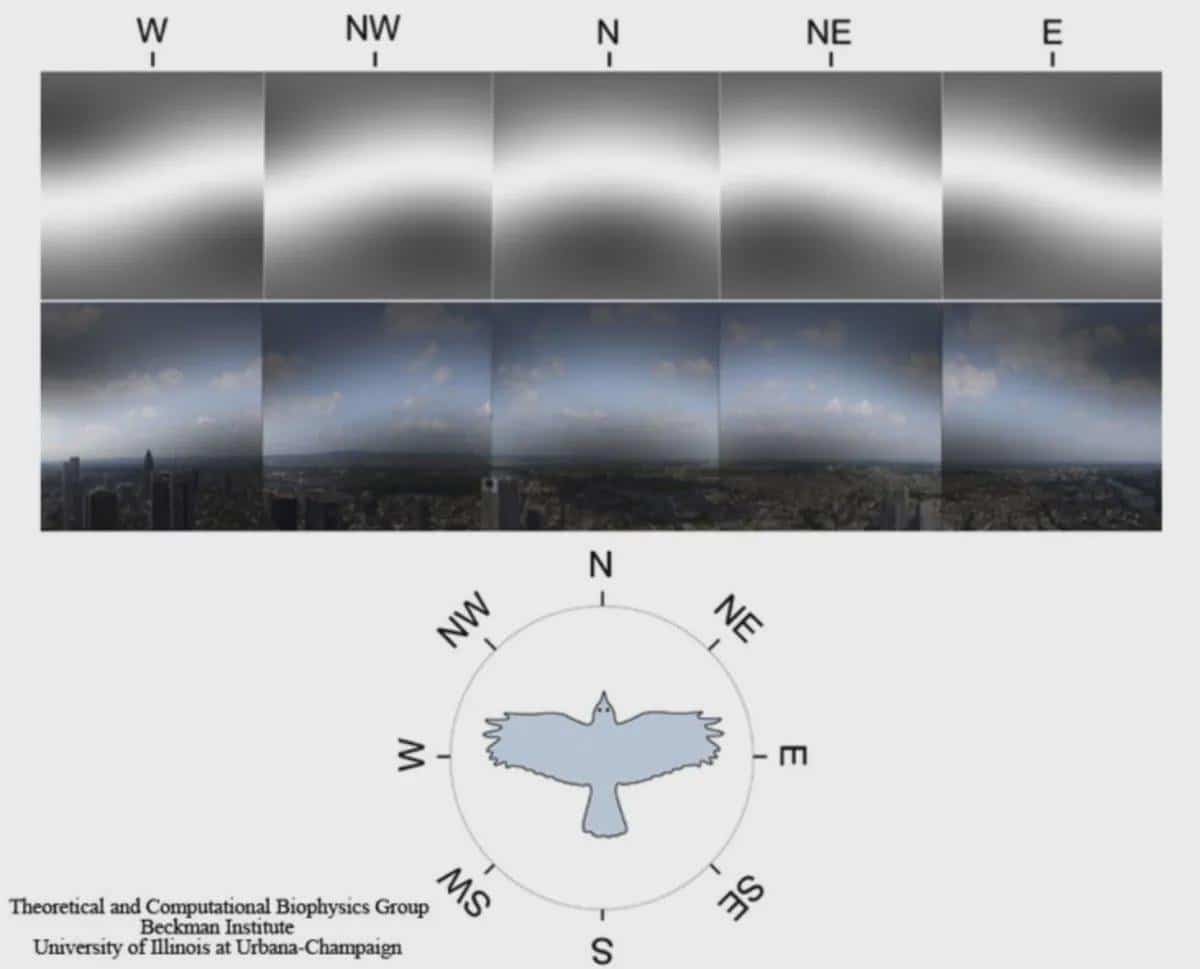
One theory says birds have molecules called cryptochromes in their eyes. These react to light and magnetic fields, helping birds see magnetic directions.
- Magnetic particles act like tiny compass needles inside cells.
- Cryptochromes change how bird eyes detect light and magnetic fields.
- Birds combine magnetic information with vision to navigate.
Evolutionary Benefits
Magnetoreception helps birds travel long distances safely. It guides them during migration to find food and breeding areas.
This sense improves survival by reducing the chance of getting lost. Birds can find safe routes and avoid dangers more easily.
- Improves long-distance migration success
- Helps find feeding and nesting sites
- Reduces energy spent on wrong routes
- Increases chances of survival and reproduction

Credit: en.wikipedia.org
Anatomy Of The Magnetic Sensor
Birds use special sensors in their bodies to sense Earth’s magnetic field. These sensors help them navigate long distances.
The magnetic sensor has parts that detect magnetic signals and send information to the bird’s brain. This system is still being studied by scientists.
Role Of The Eye
Birds’ eyes have special cells that may sense magnetic fields. These cells contain proteins called cryptochromes.
Cryptochromes react to light and magnetic fields. This helps birds see magnetic directions as visual patterns.
- Located in the retina
- Respond to blue light
- Create magnetic field signals
- Send signals to the brain
Magnetite-based Receptors
Some birds have tiny crystals of magnetite in their bodies. Magnetite is a magnetic mineral that reacts to Earth’s magnetic field.
These magnetite crystals act like compass needles. They may be found near the beak or brain and help the bird sense direction.
- Made of iron oxide crystals
- Found in the upper beak or brain area
- Move or align with magnetic fields
- Send signals to the nervous system
Radical Pair Mechanism
Birds sense Earth’s magnetic field to navigate during migration. One way they do this is through the radical pair mechanism.
This mechanism involves light and special molecules in their eyes. It helps birds detect magnetic directions.
Light-dependent Reactions
The radical pair mechanism starts with light hitting bird’s eyes. Light triggers chemical reactions in molecules.
These reactions create pairs of molecules with unpaired electrons. The magnetic field affects these electron pairs.
- Light excites molecules in the bird’s eye
- Excited molecules form radical pairs
- Magnetic fields change how these pairs behave
- Bird’s brain senses these changes to find direction
Cryptochrome Proteins
Cryptochromes are special proteins in bird eyes. They react to light and form radical pairs.
These proteins help birds sense magnetic fields by changing their chemical state. This change sends signals to the brain.
- Cryptochromes absorb blue light
- They create radical pairs after light absorption
- Magnetic fields affect the lifespan of these pairs
- The brain uses this info to guide bird flight
Neural Pathways For Navigation
Birds use special brain systems to sense Earth’s magnetic fields. These help them find their way during migration.
Scientists study how birds process magnetic signals. This helps explain their amazing navigation skills.
Brain Regions Involved
Several brain areas help birds sense magnetic fields. One key area is the trigeminal nerve system. It carries magnetic information from the beak to the brain.
The cluster N and hippocampus also play roles. They help birds remember routes and landmarks.
- Trigeminal nerve: detects magnetic signals
- Cluster N: processes magnetic information at night
- Hippocampus: aids in spatial memory and navigation
Signal Processing
Birds convert magnetic field data into nerve signals. These signals travel to the brain for interpretation.
Special proteins called cryptochromes in the eye may detect magnetic fields. They send information to the brain’s visual centers.
- Magnetic signals become electrical nerve impulses
- Cryptochromes react to magnetic fields using light
- Visual brain areas help create a magnetic map
Behavioral Evidence
Birds use Earth’s magnetic field to find their way during migration. Scientists study how birds behave to learn about this sense. Behavioral evidence helps show how birds detect magnetic fields.
Researchers watch how birds move and orient themselves in different magnetic conditions. These studies reveal how birds rely on magnetic information to navigate.
Orientation Experiments
Scientists place birds in special cages called orientation funnels. These cages let birds show the direction they want to fly. By changing the magnetic field around them, researchers see if birds change direction.
Birds often point toward their usual migration route when the magnetic field is normal. If the magnetic field shifts, birds change their direction too. This shows they use magnetic cues to guide themselves.
- Birds in normal magnetic fields face their migration direction
- Changing magnetic fields makes birds face new directions
- Some birds stop oriented flight when magnetic cues are removed
Impact Of Magnetic Disruption
Scientists use magnets or radio waves to disrupt magnetic sensing in birds. When this happens, birds get confused and lose their way. This behavior shows magnetic fields are important for navigation.
Disruption can make birds fly in wrong directions or fail to start migration. Some birds become restless but do not fly properly. These effects prove that magnetic sense is real and needed for travel.
- Magnets cause birds to lose orientation
- Radio waves can block magnetic sensing
- Disrupted birds show wrong or random flight paths
- Birds need magnetic fields to migrate successfully
Comparisons With Other Animals
Birds have a unique way to sense magnetic fields. Other animals also use magnetic sensing but in different ways. This section looks at fish, marine species, insects, and mammals.
Understanding these differences helps us learn how animals navigate and survive in their environments.
Fish And Marine Species
Many fish and marine animals detect magnetic fields to guide their migrations. They have special cells that contain magnetic particles. These help them sense the Earth’s magnetic field and find their way in the ocean.
- Salmon use magnetic cues to return to their birth rivers.
- Sea turtles navigate across oceans using magnetic maps.
- Sharks have electroreceptors that may also detect magnetic fields.
Insects And Mammals
Insects and mammals sense magnetic fields differently from birds. Some insects have light-sensitive molecules that react to magnetic fields. Mammals may use magnetic particles in their noses or brains.
| Animal Group | Magnetic Sense Mechanism | Purpose |
| Birds | Light-sensitive molecules and magnetic particles | Navigation during flight |
| Insects | Light-sensitive molecules (cryptochromes) | Orientation and migration |
| Mammals | Magnetic particles in tissues | Navigation and homing |
| Fish and Marine Species | Magnetic particles and electroreceptors | Migration and hunting |
Technological Applications
Birds use Earth’s magnetic fields to find their way during migration. Scientists study this natural skill to build new tools. These tools help improve navigation systems on land and in the air.
Understanding how birds sense magnetic fields can lead to better technology. This knowledge inspires new devices that work without GPS or batteries. These ideas come from nature’s own design.
Bio-inspired Navigation
Birds use tiny particles and special proteins to detect magnetic directions. This natural system is very sensitive and efficient. Engineers try to copy these features for human use.
- Creating sensors that detect magnetic fields like birds
- Designing drones that navigate using Earth’s magnetism
- Developing low-energy navigation tools for remote areas
- Improving safety in transportation with magnetic field guides
Future Research Directions
Scientists want to learn more about how birds sense magnetism. This will help create better technologies. Research focuses on biology, physics, and materials science.
| Research Area | Goal | Potential Impact |
| Protein-based sensors | Understand magnetic detection | New bio-compatible devices |
| Magnetic particle analysis | Identify magnetite role | Improved sensor materials |
| Neural processing | Map bird brain response | Advanced signal processing |
| Applied engineering | Build prototypes | Better navigation tools |
Credit: www.ox.ac.uk

Credit: www.discovermagazine.com
Frequently Asked Questions
How Do Birds Detect Earth’s Magnetic Field?
Birds detect Earth’s magnetic field using specialized cells containing magnetoreceptors. These cells sense magnetic cues, helping birds navigate during migration. The exact mechanism involves proteins called cryptochromes in their eyes, which respond to magnetic fields and enable directional sensing.
What Role Do Cryptochromes Play In Bird Navigation?
Cryptochromes are light-sensitive proteins in birds’ eyes. They react to magnetic fields by forming radical pairs. This reaction helps birds see magnetic field lines as visual patterns, guiding their navigation over long distances.
Can Birds Sense Magnetic Fields Without Light?
Birds primarily rely on light-dependent magnetoreception. Without light, their magnetic sense weakens or stops. This is because cryptochrome proteins need light to function properly and detect magnetic fields accurately.
How Accurate Is Bird Magnetic Field Sensing?
Birds have highly accurate magnetic sensing abilities. They can detect slight variations in Earth’s magnetic field. This precision helps them maintain migration routes over thousands of miles with remarkable consistency.
Conclusion
Birds sense magnetic fields with surprising accuracy. This ability helps them navigate long distances. Scientists study this to understand bird migration. Magnetoreception is a fascinating field of research. Birds use tiny particles in their bodies to detect Earth’s magnetic field.
Their eyes might also play a role. This natural GPS is crucial for their survival. Understanding it can help protect bird species. Nature’s wonders continue to amaze us. Birds remain one of Earth’s incredible navigators. Their skills inspire endless curiosity and exploration.
Keep exploring the mysteries of our feathered friends.



