How to Get Rid of Fruit Flies in Bird Cage: The Ultimate Guide to a Pest-Free Aviary
Few things are as frustrating for a bird owner as the sight of tiny, buzzing insects hovering around a beloved pet’s home. When you notice fruit flies in bird cage environments, it is often a sign that the delicate balance of cleanliness and moisture has shifted. These pests are more than a nuisance; they can carry bacteria and create an unsanitary living space for your avian companions.
Learning how to get rid of fruit flies in bird cage setups requires a combination of immediate sanitation, biological understanding, and long-term preventive strategies. Because birds have highly sensitive respiratory systems, you cannot simply reach for a standard household insecticide. This guide provides a deep dive into bird-safe, effective methods to reclaim your home from these persistent invaders.
Understanding the Enemy: Why Fruit Flies Target Birds
To effectively get rid of fruit flies in bird cage areas, you must first understand what draws them there. The common fruit fly (Drosophila melanogaster) is biologically programmed to seek out acetic acid and fructose—the chemical signatures of fermenting organic matter.
The Attraction Factors
Birds are messy eaters. Whether they are throwing pellets, dropping bits of fresh apple, or splashing vitamin-enriched water, they inadvertently create a buffet for pests. Fruit flies are attracted to:
-
Moistened Pellets: When water splashes into a food dish, the high carbohydrate content of the pellets begins to break down, attracting flies within hours.
-
Fresh Produce: Fruits like bananas, oranges, and berries ferment quickly in the warmth of a home.
-
Soft Droppings: If a bird has a diet high in fruit, their waste can contain enough sugar to attract insects.
-
Damp Substrate: Wet paper liners or wood shavings provide the perfect humidity for egg-laying.
The Lifecycle Challenge
A single female fruit fly can lay up to 500 eggs at a time. These eggs hatch into larvae in as little as 24 hours. This rapid reproduction is why a small problem can turn into an infestation overnight. Effective bird cage fruit fly control must target every stage of this lifecycle, not just the visible adults.
Phase 1: Immediate Sanitation and Deep Cleaning
The most critical step to eliminate fruit flies around bird cage enclosures is to remove their breeding grounds. If there is no place to lay eggs and no food to eat, the population will collapse.
1. The Total Reset
Start by moving your bird to a travel carrier in a separate room. Perform a “total reset” of the cage. This involves removing all organic material, including:
-
All old liners and substrate.
-
Every scrap of food, even the “clean” looking seeds.
-
All water sources.
2. Scrubbing the Infrastructure
You must clean bird cage to prevent fruit flies from returning by focusing on the hidden crevices. Use a solution of hot water and bird-safe soap.
-
The Grate and Tray: These are the primary collection points for waste. Scrub them thoroughly to remove any “biofilm”—a thin layer of bacteria and sugar that can sustain larvae.
-
The Tracks: Many cages have sliding tracks for the tray or doors. Use a toothbrush to ensure no fermented juice or waste is trapped in these narrow channels.
3. Sanitizing the Surroundings
Fruit flies don’t just stay in the cage; they hover nearby. Wipe down the walls behind the cage and the floor underneath it. A 1:1 mixture of water and white vinegar is an excellent, bird-safe way to clean bird cage to prevent fruit flies and neutralize the odors that attract them.
Phase 2: Implementing a Bird-Safe Fruit Fly Trap
While you clean the cage, you need a way to catch the adults currently flying in the room. You must use a bird-safe fruit fly trap to ensure your pet is never exposed to toxic vapors or sticky residues.
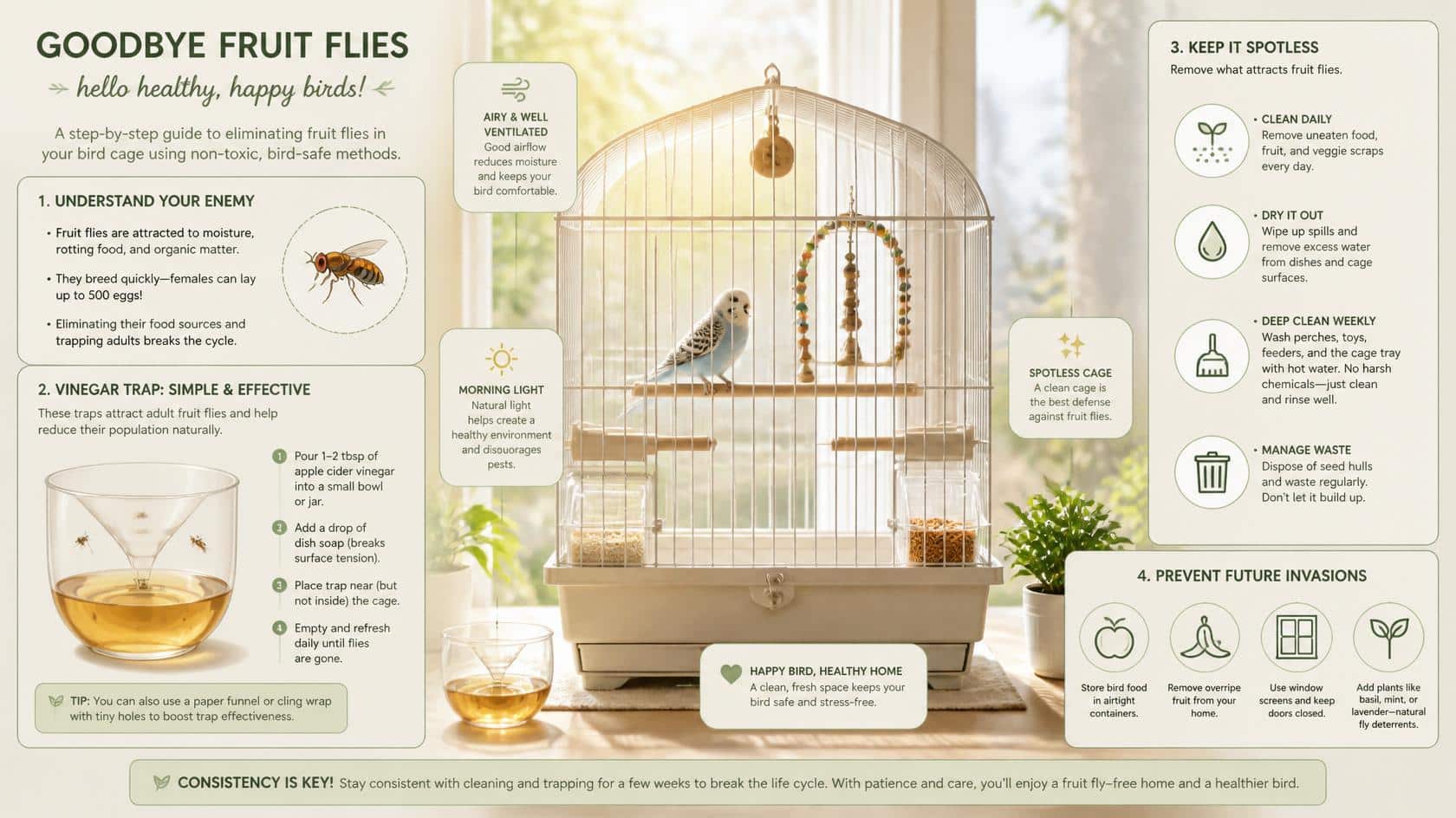
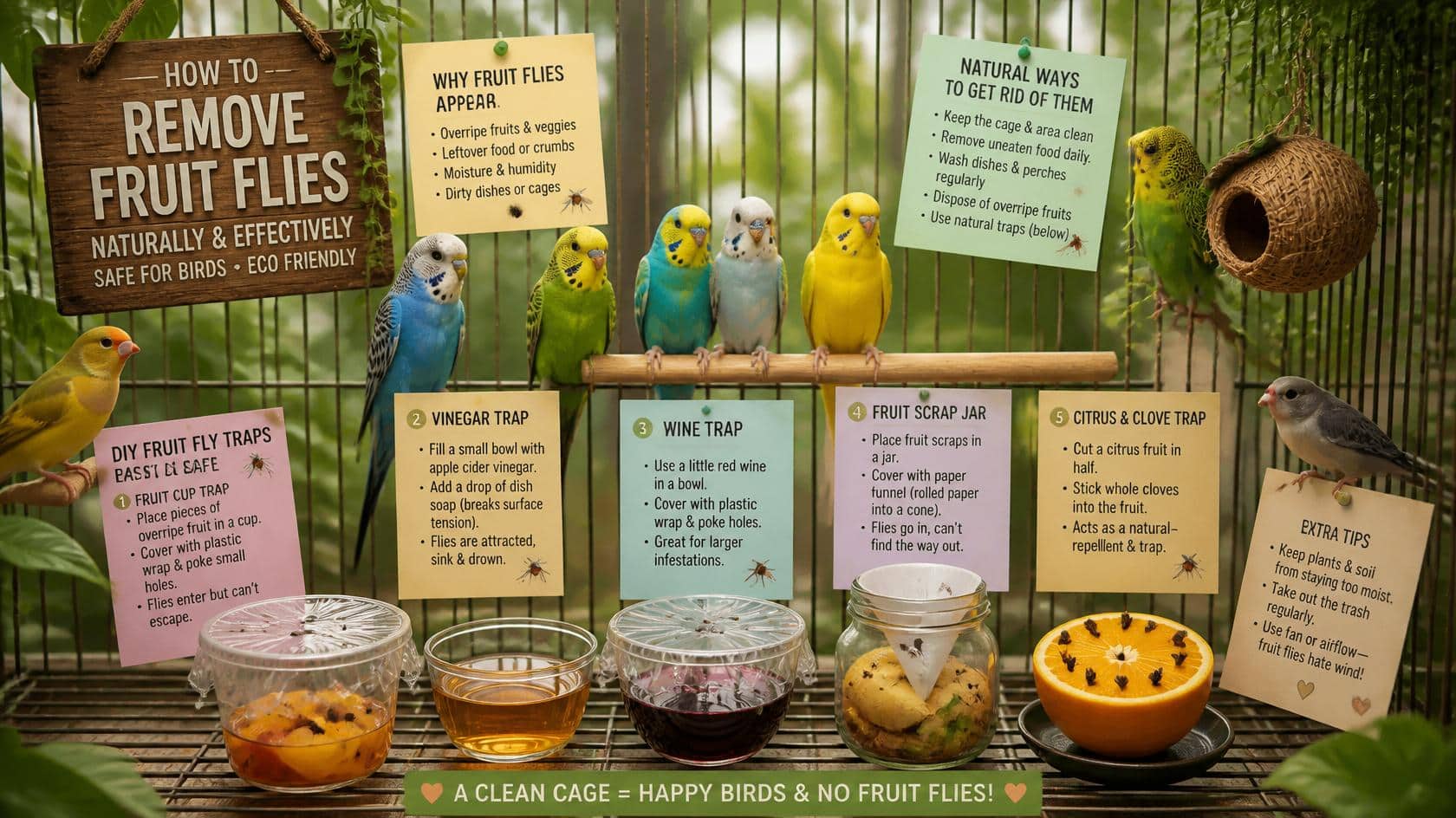
The Apple Cider Vinegar (ACV) Trap
The most effective DIY bird-safe fruit fly trap involves using the fly’s own instincts against it.
-
The Lure: Fill a small jar with two inches of apple cider vinegar. The fermented scent mimics overripe fruit.
-
The Surface Tension Breaker: Add one drop of liquid dish soap. This breaks the surface tension of the liquid. When the fly touches the surface, it sinks instead of staying afloat.
-
The Funnel: Roll a piece of paper into a cone and place it in the jar, or cover the jar with plastic wrap and poke several small holes in it.
-
Placement: Place the trap outside the cage, but nearby. Ensure your bird cannot reach the jar through the bars or while out for exercise.
Commercial Options
If you prefer a commercial product, look for “non-toxic” or “food-grade” traps that use pheromones or vinegar-based lures. Avoid any trap that uses “Yellow Sticky Paper” inside or near the cage. Birds can easily get their feathers stuck to these, leading to severe injury or stress.
Phase 3: Natural Repellents and Preventives
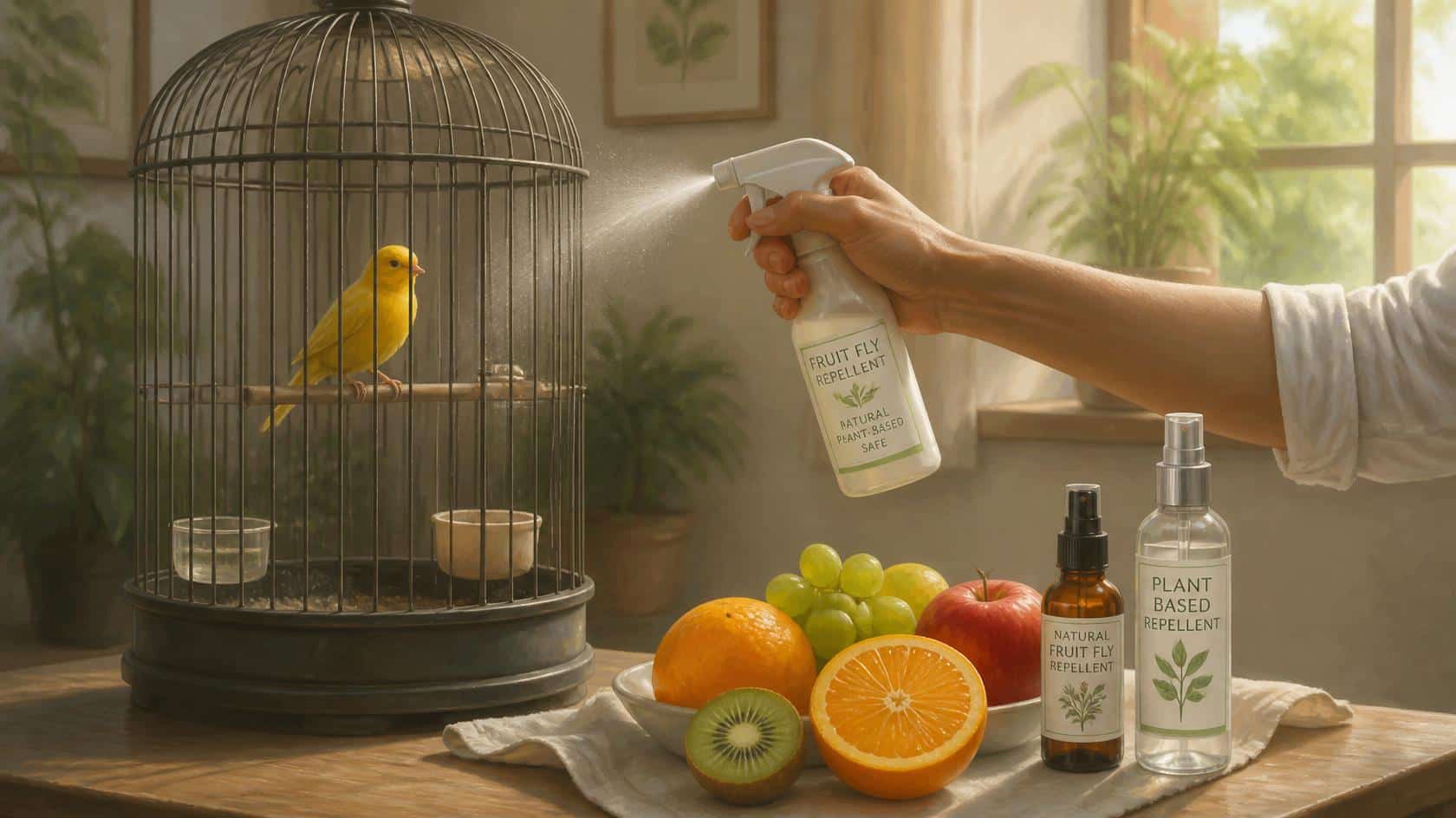
Once the initial population is reduced, you can use natural fruit fly repellents to discourage new flies from entering the area. Birds are sensitive to strong scents, so moderation is key.
Herbal Deterrents
Certain plants contain essential oils that are natural insecticides. Placing these near (but not inside) the cage can help:
-
Basil and Mint: These fresh herbs have scents that fruit flies actively avoid.
-
Lavender: Not only does it repel flies, but it also has a calming effect on many birds.
-
Cloves: Placing a few whole cloves in a small bowl near the cage can serve as one of many effective natural fruit fly repellents.
Essential Oil Safety
If you choose to use a diffuser to eliminate fruit flies around bird cage areas, proceed with extreme caution. Only use high-quality, pure oils and ensure the room is well-ventilated.
-
Safe Oils (in dilution): Lavender, Lemon, and Bergamot.
-
Oils to Avoid: Tea Tree, Peppermint (in high concentrations), and Oregano can be irritating to a bird’s lungs.
Phase 4: Long-Term Management and Food Hygiene
Consistency is the secret to how to get rid of fruit flies in bird cage environments permanently. You must change the way you manage your bird’s resources.
The “Dry Method” of Feeding
To maintain bird cage fruit fly control, minimize the time that wet food is available.
-
The 2-Hour Rule: Offer fresh fruits and vegetables in the morning, but remove the bowl entirely after two hours. Do not leave “wet” food in the cage all day.
-
Pellet Management: If your bird is a “dunker” (dipping pellets in water), change the water bowl multiple times a day to prevent a sugary soup from forming at the bottom.
Substrate Choices
Avoid using corn cob or walnut shell bedding if you have a fly problem. These can trap moisture and organic matter deep within the layer, making them perfect nurseries for flies. Instead, use flat sheets of newspaper or recycled paper liners that can be changed daily. This simple habit is the easiest way to keep bird cage free of fruit flies.
Summary Comparison: Fruit Fly Control Methods
| Method | Effectiveness | Bird Safety | Primary Benefit |
| Deep Cleaning | Extremely High | Excellent | Removes the source of the problem. |
| ACV Traps | High | Excellent | Safely removes adult flies from the air. |
| Essential Oils | Moderate | Variable | Acts as a natural deterrent. |
| Food Scheduling | High | Excellent | Prevents new flies from being attracted. |
| Sticky Traps | High | Dangerous | NOT RECOMMENDED for use near birds. |
Strategic Prevention: How to Stop the Buzz
If you want to prevent fruit flies in bird cage settings, you must look beyond the cage itself. These pests often enter the home on produce from the grocery store.
-
Wash Produce Immediately: When you bring home fruit for your bird, wash it in a vinegar-water solution to kill any existing eggs on the skin.
-
Seal Your Trash: Use a trash can with a tight-fitting lid and empty it every night.
-
Check Your Drains: Fruit flies often breed in the “schmutz” inside kitchen drains. Pouring boiling water down the drain can help prevent fruit flies in bird cage areas by removing secondary breeding sites.
-
Airflow: Fruit flies are weak fliers. Placing a small oscillating fan near the cage (pointing away from the bird so as not to cause a draft) makes it difficult for flies to land and feed.
Common Mistakes to Avoid in Bird Cage Pest Control
When homeowners try to get rid of fruit flies in bird cage environments, they often make errors that put their pets at risk.
-
Using Aerosol Sprays: Never use “Raid” or other flying insect sprays in a room where a bird lives. The mist can settle on food and feathers, leading to toxicity.
-
Neglecting the Bottom Tray: Many owners clean the bowls but forget the “gunk” that accumulates under the grate.
-
Over-watering Plants: If you have houseplants near your bird cage, the damp soil can attract fungus gnats, which are often mistaken for fruit flies.
-
Leaving the “Night Snack”: Leaving a bowl of fruit in the cage overnight is an invitation for a midnight feast for pests.
Effective bird cage pest control is about being more disciplined than the pests are prolific. By removing the food, trapping the adults, and maintaining a dry environment, you can keep bird cage free of fruit flies for good.
Frequently Asked Questions
Are fruit flies dangerous to my bird?
While they don’t bite like mites, fruit flies can mechanically transmit bacteria such as E. coli or Salmonella from waste onto your bird’s food. Furthermore, a high volume of flies can cause significant stress to your bird, leading to feather picking or decreased appetite.
How can I tell the difference between fruit flies and gnats?
Fruit flies are usually tan or brownish with red eyes and are attracted to sugar/fruit. Fungus gnats are black, look like tiny mosquitoes, and live in the damp soil of houseplants. The methods to how to get rid of fruit flies in bird cage setups specifically target sugar-seeking pests.
Can I use a bug zapper near my bird?
Electronic bug zappers are generally safe to use in the same room as a bird, provided the bird cannot reach the device. However, they are often less effective for fruit flies than vinegar traps, and the “popping” sound might startle sensitive birds.
How long does it take to fully clear an infestation?
If you follow a strict cleaning schedule and use traps, you should see a significant decrease in 48 hours. Because the lifecycle is about 8–10 days, you must maintain your bird cage fruit fly control efforts for at least two weeks to ensure all remaining eggs and larvae have been eliminated.
Is it safe to use “Wine Traps” instead of vinegar?
Yes, red wine is an excellent lure for fruit flies. However, just like with the ACV trap, you must ensure the bird cannot access the liquid. The alcohol and sugar in wine are harmful to birds if ingested.
Why do the flies keep coming back even after I clean?
Check your bird’s food storage. If you store your birdseed or pellets in the original bag with a clip, flies may be breeding inside the bag. Transfer all food to airtight plastic or glass containers to prevent fruit flies in bird cage areas from re-establishing.
Can I use diluted bleach to clean the cage?
While bleach kills larvae, the fumes are incredibly dangerous to birds. It is much safer to use a mixture of vinegar and water or a specialized veterinary disinfectant (like F10SC) to get rid of fruit flies in bird cage environments.
Conclusion
Successfully managing bird cage pest control requires a proactive rather than reactive mindset. By understanding that fruit flies are a symptom of excess moisture and organic decay, you can address the root cause of the infestation.
To how to get rid of fruit flies in bird cage areas effectively, remember the three-pronged approach: sanitize the environment, trap the existing population with a bird-safe fruit fly trap, and implement strict food hygiene. While it may take a few days of diligent effort, the result is a healthier, more comfortable home for your feathered friend. Consistency in your cleaning routine is the most powerful tool you have to keep bird cage free of fruit flies and ensure the long-term vitality of your pets.
For a more thorough cleaning process, read our How to Disinfect a Bird Cage guide to learn the safest methods for disinfecting every part of your bird’s habitat.