How to Disinfect a Bird Cage: The Ultimate Guide to Avian Hygiene
For bird owners, the cage is more than just a home; it is a sensitive ecosystem. Birds possess highly specialized respiratory systems that make them incredibly vulnerable to airborne toxins and bacterial buildup. Proper hygiene isn’t just about making the room look tidy—it’s a frontline defense against zoonotic diseases and respiratory infections that can be fatal for sensitive species like African Greys or Parakeets.
Simply wiping down the bars isn’t enough to neutralize persistent pathogens. To maintain a truly safe environment, you need a methodical approach to sanitation. This guide breaks down the science of How to Disinfect a Bird Cage, exploring the best tools, safe chemical balances, and real-world workflows that keep your feathered family thriving for decades.
Understanding the Stages of Habitat Cleaning
Before diving into specific products, it is vital to distinguish between the three levels of cleaning. Most health issues arise when owners confuse “tidying” with “disinfecting.”
1. General Cleaning (Daily)
This involves removing physical debris like seed hulls, droppings, and discarded fruit. You are physically removing dirt but not necessarily killing microorganisms.
2. Sanitizing (Weekly)
Sanitizing reduces the number of bacteria on a surface to a “safe” level according to public health standards. It is a middle-ground step that manages daily bacterial loads.
3. Disinfecting (Monthly/Post-Illness)
True disinfection involves using specialized chemicals to eliminate almost all recognized pathogenic microorganisms. This is the process we focus on in this How to Disinfect a Bird Cage analysis, as it is the most critical for disease prevention.
Safety First: Identifying Bird-Safe Chemicals vs. Household Hazards
The primary danger in avian hygiene is the use of toxic fumes. Standard household bleach, ammonia, and most kitchen floor cleaners produce “off-gassing” that can kill a bird within minutes if the room isn’t ventilated or if the bird is present during the cleaning.
Avoid These Toxic Scents
-
Phenols: Common in “pine” smelling cleaners. Highly toxic.
-
Ammonia: Causes immediate respiratory distress.
-
Strong Perfumes: Floral or artificial scents in cleaners irritate avian lung tissue.
-
Chlorine Gas: Even a small amount of concentrated bleach residue can be dangerous if the cage is not rinsed perfectly.
The Role of Natural Acids
For many keepers, cleaning bird cage with vinegar is the most trusted entry-point into hygiene. White distilled vinegar is an excellent degreaser and can kill some common bacteria like Salmonella. However, for a complete medical-grade disinfection, vinegar alone may not neutralize harder viruses like Psittacine Hatching and Feather Disease (PBFD).
Detailed Step-by-Step Disinfection Protocol
Following a set order of operations ensures you don’t cross-contaminate clean parts of the habitat with old debris.
Phase 1: Preparation and Extraction
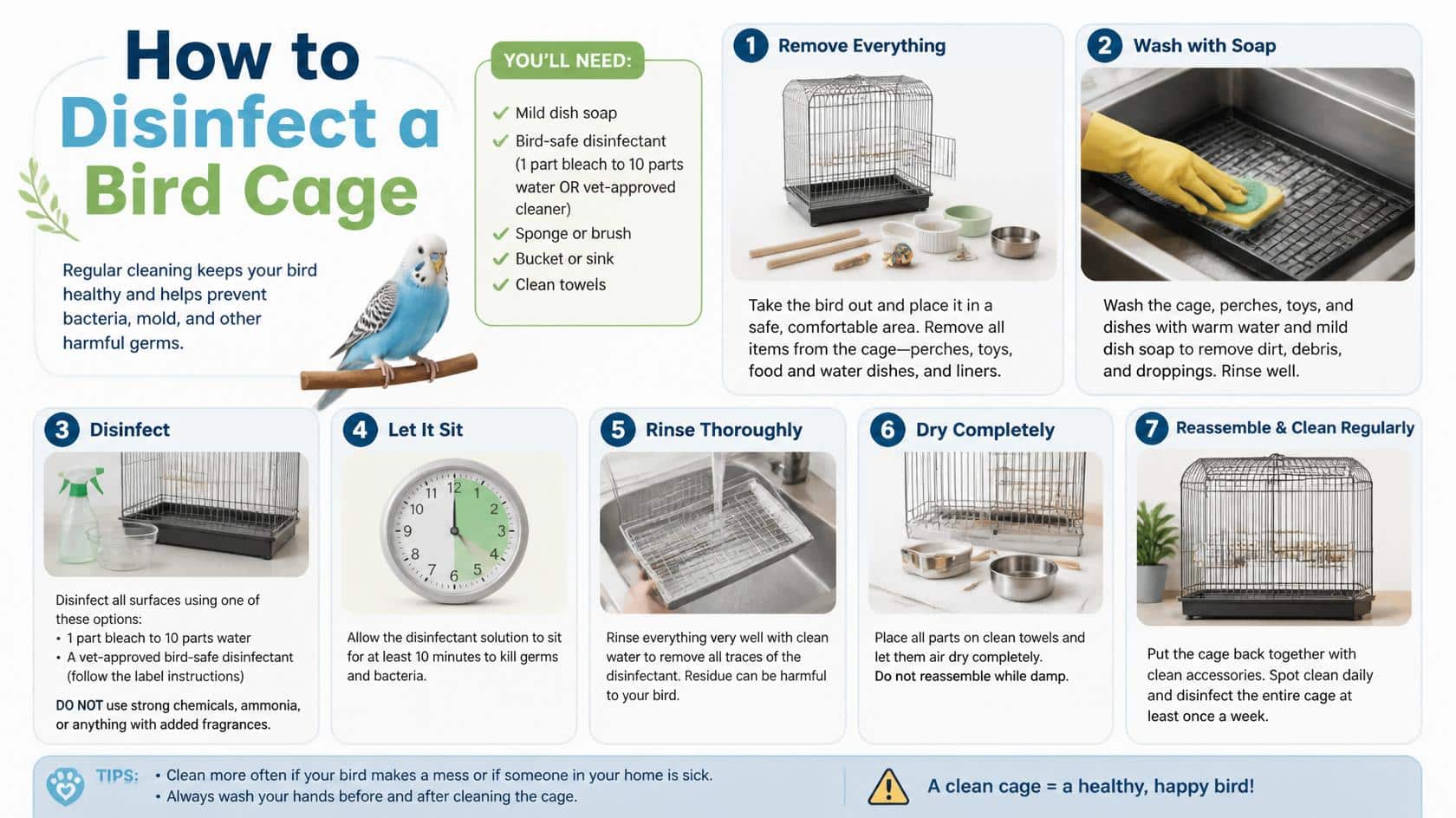
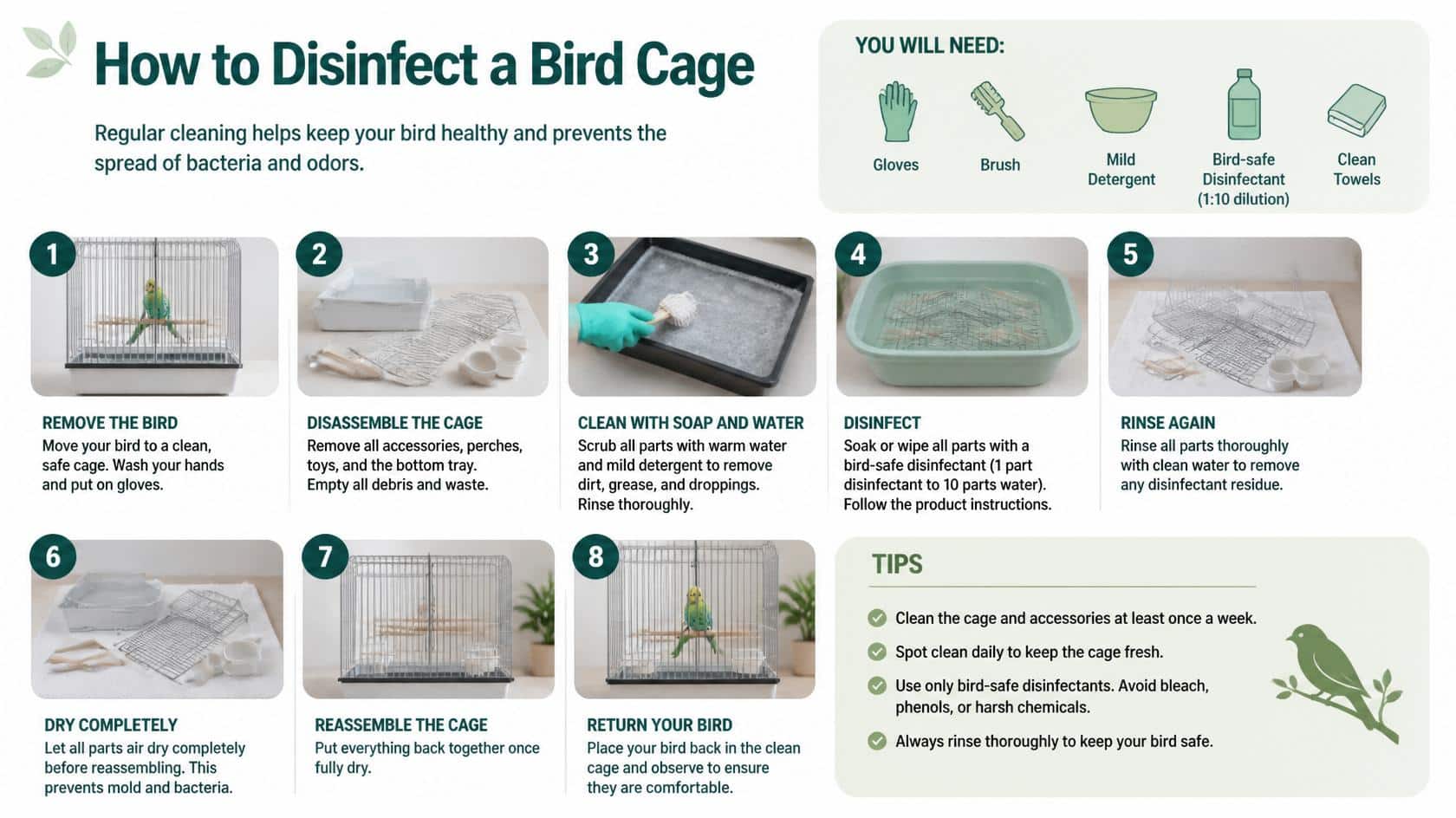
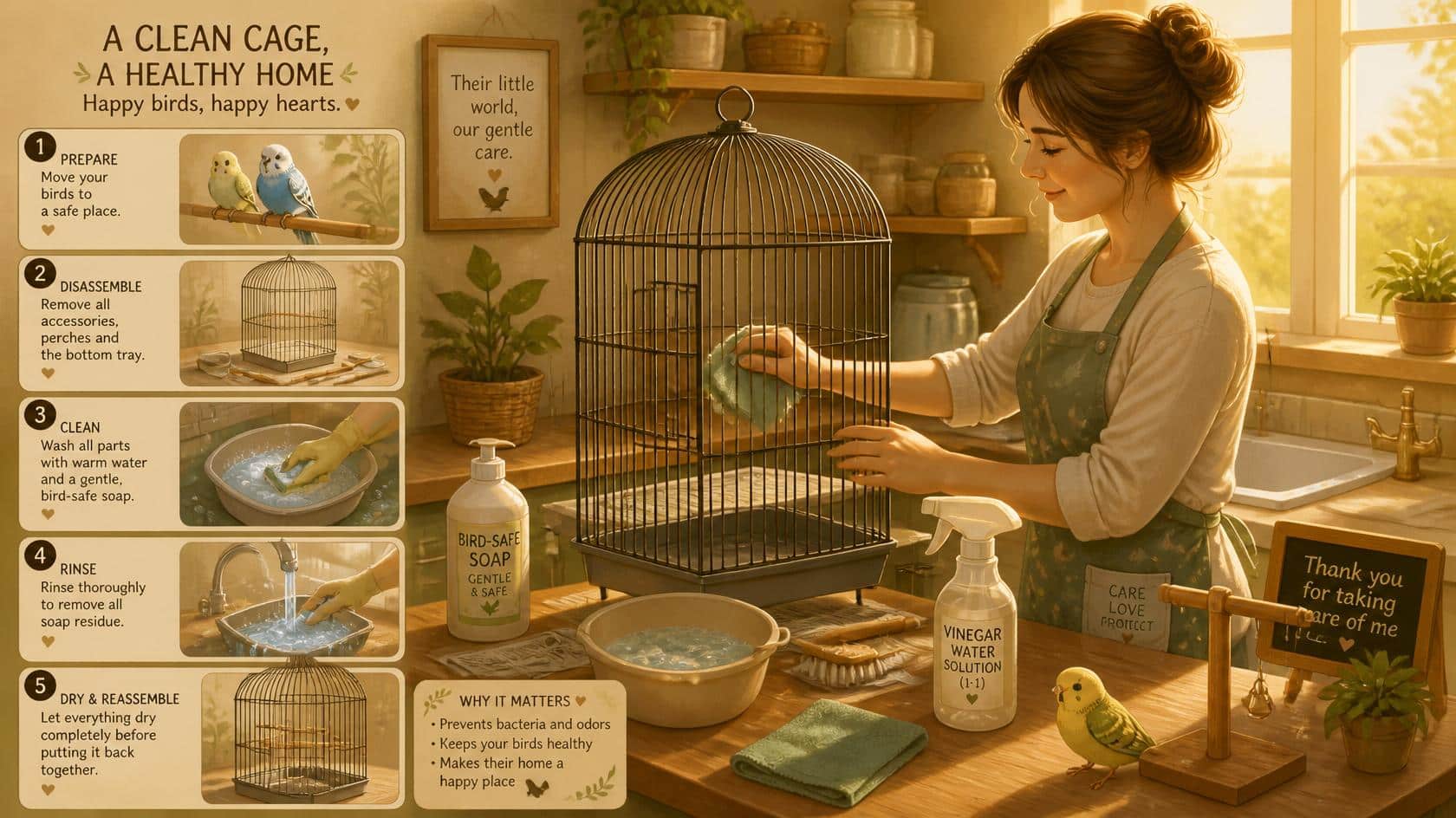
The bird must be removed from the area. Place them in a secure travel carrier in a separate, well-ventilated room. Remove all toys, perches, food cups, and the waste tray.
Phase 2: The Physical Breakdown (Organic Removal)
No disinfectant can work through a layer of dried organic material (feces). Use warm water and a scrubbing brush to remove all physical grime. Professional bird cage cleaning tips often suggest using a handheld steam cleaner here, as the heat helps soften dried droppings without the need for excessive scrubbing.
Phase 3: The Wash
Once physical debris is gone, apply a specialized bird safe cage cleaner. Ensure the soap is mild and specifically labeled as “Avian Safe” to avoid heavy perfumes or oils that cling to the metal.
Phase 4: Active Disinfection
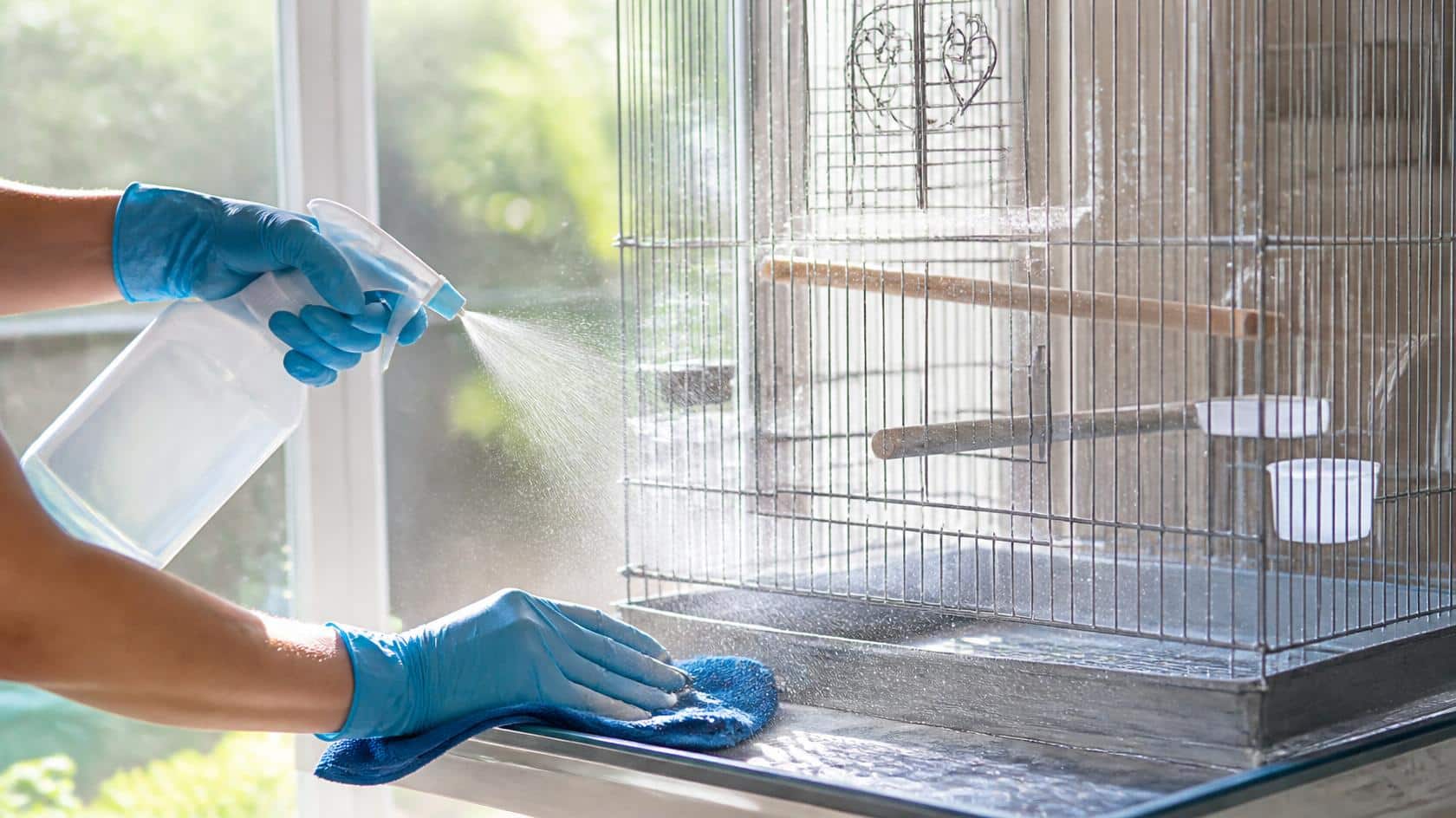
This is the stage where pathogens are neutralized. You should apply your choice of best disinfectant for parrot cage use, such as an accelerated hydrogen peroxide solution or a diluted veterinary compound. Let the product sit (the “contact time”) as specified by the manufacturer—usually between 5 to 10 minutes.
Phase 5: Rinsing and Sunlight Curing
Rinse every surface with plain, high-pressure water until no soapy residue remains. If possible, let the cage panels air-dry in direct sunlight. Natural ultraviolet light acts as a powerful secondary germicide that helps eliminate remaining surface bacteria.
The Leading Veterinary Solutions for Deep Sanitization
If you are dealing with a used cage or a post-illness situation, industrial or veterinary-grade products provide the highest level of security.
| Product Type | Active Ingredient | Benefit | Limitation |
| Veterinary Concentrate | Benzalkonium Chloride | Wide-spectrum kill rate | Needs precise dilution |
| Natural Solution | Distilled Vinegar | Food-safe, non-toxic | Low viral kill rate |
| Accelerated Peroxide | Hydrogen Peroxide | No fumes, oxygen-based | Can be corrosive to some finishes |
| Avian Foam | Surfactants | Easy application for bars | Mostly for organic removal |
A Professional Standard: f10 bird cage disinfectant
Documentation in veterinary circles frequently highlights F10 as a “best-in-class” solution. It is non-corrosive and effective against a massive range of avian-specific pathogens. Crucially, the f10 bird cage disinfectant does not require rinsing in most diluted formats, though many owners still choose a final water wipe-down for absolute peace of mind.
Practical Comparison Table: Sanitizing vs. Disinfecting
Understanding how to sanitize bird cage setups involves knowing the intensity of the treatment required.
| Feature | Sanitizing (Routine) | Disinfecting (Deep Clean) |
| Target Goal | Remove 99.9% of bacteria | Neutralize viruses, fungi, and spores |
| Contact Time | 30 – 60 Seconds | 5 – 10 Minutes |
| Common Method | Mild Soap / Steam | Veterinary Grade Concentrates |
| Frequency | Weekly | Monthly or as needed |
How to Clean and Wash Different Cage Materials
Materials dictate which safe bird cage cleaning products you should choose. Metal reacts differently than plastic or wood.
Stainless Steel Enclosures
Stainless steel is the easiest to disinfect because it can handle acidic cleaners and heat. You can use a higher concentration of best disinfectant for parrot cage treatment without fear of pitting the metal. High-pressure hosing or even pressure washing is safe for stainless models.
Powder-Coated Wrought Iron
Most cages fall into this category. These require gentleness. Avoid using heavy abrasive pads that can scratch the paint. If the powder coat is scratched, organic waste can seep under the paint, allowing rust and bacteria to hide where chemical cleaners cannot reach them. For these models, a soft-bristle brush is mandatory.
Acrylic and Plastic
Clear panels can “cloud” if you use a high-acid solution like vinegar frequently. Always test a small area of a bird safe cage cleaner on an acrylic door to ensure it won’t crack (craze) the material over time.
Specialist Protocols for Small Species
Species-specific advice matters. A parakeet cage cleaning guide focuses on different hazards than one for a large Macaw. Small birds often have higher metabolisms and forage on the bottom of the cage more frequently. This makes the removal of the bottom grate during the “how to sanitize” process essential to prevent them from walking through disinfected residue.
Parakeet and Lovebird Specifics
Small cages often have tighter bar spacing (1/2″ or less), which makes physical scrubbing with a large sponge difficult. Use long-handled dish brushes to ensure the disinfection reaches into every corner weld of the habitat.
Maintenance Cycles: Developing Your Rhythm
If you are wondering how often to clean bird cage layouts, follow this standard industry schedule to prevent crisis-level filth.
-
Every Morning: Change water, replace paper liners, and remove uneaten soft food.
-
Every 3 Days: Wipe down obvious droppings from perches.
-
Every 7 Days: Perform a full how to wash a bird cage routine using warm soapy water on all surfaces.
-
Monthly: Conduct the formal process of how to disinfect a bird cage using a vet-approved chemical agent.
Troubleshooting Stubborn Hygiene Issues
Removing Biofilm
Water bowls often develop a “slime” known as biofilm. This is a fortress for bacteria. A simple rinse won’t remove it. You must use friction (a sponge or brush) paired with an antibacterial soap. Afterward, perform a deep rinse.
Softening Hardened Waste
Instead of chipping away at dried feces and potentially damaging the cage’s paint, lay a damp towel over the spot for 20 minutes. This rehydrates the matter, making it slide off with minimal pressure during the next phase of your bird cage cleaning tips routine.
Selection Guide: Buying Effective Hygiene Gear
Investing in the right infrastructure makes your how to sanitize bird cage tasks much less burdensome.
Look for These Infrastructure Features:
-
Large Swing-Out Doors: Allow your shoulders and arms access to reach the back corners.
-
Removable Grates and Trays: These should ideally slide out without having to lift the entire cage structure.
-
Seamless Welds: High-quality cages minimize “gaps” in the metalwork where bacterial “pockets” can grow undisturbed.
Finding safe bird cage cleaning products is half the battle; the other half is having a habitat that is built to be scrubbed. When making your next cage purchase, ask yourself: “How easily could I pressure-wash this model?”
Frequently Asked Questions
Is dish soap safe for birds?
A mild, clear, perfume-free dish soap (like Dawn) is excellent for breaking down organic oils and physical waste. It is a fantastic tool in the “wash” phase, but remember it does not officially disinfect surfaces to medical standards.
Why do experts recommend cleaning bird cage with vinegar?
Vinegar contains acetic acid, which can penetrate some bacterial cell walls. It is highly valued because it leaves no toxic residue if a bird happens to lick the bars immediately after drying.
Can I leave my bird in the room while using F10?
Yes, f10 bird cage disinfectant is formulated to be non-toxic even when nebulized near birds in clinical settings. However, as an added layer of safety, most professional researchers recommend moving the bird anyway to ensure no accidents occur during the deep cleaning phase.
How long do bird viruses stay on a cage surface?
Some pathogens can remain viable for months. Without a dedicated process for how to wash a bird cage with chemicals, those viruses stay dormant on perches or in cracks until they find a way into your bird’s respiratory system.
Pre-Sanitation Check-list for Owners
|
Step |
Action Item |
|
Bird Status |
Is the bird safely moved to another room? |
|
Waste Removal |
Has 100% of physical debris been scrubbed away? |
|
Chemical Safety |
Is the disinfectant specifically listed as non-toxic to parrots? |
|
Contact Time |
Have you left the solution on the bars for 5+ minutes? |
|
Residue Check |
Has every drop of cleaner been rinsed away with water? |
Strategic Summary for Habitat Longevity
A disciplined cleaning cycle is the cheapest health insurance policy you can provide for your companion. By following a regular parakeet cage cleaning guide or macaw deep-clean schedule, you prevent the chronic health conditions that are so common in “dusty” parrot environments.
Consistency is the secret variable. While the technical steps of how to disinfect a bird cage may feel overwhelming initially, they quickly become a 30-minute rhythmic part of your ownership lifestyle. Use this guide to select the safe bird cage cleaning products that match your cage material, and never skip the mandatory rinse-and-dry phase.
Whether you are performing a simple weekly scrub or utilizing a concentrated f10 bird cage disinfectant after a vet visit, the goal is always to create a pathogen-free sanctuary. Following these refined bird cage cleaning tips ensures your parrot spends its energy playing and talking—not fighting avoidable environmental illness.
Finalize your protocol today by stocking up on high-grade supplies and setting a monthly “Disinfection Day” on your calendar. Your bird’s respiratory health and your long-term success as an avian parent depend on the transparency and rigor of your sanitation habits. If you can honestly answer “How to wash a bird cage?” with a scientifically backed methodology, you are well ahead of the average owner in terms of E-E-A-T bird care excellence. Your dedication to hygiene represents your dedication to your bird’s very life. Ensure you choose a bird safe cage cleaner and perform your how often to clean bird cage assessment annually as your bird ages. Use the best techniques on how to sanitize bird cage interiors to provide total peace of mind for you and your flock.
A great cage is the foundation of a healthy bird habitat. Looking for more options? Check our Best Bird Cages guide.