How to Place Perches in Bird Cage: A Complete Guide to Safe, Comfortable Placement
If you’ve ever stood in front of an open cage holding two or three wooden dowels, unsure where they’re actually supposed to go, you’re not alone. Learning how to place perches in a bird cage is one of those tasks that looks simple until you try it — get it wrong, and your bird can end up with sore feet, a cramped living space, or a cage that feels more like a hallway than a home.
The good news is that once you understand a few core principles, arranging a cage becomes intuitive. This guide walks through choosing the right bird cage perches, figuring out how many you need, and placing them step by step so your bird can climb, rest, eat, and sleep comfortably. It also covers the mistakes that trip up even experienced owners, plus a quick-reference FAQ for the questions that come up most often.
Why Perch Placement Matters More Than You’d Think
Perches aren’t just resting spots — they’re where a bird spends nearly all of its waking and sleeping hours. A parrot or cockatiel that never leaves its cage during the day is still standing, gripping, and shifting its weight on those perches hour after hour.
That’s why bird cage perch placement affects far more than tidiness. Perches positioned at the wrong height can make a bird feel exposed or unable to reach food easily, and perches that are all the same width force the feet to hold one grip pattern around the clock. Constant pressure on the same spot of the foot is a recognized contributor to bumblefoot (pododermatitis), a painful inflammation of the footpad that’s much easier to prevent than to treat. Thoughtful placement also reduces stress, since birds instinctively want a mix of open perches for confidence and sheltered ones for security.
None of this requires expensive equipment. It just requires understanding what your bird’s feet, wings, and instincts actually need — which is exactly what the rest of this guide covers.
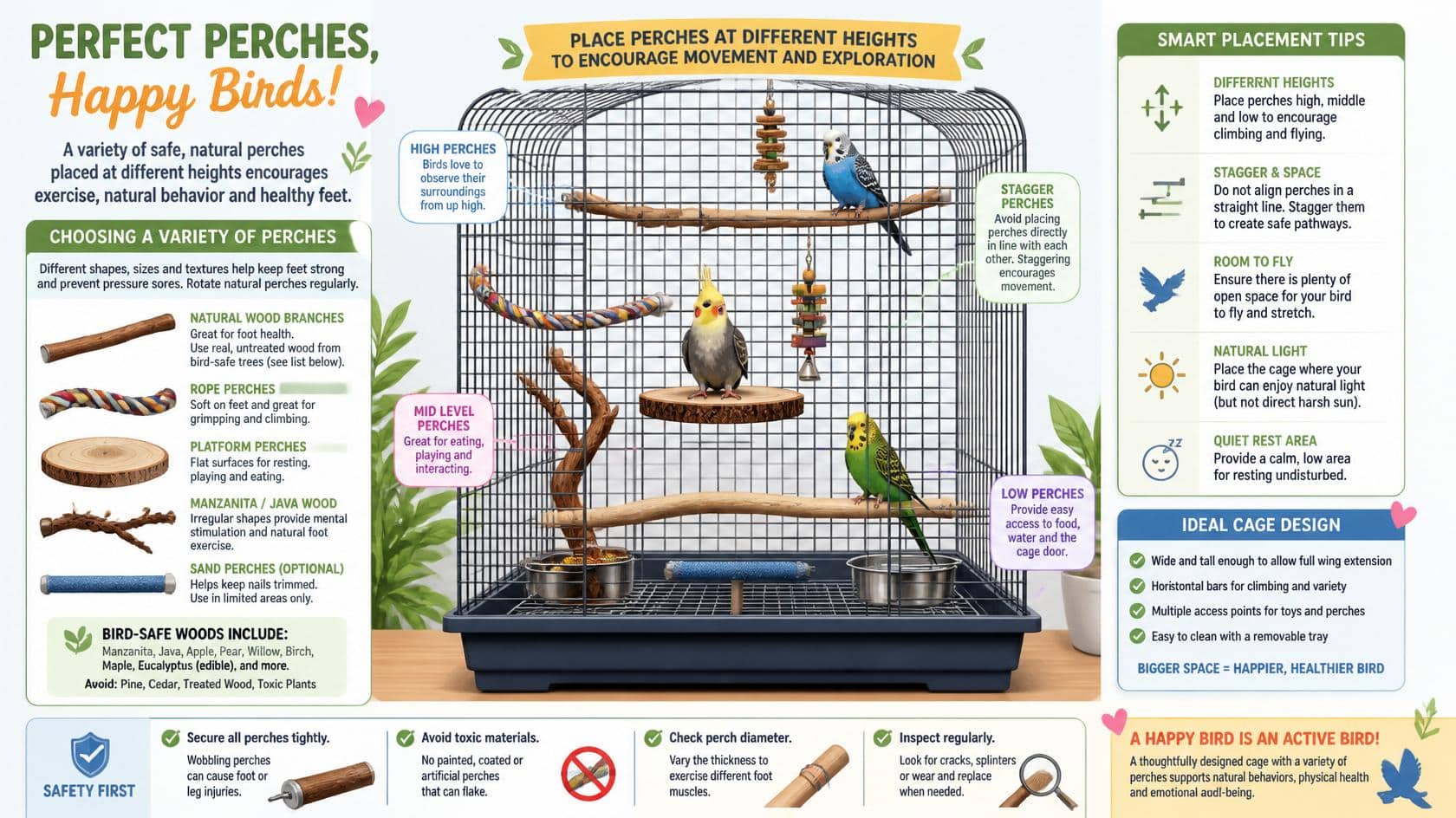
Choosing the Right Perch Materials Before You Place Them
Placement only works if you’re starting with the right perches. Material affects grip, foot health, and how quickly a perch wears out, so it’s worth sorting out before you install anything.
Natural Wood Perches
Natural wood bird perches are the most commonly recommended option, and it’s easy to see why. Untreated branches from trees like apple, ash, elm, willow, and manzanita have the slightly irregular shape and rough texture birds would grip in the wild, which helps exercise foot muscles and naturally wears down nails.
Wood choice does matter, though. Many bird-care sources advise steering clear of cedar and pine because of their aromatic oils and resin, which can irritate the respiratory tract in an enclosed space — though you’ll find some disagreement on exactly how risky properly dried, untreated pine really is. When in doubt, hardwoods like the ones listed above are the safer default, and they hold up better to chewing besides.
Rope, Cement, and Synthetic Perches
Rope perches offer a soft, flexible grip that many birds enjoy for resting, though they fray over time and need regular inspection for loose threads a bird could catch a toe on. Cement or mineral perches have a rough surface that can help keep nails naturally worn down, but they shouldn’t be a bird’s only perch, since standing on an abrasive surface all day can irritate the feet. Plastic and other synthetic perches are easy to clean and long-lasting, but their smooth, uniform surface offers little exercise value and can become slippery.
Branch Perches From Your Own Yard
If you’d rather source materials yourself, bird cage branch perches cut from your own trees can be a safe, low-cost option — as long as you identify the species correctly, avoid anything grown near roads or treated with pesticides, and clean the branch thoroughly before it goes anywhere near your bird. A scrub with mild soap followed by a rinse in hot water and full air-drying is usually enough.
Materials to Avoid
- Painted, stained, or varnished wood, which can flake and release chemicals
- Thin wire or metal perches, which concentrate pressure on tiny points of the foot
- Sandpaper-covered perch covers, which are rougher than they look and can cause sores without actually trimming nails as advertised
- Any perch with visible mold, cracks, or splintering
How Many Perches Does a Bird Cage Need?
Before finalizing perch placement in a bird cage, it helps to know how many perches you’re actually working with. As a general starting point, most single pet birds do well with two to four perches. Fewer than that limits variety and exercise; more than that can crowd the cage and block flight paths.
The right number also depends on cage size and bird size. A small flight cage for a single budgie might only comfortably fit two or three perches, while a large parrot cage can often support four, plus a swing or two, without feeling cramped. Use this as a starting point and adjust based on how much open floor and air space is left once everything is installed.
Step-by-Step: How to Set Up Perches in a Bird Cage
Once you’ve chosen your perches, setting them up is a matter of working through a few decisions in order. Follow these steps to arrange a cage that’s safe, comfortable, and genuinely engaging for your bird.
-
Match perch diameter to your bird’s feet. A widely used guideline is that a bird’s toes should wrap about two-thirds to three-quarters of the way around a perch without touching or overlapping on the other side. A perch that’s too thin strains the toes and claws; one that’s too thick prevents a secure grip.
-
Choose a mix of textures and materials. Rather than filling the cage with identical dowels, combine natural wood, a rope perch, and possibly one cement perch. Variety is what protects the feet over the long run, not any single “perfect” perch.
-
Plan your heights before you install anything. Decide which perch will be the highest — this is usually where your bird will sleep — and work downward from there. Sketching it out first, even mentally, prevents you from running out of usable space halfway through.
-
Space perches to allow full movement. Good perch spacing for birds means leaving enough distance for your bird to hop, flap, or fly short distances between stops, not just shuffle sideways. As a starting point, small birds do well with 6–8 inches between perches, medium birds with 8–12 inches, and large birds with 12–18 inches, though exact spacing depends on your cage dimensions.
-
Keep perches away from food and water dishes. Droppings falling from a perch above a food or water dish are one of the most common contamination sources in a cage. Position perches so a bird sitting on them isn’t directly over any dish.
-
Avoid tight corners and cage bars. A perch wedged into a corner can trap a bird’s tail or wings when it turns around. Leave a small gap between the perch ends and the cage bars, and avoid angles that force an awkward landing.
-
Secure every perch firmly. Use the mounting hardware that came with the perch, or wing nuts and clamps for natural branches, and check that nothing wobbles or shifts under weight. A loose perch is a fall risk, especially for older or less agile birds.
-
Watch how your bird responds, then adjust. After a few days, notice which perches get used most and which are ignored. Birds often reveal their preferences quickly, and there’s no harm in rearranging things once you’ve learned how to place perches in a bird cage that actually suits your individual bird.
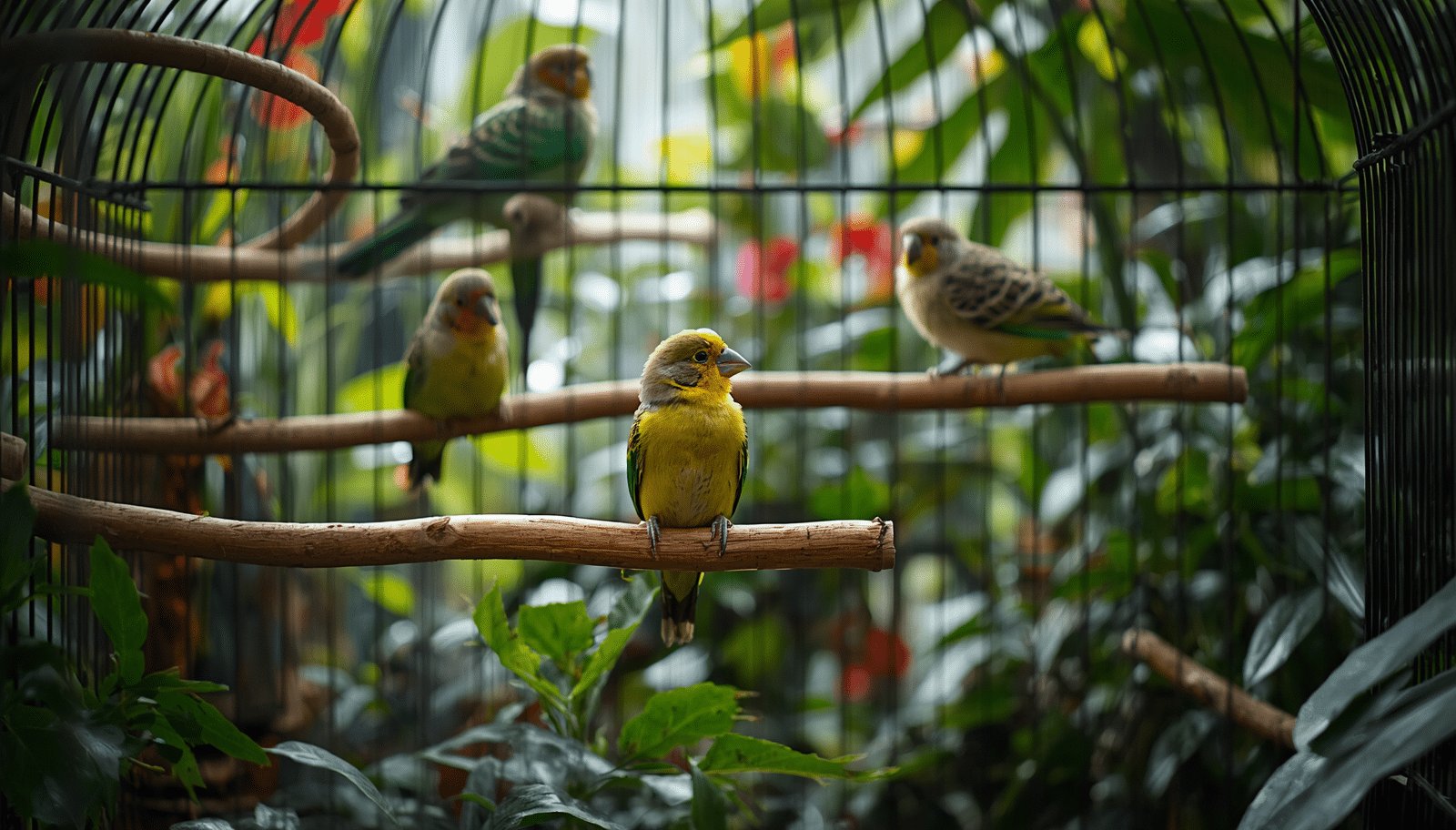
Perch Spacing and Height at a Glance
Because exact needs vary by species, it helps to see the numbers side by side. Perch spacing for birds and perch diameter both scale with body size, so use the table below as a starting point and fine-tune based on your bird’s actual foot size.
| Bird Size | Example Species | Perch Diameter | Spacing Between Perches |
|---|---|---|---|
| Small | Finches, canaries, budgies | 0.5–0.75 in (1.3–1.9 cm) | 6–8 in |
| Medium | Cockatiels, conures, lovebirds | 0.75–1.25 in (1.9–3.2 cm) | 8–12 in |
| Large | Parrots, macaws, cockatoos | 1.25–2 in (3.2–5 cm) | 12–18 in |
If you’re setting up a cage for more than one bird, or for a particularly active species, err toward the wider end of these ranges. When you arrange perches in a bird cage with less room to spare than you’d like, prioritize keeping the flight path down the center of the cage clear over squeezing in one extra perch.
Arranging Perches by Height and Purpose
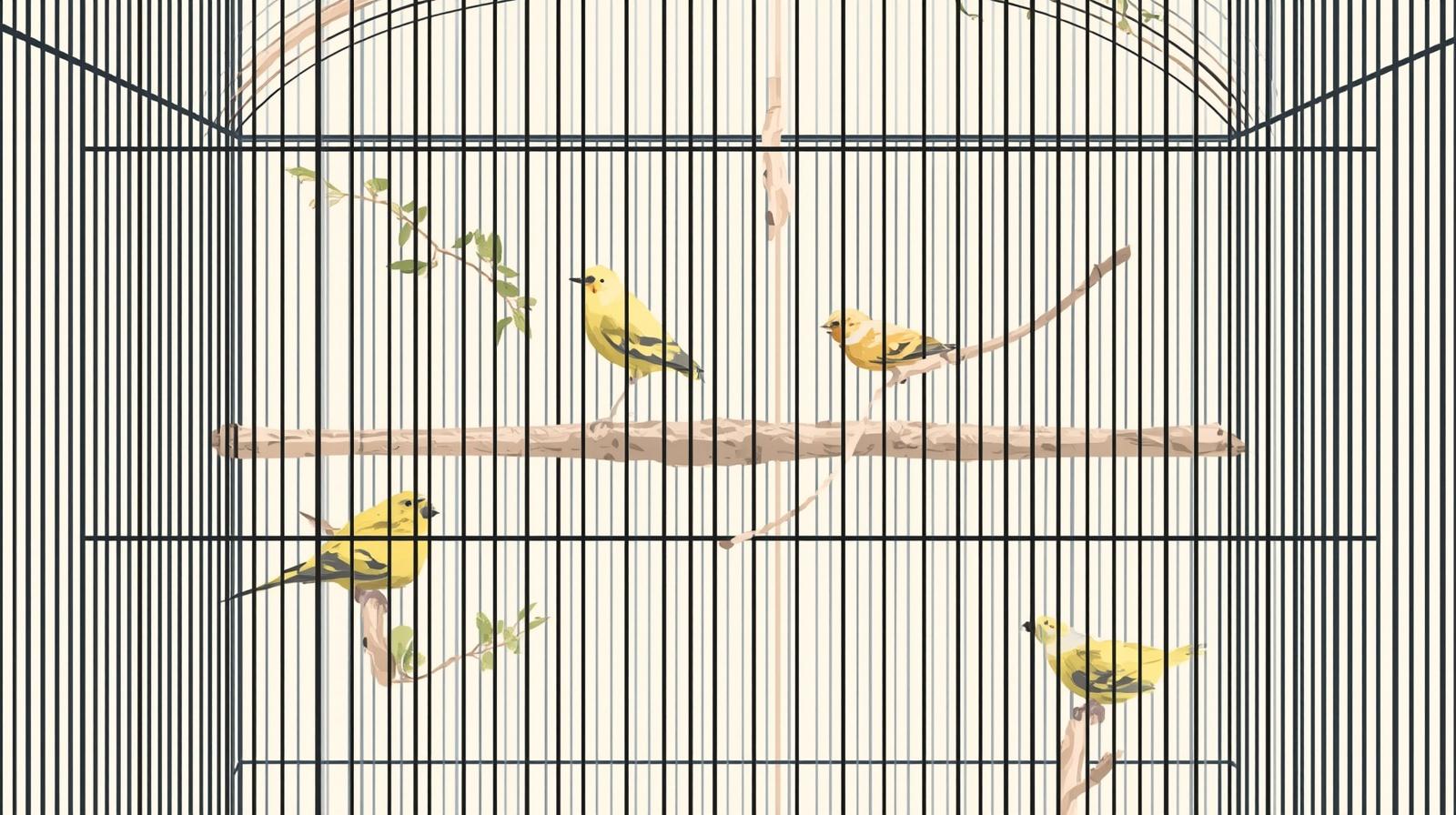
One clear way to arrange perches in a bird cage is to think in terms of three vertical zones, each serving a different purpose in your bird’s day.
| Zone | Purpose | Placement Notes |
|---|---|---|
| High | Sleeping and observation | Keep several inches of headroom; never place directly over food or water |
| Middle | Eating, socializing, active play | Central and easy to reach from most angles |
| Low | Resting, retreating, quiet time | Slightly sheltered, away from drafts near the cage door |
The highest perch usually becomes the sleeping spot, since birds naturally prefer to rest somewhere elevated and secure. Because of this, it’s especially important that nothing sits directly beneath it — droppings from an overnight perch can otherwise land on lower perches, toys, food, or water below.
Placing Perches for Different Bird Species and Sizes
Perch placement in a bird cage should reflect the bird actually living in it, not a generic formula. A setup that works beautifully for a cockatiel can be entirely wrong for a budgie or a macaw.
| Bird Type | Perch Diameter | Placement Tip |
|---|---|---|
| Small birds (finches, canaries) | ¾ in | Place perches closer together; small birds hop more than they fly between stops |
| Medium birds (cockatiels, conures, parakeets) | 1–1.25 in | Space perches to allow short flights; mix wood and rope textures |
| Large birds (parrots, macaws) | 1.5–2 in | Use thick, sturdy branches; secure extra firmly to handle a larger bird’s weight and grip strength |
Natural wood bird perches work well across every size category, since branch diameter naturally varies along its length, giving even a single perch some built-in variety for the foot. Whatever the species, resist the urge to buy several identical perches just because they matched at the store — variation in diameter and texture matters more than uniformity.
Common Mistakes to Avoid
Even careful owners fall into a few predictable traps when arranging a cage. A safe bird perch arrangement avoids these issues from the start:
- Using only one perch diameter. Identical perches throughout the cage force the feet into the same grip all day, which contributes to pressure sores over time.
- Placing perches directly above food or water. Droppings contaminate dishes below, which can lead to bacterial buildup and illness.
- Overcrowding the cage. Too many perches leave no room to fly, flap, or stretch, and can increase stress rather than provide enrichment.
- Wedging perches into corners. Tight corners can trap tails, wings, or feet when a bird turns around.
- Skipping regular inspection. Cracks, splinters, and mold aren’t always obvious at a glance and can go unnoticed until a bird is already injured.
- Ignoring the sleeping perch. Forgetting to designate — and protect — a high, quiet perch for sleep can leave a bird feeling unsettled at night, even if the daytime perches are ideal.
- Copying another owner’s exact layout. Bird cage perch placement should account for your specific cage dimensions and your bird’s size, not just replicate a photo you saw online.
Most of these mistakes are easy to fix once you notice them. A quick monthly walk-through of the cage, checking height, spacing, materials, and wear, catches almost all of them before they become a real problem.
Keeping Perches Safe Over Time
Placement isn’t a one-time task. Bird cage perches shift, wear, and get soiled with regular use, so a short maintenance routine keeps the setup safe long after the initial arrangement.
Wipe down perches daily if your bird is a messy eater, and give them a deeper wash — warm water and a mild, fragrance-free soap, rinsed thoroughly — about once a week. Let everything air dry completely before returning it to the cage, since damp wood can encourage mold. Inspect for cracks, splinters, or loose fittings during each cleaning, and replace anything that’s chipped, wobbly, or worn smooth, since a worn perch loses the texture that made it useful in the first place.
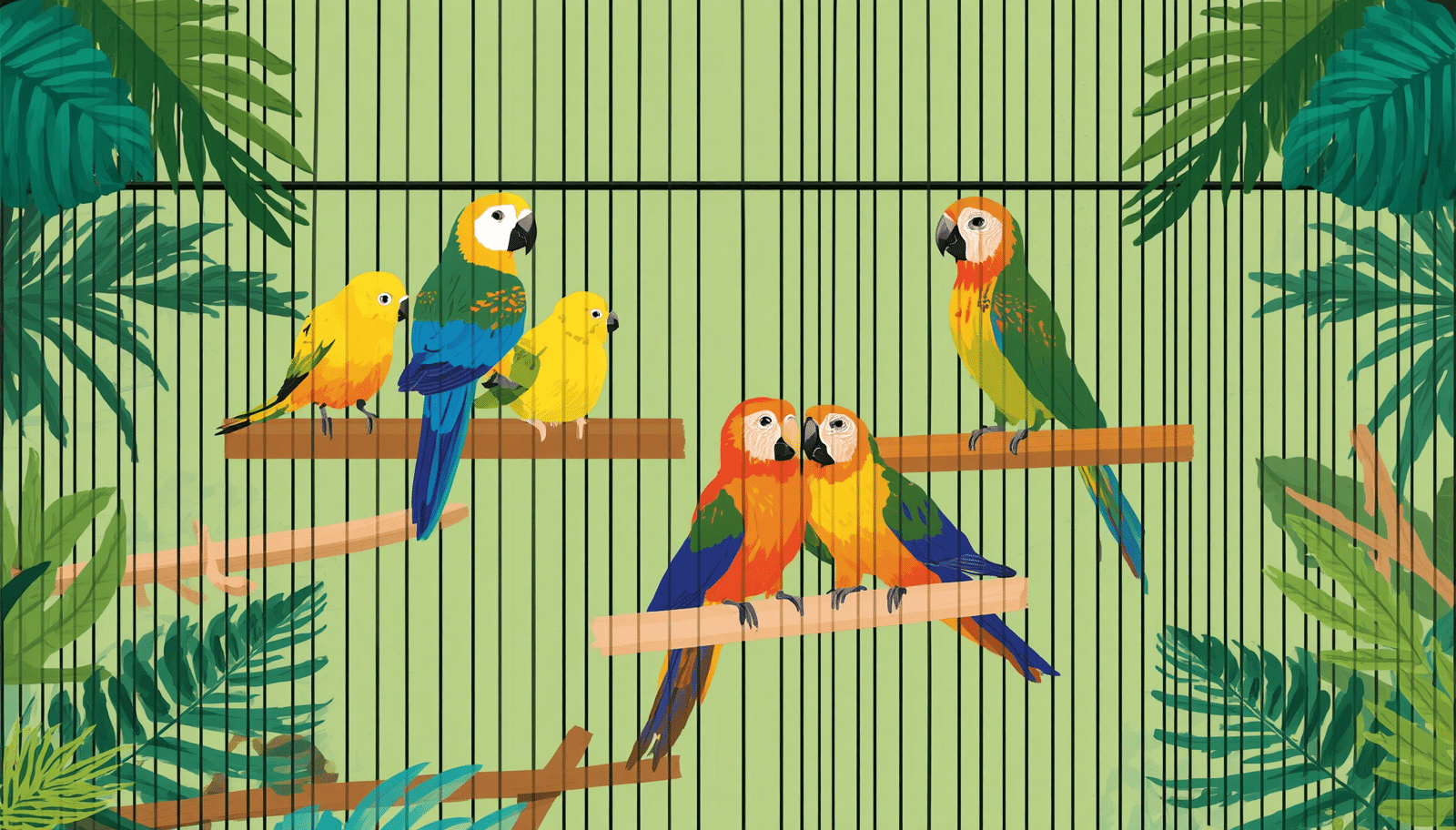
Keeping perches clean is just one part of proper cage hygiene. For a complete step-by-step cleaning routine, check out our How to Disinfect a Bird Cage guide to safely disinfect cages, perches, food bowls, and bird toys.
Frequently Asked Questions
How many perches should a bird cage have?
Most single birds do well with two to four bird cage perches of varying sizes and materials. Fewer than that limits exercise and choice; significantly more can crowd the cage and block flight paths.
What’s the best height for the main perch?
The highest perch — usually the sleeping spot — should sit with enough headroom that your bird can’t touch the cage ceiling while perched. Everything else can be positioned below it at varying heights.
Can I use branches I find outside as perches?
Yes — bird cage branch perches from safe, unsprayed trees like apple, willow, or manzanita are a popular natural option. Scrub them clean, rinse well, and let them dry completely before adding them to the cage, and skip any branch you can’t confidently identify.
How far apart should perches be spaced?
It depends on bird size: roughly 6–8 inches for small birds, 8–12 inches for medium birds, and 12–18 inches for large birds, adjusted to fit your specific cage.
How do I know if a perch is the right diameter?
Your bird’s toes should wrap about two-thirds to three-quarters of the way around the perch without the claws touching or overlapping on the other side. If the grip looks strained or the toes barely bend, size up or down accordingly.
How often should perches be cleaned or replaced?
Clean perches weekly, or daily if your bird is messy, and inspect for cracks or wear at the same time. Replace any perch that’s splintered, wobbly, moldy, or worn completely smooth.
What’s a simple checklist for setting up a new cage?
Use this bird perch setup guide as a quick checklist: choose varied textures and diameters, plan your heights before installing anything, keep every perch clear of food and water, leave room for movement between perches, and secure each one firmly before your bird moves in.
Conclusion – How to Place Perches in Bird Cage
Getting perch placement right isn’t about buying the fanciest branches or following one exact diagram — it’s about combining variety, safety, and observation. Choose a mix of diameters and textures, plan heights before you start installing, leave enough space for real movement, and keep every perch clear of food, water, and tight corners.
Once you’ve learned how to place perches in a bird cage this way, the setup practically maintains itself: a quick weekly clean, an occasional check for wear, and small adjustments based on what your bird actually uses. Taking the time to set up perches in a bird cage thoughtfully, rather than just filling empty space, pays off in a calmer, more active, and more comfortable bird every single day.
Before arranging perches, make sure your bird has a cage large enough to support a safe and comfortable layout. Check out our Best Bird Cages guide to find the right enclosure for your bird’s size and activity level.