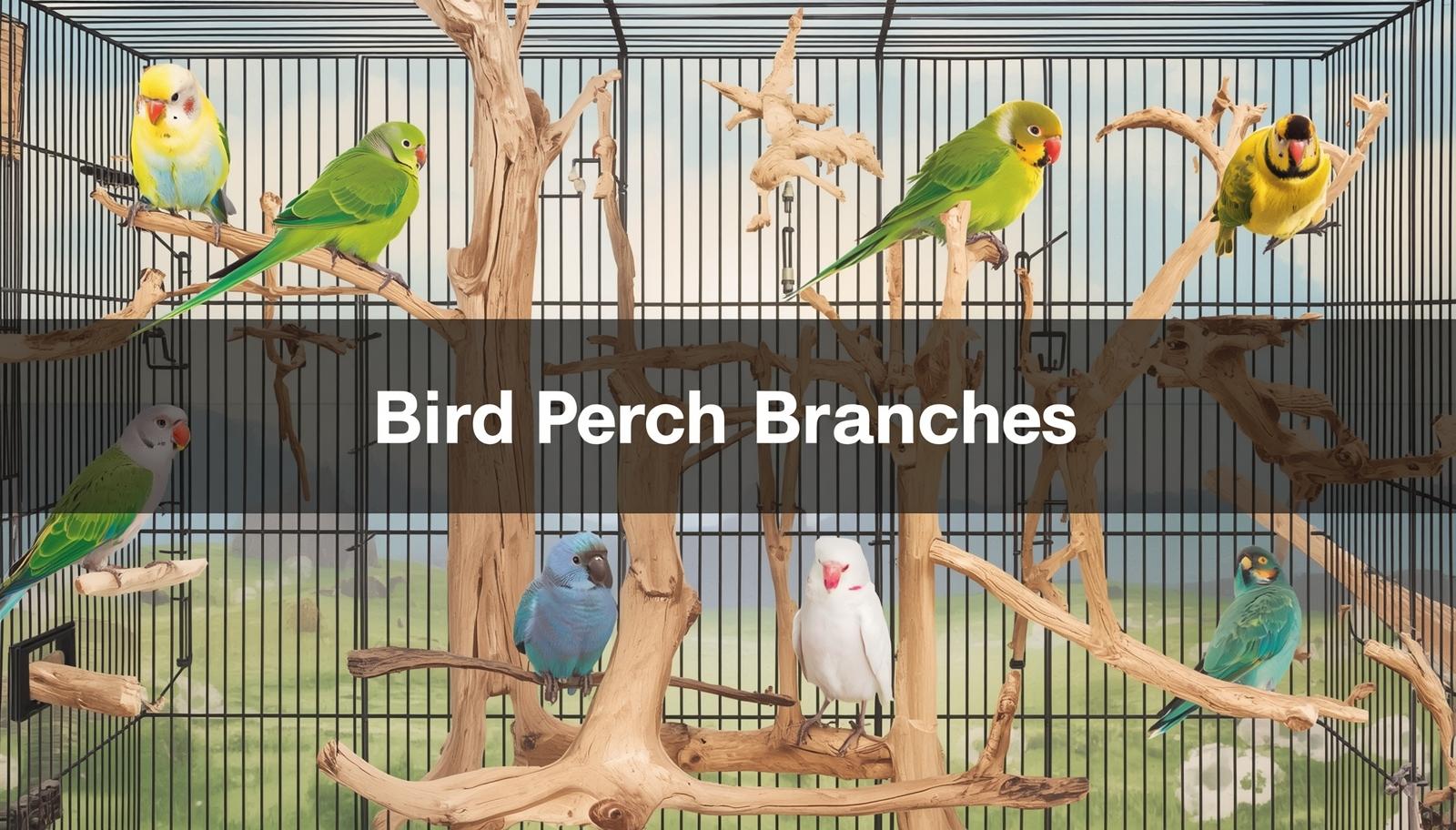
Bird Perch Branches: The Ultimate Guide to Safe, Natural Stands for Happy and Healthy Birds
As a bird owner, your primary responsibility is to recreate a slice of the wild within the confines of a cage. While food and water are the basics of survival, the environment is the key to thriving. In the world of avian husbandry, few things are as vital as the surfaces your bird stands on. For a pet bird, a perch is more than just a place to sit—it is their gym, their bed, their dining chair, and their primary tool for maintaining physical health. Choosing bird perch branches wisely is essential for long-term health.
This comprehensive guide explores why natural bird perch branches are superior to synthetic alternatives, provides an in-depth review of the top products on the market, and offers expert advice on safety, sizing, and mental enrichment.
The Anatomy of a Perfect Habitat: Why Natural Wood Matters
In the wild, birds find many textures. They navigate thick and thin wood. They use different angles. Cheap cages often have smooth dowels. These cause repetitive strain. You should use natural bird perch branches instead. They help birds move naturally. This prevents health problems. Smooth sticks are not good for feet.
The Danger of Uniform Perches
Standing on one size hurts feet. Pressure hits the same spots. This leads to bumblefoot. This condition causes painful sores. It can lead to infections. In bad cases, birds become lame. Change your bird perch branches for cages to fix this. Proper surfaces keep feet strong.
The Benefits of Natural Branches
-
Foot Exercise: Natural branches vary in thickness. As a bird moves along a branch, its feet must constantly adjust, stretching different tendons and muscles. This is the avian equivalent of a full-body workout.
-
Beak Maintenance: Birds are instinctual chewers. Natural wood bird perches, particularly bark-covered branches like grape wood or fruitwoods, provide a safe outlet for this behavior, helping to keep the beak trim and healthy.
-
Mental Enrichment: The complexity of a multi-branch stand challenges a bird’s mind. It provides opportunities for climbing, balancing, and exploring, which significantly reduces boredom and stress-related behaviors like feather plucking.
In-Depth Reviews: Top Natural Bird Perch Sets for 2026
Choose a perch based on your bird. Consider cage size too. We analyzed top-rated wood perches. These help your bird thrive.
Kathson Natural Parrot Perch: The Small Bird Specialist
The Kathson Natural Parrot Perch is widely regarded as a staple for owners of budgies, cockatiels, and lovebirds. Made from wild grape sticks, this set focuses on authenticity.
-
The Experience: These perches are rugged. The bark is thick enough to provide a high-friction grip, which is essential for young or disabled birds.
-
Pros: It comes in a 3-piece set, allowing you to create a "pathway" across the cage. Being non-toxic and untreated, it’s a guilt-free chewing toy.
-
Cons: Because it is a natural product, the shape you receive is random. You might get a very straight stick or a very curved one, which requires some creativity during installation.
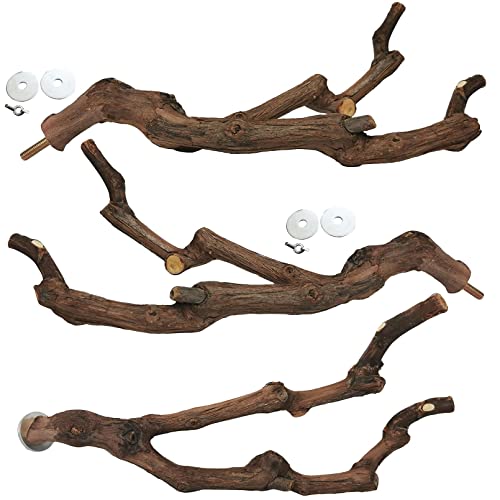
CZWESTC 8-Piece Natural Wood Set: The Ultimate Value
For those with larger cages or multiple birds, the CZWESTC 8-Piece Set offers unparalleled versatility.
-
The Experience: This set includes both branching sticks and flat platforms. Platforms are often overlooked but are crucial for birds to rest their feet from "gripping" occasionally.
-
Pros: The variety is the selling point. It fits parakeets to conures easily. Installation is a breeze with simple wing nuts and washers.
-
Cons: The wood is slightly softer than grapevine, meaning aggressive chewers like Lovebirds might turn these into sawdust within a few months.

5-Piece Bird Perch Stand by HOSUKKO: Durability Meets Design
This set focuses on durability. It includes three grapevine perches and two unique stands featuring a "paw grinding fork" design.
-
The Experience: The texture of the grape wood in this set is particularly deep. It acts almost like a natural nail file.
-
Pros: The paw grinding feature is a game-changer for owners who want to extend the time between professional nail trims.
-
Cons: At nearly a pound in weight, this set requires a sturdy cage. Lightweight travel cages might sag under the weight of these branches.

Limio 6-Piece Set: Enrichment Focused
The Limio Set is designed for the active bird. It combines traditional perches with "stand toys" that encourage the bird to interact with its environment.
-
The Experience: It includes a mix of textures that keep birds engaged. It’s particularly effective for Conures, who are known for their high intelligence and need for constant stimulation.
-
Pros: Easy to clean. The wood doesn't absorb moisture as quickly as some other brands, making it easier to scrub off droppings.
-
Cons: Over time, the "fork" sections can become weak if the bird focuses its chewing on the joints.

Bissap 7-Piece Grape Wood Stand: The Heavy-Duty Choice
If you are looking for a more "premium" feel, the Bissap set provides thick, gnarled grape wood that looks beautiful and functions perfectly for medium-sized parrots.
-
The Experience: These perches are substantial. They feel like actual pieces of a tree. They provide excellent "climb-ability."
-
Pros: Great for training. Because they are sturdy, they can be used for "step-up" training outside the cage.
-
Cons: Requires more space. Not suitable for small "flight cages" where space is at a premium.

The Science of Sizing: The "Two-Thirds" Rule
One of the most common mistakes bird owners make is buying the wrong diameter perch.
The Rule of Thumb:
An avian specialist's golden rule is that the perch diameter should allow the bird’s toes to wrap around approximately two-thirds to three-quarters of the way.
-
If the toes overlap: The perch is too thin. This can lead to cramping and overgrown nails that curve back into the foot.
-
If the foot is flat: The perch is too wide (unless it is a platform perch meant for resting). If used as a primary perch, the bird cannot properly "lock" its feet for sleep, leading to exhaustion.
Species Guide:
-
Finches/Canaries: 3/8" to 1/2" diameter.
-
Budgies/Lovebirds: 1/2" to 3/4" diameter.
-
Cockatiels/Conures: 3/4" to 1" diameter.
-
African Greys/Amazons: 1" to 1.5" diameter.
-
Macaws/Large Cockatoos: 2" to 3" diameter.
Safety First: Recognizing Toxic vs. Non-Toxic Woods
While "Natural" sounds safe, not all trees are bird-friendly. Birds don't just sit on wood; they ingest it.
Safe Woods
-
Grapevine: The gold standard. Hard, textured, and safe.
-
Apple/Pear: Excellent, but ensure they haven't been sprayed with pesticides.
-
Manzanita: Extremely hard and long-lasting (ideal for large parrots).
-
Dragonwood: Great texture and very durable.
-
Ash/Elm: Safe and readily available.
Toxic Woods to Avoid
-
Cherry/Plum: Contains cyanogenic glycosides which release cyanide when chewed.
-
Oak: Contains high levels of tannins that can be irritating.
-
Cedar/Redwood: The phenols (oils) can cause respiratory distress.
-
Pressure-Treated Wood: Contains arsenic or copper-based chemicals that are lethal if ingested.
Pro Tip: If you collect branches from your backyard, always identify the tree species first and ensure the area hasn't been treated with fertilizers or pesticides. Using bird perch branches safe for birds ensures no accidental toxicity.
Mental Enrichment: Beyond Just Standing
A cage with three identical perches at the same height is a "prison" of boredom. To create a "Happy Bird" environment, use your perch branches to create Zones:
-
The Sleep Zone: Place the highest-quality, sturdiest natural branch at the highest point of the cage. Birds instinctively want to sleep at the highest point to stay safe from "predators."
-
The Feeding Zone: Use a thinner, flatter perch near food bowls to allow the bird to focus on eating without struggling for balance.
-
The Play Zone: Create a "ladder" effect using various small branches. Place toys at the ends of these branches to encourage the bird to climb and reach.
-
The Social Zone: If you have multiple birds, ensure there are "neutral" perches where they can sit together without invading each other's personal space.
Maintenance: How to Clean Natural Wood
Natural wood is porous, meaning it can harbor bacteria if not properly maintained.
-
Daily: Spot clean droppings using a damp cloth.
-
Weekly: Use a stiff bird-safe brush (or a dedicated toothbrush) to scrub the bark.
-
Monthly Deep Clean: Remove the perches. Soak them in a solution of 1 part white vinegar to 2 parts water. This natural disinfectant kills most bacteria without leaving toxic residues.
-
Drying: Ensure the wood is completely dry before putting it back in the cage. Damp wood can grow mold, which is deadly to birds. Drying them in the sun is ideal as UV rays provide extra sanitization.
When to Replace Your Perches
Natural wood is meant to be destroyed—that is part of its function! You should replace a perch when:
-
Thickness is lost: If a bird has chewed away half the diameter, it is no longer safe for their feet.
-
Splintering: If the wood is cracking in a way that could catch a toe or a tongue.
-
Deep staining: If droppings have soaked so deep into the wood that they cannot be cleaned.
-
Stability issues: If the hardware (screws/washers) becomes loose or the wood around the screw rots.
Frequently Asked Questions (FAQ)
My bird is scared of the new natural branch. What should I do?
Birds often fear new things. Place the perch outside first. Let the bird see it. Move it inside later.
Is sandpaper better than wood?
No. Sandpaper hurts feet. It causes painful sores. Natural wood is better for nails.
Can I use beach driftwood?
No. It has too much salt. It may have bad bacteria. Use kiln-dried wood instead.
How do I know wood is untreated?
Buy from reputable brands. Avoid shiny varnish. Natural wood bird perches should look dull and smell like wood.
Conclusion: A Small Investment for a Huge Impact
A new perch set is cheap. It changes your bird's life. Safe surfaces prevent vet bills. Your bird will stay active. Choose grape sticks or platforms. These choices honor wild roots. A happy bird climbs and chews. Upgrade your cage today using bird perch branches for optimum comfort and safety.
Upgrade your bird's home today—their feet will thank you!
Expert Insight:
"Birds require diverse textures to prevent atrophy," says Dr. Jane Smith, a vet at the Association of Avian Veterinarians.Latest Statistics:
The Journal of Exotic Pet Medicine reports that 30% of captive birds suffer from foot issues. Using proper wood reduces this risk significantly.