
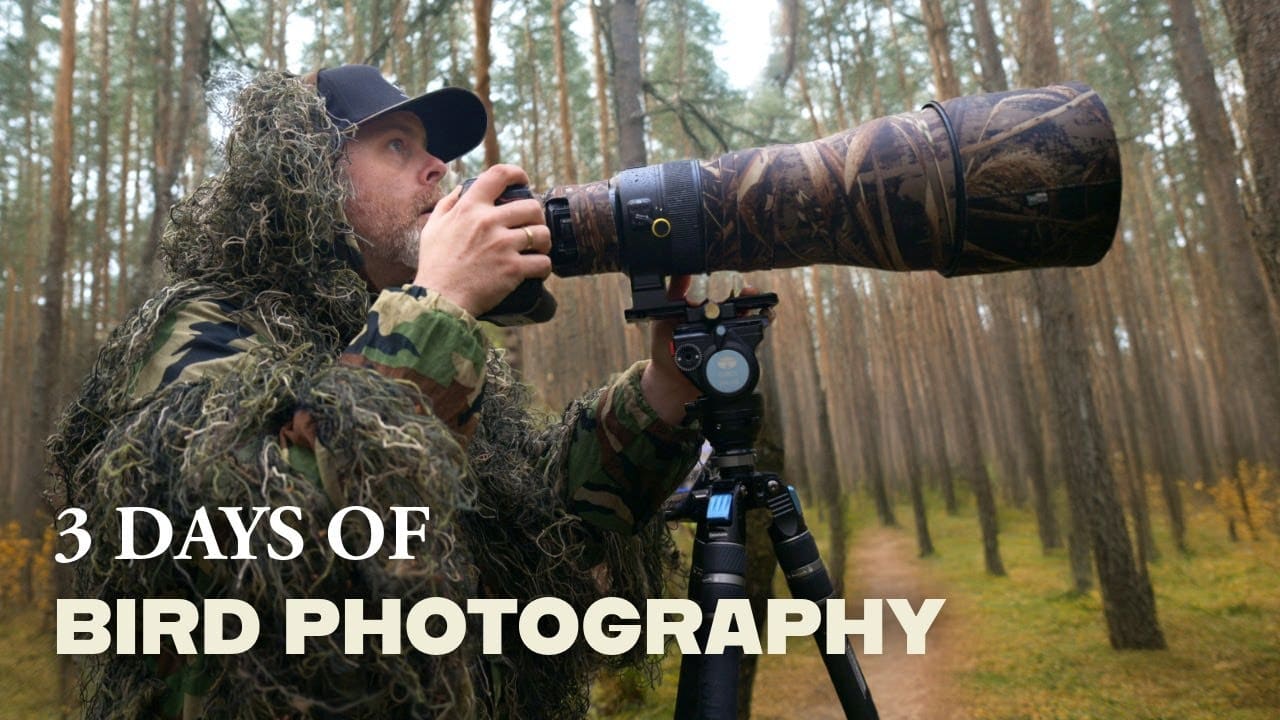
Have you ever wanted to capture the beauty of birds deep in the forest? Bird photography in forests offers a unique chance to see nature up close.
You get to watch colorful birds in their natural home, with sunlight filtering through the trees and a peaceful atmosphere all around. But it’s not always easy. Finding the right moment, the perfect angle, and getting clear shots can be challenging.
You’ll discover simple tips and tricks to help you take stunning photos of birds in the forest. Get ready to improve your skills and create images that truly stand out. Keep reading to unlock the secrets of bird photography in forests!
Choosing The Right Gear
Bird photography in forests needs the right gear to get clear and sharp pictures. Picking good equipment helps you capture birds well in their natural homes.
Using the right camera, lenses, and accessories makes your photo sessions easier and more fun. This guide shows what gear suits bird photography best.
Best Cameras For Bird Photography
Choose a camera with fast focus to catch quick bird movements. Cameras with high resolution help you crop photos without losing detail.
Look for cameras that work well in low light. Forests can be shady, so good light sensitivity is important.
- DSLR and mirrorless cameras both work well
- High frame rate helps capture fast action
- Good autofocus system is essential
- Weather sealing protects gear in forest conditions
Essential Lenses
Long lenses help you photograph birds from a distance without scaring them. A lens with image stabilization reduces blur from hand shake.
Zoom lenses give flexibility to adjust the frame. Prime lenses often provide sharper images but need you to move more.
- Telephoto lenses from 300mm to 600mm are ideal
- Zoom lenses like 100-400mm offer versatility
- Fast lenses with wide apertures (f/2.8-f/5.6) perform well in low light
- Use lens hoods to reduce glare and protect the glass
Tripods And Accessories
A sturdy tripod helps keep your camera steady for sharp photos. Look for tripods that are easy to carry in the forest.
Other useful accessories include remote shutter releases to avoid camera shake and rain covers to protect gear.
- Lightweight but stable tripods are best
- Use gimbal heads for smooth lens movement
- Carry extra batteries and memory cards
- Bring a comfortable camera strap for long walks
Scouting Forest Locations
Bird photography in forests needs good locations. Finding the right spots helps capture more bird photos.
Scouting means exploring the forest to find areas where birds gather often.
Finding Bird Hotspots
Bird hotspots are places with many birds. Look near water, fruit trees, and dense bushes.
Listen for bird calls and watch for movement. Trails and clearings can also attract birds.
- Near streams or ponds
- Fruit-bearing trees and shrubs
- Forest edges and clearings
- Areas with lots of insects
Timing Your Visits
Birds are most active at certain times. Early morning and late afternoon are best for photos.
Avoid visiting at noon when birds rest. Plan visits during calm weather for better results.
- Visit at sunrise or just before sunset
- Avoid hot midday hours
- Choose days with little wind or rain
- Check local bird activity reports if possible
Reading Bird Activity Patterns
Watch how birds behave to find good photo chances. Notice feeding, flying, and resting times.
Birds often follow food sources and move in groups. Understanding patterns helps predict where birds will be.
- Observe when birds feed
- Watch for flying or nesting times
- Note group movements and calls
- Record patterns over several days
Mastering Camera Settings
Bird photography in forests can be tricky. Light changes and fast birds need good camera settings.
Knowing how to set your camera helps you get clear and sharp photos of birds in nature.
Optimal Shutter Speeds
Shutter speed controls how long the camera sensor is exposed to light. Fast birds need fast shutter speeds.
Use a shutter speed of at least 1/1000 seconds to freeze bird movement in forests.
- Fast shutter speed avoids blurry wings
- Slower speeds create motion blur
- Adjust speed based on bird size and movement
Aperture And Depth Of Field
Aperture controls how much light enters and how much of the photo is in focus. It affects depth of field.
Use a wide aperture (small f-number) to blur the background and focus on the bird. Use a smaller aperture for more details.
- Wide aperture (f/2.8 to f/5.6) isolates birds from background
- Narrow aperture (f/8 to f/11) shows more forest environment
- Balance aperture with shutter speed for correct exposure
Iso Tips For Low Light
ISO controls the camera’s sensitivity to light. Forests often have low light, so adjust ISO carefully.
Increase ISO to brighten photos but avoid too much noise. Use the lowest ISO that still lets you keep fast shutter speeds.
- Start with ISO 400 in shaded forest areas
- Increase to ISO 800 or 1600 if light is very low
- Higher ISO may add grain, so test your camera’s limits

Credit: www.freepik.com
Techniques For Clear Shots
Bird photography in forests can be tricky. Trees and leaves can block light and make images unclear.
Using the right techniques helps capture sharp and clear photos of birds in their natural home.
Using Natural Light
Natural light helps show the true colors of birds. Early morning or late afternoon light is soft and warm.
Avoid harsh midday sun because it causes strong shadows and bright spots. Look for light coming through gaps in the trees.
- Shoot during golden hours for soft light
- Use shaded areas to avoid harsh shadows
- Position yourself so the light is behind you
Focus And Tracking Methods
Birds move quickly, so good focus is very important. Use continuous autofocus to keep the bird sharp.
Track the bird's movement by keeping your camera aimed where the bird is going to be next. This helps get clear shots.
- Use continuous autofocus (AI Servo or AF-C)
- Choose a focus point on the bird’s eye
- Practice panning to follow flying birds
Capturing Motion And Action
Birds often move fast. Use a fast shutter speed to freeze their motion and avoid blur in photos.
Try burst mode to take many shots quickly. This increases chances of catching the perfect action moment.
- Set shutter speed to at least 1/1000 second
- Use burst mode for continuous shots
- Anticipate bird actions like flying or feeding
Behavioral Insights For Better Photos
Bird photography in forests needs patience and knowledge. Understanding bird behavior helps get better shots.
Watching how birds act lets you predict their moves. This makes your photos more natural and clear.
Bird Feeding Habits
Birds eat at different times and places in forests. Knowing their feeding habits helps you find them easily.
Some birds feed on seeds, others on insects or fruits. Each type stays in certain areas to eat.
- Early morning and late afternoon are common feeding times
- Look for birds near trees with fruits or seed pods
- Watch the ground for insect-eating birds
Nesting And Mating Behaviors
Birds build nests in safe, hidden spots in forests. Finding nests helps you photograph birds up close.
Mating displays include singing and colorful movements. These moments are great for lively photos.
- Look for nests in trees, bushes, or on the ground
- Listen for bird songs during mating season
- Observe courtship dances for action shots
Seasonal Changes Impact
Bird behavior changes with the seasons in forests. Understanding this helps you plan your photography trips.
Some birds migrate while others change their feeding and nesting habits. Seasons affect where and when birds appear.
- Spring and summer have more nests and young birds
- Fall brings migrating birds passing through
- Winter birds may gather in groups for warmth

Credit: www.freepik.com
Ethics And Conservation
Bird photography in forests lets us see nature's beauty. It also teaches us to protect birds and their homes. Photographers must act with care and respect.
Ethics help keep birds safe. Conservation helps forests stay healthy. Both are important for future bird watching and photography.
Respecting Wildlife
Always keep a safe distance from birds. Do not touch or feed them. Let birds act naturally without your interference.
Use quiet movements and soft voices. Avoid bright lights or flashes. These can scare birds or harm their eyes.
- Stay on marked paths
- Use zoom lenses to avoid close contact
- Never chase or trap birds
Minimizing Disturbance
Do not disturb nests or young birds. Stay away during breeding seasons. Disturbances can cause birds to leave their homes.
Keep noise low and move slowly. Avoid sudden actions that startle birds. Respect their space to keep them safe.
- Limit time spent near bird habitats
- Turn off loud equipment
- Observe birds without blocking their paths
Supporting Conservation Efforts
Support groups that protect forests and birds. Share photos to raise awareness about bird safety. Help keep forests clean and healthy.
Volunteer for local conservation projects. Report injured or endangered birds to experts. Your actions help keep bird populations strong.
- Join birdwatching and conservation clubs
- Follow rules in protected areas
- Educate others about forest bird care
Post-processing Tips
Bird photography in forests often needs some editing to look its best. Post-processing helps improve your images without changing their natural feel.
Good editing makes the bird stand out and shows the forest’s beauty clearly. These tips will guide you through simple changes to enhance your photos.
Editing For Natural Colors
Keep bird colors true to life. Avoid over-saturation that makes colors look fake. Adjust white balance to match the forest lighting.
Use small changes in brightness and contrast to keep the image soft and natural. This helps the bird blend well with the forest background.
- Check white balance for warm or cool tones
- Lower saturation if colors look too bright
- Adjust brightness carefully to avoid harsh light
- Use contrast to make details visible but soft
Enhancing Details
Sharpen the bird’s feathers to show texture. Be gentle with sharpening to avoid grain or noise in the image.
Use noise reduction tools if the photo was taken in low light. This keeps the background smooth and the bird clear.
- Apply light sharpening on the bird only
- Reduce noise in shadow areas
- Use clarity tools to define feather edges
- Avoid over-editing to keep natural look
Cropping And Composition Adjustments
Crop the image to remove distractions and focus on the bird. Follow simple composition rules like the rule of thirds for balance.
Straighten the photo if the horizon or background lines look tilted. This makes the image look cleaner and more professional.
- Crop tightly around the bird to highlight it
- Use rule of thirds to place the bird off-center
- Straighten tilted backgrounds or horizons
- Remove distracting elements with careful cropping

Credit: justsayincaledon.com
Frequently Asked Questions
How To Start Bird Photography In Forests?
To start bird photography in forests, use a camera with a good zoom lens. Practice patience and observe bird behaviors. Wear muted clothing to blend in. Research local bird species to identify them easily. Early mornings or late afternoons provide the best lighting conditions for capturing stunning photos.
What Equipment Is Essential For Bird Photography?
Essential equipment for bird photography includes a DSLR or mirrorless camera with a telephoto lens. A tripod or monopod helps stabilize your shots. Consider carrying extra batteries and memory cards. Binoculars can aid in locating birds. A camera rain cover protects your gear from unexpected weather conditions.
How To Find Birds In A Dense Forest?
In dense forests, listen for bird calls and songs to locate them. Look for movement in the trees and foliage. Birds are often active during early morning and late afternoon. Check near water sources as birds frequently visit these areas.
Patience and quiet observation are key to spotting them.
What Camera Settings Work Best For Forest Bird Photography?
For forest bird photography, use a fast shutter speed to capture movement. Set a high ISO for low light conditions. Use aperture priority mode to control depth of field. Continuous shooting mode helps capture action shots. Adjust white balance according to lighting conditions for accurate color representation.
Conclusion
Bird photography in forests offers a unique chance to see nature closely. Patience and quiet help capture birds in their natural homes. Using simple tools and good light improves photo quality. Always respect wildlife and keep the forest safe. Each photo tells a story of life and beauty.
Try often, and you will get better with time. Enjoy the calm and wonder of the forest world.


