Have you ever wondered how tiny birds manage to travel thousands of miles across vast oceans without getting lost or tired? Bird migration across oceans is one of nature’s most incredible feats.
It’s a story of endurance, navigation, and survival that can teach you a lot about determination and instinct. You’ll discover the secrets behind these amazing journeys and why they matter not just to birds, but to the world around you.
Keep reading, and prepare to be amazed by what these feathered travelers can do.
Epic Ocean Crossings
Many bird species travel thousands of miles across oceans. These epic journeys show nature’s strength and endurance. Birds cross vast water to reach warmer places and find food.
Bird migration over oceans is a tough challenge. These flights can last for days without rest. Understanding these trips helps us learn about birds and their habits.
Record-breaking Flights
The bar-tailed godwit holds the record for the longest nonstop flight. It flies about 7,000 miles from Alaska to New Zealand. This journey takes nearly nine days without stopping.
Other birds like the Arctic tern also fly long distances. The tern travels from the Arctic to the Antarctic and back each year. This totals over 25,000 miles of flight.
Popular Migratory Routes
- Atlantic Flyway: From North America to South America across the Atlantic Ocean
- East Asian-Australasian Flyway: From Siberia to Australia over the Pacific Ocean
- Pacific Flyway: Along the west coast of the Americas crossing the Pacific Ocean
- Central Asian Flyway: Across the Indian Ocean between Asia and Africa
These routes help birds avoid harsh weather and find safe resting spots. Many stop on islands or coastal areas during long flights.
Challenges Over Open Water
| Challenge | Description |
| Strong Winds | Can push birds off course or make flying harder |
| No Food or Water | Birds must rely on stored energy and water from food |
| Predators | Fewer but include large sea birds and some marine animals |
| Weather | Storms and rain can reduce visibility and increase danger |
Birds use special skills to face these problems. They navigate by the sun, stars, and Earth’s magnetic field. Their bodies store fat to fuel long flights.
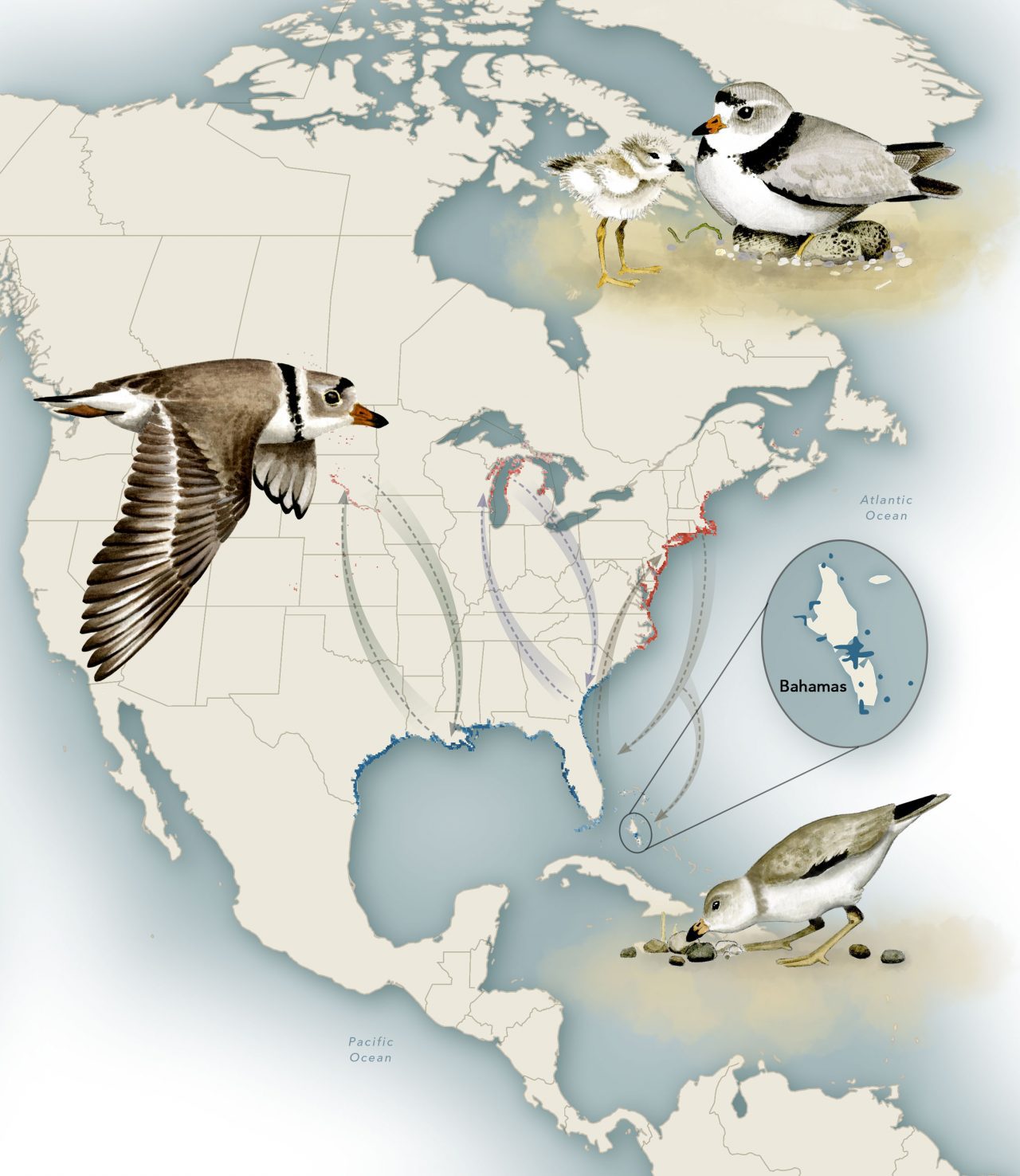
Credit: www.allaboutbirds.org
Navigation Skills
Birds travel thousands of miles across oceans during migration. They use special skills to find their way. These skills help them reach their destinations safely.
Understanding these navigation methods shows how amazing birds are. They rely on natural signs and built-in tools to guide their long journeys.
Magnetic Field Detection
Birds sense Earth’s magnetic field to know direction. They have tiny particles in their bodies that detect this field. This helps them stay on course even in the dark or bad weather.
Star And Sun Positioning
Birds use the sun during the day to find their way. At night, they look at stars for guidance. Their internal clocks help them understand the time and angle of these lights.
- During the day, birds track the sun’s position.
- At night, they navigate by constellations.
- They adjust their path using an internal clock.
Landmark Recognition
Birds remember landmarks like mountains, rivers, and coastlines. These features guide them near their destination. They combine this with other skills for precise navigation.
| Landmark Type | Use in Navigation |
|---|---|
| Mountains | Help birds identify regions |
| Rivers | Serve as natural pathways |
| Coastlines | Mark edges of flight routes |
Energy Management
Bird migration across oceans requires smart energy use. Birds travel thousands of miles with limited resources.
Managing energy well helps birds survive long flights and reach their destinations safely.
Fat Storage Strategies
Before migration, birds build fat layers to store energy. Fat is a dense fuel that lasts long during flight.
- Birds eat more food to increase fat reserves.
- Fat is stored under the skin and around organs.
- Fat helps birds fly long distances without stopping.
Efficient Flight Techniques
Birds use special flight methods to save energy. These techniques reduce air resistance and muscle effort.
| Flight Technique | Energy Benefit |
|---|---|
| Soaring | Uses rising air currents to glide without flapping |
| V-formation | Reduces wind resistance and conserves energy |
| Flapping-gliding | Combines flapping with gliding to rest muscles |
Rest And Refueling Stops
Birds take breaks to rest and eat during migration. These stops help them regain energy for the next flight.
Key rest and refueling spots include:
- Coastal wetlands
- Islands with abundant food
- Freshwater lakes

Credit: www.myjournalcourier.com
Survival Tactics
Bird migration across oceans is a hard journey. Birds use many tactics to survive the long flight.
These tactics help them avoid danger and save energy during their trip.
Weather Adaptation
Birds watch the weather before they fly. They choose days with good wind and clear skies.
This helps them save energy and avoid storms that can be dangerous.
- Use tailwinds to fly faster
- Avoid flying in heavy rain or storms
- Rest on islands during bad weather
Predator Avoidance
Birds watch for predators while flying. They stay alert to avoid being caught.
They use quick movements and sometimes fly higher to stay safe from hunters.
- Fly at safe altitudes
- Use sharp turns to escape
- Rest in hidden spots at night
Group Flying Benefits
Flying in groups helps birds save energy. They take turns leading and breaking the wind.
Groups also watch for danger better than a single bird can.
- Reduce wind resistance by flying in V-shape
- Share the work of leading the flight
- Spot predators early with many eyes
Scientific Discoveries
Bird migration across oceans is a fascinating natural event. Scientists study how birds travel long distances over water.
Recent discoveries help us understand their routes, behavior, and challenges. These findings guide conservation work.
Tracking Technologies
New tools let scientists follow birds in real time. GPS trackers and satellite tags provide precise data on flights.
- Lightweight GPS devices track long migrations
- Satellite telemetry sends location data from remote areas
- Geolocators record light levels to estimate position
- Radar helps detect flocks during night flights
Recent Research Findings
Studies show some birds cross oceans nonstop. Others stop on islands to rest and feed.
| Species | Ocean Crossed | Distance (km) |
| Arctic Tern | Atlantic | 11,000 |
| Bar-tailed Godwit | Pacific | 12,000 |
| Swallow | Indian | 5,000 |
Conservation Efforts
Protecting ocean-crossing birds needs global action. Many groups work to reduce threats during migration.
Key conservation actions include:
- Preserving stopover habitats on islands and coasts
- Reducing light pollution that confuses birds at night
- Limiting hunting and trapping in migration zones
- Monitoring climate change impacts on food supply

Credit: www.spa.gov.sa
Frequently Asked Questions
What Are The Main Reasons Birds Migrate Across Oceans?
Birds migrate across oceans mainly for breeding, feeding, and favorable climate. Ocean crossings help them reach safe habitats and abundant resources for survival.
How Do Birds Navigate During Long Ocean Migrations?
Birds use a combination of the sun, stars, magnetic fields, and landmarks to navigate. Their remarkable instincts guide them accurately across vast ocean distances.
Which Bird Species Are Known For Oceanic Migration?
Albatrosses, Arctic Terns, and Sooty Shearwaters are notable ocean migrators. These species travel thousands of miles across oceans annually for breeding and feeding.
How Do Birds Survive Harsh Oceanic Conditions During Migration?
Birds rely on strong flight muscles, fat reserves, and efficient energy use. They also find resting spots on islands or float on water to recover.
Conclusion
Bird migration across oceans is truly a fascinating phenomenon. Birds travel vast distances, showing immense strength and endurance. These journeys ensure survival, linking continents and cultures. Understanding bird migration helps us appreciate nature’s wonders. It also emphasizes the importance of preserving their habitats.
As we learn more, we can support conservation efforts. This knowledge fosters respect for our environment. By protecting birds, we protect our planet. Let’s cherish these incredible travelers and their epic journeys. Observing them reminds us of nature’s intricate beauty.
Their migrations are a testament to resilience and adaptability. Truly inspiring.