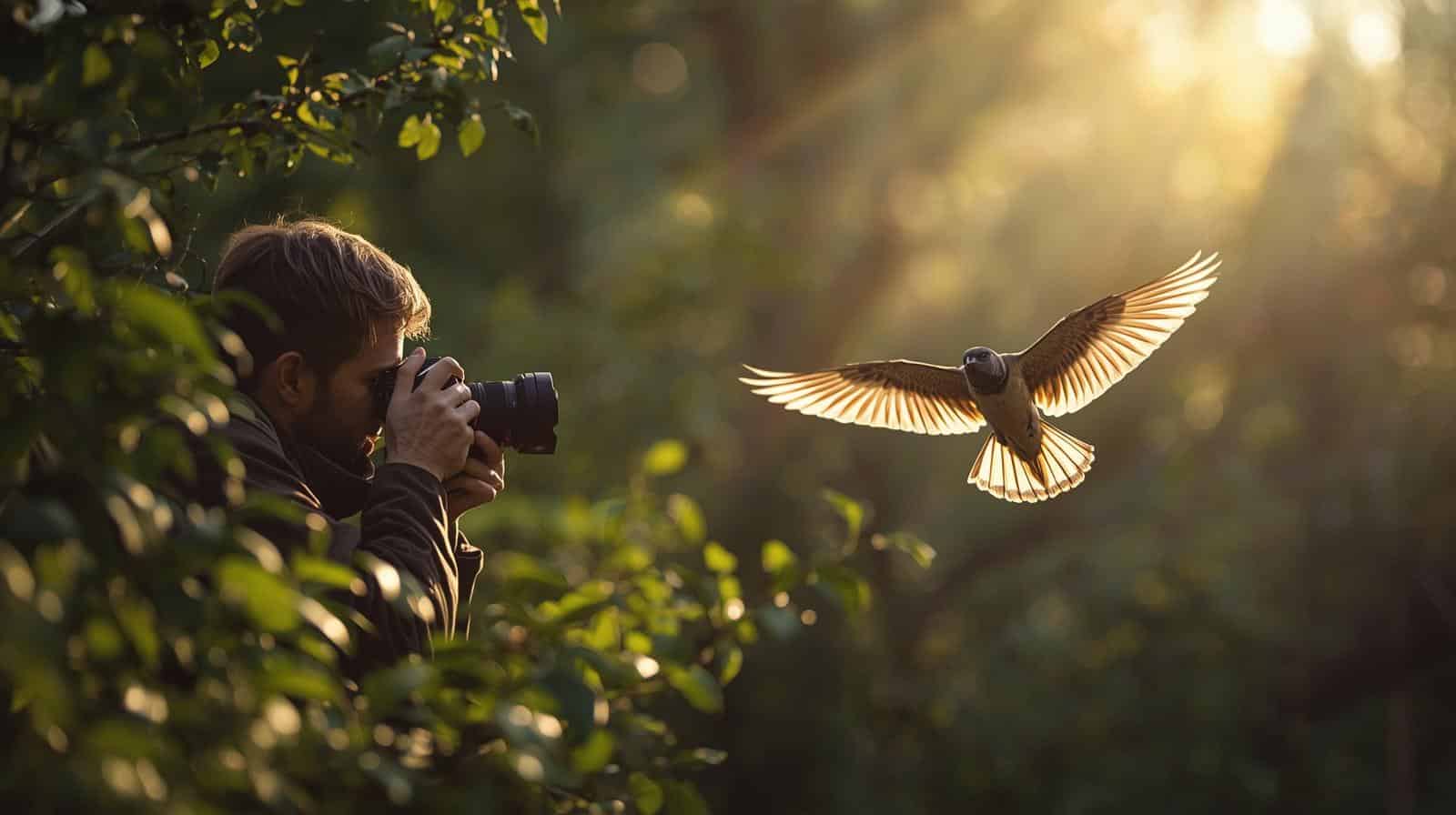
Bird Photography Tips: Capture Stunning Shots of Wildlife in Action
Do you want to capture stunning photos of birds that make everyone stop and admire? Bird photography can be tricky, but with the right tips, you can turn your shots from ordinary to extraordinary.
Imagine freezing a bird’s graceful flight or catching its vibrant colors in perfect detail. This guide will show you how to do just that. Keep reading, and you’ll discover simple tricks to improve your skills, no matter your experience level.
Get ready to take your bird photography to the next level!
Choosing The Right Gear
Bird photography needs the right tools to capture sharp and clear images. Picking good gear helps you get close to birds without scaring them away.
Using suitable cameras, lenses, and accessories makes bird photos look better and easier to take.
Best Cameras For Bird Photography
Choose cameras with fast autofocus and high frame rates. These features help catch quick bird movements.
Look for cameras with good image quality and weather sealing to handle outdoor conditions.
- DSLR cameras with fast burst modes
- Mirrorless cameras for light weight and speed
- High megapixel sensors for detailed images
- Good low-light performance for early mornings
Lenses That Make A Difference
Long telephoto lenses let you shoot birds from far away. This keeps the birds calm and natural.
Choose lenses with image stabilization to reduce blur from hand movements.
- 300mm to 600mm focal lengths work well
- Zoom lenses offer flexibility for different distances
- Prime lenses provide sharper images
- Fast apertures (f/4 or wider) help in low light
Essential Accessories
Use tripods or monopods to keep your camera steady. This helps with sharp photos during long shoots.
Extra batteries and memory cards keep you ready for long sessions in the field.
- Tripod or monopod for stability
- Remote shutter release to avoid shake
- Lens cleaning kit for clear shots
- Protective camera bag for gear safety
- Extra batteries and memory cards

Mastering Camera Settings
Bird photography needs the right camera settings. Good settings help capture clear and sharp images.
Understanding shutter speed, aperture, and ISO is key to better bird photos.
Optimal Shutter Speeds
Birds move fast. Use a high shutter speed to freeze their motion. This avoids blur in your photos.
A shutter speed of 1/1000 second or faster works well for flying birds. For resting birds, slower speeds can be fine.
- Flying birds: 1/1000 second or faster
- Perched birds: 1/500 to 1/800 second
- Low light: Use the fastest speed you can
Aperture For Sharp Images
Aperture controls how much of the image is in focus. A smaller aperture number means a wider opening.
Use a medium aperture like f/5.6 to f/8 for sharp bird photos. This gives a good balance of focus and background blur.
- Wide aperture (f/2.8 – f/4): More background blur, less depth of field
- Medium aperture (f/5.6 – f/8): Sharp focus on the bird, nice background
- Narrow aperture (f/11 and above): More of the scene in focus but needs more light
Iso Settings For Different Conditions
ISO controls the camera’s sensitivity to light. Higher ISO helps in low light but adds noise to photos.
Use low ISO on sunny days and increase ISO in cloudy or shaded areas to keep fast shutter speeds.
| Light Condition | Recommended ISO |
|---|---|
| Bright daylight | 100-400 |
| Cloudy or shade | 400-800 |
| Early morning or late evening | 800-1600 |
| Very low light | 1600 or higher |

Finding And Approaching Birds
Bird photography is fun but needs patience and skill. Finding birds and getting close takes practice.
Knowing where and when to look helps you take better photos. Approaching birds carefully keeps them calm.
Scouting Ideal Locations
Find places where birds live or visit often. Parks, wetlands, and forests are good spots. Look for water and food sources.
Watch the area before you start shooting. Notice where birds like to perch or feed. This helps plan your shots.
- Visit local parks early in the morning
- Check birdwatching websites for hot spots
- Look for places with trees, bushes, and water
- Observe quietly to avoid scaring birds
Timing Your Shoots
Birds are most active at dawn and dusk. These times have soft light that makes photos look better.
Plan your shoot around bird feeding or migration times. Birds move less in bad weather, so clear days work best.
- Shoot early morning or late afternoon
- Check weather forecasts for clear skies
- Learn local bird feeding schedules
- Avoid windy or rainy days
Techniques For Getting Close
Approach birds slowly and quietly. Sudden moves can scare them away. Use natural cover to hide your approach.
Use a zoom lens to keep distance but still get close-up shots. Patience is key when waiting for birds to come near.
- Move slowly and avoid loud noises
- Wear clothes that blend with nature
- Use bushes or trees as cover
- Stay low to the ground
- Use zoom lenses instead of walking close
Composing Striking Bird Photos
Bird photography requires patience and a good eye for detail. Composing your shots well makes the photos more interesting.
Good composition helps highlight the bird’s beauty and behavior. It also makes your photos stand out.
Using The Rule Of Thirds
The rule of thirds divides your frame into nine parts with two lines across and two lines down. Place the bird where these lines meet.
This creates balance and draws the viewer’s eye to the bird naturally. Avoid placing the bird in the center all the time.
- Imagine a grid with two vertical and two horizontal lines
- Place the bird’s eye or head near the intersection points
- Leave space in front of the bird for it to “look into”
Capturing Action And Behavior
Birds show many behaviors like flying, feeding, or preening. Capture these moments to tell a story.
Use a fast shutter speed to freeze motion. Watch the bird closely and be ready to shoot quickly.
- Focus on the bird’s eyes during action
- Try to capture wings in different positions
- Show interaction with the environment or other birds
Background And Lighting Tips
A clean background helps the bird stand out. Look for simple colors or blurred backgrounds.
Soft natural light is best. Shoot early in the morning or late in the afternoon for warm tones and gentle shadows.
- Avoid cluttered or bright backgrounds
- Use a wide aperture to blur the background
- Side lighting adds depth and texture
- Backlighting can create nice silhouettes
Patience And Persistence
Bird photography needs a lot of patience. Birds do not always stay still or come close.
Persistence helps you keep trying until you get a good shot. It takes time and effort.
Waiting For The Perfect Moment
Great bird photos happen at the right time. Sometimes you must wait quietly for long.
Watch the bird’s behavior to know when it will act. Wait without moving to avoid scaring it.
Dealing With Unpredictable Wildlife
Birds can change direction or fly away quickly. Stay alert and ready to adjust your plan.
Accept that not every photo will be perfect. Keep trying and learn from each experience.
- Watch the bird’s signals
- Be ready to move fast
- Stay calm and focused
- Try again if you miss a shot
Keeping Your Gear Ready
Keep your camera and lenses clean and charged. You do not want to miss a chance.
Check your settings before going out. Quick adjustments save time when birds appear.
- Charge batteries fully
- Carry extra memory cards
- Use a sturdy tripod
- Keep lenses clean and dry
Post-processing Tips
Post-processing is key to make your bird photos look their best. It helps bring out details and colors.
Editing your photos carefully improves their impact and shows the beauty of birds clearly.
Enhancing Colors And Details
Adjust colors to make feathers and backgrounds look natural and vivid. Avoid making colors too bright.
Use sharpening tools to highlight fine details like feathers and eyes. Keep the effect subtle to stay realistic.
- Increase contrast slightly to add depth
- Adjust saturation carefully to keep natural tones
- Use clarity or texture tools for feather details
- Reduce noise without losing sharpness
Cropping For Impact
Cropping helps focus on the bird and removes distractions. It also improves composition and balance.
Try different crops to see what works best. Use the rule of thirds to place the bird in a strong spot.
- Crop tightly to highlight the bird’s features
- Keep enough space for the bird to “look into”
- Remove empty or distracting background areas
- Keep the image resolution high enough after cropping
Common Editing Mistakes To Avoid
Over-editing can ruin a photo. Avoid making colors look fake or details too sharp.
Do not crop too much or lose important parts of the bird. Keep the photo natural and clear.
- Do not over-saturate colors
- Avoid too much sharpening or noise reduction
- Do not crop out key parts like the head or wings
- Keep brightness and contrast balanced

Frequently Asked Questions
What Camera Settings Work Best For Bird Photography?
Use a fast shutter speed (1/1000s or higher) to freeze motion. Set a low ISO to reduce noise. Use aperture priority mode with a wide aperture (f/4-f/8) for sharp focus and blurred backgrounds.
How Can I Approach Birds Without Scaring Them Away?
Move slowly and quietly, avoiding sudden movements. Wear neutral colors to blend with surroundings. Use a telephoto lens to maintain distance while capturing detailed shots.
When Is The Best Time For Bird Photography?
Early morning and late afternoon offer soft, warm light. Birds are more active during these times, increasing your chances of capturing dynamic behavior.
What Lens Is Ideal For Bird Photography?
A telephoto lens with 300mm or longer focal length is ideal. It allows close-up shots without disturbing birds. Image stabilization helps reduce blur from hand movements.
Conclusion
Capturing bird photos can be a rewarding hobby. Patience is key. Practice often to improve your skills. Always respect nature and its creatures. Use the right equipment for better results. Experiment with different angles and lighting. Observe birds’ behavior for perfect timing.
Each photo tells a unique story. Share your work and inspire others. Enjoy the process and keep learning. Bird photography offers endless opportunities. Embrace the challenges and celebrate your progress. Happy shooting!