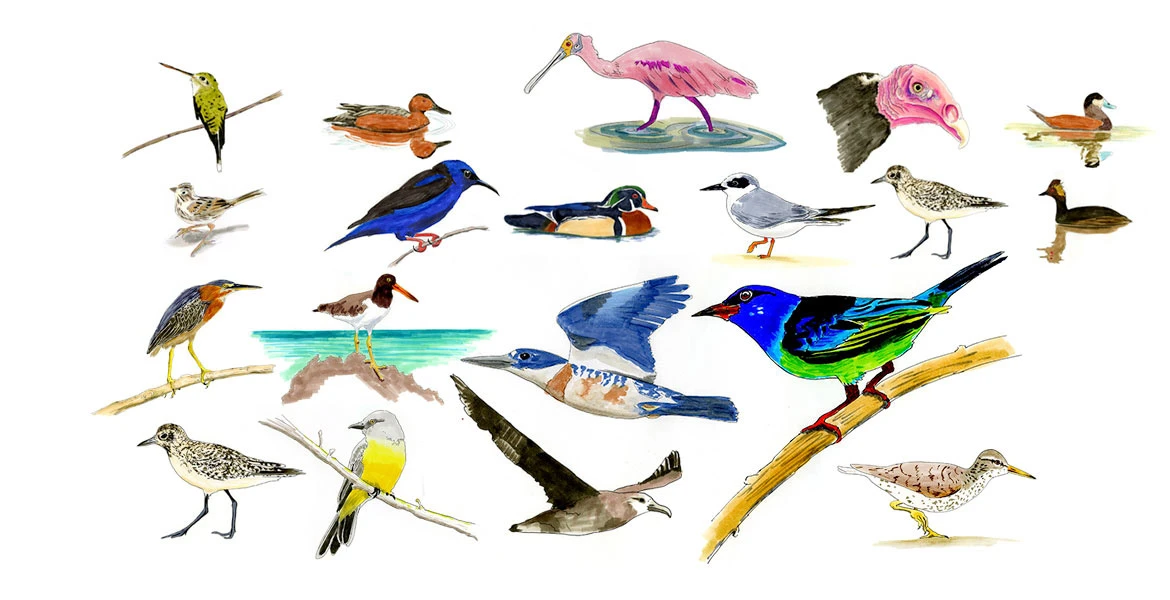
Have you ever looked up at the sky and wondered How Many Types of Birds in the World there are? Birds come in all shapes, sizes, and colors, and the variety can truly amaze you.
Knowing about the different kinds of birds not only sparks your curiosity but also connects you to the incredible world of nature around you. You’ll discover the fascinating range of bird species that share our planet. Get ready to uncover facts that might surprise you and deepen your appreciation for these incredible creatures.
Keep reading, because the world of birds is more exciting and diverse than you might think!
Global Bird Diversity
Birds are found almost everywhere on Earth. They come in many shapes and sizes. Their diversity is vast and interesting.
Studying bird diversity helps us understand nature better. It shows how life adapts to different places.
Total Number Of Bird Species
There are about 10,000 bird species worldwide. Scientists discover new species from time to time. This number may change with new research.
Bird species include tiny hummingbirds and large ostriches. Each species has unique features and behaviors.
Distribution Across Continents
Bird species live on every continent. Some areas have more species than others. Tropical regions usually have the highest diversity.
- South America has many colorful birds like toucans.
- Africa hosts large birds like flamingos and ostriches.
- Asia is home to diverse birds including pheasants.
- North America has many songbirds and raptors.
- Australia features unique birds like cockatoos and emus.
- Europe has fewer species but many common birds.
- Antarctica has very few bird species, mostly penguins.
Bird Habitats Worldwide
Birds live in many habitats. Each habitat supports different bird types. Habitats include forests, deserts, wetlands, and oceans.
- Forests provide homes for songbirds and woodpeckers.
- Wetlands attract ducks, herons, and other water birds.
- Deserts have birds adapted to dry conditions, like roadrunners.
- Grasslands are home to ground-nesting birds like quails.
- Coastal areas support seabirds such as gulls and albatrosses.

Credit: www.aol.com
Major Bird Groups
Birds are one of the most diverse groups of animals on Earth. Scientists estimate there are over 10,000 bird species worldwide. These species belong to different groups based on their features and habits.
Understanding major bird groups helps us learn about their behavior and roles in nature. Each group has unique traits that make them special.
Passerines: The Perching Birds
Passerines are the largest group of birds. They are also called perching birds because they can grip branches well. They have three toes pointing forward and one backward.
These birds include sparrows, robins, and finches. Most passerines are small and sing beautiful songs to communicate.
Raptors: Birds Of Prey
Raptors are strong birds that hunt other animals for food. They have sharp talons and hooked beaks to catch and kill prey.
Common raptors include eagles, hawks, owls, and falcons. They have keen eyesight to spot prey from far away.
Waterfowl And Aquatic Birds
Waterfowl live near water like lakes and rivers. They are good swimmers and often have webbed feet. Examples are ducks, swans, and geese.
Aquatic birds also include shorebirds and seabirds. These birds feed on fish or small water animals and have special features for their habitats.
Flightless Birds
Flightless birds cannot fly but are often fast runners. They have strong legs and large bodies. Examples include ostriches, emus, and kiwis.
These birds live in different places, such as deserts, forests, and islands. They use running or swimming to escape danger.
Other Notable Bird Groups
There are many other bird groups with special traits. Parrots are known for their bright colors and ability to mimic sounds.
Woodpeckers use their strong beaks to drill into trees. Hummingbirds can hover and fly backwards thanks to their fast wing beats.
- Parrots: Colorful, intelligent, mimic sounds
- Woodpeckers: Peck trees for insects
- Hummingbirds: Tiny, hover, fast wing beats
- Swifts: Fast flyers, spend most time in air
- Kingfishers: Dive to catch fish in water
Bird Classification Criteria
Birds are divided into many groups based on different features. Scientists look at their bodies, behavior, and genes. These help us understand how many types of birds exist worldwide.
Classifying birds helps in studying their habits and protecting them. It also shows how birds are related to each other.
Physical Characteristics
Physical features like size, shape, and colors help classify birds. Beak shape and foot type show how birds eat and move. Feather patterns are also important.
- Beak shapes vary for eating different foods
- Foot types help birds perch, swim, or run
- Feather colors and patterns differ by species
- Size ranges from tiny hummingbirds to large ostriches
Behavioral Traits
Bird behavior shows how they live and survive. Some birds migrate long distances. Others build special nests or sing unique songs.
- Migratory patterns help group birds by travel habits
- Nesting styles vary from simple to complex
- Feeding habits include hunting, scavenging, or grazing
- Bird calls and songs differ among species
Genetic Studies
DNA tests reveal the true relationships between birds. Genetics can show if birds look alike but are different species. It helps correct earlier classifications.
- DNA comparisons group birds by genetic similarity
- Genetics identify new species not seen before
- Shows how birds evolved over millions of years
- Helps track bird migration and population changes

Credit: www.wildlifenomads.com
Endemic And Rare Birds
There are many types of birds in the world. Some birds live only in one place. These are called endemic birds.
Rare birds are hard to find. They may live in small areas or have few numbers left. Many are special to nature.
Birds Found In Specific Regions
Endemic birds live in certain regions only. These birds do not live anywhere else. They have adapted to their unique homes.
- The Kiwi is found only in New Zealand.
- The Kakapo, a rare parrot, is also from New Zealand.
- The California Condor lives only in parts of the USA.
- The Philippine Eagle is found in the Philippines alone.
These birds are important to their ecosystems. They help keep nature balanced.
Threatened And Endangered Species
Many rare birds face danger. Habitat loss and hunting reduce their numbers. Some are close to extinction.
- The Spix's Macaw is extinct in the wild.
- The Kakapo is critically endangered with few left.
- The California Condor was once almost extinct.
- The Philippine Eagle is threatened by deforestation.
Protecting these birds helps keep nature healthy. Efforts focus on saving habitats and stopping harm.
Record Holders Among Birds
Birds are one of the most diverse groups of animals. There are about 10,000 bird species worldwide. Some birds stand out because of their unique traits.
This article looks at birds that hold records. These birds are the largest, smallest, fastest, longest migrants, and most colorful.
Largest And Smallest Birds
The largest bird alive today is the ostrich. It can grow up to 9 feet tall and weigh over 300 pounds. Ostriches cannot fly but run very fast.
The smallest bird is the bee hummingbird. It is only about 2 inches long and weighs less than a penny. It can hover and fly backward.
- Largest Bird: Ostrich (Struthio camelus)
- Smallest Bird: Bee Hummingbird (Mellisuga helenae)
Fastest And Longest Migrants
The peregrine falcon is the fastest bird. It can dive at speeds over 240 miles per hour to catch prey. This speed makes it the fastest animal on Earth.
The longest migrant bird is the Arctic tern. It flies from the Arctic to Antarctica and back every year. This trip can be over 25,000 miles long.
- Fastest Bird: Peregrine Falcon (Falco peregrinus)
- Longest Migrant: Arctic Tern (Sterna paradisaea)
Most Colorful Species
Some birds have bright and beautiful colors. The resplendent quetzal is famous for its brilliant green and red feathers. It lives in Central America.
The peacock is another colorful bird. The male has a large tail with shiny blue, green, and gold feathers. It uses these feathers to attract mates.
- Resplendent Quetzal (Pharomachrus mocinno): bright green and red colors
- Peacock (Pavo cristatus): large, shiny blue and green tail feathers
Bird Conservation Efforts
Birds are an important part of nature. Many types of birds live all over the world. Some birds face dangers like habitat loss and pollution.
People work hard to protect birds. Conservation efforts help keep bird numbers safe and healthy. These efforts happen worldwide in many ways.
Global Initiatives
Global groups join forces to protect birds. These groups create plans to save bird species from extinction. They share knowledge and resources with countries.
Important programs track bird populations and threats. They raise awareness about the need to protect birds across continents.
- International treaties protect migratory birds
- Research projects study bird habitats and behavior
- Global networks share bird conservation data
Protected Areas And Reserves
Protected areas are safe places for birds. These lands and waters help birds live and breed without danger. Many rare birds depend on these areas.
Reserves limit human activities that harm birds. They also restore damaged habitats to support bird life.
- National parks provide shelter for many bird species
- Wetland reserves protect water birds
- Forest reserves save woodland bird homes
Community Involvement
Local people play a big role in bird conservation. They watch birds and report problems. Communities help by planting native trees and cleaning habitats.
Education programs teach people how to protect birds. Volunteers join bird counts and habitat restoration projects.
- Community birdwatching groups monitor local birds
- Volunteer programs help plant trees and remove trash
- Schools teach students about bird importance
Credit: medium.com
Frequently Asked Questions
How Many Bird Species Exist Worldwide?
There are approximately 10,000 to 11,000 bird species globally. This number varies due to ongoing discoveries and classification changes. Birds are highly diverse, adapting to different habitats across all continents except Antarctica.
What Are The Main Bird Classification Types?
Birds are mainly classified into three groups: flightless birds, water birds, and land birds. Each group has unique features suited to their environment, such as wings for flying or specialized feet for swimming or perching.
Which Bird Species Is The Most Common Worldwide?
The house sparrow is considered the most common bird species globally. It thrives in urban and rural areas, adapting well to human environments. Its widespread presence makes it a familiar bird in many countries.
How Do Bird Types Differ By Habitat?
Bird types differ by habitat in terms of feeding, nesting, and behavior. Forest birds often have camouflaged plumage, while aquatic birds have webbed feet. These adaptations help them survive and reproduce in specific environments.
Conclusion
Birds fill our world with color and sound. Over 10,000 types exist, each unique. From tiny hummingbirds to large eagles, diversity is vast. They live everywhere—forests, deserts, cities, and oceans. Studying birds helps us understand nature better. Protecting their habitats keeps them safe.
Every bird plays a role in the environment. Their beauty and variety inspire many people. Keep learning about birds to appreciate their wonders. Nature’s winged treasures deserve our care and respect.