

Is a Hummingbird a Perching Bird? Beginner Bird Guide
Have you ever watched a hummingbird flit from flower to flower and wondered if it’s a perching bird? You might think these tiny birds are just built for hovering, but there’s more to their story.
Understanding whether hummingbirds are perching birds can change the way you see their behavior and their place in nature. Keep reading, and you’ll discover surprising facts that will make you appreciate these incredible creatures even more.
Hummingbird Classification
Hummingbirds are small birds known for their fast-wing movement. They belong to a specific group of birds with unique features.
Understanding where hummingbirds fit in bird classification helps explain if they are perching birds or not.
Bird Families and Groups
Birds are grouped into families based on shared traits. One common group is the perching birds, also called passerines.
Perching birds have a special foot structure that helps them grip branches. Many small birds belong to this group.
- Passerines or perching birds make up over half of all bird species.
- They have three toes pointing forward and one backward.
- This toe arrangement helps them hold onto branches tightly.
Where Hummingbirds Fit
Hummingbirds belong to the family Trochilidae. This family is part of the order Apodiformes, not passerines.
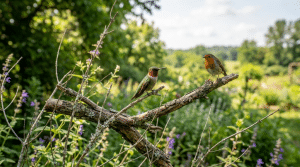
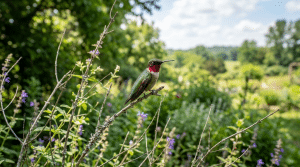
Though hummingbirds can perch, they are not classified as perching birds. Their feet are small and less suited for gripping.
- Hummingbirds have tiny feet mainly for perching briefly.
- They use their wings more for hovering than perching.
- Their classification places them outside the perching bird group.
Traits Of Perching Birds
Perching birds are a large group of birds that spend most of their time resting on branches or wires. Their feet are made for gripping.
This group includes many smalls to medium-sized birds. They often have bright colors and sharp calls.
Physical Features
Perching birds have special feet with three toes pointing forward and one toe pointing backward. This helps them hold onto branches tightly.
- Strong, curved claws for gripping
- Lightweight bodies for easy flight
- Short legs to stay close to branches
- Well-developed wings for quick flying
- Sharp beaks for eating insects or seeds
Behavior Patterns
Perching birds often sing to mark their territory and attract mates. They build nests in trees or shrubs.
| Behavior | Description |
| Singing | Used for communication and mating calls |
| Nesting | Build nests on branches or hidden spots |
| Feeding | Eat insects, seeds, or small fruits |
| Perching | Rest on branches using strong feet |
| Flocking | Often gather in groups for safety |
Hummingbird Habits
Hummingbirds are small, colorful birds known for their quick movements. They have unique habits that help them survive and thrive.
Understanding their habits can explain if hummingbirds are perching birds and how they live daily.
Feeding And Movement
Hummingbirds feed mainly on nectar from flowers. Their long beaks help reach deep into blossoms.
They move fast and can hover in one spot. Their wings beat very quickly, allowing precise flight.
- Feed on nectar and small insects
- Hover while feeding
- Fly forwards, backwards, and sideways
- Use fast wing beats for stability
Resting And Nesting
Hummingbirds are perching birds because they rest on branches or wires. They use their feet to grip tightly.
They build tiny cup-shaped nests. These nests are often made with soft materials and spider silk.
- Perch to rest between flights
- Use feet to hold onto branches
- Make small nests with soft materials
- Lay two tiny eggs in each nest
Comparing Hummingbirds to Perching Birds
Hummingbirds and perching birds share many traits. They both belong to the large group of birds known as passerines.
This article looks at how hummingbirds compare to other perching birds. We explore their behavior and key differences.
Similarities In Behavior
Hummingbirds and perching birds have similar habits. Both use their feet to grasp branches tightly. They also build nests in trees or shrubs.
- Both feed on insects for protein
- Both sing or make sounds to communicate
- Both care for their young until they can fly
- Both use sharp claws to hold onto perches
Key Differences
Hummingbirds differ from other perching birds in many ways. Their wings beat very fast, allowing them to hover. Most perching birds cannot hover for long.
| Feature | Hummingbirds | Other Perching Birds |
|---|---|---|
| Wing Movement | Rapid, allows hovering | Slower, no hovering |
| Feeding | Mostly nectar | Mostly seeds or insects |
| Size | Very small | Varies, often larger |
| Flight Speed | Very fast | Moderate |
Unique Features Of Hummingbirds
Hummingbirds are tiny birds known for their bright colors and fast wing beats. They are part of the perching bird group, but they have many special traits. These traits help them live and move differently from other birds.
This article explores two key areas where hummingbirds stand out: how they fly and how they survive in nature.
Flight Mechanics
Hummingbirds can hover in place and fly in many directions. Their wings move in a figure-eight pattern. This lets them stay still in the air and move backwards or sideways.
- They flap their wings about 50 times per second.
- Their wing bones are flexible and strong.
- They can change wing angle quickly to control movement.
- Flight muscles make up about 30% of their body weight.
Adaptations For Survival
Hummingbirds have many body features that help them find food and stay safe. Their long, thin beaks fit into flowers to drink nectar. Their feet are small but strong enough to perch on branches.
| Adaptation | Purpose |
| Long, curved beak | Reach nectar deep inside flowers |
| Bright feathers | Attract mates and warn predators |
| High metabolism | Provide energy for constant flying |
| Sharp eyesight | Spot flowers and predators quickly |
Common Misconceptions
Many people wonder if hummingbirds are perching birds. This causes some confusion about their classification.
This article clears up common misunderstandings and explains the true facts about hummingbirds.
Why People Confuse The Categories
Hummingbirds are often thought to be different because of their size and flying style. People see them hovering, which is unusual for most birds.
- Hummingbirds hover in the air, unlike most perching birds.
- They have bright colors and fast wing beats.
- Many assume only bigger birds can perch.
- Some confuse their feeding habits with other birds.
Clarifying The Facts
Hummingbirds are part of the order Passeriformes, which is the group for perching birds. So technically, they are perching birds.
| Feature | Hummingbird | Typical Perching Bird |
| Ability to perch | Yes | Yes |
| Flight style | Hover and dart | Mostly gliding or flapping |
| Size | Very small | Varies |
| Family | Trochilidae | Various families |
Hummingbirds have feet that allow them to grip branches, just like other perching birds. Their unique flight does not exclude them from this group.

Credit: ngtimes.ca
Frequently Asked Questions – Hummingbird Perching
Is A Hummingbird Considered a Perching Bird?
Yes, hummingbirds are perching birds. Their feet are adapted for grasping branches and perches.
How Do Hummingbirds Perch Differently from Other Birds?
They cling tightly with their toes but rarely walk, unlike many birds that hop or move along branches.
Can Hummingbirds Perch for Long Periods?
They perch to rest or sleep but usually only briefly, since their high metabolism requires frequent feeding.
Do Hummingbirds Use Perching to Hunt or Feed?
Yes, they perch while feeding on nectar or insects, conserving energy between rapid wing beats.
Conclusion
Hummingbirds, with their tiny size, are fascinating creatures. Yes, they are perching birds. They rest on branches and twigs. Their feet are perfect for gripping. Unlike some birds, they can’t walk or hop. But they perch gracefully. Observing these birds in nature is a joy.
Their vibrant colors and quick movements captivate many. Next time you see one, notice its perch. It offers a moment of rest. Understanding their behavior helps us appreciate them more. Nature’s wonders, like hummingbirds, always amaze us. Enjoy watching these unique creatures in their natural habitat.



