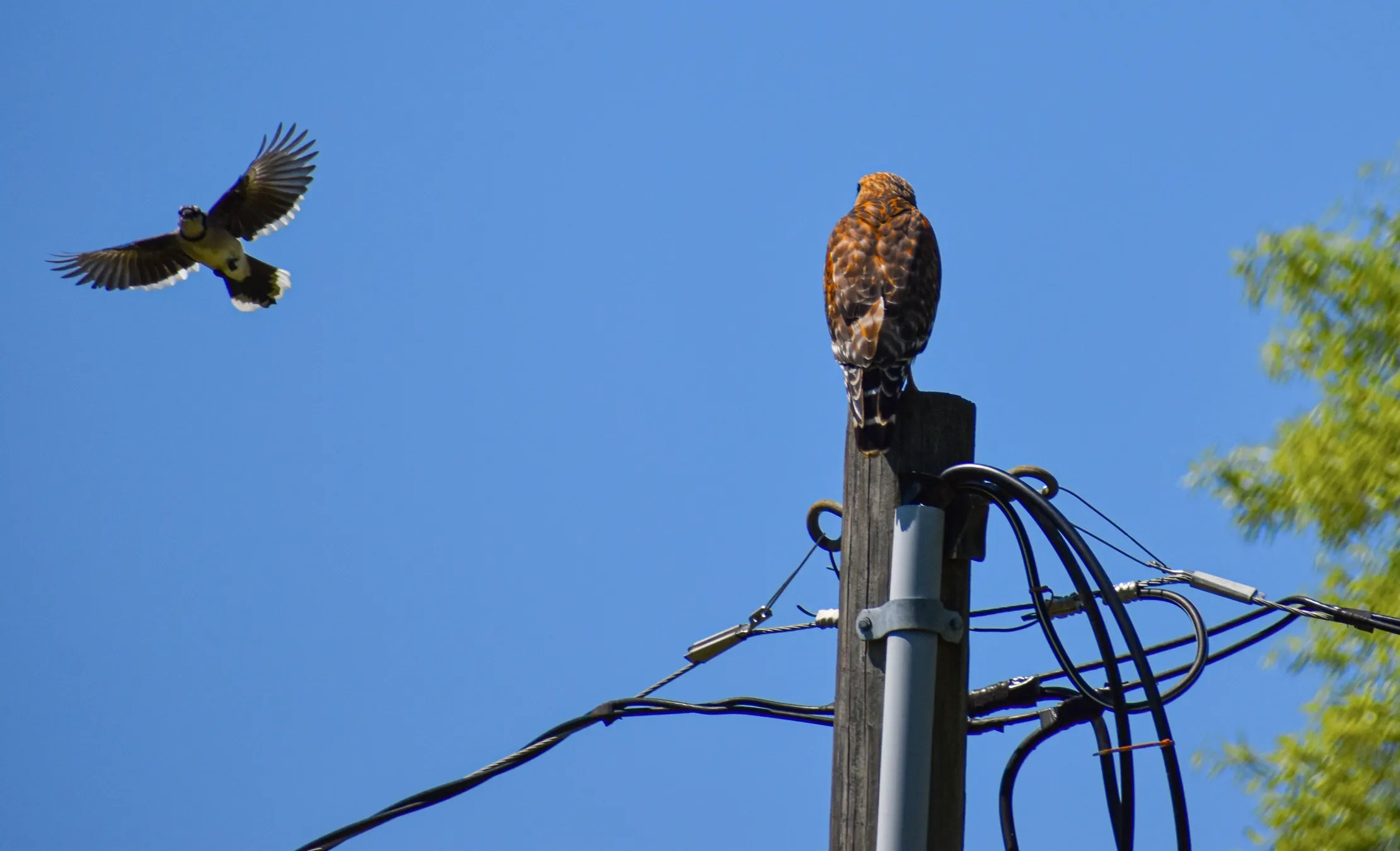
Have you ever wondered why birds can sit safely on power lines without getting hurt? It seems strange, doesn’t it? Many people first think about this mystery when they see a Bird Perch on a Power Line high above the street.
You might worry about the electricity or imagine sparks flying. But these little creatures have a secret that keeps them safe while resting high above your head. Understanding this can change the way you see the world around you and even help you stay safe near electrical wires.
Keep reading, and you’ll discover the surprising science behind why birds can perch on power lines without a shock.

Credit: www.mdpi.com
Birds And Power Lines
Birds often sit on power lines without getting hurt, which is why seeing a Bird Perch on a Power Line often surprises people. The secret lies in how electricity works and how birds land.
This article explains how birds land safely on power lines and the basics of electricity that keep them safe.
How Birds Land Safely
Birds land on power lines carefully to avoid electric shocks, which explains how a Bird Perch on a Power Line without danger. They usually perch on a single wire and do not touch anything else.
-
Birds keep both feet on the same wire.
-
They do not touch the ground or other wires at the same time.
-
Their bodies do not complete an electric circuit.
-
Birds have dry feet which reduce electric flow.
-
Their lightweight bodies help them stay balanced.
Electricity Basics For Birds
Electricity flows when there is a path from high voltage to low voltage. Birds do not provide this path when they sit on one wire.
| Condition | Result |
|---|---|
| Bird touches one wire only | No electric shock |
| Bird touches wire and ground | Electric shock occurs |
| Bird touches two wires at once | Electric shock occurs |
| Bird’s feet are wet and touch wire | Higher risk of shock |

Credit: medium.com
Electric Current and Resistance
Birds can sit safely on power lines because of how electric current flows. The key ideas are electric current and resistance. These help explain why birds do not get shocked.
Understanding these concepts helps us see why touching one wire is safe, but touching two wires can be dangerous. Let’s learn more about electric current and resistance.
What Is Electric Current?
Electric current is the flow of tiny particles called electrons. These electrons move through wires to carry energy. We use this energy to power lights and machines.
Current flows from one point to another when there is a difference in electric charge. The amount of current depends on the voltage and resistance in the circuit.
Role Of Resistance in Electricity
Resistance is how much a material stops the flow of electric current. Different materials have different resistance levels. High resistance means less current flows.
Birds do not get shocked because their bodies have high resistance. The electric current prefers to flow through the metal wire, which has lower resistance.
- Wires have low resistance and carry current easily
- Birds have high resistance, so little current flows through them
- Current needs a path from one wire to another to flow through a bird
Why Birds Don’t Get Shocked
Many people ask why a Bird Perch on a Power Line does not get electrocuted. The answer lies in how electricity flows and how birds touch the wire.
Electricity flows only when there is a complete path. Birds touch just one wire, so no current moves through their bodies.
Single Point Contact
Birds perch on a power line with just one foot or both feet on the same wire. This means they have only one point of contact with electricity. Because they do not touch anything else, electricity has no path to flow through their bodies.
Electricity moves from a high voltage point to a lower voltage point. Since the bird touches only one wire, there is no voltage difference across its body. Without this difference, no current flows through the bird.
No Voltage Difference
Power lines carry high voltage electricity. The voltage is the electric pressure that pushes current to flow. Birds are safe because both of their feet are on the same wire. This wire has the same voltage everywhere along it.
If a bird touched two wires with different voltages or a wire and the ground, a voltage difference would exist. This difference would cause electricity to flow through the bird’s body, causing a shock.
Credit: blog.ansi.org
When Birds Are At Risk
A Bird Perch on a Power Line is usually safe, but danger appears if the bird touches two wires or a grounded structure at the same time.
-
Wires carry different voltages
-
Touching two wires completes the circuit
-
Electricity flows through the bird’s body
-
Serious injury or death can occur
Touching Two Wires
A bird perching on one power line is usually safe. The bird’s body touches only one wire, so electricity does not flow through it.
If a bird touches two wires at the same time, it creates a path for electricity. This path can cause a dangerous electric shock or electrocution.
- Wires carry different voltages.
- Touching two wires completes the electric circuit.
- Electricity flows through the bird’s body.
- The bird can be seriously injured or killed.
Contact With Grounded Structures
Birds also risk electrocution if they touch a wire and a grounded object at the same time. Grounded objects include metal poles or towers connected to the earth.
| Grounded Structure | Risk to Bird |
|---|---|
| Metal pole | High risk of electric shock |
| Transformer box | Can cause electrocution |
| Ground wire | Completes electric circuit through bird |
Power Line Design And Safety
Birds can sit safely on power lines because of how these lines are made. The design helps keep birds from getting shocked. Safety is important for both people and animals.
Power lines carry electricity but are built to stop accidents. The parts used and the space between wires help protect birds and other wildlife.
Insulators And Spacing
Insulators stop electricity from moving to the poles or wires where birds sit. They are made from materials that do not conduct electricity. This keeps the electricity only inside the wires.
Spacing between wires is enough so birds do not touch two wires at once. Touching two wires can cause electric shock. The distance keeps birds safe while they perch.
- Insulators block electricity from poles and supports
- Wires are spaced apart to prevent electric shocks
- Careful design helps birds avoid dangerous contact
Protecting Wildlife
Power companies work to protect birds and other animals. They use special covers and markers to make power lines safer. These prevent injuries and deaths from electric shocks.
Efforts to protect wildlife include adding barriers and using safe materials. This helps keep animals from touching dangerous parts of the power lines.
- Use of bird guards and covers on wires
- Installing markers to make wires visible to birds
- Design changes to reduce animal accidents
Electricity And Animal Behavior
Birds often sit on power lines without harm. This happens because electricity flows in a certain way. Understanding why helps us learn about both electricity and animals.
Animals act in ways that keep them safe. Their behavior around power lines shows how they avoid danger from electricity.
Why Birds Choose Power Lines
Birds like power lines because they offer a good place to rest and watch for food. The wires are high and away from predators. Also, birds do not get shocked because they only touch one wire at a time.
- Power lines are high and safe from ground threats.
- The wires give birds a clear view of the area.
- Birds perch alone on a single wire, avoiding electric flow.
- The wire’s insulation and air help keep birds safe.
- Power lines are easy spots to rest during long flights.
Other Animals On Power Lines
Besides birds, some small animals also use power lines. These animals move carefully to avoid touching two wires or the pole at once. This helps them stay safe from electric shocks.
| Animal | Reason for Using Power Lines |
| Squirrels | Travel paths and find food |
| Bats | Rest spots during night flights |
| Insects’ | Warm surfaces for sunbathing |
| Rats | Escape from predators on ground |
Frequently Asked Questions
Why Don’t Birds Get Shocked on Power Lines?
A Bird Perch on a Power Line stays safe because it touches only one wire, so electricity has no path to flow through its body.
How Do Birds Safely Perch on Electrical Wires?
Birds perch safely by avoiding contact with two wires or the ground simultaneously. This prevents electricity from passing through them. Their bodies act like insulated platforms, allowing them to rest without completing an electrical circuit.
Can Birds Cause Power Outages by Perching?
Birds rarely cause outages by perching alone. Problems occur if they touch two wires or equipment simultaneously. This can create a short circuit, leading to power interruptions and potential damage to the electrical system.
Why Is A Bird’s Size Important on Power Lines?
A bird’s small size limits electrical current flow through its body. Larger animals or humans touching power lines risk completing a circuit, causing shocks. Birds’ lightweight bodies and single-point contact prevent dangerous current flow.
Conclusion
Birds can safely perch on power lines. No harm comes to them. Their feet touch only one wire. This prevents electric current flow. They stay safe. Understanding this can ease your worries. Next time you see a bird on a wire, know it’s safe.
Electricity is complex, but fascinating. Nature and science work hand in hand. Knowing their secrets can be enlightening. So, always stay curious. Explore more about the wonders around us. The world is full of amazing facts. Keep learning. Stay safe around electricity.
Respect its power. And enjoy the beauty of birds.