
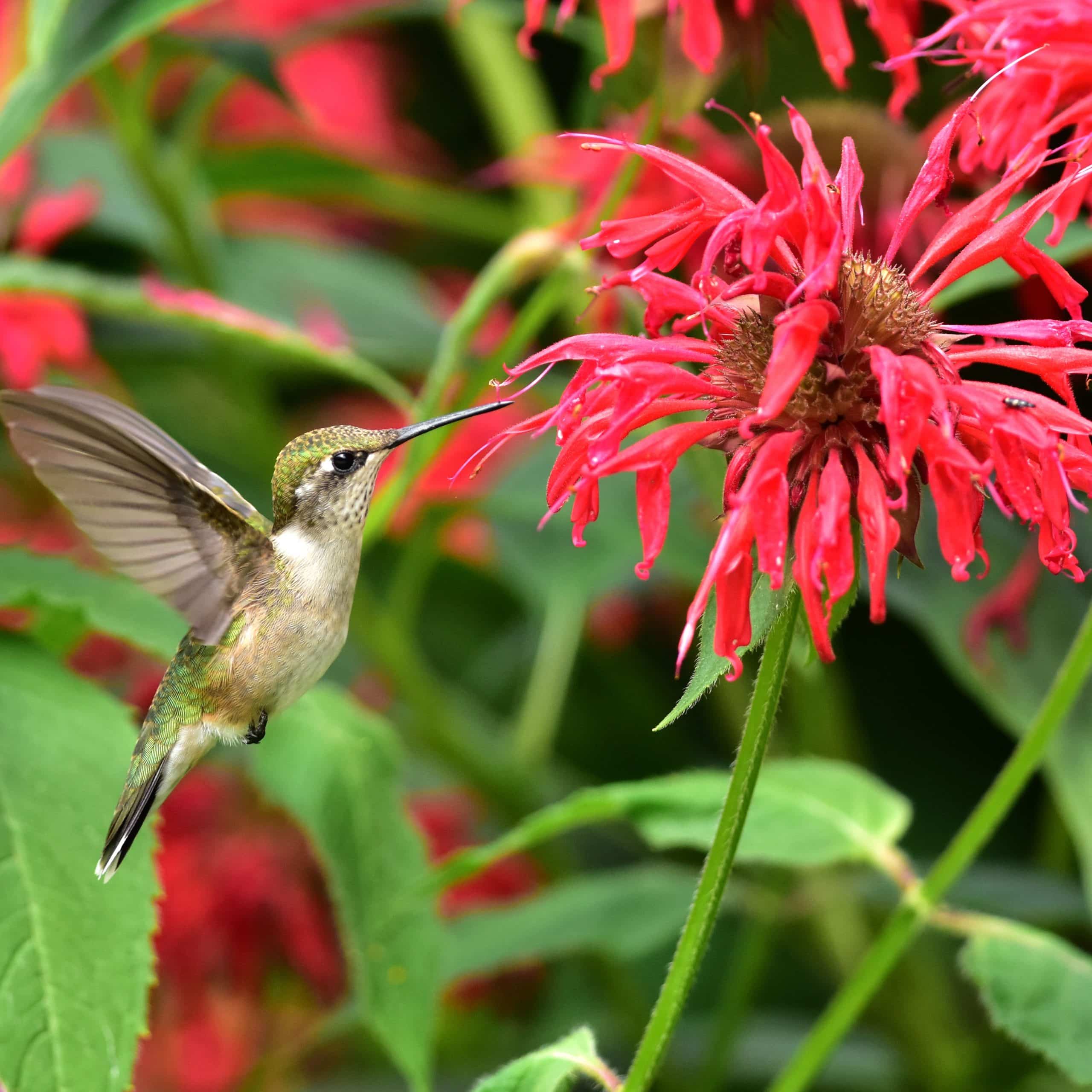
Did you know that most bird pollinated flowers are specifically designed to be invisible to bees while screaming for a bird’s attention?
It can be frustrating to plant a garden that looks beautiful to you but stays completely empty of wildlife.
I promise that once you understand how birds see the world, you can transform your backyard into a bird sanctuary. In this guide, we will preview the top colors birds love, the science of their vision, and the specific flowers that get results.
But first, let’s look at the basics.
Colors That Attract Birds
Bird-pollinated flowers often show bright colors to catch birds’ attention. These colors help birds find the flowers easily.
Different colors attract different types of birds. The colors also tell birds where to get nectar.
Red And Its Variations
Red is the most common color in bird-pollinated flowers. Birds like hummingbirds see red very well. Flowers use red shades to stand out against green leaves.
Bright red bird pollinated flowers attract hummingbirds strongly
Deep red shades can attract sunbirds
Red helps flowers signal a rich nectar supply
In simple terms, knowing which flowers have colors that attract birds helps you predict which birds will visit your yard.
Orange And Yellow Shades
Orange and yellow flowers also attract birds. These colors are bright and easy to see. Some birds prefer these shades over red.
| Color | Bird Type Attracted | Reason |
| Orange | Hummingbirds, Orioles | High visibility in daylight |
| Yellow | Sunbirds, Honeyeaters | Signals fresh nectar |
| Golden Yellow | Various small birds | Stands out in dense foliage |
Why Blue And Purple Are Rare
Blue and purple colors are rare in bird-pollinated flowers. Birds see these colors less clearly. These colors do not attract birds as well as red or yellow.
But that’s not all.
Some reasons blue and purple flowers are uncommon for birds:
Birds have fewer receptors for blue and purple.
These colors blend into the background more.
Flowers with blue or purple often rely on bees instead.

Credit: www.shutterstock.com
Bird Vision And Color Perception
Birds see colors differently than humans. Their vision helps them locate flowers with nectar.
Most bird-pollinated flowers have bird pollinated flower colors that look bright and clear to birds.
How Birds See Colors Differently
Birds have four types of color receptors in their eyes. Humans have only three types. This lets birds see more colors.
Birds see colors like red, orange, and yellow very well. These colors stand out on flowers they visit for food.
- Birds see red much better than insects do
- Bright colors help birds find flowers quickly
- Bird vision includes colors humans cannot see
Ultraviolet Patterns Invisible To Humans
Many flowers have patterns that shine in ultraviolet (UV) light. Birds can see these patterns, but humans cannot.
Now here’s the real deal: these UV patterns guide birds to the nectar inside the flower. This helps birds find food easily.
UV patterns act like landing strips for birds.
They highlight where nectar is located.
Humans only see a plain flower color without UV.
Flower Adaptations For Bird Pollination
Many flowers have special features to attract birds for pollination. These flowers use bird pollination color adaptation and shapes that birds can easily see and reach.
Birds help flowers spread pollen. Flowers need to be easy for birds to visit and get nectar from.
Shape And Size For Bird Access
Bird-pollinated flowers often have shapes that fit bird beaks. These shapes make it easy for birds to reach the nectar inside.
Many flowers are tubular or bell-shaped. They are usually larger than insect-pollinated flowers to hold enough nectar for birds.
Tubular shapes fit long bird beaks.
Large flowers support bird weight.
Sturdy petals prevent damage from birds.
Nectar Production And Color Signals
Bird-pollinated flowers produce a lot of nectar. Nectar gives birds energy and encourages them to visit many flowers.
These flowers often have bright red, orange, or yellow colors. Birds see these colors well and are drawn to them.
- High nectar volume attracts birds
- Bright red and orange colors signal food
- Less scent, as birds rely more on sight
Credit: medium.com
Examples Of Bird-pollinated Flowers
Many flowers rely on birds to spread their pollen. These flowers often have bright colors and shapes that attract birds.
Different birds prefer different flowers. Some like tube-shaped flowers, while others like open shapes.
Hummingbird Favorites
Hummingbirds love flowers with bright red or orange colors. These flowers often have long tubes that fit the bird’s beak.
Trumpet Creeper (Campsis radicans)
Bee Balm (Monarda didyma)
Salvia (Salvia spp.)
Cardinal Flower (Lobelia cardinalis)
Hummingbird Mint (Agastache spp.)
Flowers Pollinated By Sunbirds
Sunbirds prefer flowers found in Africa and Asia. These flowers are often red, yellow, or orange. They have curved shapes that match the sunbirds’ curved beaks.
Bottlebrush (Callistemon spp.)
Strelitzia (Bird of Paradise)
Heliconia (Heliconia spp.)
Other Bird Pollinators And Their Flowers
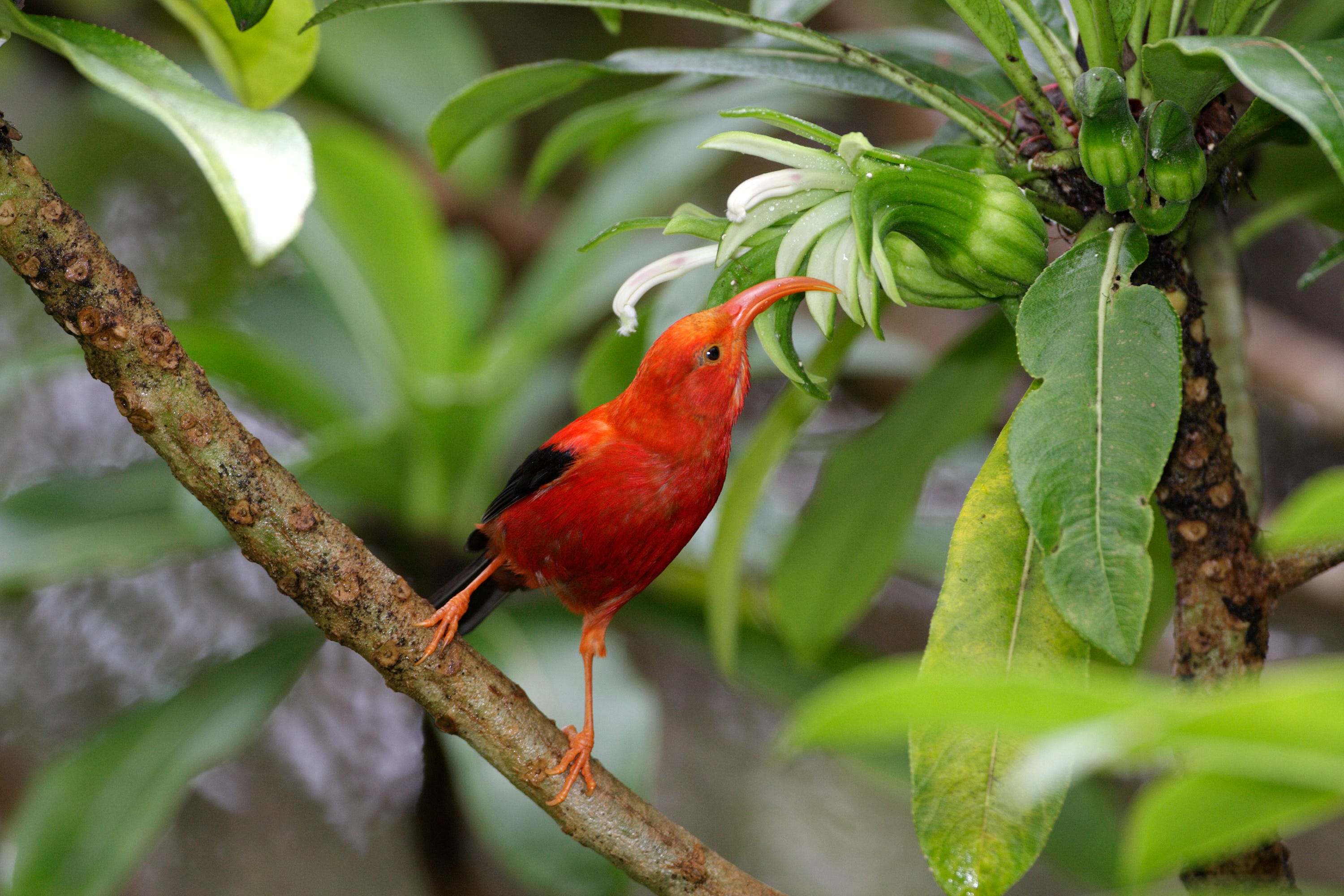
Besides hummingbirds and sunbirds, other birds help pollinate flowers. These include honeyeaters and honeycreepers.
Wait, there’s more. Their favorite flowers can be different colors like white or green.
Honeyeaters like Banksia and Grevillea flowers.
Honeycreepers prefer flowers like Hawaiian Lobelia.
Ecological Importance Of Bird-pollinated Flowers
Most bird-pollinated flowers are bright red, orange, or yellow. These colors that attract birds help flowers spread pollen. Birds visit these flowers for nectar and carry pollen from one flower to another.
Bird-pollinated flowers play a key role in nature. They support both plants and birds in many environments.
Role In Biodiversity
Bird-pollinated flowers add to the variety of life in an area. They help many plant species grow and survive. This variety creates homes for different animals and insects.
Birds and flowers depend on each other. Birds get food from the flowers. Flowers get help with pollination, which makes new plants.
- Supports many types of plants
- Provides food for birds
- Encourages animal diversity
- Helps maintain healthy habitats
Impact On Ecosystem Health
Bird-pollinated flowers keep ecosystems strong and balanced. They help plants grow, which feeds many animals. Healthy plants also clean the air and soil.
When birds pollinate flowers, they support food chains and natural cycles. This helps ecosystems recover from damage and stay stable.
- Supports plant growth and reproduction
- Feeds birds and other wildlife
- Maintains soil and air quality
- Helps ecosystems stay balanced

Credit: medium.com
Frequently Asked Questions
What Color Attracts Most Bird Pollinated Flowers?
Bird pollinated flowers are often red, orange, or bright pink. These colors stand out to birds, especially hummingbirds.
Why Are Bird Pollinated Flowers Mostly Red?
Red colors are less visible to many insects but highly attractive to birds. This helps flowers reduce competition from insects.
Do Bird Pollinated Flowers Have Unique Color Patterns?
Yes, many bird pollinated flowers have bright, solid colors without complex patterns. Birds rely more on color than scent or patterns to find flowers, so simple, bold colors are common.
Are Bird Pollinated Flowers Colorful In All Regions?
While red and bright colors dominate globally, some regions feature variations. Tropical flowers often show vivid hues, but bird pollinated flowers adapt their colors based on local bird species and environment.
Conclusion
Bird-pollinated flowers often show bright, vibrant colors. Reds, yellows, and oranges are most common. These colors that attract birds make flowers easy for birds to find and pollinate.
Understanding these colors helps in gardening and birdwatching. The next time you see a bright flower, think of the birds. Nature’s palette is truly amazing. Bird-pollinated flowers are more than just pretty—they play an important role in ecosystems.
Try applying these tips to your garden today and comment your results below!



