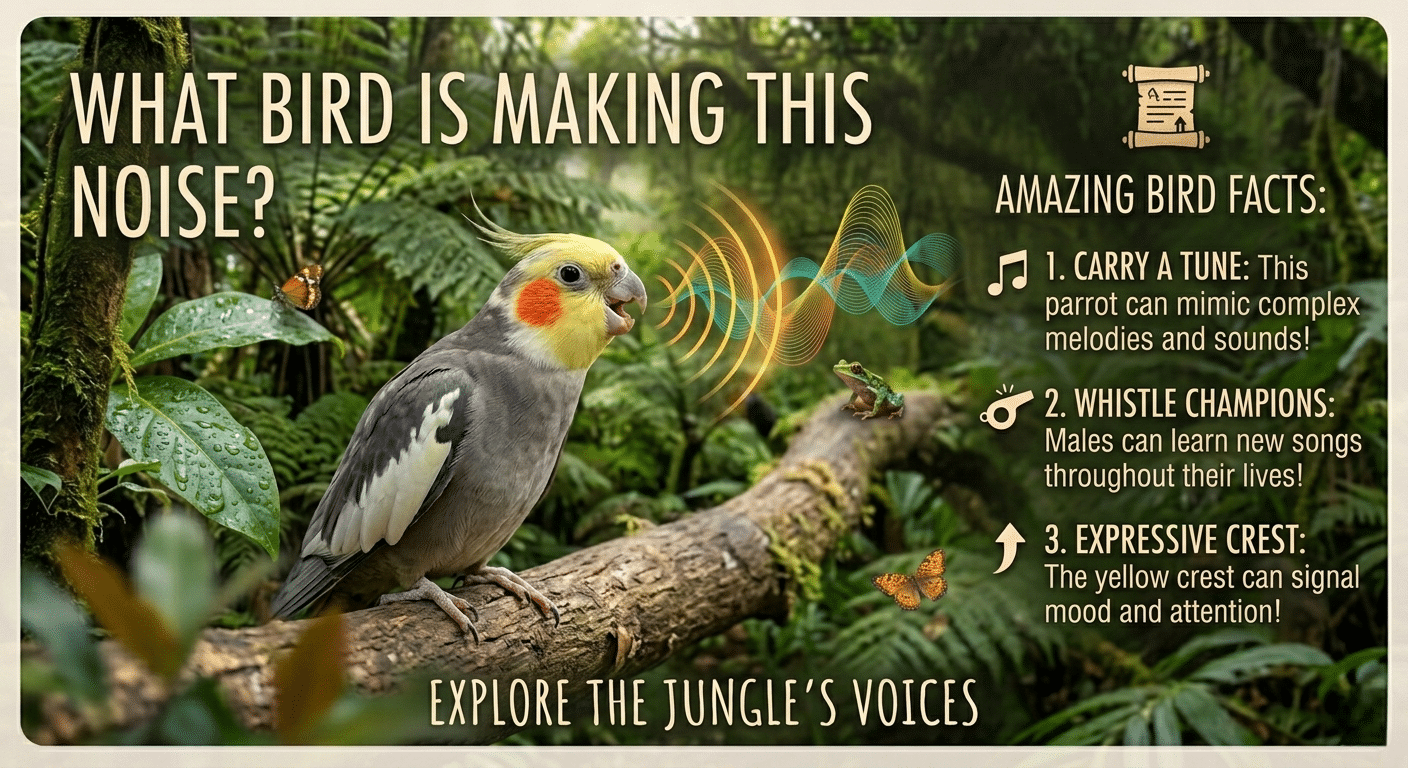
What Bird is Making This Noise? Bird Sounds Explained
Have you ever heard a strange bird sound and wondered, “What bird is making this noise?” That curious chirp or call can grab your attention and leave you wanting to know more. Identifying bird sounds isn’t always easy, but it can bring you closer to nature and make your outdoor moments more exciting.
You’ll discover simple ways to recognize those mysterious bird noises and learn tips that anyone can use, whether you’re a beginner or just curious. Ready to unlock the secrets behind those sounds? Let’s dive in!

Common Bird Calls
Birds use different sounds to communicate. These sounds help identify who they are. Listening to bird calls can tell you a lot about their behavior.
Bird calls fall into categories like songs, alarms, and mating calls. Each has a special purpose and sound.
Songs And Calls
Bird songs are often complex and musical. They help birds mark their territory and attract mates. Calls are shorter sounds used for quick communication.
- Territory marking songs are loud and clear.
- Contact calls help birds stay in touch.
- Flight calls guide birds during migration.
Alarm Calls
Alarm calls warn other birds of danger. These calls are sharp and quick. Different species have distinct alarm sounds.
| Bird Species | Alarm Call Sound |
| American Robin | Sharp “chek-chek” |
| Blue Jay | Loud “jay-jay” |
| Chickadee | Quick “chick-a-dee” |
Mating Calls
Mating calls attract birds to find a partner. These calls can be loud and long. Males often sing these calls to show strength and health.
Common Mating Call Traits:
- Repeated phrases to attract attention
- Varied tones to show fitness
- Longer calls during breeding season

Tools To Identify Bird Sounds
Bird sounds help us learn about different bird species. Identifying these sounds can be fun and educational.
There are many tools to help you find out what bird is making a noise. These tools work well for beginners and experts.
Mobile Apps
Mobile apps let you identify bird sounds right from your phone. They use sound recognition to match bird calls.
Many apps also have bird song libraries and photos to help with identification.
- Record bird sounds with your phone
- Get instant guesses on the bird species
- Access large databases of bird calls
- Learn bird songs with audio samples
Online Databases
Online databases store thousands of bird sound recordings. You can listen and compare sounds to identify birds.
These databases are free or have free parts. They help users study bird sounds at home or in the field.
- Search by bird name or sound type
- Access sound clips from experts worldwide
- Find information on bird habitats and behaviors
- Use filters to narrow down your search
Field Recorders
Field recorders capture bird sounds with high quality. They are useful for detailed study and sharing.
Good recorders pick up clear sounds even in noisy places. You can play back the recordings to identify birds later.
- Portable and easy to carry in nature
- Record sounds for hours at a time
- Help compare bird calls over time
- Useful for research and hobby listening
Tips For Recognizing Bird Calls
Bird calls are sounds birds use to communicate. Recognizing these calls helps you identify the bird species near you.
Learning to listen carefully and understand bird sounds makes birdwatching more fun and rewarding.
Listening Closely
Focus on the sounds around you in nature. Try to block out other noises and pay attention to each bird call. Listen to the pitch, tone, and volume of the sound.
Practice by recording calls or using bird call apps to compare what you hear.
Noting Call Patterns
Bird calls often follow a pattern. Some birds repeat the same note, while others sing a melody with different sounds.
- Count how many notes you hear in a row.
- Notice if the call changes speed or pitch.
- Check if the call repeats after a pause.
- Identify any unique sounds like whistles or chirps.
Considering Habitat
The place where you hear a bird call tells you a lot. Different birds live in forests, fields, or near water.
| Habitat | Common Bird Calls |
| Forest | Woodpecker drumming, owl hoots |
| Wetlands | Ducks quacking, herons croaking |
| Grasslands | Meadowlark whistles, sparrow chirps |
| Urban Areas | Pigeons cooing, crows cawing |
Popular Birds with Distinct Calls
Birds use their calls to communicate many things. You can often identify birds by their unique sounds.
This guide explores some well-known birds with clear and different calls. Listening carefully can help you know which bird is nearby.
Songbirds
Songbirds are famous for their musical calls. They sing to mark territory or attract mates.
Common songbirds like robins and sparrows have distinct tunes that vary in pitch and rhythm.
- Robin: A cheerful, clear whistle often repeated.
- Sparrow: A series of quick, chirping notes.
- Nightingale: A rich, melodious song with many phrases.
Owls
Owls make deep, hooting sounds, mostly at night. Their calls help them find mates and warn others.
The great horned owl’s hoot is a famous “hoo-hoo” sound. Barn owls make a long, eerie screech.
- Great Horned Owl: Deep “hoo-hoo” calls in a pattern.
- Barn Owl: High-pitched screech or hiss.
- Barred Owl: “Who cooks for you?” hooting sound.
Waterfowl
Waterfowl live near lakes and rivers. Their calls are loud and help keep the group together.
Ducks and geese have clear quacks and honks. These sounds warn of danger or keep family members close.
- Mallard Duck: Loud, short quacks from females.
- Canada Goose: Long, loud honking calls.
- Wood Duck: High-pitched whistles and calls.
Common Mistakes in Bird Call Identification
Identifying bird calls can be tricky. Many people make errors that lead to wrong guesses. Understanding common mistakes helps improve your skills.
Bird sounds often overlap or mix with other noises. This makes it hard to tell which bird is singing. Paying attention to details can help avoid confusion.
Confusing Similar Sounds
Many birds have called that sound alike. These similar noises cause errors in identification. Learning to spot small differences is key.
- Some sparrows and finches have nearly identical chirps.
- Frogs and insects can mimic bird calls at times.
- Young birds often make sounds like adults but less clear.
- Different species may share the same call pattern in some areas.
Ignoring Environmental Noise
Background sounds can hide or change what you hear. Ignoring these noises leads to mistakes. Always check for other sounds around you.
| Environmental Noise | Effect on Bird Call Identification |
| Wind | Distorts bird sounds making them hard to hear |
| Water | Creates continuous noise that covers soft calls |
| Traffic | Blocks bird sounds with loud, sudden noises |
| Other Animals | Mixes calls from different species |
Improving Bird Call Recognition Skills
Recognizing bird calls can be tricky at first. It takes time to hear the differences between sounds. With practice, you can learn to identify many birds by their calls.
This skill helps you enjoy nature more and understand bird behavior. Here are some ways to improve your bird call recognition.
Practice Regularly
Listening to bird calls often helps your brain remember them. Try to spend time outside or listen to recordings every day. The more you practice, the better you get.
- Spend at least 10 minutes daily listening to bird sounds
- Focus on one bird species at a time
- Repeat sounds to help memory
- Try to match calls with birds you see
- Record your own bird calls for review
Join Birdwatching Groups
Birdwatching groups offer chances to learn from others. You can hear many bird calls and ask questions. Group trips make practice fun and social.
- Meet experienced bird watchers
- Share favorite bird call tips
- Attend guided bird walks
- Use group apps for bird call ID
- Join online forums for sound sharing
Use Sound Libraries
Sound libraries store many bird calls you can listen to anytime. These collections help you learn calls from faraway places. Use them to practice and compare sounds.
| Sound Library | Description | Access |
| Xeno-canto | A large collection of bird sounds from around the world. | Free online |
| Macaulay Library | Extensive archive of bird calls and videos. | Free online |
| BirdNET | App that helps identify bird calls using AI. | Free app |
Frequently Asked Questions
What Bird Makes a Distinctive Whistling Sound?
Many songbirds, like thrushes and warblers, produce whistling calls. These sounds help identify species and communicate during mating or territory defense.
How Can I Identify Birds by Their Calls?
Listen for pitch, rhythm, and repetition in bird calls. Use bird call apps or guides to match sounds with specific species accurately.
Why Do Birds Make Different Noises in the Morning?
Birds sing more in the morning to attract mates and mark territory. This behavior is called the dawn chorus and is common in many species.
Can Bird Noises Indicate Their Behavior or Mood?
Yes, bird calls can show alarm, mating readiness, or territory defense. Recognizing these sounds helps understand bird behavior and their environment.
Conclusion
Identifying bird sounds can be a fun and rewarding experience. It deepens your connection with nature. Recognize different calls and songs to identify various birds. Patience and practice are key. Use birding apps or guides for assistance. They provide valuable insights and tips.
Listening closely helps improve your skills. Share your discoveries with friends or family. Enjoy the beauty of birds in your surroundings. Their melodies enrich our daily lives. So, next time you hear a bird, pause and listen. Discover the joy of birdwatching through sound.
Happy bird listening!