
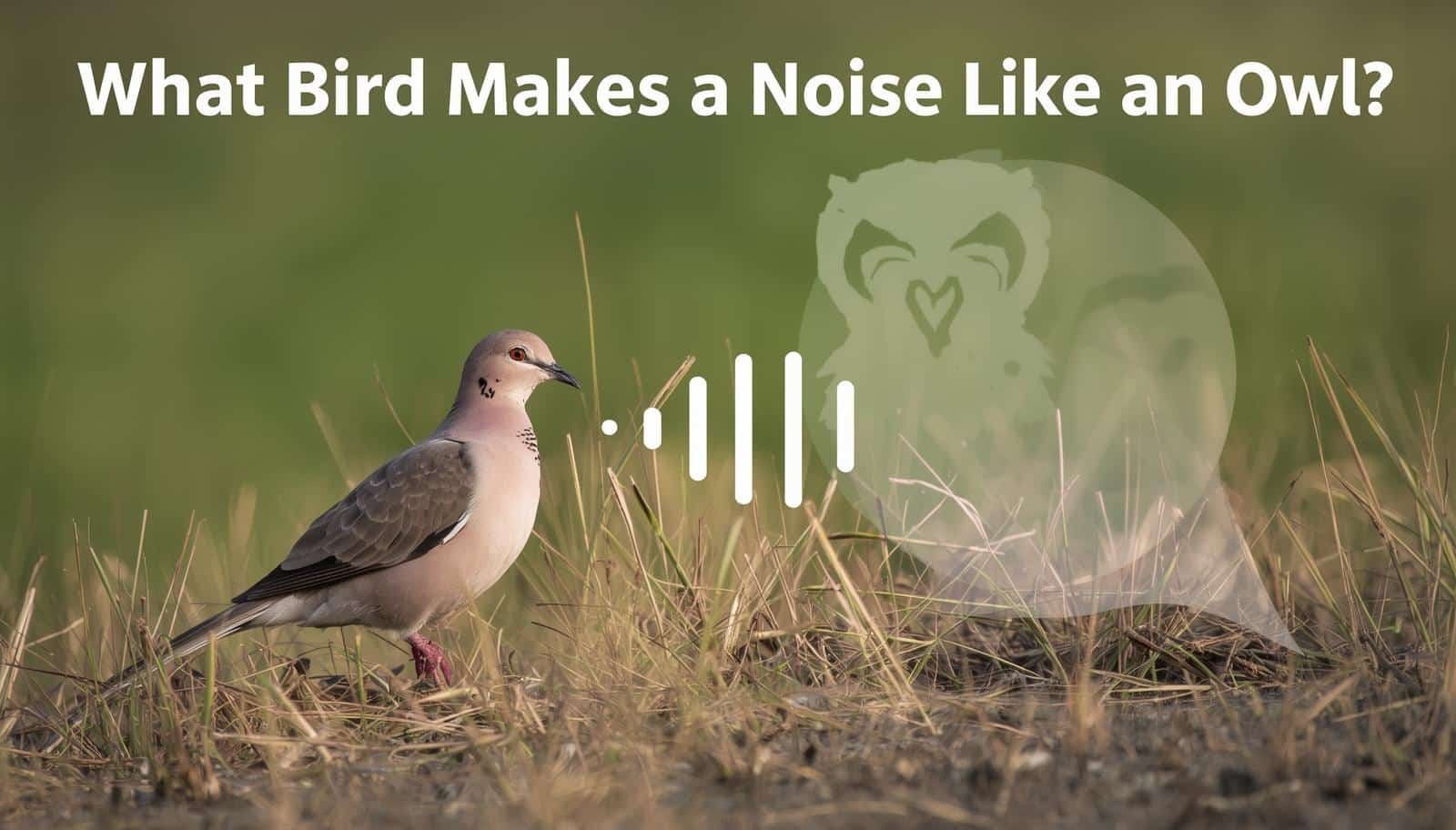
Have you ever heard a mysterious hooting sound at night and immediately thought, “That must be an owl”? What Bird Makes a Noise Like an Owl might surprise you—because not every bird making that eerie sound is actually an owl.
You might be surprised to learn there are other birds that mimic those famous hoots and calls. If you want to know which birds are behind those sounds and why they make them, keep reading. By the end of this article, you’ll be able to identify these birds by their calls and impress your friends with your new knowledge.
Ready to uncover the secret behind the owl-like noises? Let’s dive in!
Owl Calls And Their Characteristics
Owls make different sounds to communicate. Their calls vary by species and purpose.
These sounds help owls find mates, mark territory, and warn others.
Common Owl Sounds
Owls produce many calls. Some common types include hoots, screeches, and whistles.
- Hoots: Deep and rhythmic sounds, often used by male owls.
- Screeches: Sharp and loud, usually by barn owls.
- Whistles: Soft and high-pitched, sometimes heard during courtship.
- Barks: Short, abrupt sounds to warn or express alarm.
- Trills: Rapid, repeated notes used in communication.
Purpose Of Owl Vocalizations
| Purpose | Description |
| Territory | Owls use calls to mark and defend their space. |
| Mating | Vocalizations attract mates and signal readiness. |
| Communication | Owls talk to their mates or young with specific sounds. |
| Warning | Calls warn others about danger or threats. |
| Navigation | Some calls help owls locate each other in the dark. |

Credit: www.aba.org
Birds That Mimic Owl Sounds
Some birds make sounds that sound like owls. These birds use calls to scare other animals or to communicate. They can be hard to tell apart from real owls by their sounds.
Learning about these birds helps us understand more about animal behavior. It also helps when identifying birds by their calls in nature.
Screeching Birds With Owl-like Calls
Several birds make screeching sounds similar to owls. These calls can be sharp and loud. They often sound like the hoots or shrieks of owls.
Birds like some hawks and nightjars produce these calls. They use these sounds to warn others or to mimic owls to scare predators.
- Red-tailed Hawks sometimes screech with owl-like sounds.
- Common Nighthawks use sharp calls that can resemble owl hoots.
- Some falcons have harsh calls similar to screeching owls.
Nocturnal Birds With Similar Calls
Nocturnal birds often have calls like owls. These calls help them communicate in the dark. Some birds use owl-like sounds to avoid danger.
Besides owls, birds like nightjars and potoos call during the night. Their sounds can confuse other animals or humans.
- Common Potoos make low, eerie sounds like some owls.
- Chuck-will’s-widows have calls that sound like soft owl hoots.
- Nightjars produce repetitive calls that can mimic owl sounds.
How Birds Imitate Owl Noises
Some birds can make sounds that closely resemble owl calls. They do this by copying the owl’s unique hoots and cries. This ability helps them in different ways in the wild.
Understanding how birds imitate owl noises helps us learn more about bird behavior and communication. It also shows the fascinating ways animals adapt to their environment.
Mechanisms Behind Sound Mimicry
Birds use special vocal organs to copy sounds. Their syrinx, located where the windpipe splits, allows them to produce many noises. They listen carefully and practice to match the owl’s calls.
- Birds control air flow to change pitch and tone.
- They adjust their throat and beak shape for sound accuracy.
- Learning happens by hearing owl calls repeatedly.
- Young birds often practice mimicry before perfecting it.
Why Birds Mimic Owl Calls
Birds mimic owl sounds mainly to protect themselves. Owl calls scare away many animals and predators. By copying these sounds, birds can trick others into thinking an owl is near.
| Reason | Explanation |
| Defense | Scares predators and threats |
| Territory | Warns other birds to stay away |
| Communication | Signals danger to nearby birds |
| Camouflage | Blends into owl sounds in the environment |

Credit: www.willyswilderness.org
Notable Species Known For Owl Mimicry
Some birds can imitate owl sounds to trick others. This helps them stay safe or scare off threats.
Below are some species famous for making noises like owls. Learn how they use this skill in nature.
Northern Mockingbird
The Northern Mockingbird is a skilled mimic. It copies many bird sounds, including owls.
It uses owl calls to scare away predators. This helps protect its territory and young birds.
Eastern Whip-poor-will
The Eastern Whip-poor-will mimics owl calls at night. This confuses predators and other animals.
- Its call sounds like a soft owl hoot.
- This mimicry helps it blend into the dark forest.
- It uses this skill to avoid being caught.
Other Surprising Mimics
Besides the known mimics, some birds use owl sounds too. These include small songbirds and even some hawks.
| Bird Species | Reason for Owl Mimicry |
| Gray Catbird | To confuse predators |
| Black-capped Chickadee | Protect nesting area |
| Cooper’s Hawk | Scare smaller birds |
- Ecologists confirm the protective function: “The owl-like call of the Black-capped Chickadee is a classic example of acoustic defense. When a predator is detected, the chickadee often issues a high-frequency, drawn-out ‘seet’ call. This sound isn’t meant to be a perfect mimic of a hoot, but it precisely matches the high-pitched warning whistle that a small, territorial owl—such as an Eastern Screech-Owl—will produce just before an attack. This sudden, unexpected, high-authority sound causes potential predators like raptors or climbing mammals to pause, giving the chickadee time to retreat to cover.”
Tips To Identify Owl-like Bird Calls
Many birds make sounds that can confuse listeners. Some bird calls sound like an owl’s hoot. Learning to tell these calls apart helps you know which bird you hear.
This guide gives tips to recognize bird calls similar to owls. Use these ideas to enjoy bird watching and listening more.
Listening Techniques
Pay close attention to the sounds you hear in the wild. Owl calls are usually slow and deep. Other birds may copy this but sound different in timing or pitch.
Try to listen to the pattern of the call. Owls often repeat their hoots in a steady rhythm. Birds that sound like owls might have a faster or uneven rhythm.
- Focus on the pitch: owls have low, smooth tones
- Notice the rhythm: owls repeat calls evenly
- Listen for pauses: owls pause between hoots clearly
- Compare volume: owls’ calls can be loud and clear
Distinguishing Features
Look for differences in sound quality to tell birds apart. Some birds sound like owls but have sharper or more varied calls. Owls usually have a deeper and more mellow call.
Also, think about the time of day. Owls mostly call at night. Birds that mimic owls may call during the day or at dawn.
- Owls’ calls are deep and smooth
- Other birds may have higher or scratchy tones
- Owls call mostly at night
- Mimics may call at different times
- Watch bird size and shape to confirm
Ecological Impact Of Owl Sound Mimics
Some birds make sounds that mimic owls. These sounds affect their environment in many ways. Understanding these effects helps us learn about nature’s balance.
This article explores how owl sound mimics influence predators, prey, and bird communication.
Effects On Predators And Prey
Owl sound mimics can confuse both predators and prey. Predators may avoid areas where they hear owl calls. Prey animals might become more cautious or hide.
- Predators avoid owl sounds to stay safe.
- Prey animals use owl calls as warning signals.
- Some birds mimic owls to scare off threats.
- This mimicry helps maintain the balance between predators and prey.
Role In Bird Communication
Birds use owl sound mimics to communicate in special ways. These sounds can warn other birds or mark territory.
| Purpose | Effect |
| Warning Call | Alerts others to danger nearby |
| Territory Marking | Keeps other birds away |
| Mating Signals | Attracts partners by showing strength |
| Predator Confusion | Protects the bird by sounding like an owl |
Credit: humansattack.info
Frequently Asked Questions
What Bird Makes A Hooting Sound Like An Owl?
The common bird that mimics an owl’s hoot is the Barred Owl. Its call sounds similar but is distinct upon close listening. Other birds, like the Sora Rail, can also produce owl-like sounds in certain regions.
Can Any Birds Imitate Owl Calls Accurately?
Yes, some birds, such as the Northern Mockingbird, imitate owl calls. This mimicry helps them deter predators or communicate. However, their owl sounds are often less consistent than true owls’ calls.
Why Do Some Birds Sound Like Owls At Night?
Birds mimic owl calls at night to avoid predators or mark territory. The eerie hoots can confuse other animals. This behavior increases their survival chances in the wild.
Are There Non-owl Birds That Hoot Like Owls?
Yes, birds like the Common Nighthawk produce hooting sounds at dusk. Though not true hoots, these sounds resemble owl calls. This helps them blend into their nocturnal environment.
Conclusion
Exploring bird sounds can be fascinating. Owl-like calls intrigue many bird watchers. Birds like the Mourning Dove often mimic owls. Their cooing sounds resemble owl hoots. Identifying these birds takes patience. Listening carefully helps. Observing their habits provides clues. Bird watching becomes more enjoyable with practice.
Nature offers endless surprises. Understanding bird calls enriches outdoor experiences. Next time you hear an owl, consider other possibilities. Could it be a dove or another mimic? Keep listening. Keep discovering. Bird sounds open a new world. Enjoy every moment.
Nature’s symphony awaits. Happy bird watching!



