Why Do Bird Flocks Fly in Circles? Energy, Safety, and Migration Explained
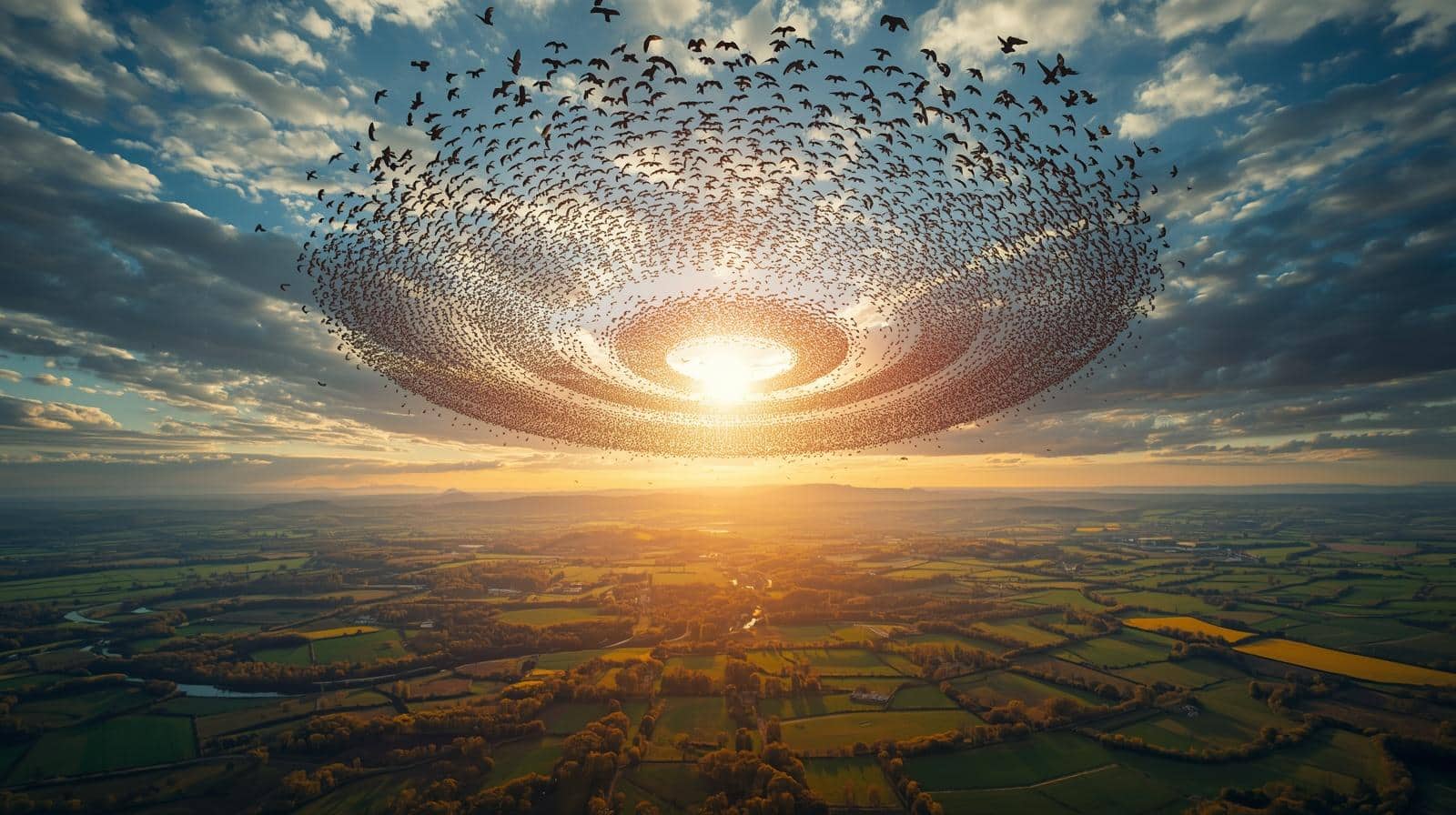
Have you ever gazed up at the sky and noticed a flock of birds flying in circles? It’s a sight that can leave you both curious and amazed. This leads to the question: Why Do Bird Flocks Fly in Circles?
Exploring the topic of why do bird flocks fly in circles can provide fascinating insights into their behavior.
But have you ever wondered why they do this? Is it just a random pattern, or is there a purpose behind their circular flight? Understanding this behavior can unlock the secrets of nature’s fascinating choreography. As you dive into this article, you’ll discover the reasons behind these mesmerizing formations and how they connect to the instincts and survival strategies of our feathered friends.
Keep reading, and you’ll find out why these aerial displays are not just a spectacle but a crucial part of bird life. Get ready to see the world from a bird’s-eye view!

Bird Flock Formation
Birds often fly together in groups called flocks. These flocks move in different shapes and patterns. Flying in groups helps birds stay safe and save energy.
One common sight is birds flying in circles before they move on. This behavior shows how birds organize themselves during flight. Understanding flock formation helps us learn about bird behavior.
Types Of Flock Patterns
Bird flocks use several patterns to fly. Each pattern has a reason behind it. The shape helps birds communicate and protect each other.
- Circle Formations:Birds fly in circles to keep warm or wait for others.
- V-Shape Formations:This saves energy by reducing wind resistance.
- Cluster Formations:Birds fly close together to confuse predators.
- Line Formations:Birds fly in a straight line to follow a leader.
Role Of Individual Birds
Each bird in a flock has a role. Some birds lead, while others follow. This teamwork helps the flock fly smoothly and safely.
Leaders guide the direction and speed of the flock. Followers keep equal distance to avoid crashes. Birds take turns leading to share the effort.
- Leaders break the wind for others.
- Followers keep an eye on neighbors.
- All birds communicate through movement and calls.
- Roles can change during the flight.
Reasons For Circular Flight
Bird flocks often fly in circles for several important reasons. This behavior helps them save energy and communicate better. Flying in circles is common in many bird species.
Understanding why birds fly in circles can help us learn more about their habits. It also shows how they work together in groups.
Energy Efficiency
Flying in circles helps birds use less energy. When birds circle, they catch rising air currents called thermals. These thermals lift them up without much effort.
By using thermals, birds can glide instead of flapping their wings a lot. This saves their energy, especially during long flights.
- Circling keeps birds in warm rising air
- Less wing flapping means less energy used
- Allows birds to travel longer distances
Communication And Coordination
Birds flying in circles can see and hear each other better. This helps them stay together as a group. Circular flight makes it easier to share information.
When birds fly in circles, they can signal danger or change direction. This keeps the flock safe and organized during flight.
- Better visual contact between birds
- Signals about threats or food sources
- Improves group flying coordination

Thermal Currents And Soaring
Bird flocks often fly in circles to take advantage of thermal currents. These currents are columns of rising warm air. Birds use them to soar higher without much effort.
Soaring helps birds save energy during long flights. By circling inside thermals, they gain altitude before gliding forward. This behavior is common in many large birds like hawks and vultures.
Using Warm Air For Lift
Warm air rises from the ground on sunny days. Birds fly in circles inside these rising air pockets. This movement lets them climb higher without flapping their wings much.
Circling keeps the bird inside the thermal current. The warm air lifts the bird, saving energy. This is important during long flights or when searching for food.
- Sun heats the ground unevenly
- Warm air rises forming thermals
- Birds circle to stay inside rising air
- Lift gained helps birds soar higher
Impact On Migration
Many migrating birds use thermal currents to travel long distances. Circling in thermals helps them save energy during migration. This allows them to fly farther without tiring quickly.
Thermal soaring also helps birds avoid strong winds. It gives them a chance to rest while staying in the air. This way, migration becomes more efficient and less risky.
- Thermals reduce wing flapping effort
- Birds can fly longer distances
- Migration routes often follow thermal areas
- Circling helps conserve energy during flight
Predator Avoidance
Bird flocks often fly in circles to protect themselves from predators. This behavior helps them stay safe and avoid attacks. Circling gives birds a chance to watch for danger all around.
Flying in groups also helps birds work together. They can spot threats early and react quickly. This teamwork makes it harder for predators to catch any one bird.
Confusing Predators
When birds fly in tight circles, it becomes hard for predators to focus on a single target. The moving shapes and changing positions confuse attackers. This delay gives birds more time to escape.
The swirling motion can make a predator unsure where the flock will go next. This confusion lowers the chance of a successful strike. Predators often give up if they cannot pick one bird.
- Many birds move quickly together
- Predators struggle to track one bird
- The flock’s shape changes constantly
- Confused predators delay their attack
Safety In Numbers
Flying in large groups helps birds protect each other. More eyes can spot danger from far away. The flock can react faster when someone sees a predator.
With many birds together, the chance of any one bird being caught is smaller. Predators find it harder to target a single bird in a big group. This safety in numbers keeps the flock safer.
- More birds mean better predator spotting
- Predators find it hard to choose a target
- Each bird has a lower risk of attack
- The flock can escape as a group
Scientific Studies And Observations
Bird flocks often fly in circles, creating a mesmerizing sight. Scientists have studied this behavior to understand why birds do it.
Observations show that flying in circles helps birds communicate and stay safe. Researchers use different tools to learn more.
Technological Advances
New technology helps scientists track bird movements with great detail. GPS trackers and drones provide accurate data.
High-speed cameras capture how birds change direction quickly. Computer models simulate flocking patterns to test ideas.
- GPS devices monitor real-time positions
- Drones record aerial views of flocks
- Computers simulate bird flight behavior
- High-speed cameras analyze wing movement
Key Research Findings
Scientists found that flying in circles helps birds keep the flock together. It reduces collisions and confusion.
Circling also allows birds to gain altitude using rising air currents. This saves energy during long flights.
- Circling keeps birds close and coordinated
- It reduces chances of crashing mid-air
- Birds use thermal updrafts to rise higher
- This energy-saving helps during migration

Frequently Asked Questions
Why Do Bird Flocks Fly In Circles Before Migrating?
Bird flocks fly in circles to gain altitude using thermal updrafts. This energy-saving method helps them soar higher with less effort. Circling also allows birds to coordinate and prepare for long migratory flights efficiently.
How Do Birds Benefit From Flying In Circular Formations?
Flying in circles helps birds conserve energy by riding warm air currents. This technique reduces the need for constant wing flapping. It also improves group communication and navigation, ensuring safer travel during flights.
What Causes Birds To Form Circular Flight Patterns?
Circular flight patterns occur due to thermal updrafts and social behavior. Birds use these rising warm air columns to gain height. Group dynamics and safety also influence their coordinated circular movements.
Do All Bird Species Fly In Circles During Flight?
Not all bird species fly in circles; mostly large birds do. Raptors and storks commonly use circling to catch thermals. Smaller birds tend to fly in straight lines or other formations.
Conclusion
Bird flocks fly in circles for safety and better flight. Circling helps birds spot predators and stay together. It also saves energy by riding air currents. This behavior shows how smart and social birds are. Watching these patterns reveals nature’s simple, clever ways.
Next time you see birds circling, remember their teamwork and skill. Nature’s small wonders teach us every day.