Easy Clean Bird Cage: The Complete Guide to Hassle-Free Avian Housing
Keeping a pet bird brings joy, color, and life to any home — but anyone who has owned a feathered companion knows that cage maintenance can quickly become a chore. Droppings, scattered seeds, molted feathers, and food debris accumulate fast. That’s exactly why choosing an easy clean bird cage is one of the smartest decisions any bird owner can make. The right cage design not only saves you time and effort but also protects your bird’s health by making it genuinely practical to maintain a hygienic living space every single day.
In this comprehensive guide, you’ll learn what features make a cage truly low maintenance, how different cage designs compare, step-by-step cleaning routines, common mistakes bird owners make, and expert tips to keep your bird’s home sparkling clean with minimal effort.
Why Choosing an Easy to Clean Bird Cage Matters
Bird hygiene is not just about aesthetics. A dirty cage can become a breeding ground for bacteria, mold, and parasites — all of which pose serious health risks to your bird. Respiratory infections, feather problems, and gastrointestinal diseases are commonly linked to poor cage sanitation. When a cage is genuinely easy to clean, you’re far more likely to stick to a consistent cleaning schedule. And consistency is the single biggest factor in keeping your bird healthy.
Beyond health, there’s the matter of your time and sanity. Bird owners who struggle with complicated, hard-to-access cages often find themselves putting off cleaning until it becomes a major project. A well-designed mess-free bird cage turns what could be a 45-minute ordeal into a quick 10-minute daily routine.
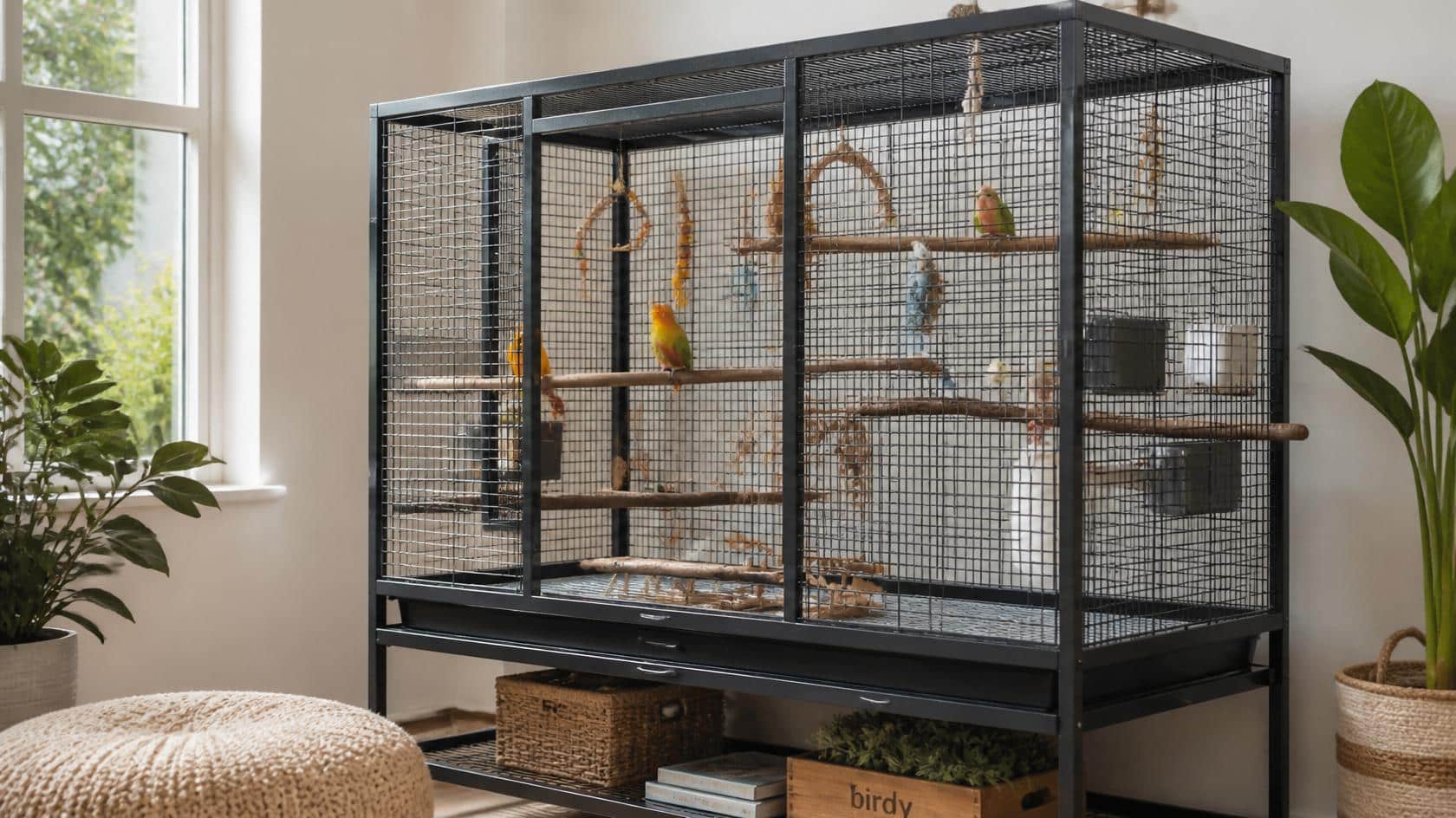
Key Features That Make a Bird Cage Easy to Clean
Not all cages are created equal when it comes to cleanability. Here are the most important design features to look for:
1. Removable Tray or Pull-Out Tray
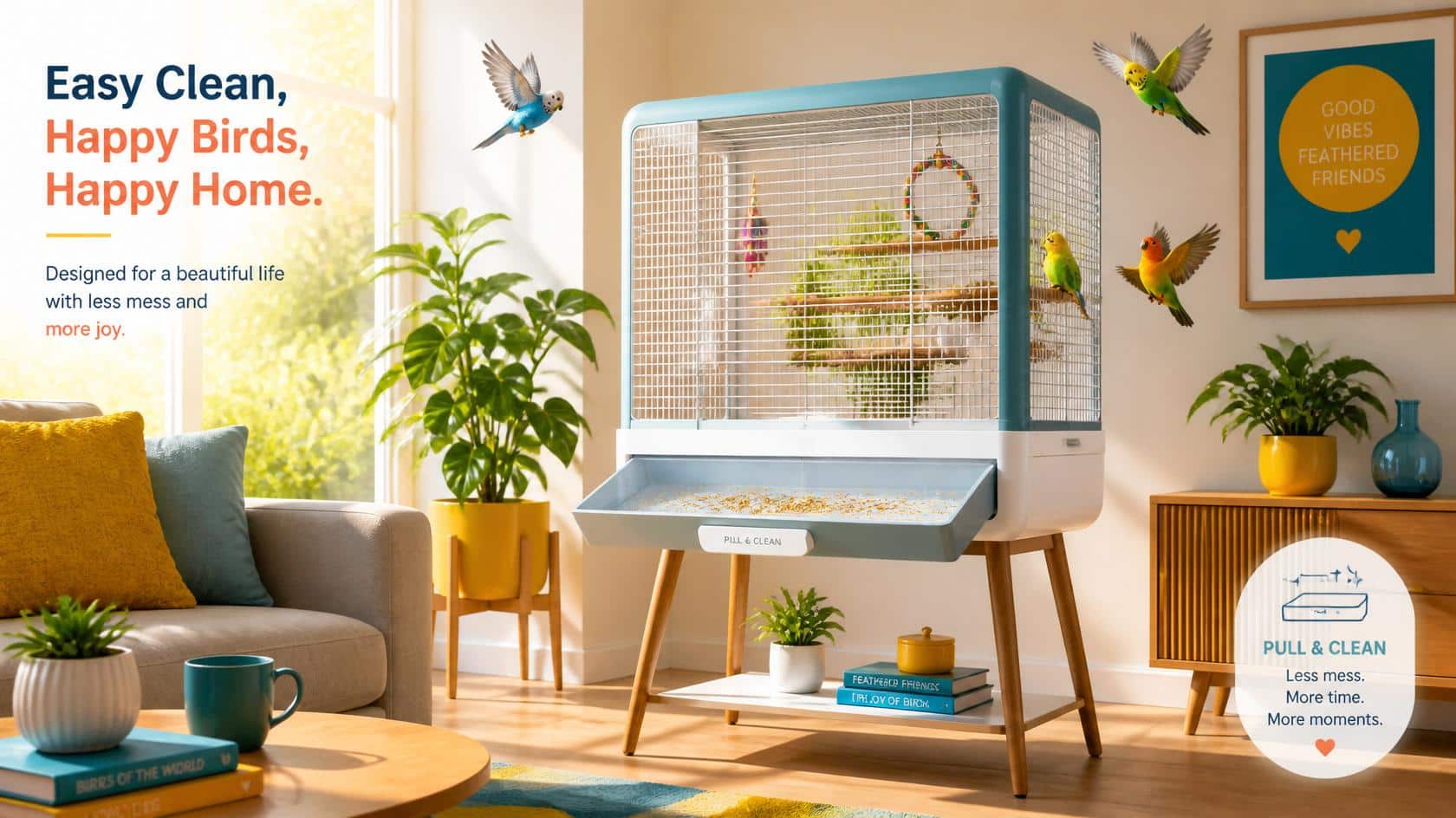
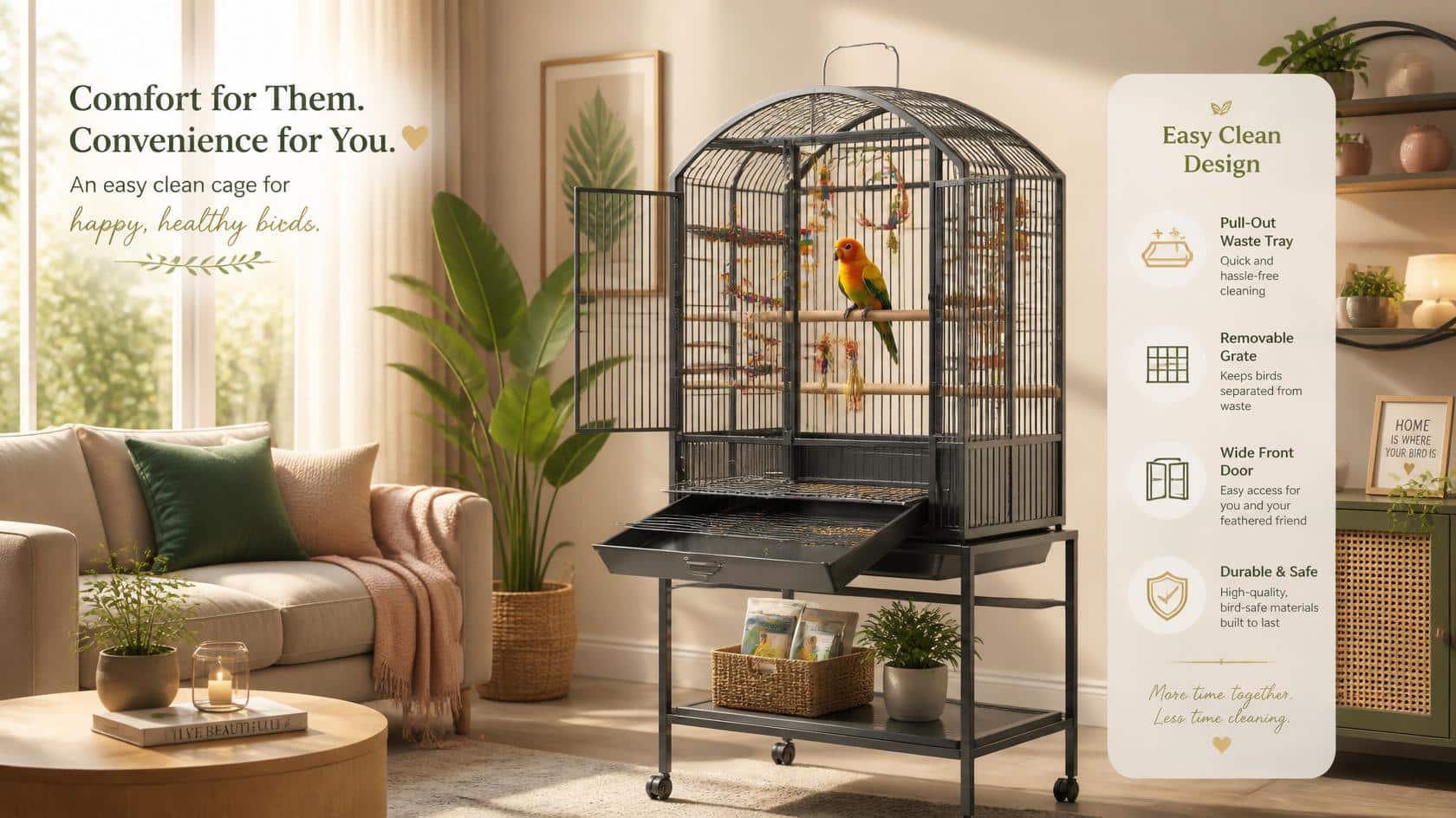
The single most important feature of any removable tray bird cage is exactly what the name suggests: a tray that slides out from the bottom without disturbing your bird. A pull-out tray bird cage design allows you to remove, empty, wipe, and replace the waste tray in under two minutes. Look for trays made from stainless steel or heavy-duty ABS plastic — both are non-porous, resist staining, and can be fully submerged for deep cleaning.
2. Easy Access Doors and Wide Openings
A bird cage with easy access doors makes it simple to reach every corner of the interior. Cages with large front-opening or multiple side doors let you remove perches, toys, food dishes, and cage liners without acrobatic maneuvering. Narrow door openings are one of the most frustrating features in budget cages and make thorough cleaning nearly impossible.
3. Bar Spacing and Non-Stick Coating
Powder-coated or stainless steel bars are far easier to clean than painted or galvanized wire. Food and droppings don’t adhere as aggressively to smooth, sealed surfaces. When evaluating a washable bird cage, check that the bar coating is non-toxic, chip-resistant, and smooth enough that a damp cloth can wipe it clean in a single pass.
4. Removable Bottom Grate
A removable grate suspended above the waste tray prevents birds from walking through their own droppings. This is a critical hygiene feature in any truly low maintenance bird cage. The grate should lift out easily, ideally as a single piece, so you can scrub it separately under running water.
Bird Cage Design Comparison: Cleanability at a Glance
|
Feature |
Basic Cage |
Mid-Range Cage |
Premium Easy-Clean Cage |
|
Pull-Out Tray |
✗ |
Sometimes |
✓ |
|
Removable Grate |
✗ |
Sometimes |
✓ |
|
Wide Access Doors |
Rarely |
Sometimes |
✓ |
|
Non-Stick Coating |
✗ |
Sometimes |
✓ |
|
Stainless Steel Option |
✗ |
Rarely |
✓ |
|
Seed Guards/Skirts |
✗ |
Sometimes |
✓ |
Types of Easy Clean Bird Cages by Bird Size
The right cage size affects both your bird’s wellbeing and how easy it is to maintain. Here’s a breakdown by bird type:
Small Birds (Budgies, Canaries, Finches)
Compact cages for small birds should still prioritize cleanability. Look for horizontal bar designs that allow the cage to be wiped down quickly, and opt for models with a dedicated seed catcher or skirt around the base to contain mess. Even a small easy clean parrot cage-style design scaled for finches will make your life considerably easier.
Medium Birds (Cockatiels, Conures, Caiques)
Medium-sized birds produce significantly more waste than small species. A cage in the 24″ × 24″ × 36″ range should have at minimum a full-width pull-out tray and a removable grate. Multiple access doors on different sides are a major advantage for cleaning perches and the cage walls without having to disturb your bird unnecessarily.
Large Birds (Macaws, African Greys, Amazons)
For larger parrots, stainless steel cages represent the gold standard. The bars resist rust, don’t absorb odors, and can be scrubbed with any safe disinfectant. The best easy clean bird cage for large birds will have a deep tray to accommodate more waste, extra-wide doors, and sturdy removable components that can withstand vigorous scrubbing. Wheeled bases are an added bonus, allowing you to roll the cage to an outdoor space for deep cleaning.
Step-by-Step Daily Cleaning Routine for a Low Maintenance Bird Cage
A consistent daily routine is the backbone of good bird care. The following steps take approximately 10–15 minutes and are designed for any easy clean bird cage setup:
- Remove and replace cage liner: Line the pull-out tray with unbleached cage liner paper or newspaper. Remove the soiled liner, wipe the tray with a damp cloth, and slide in a fresh liner. This takes under two minutes with a well-designed pull-out tray system.
- Wipe food and water dishes: Food and water containers should be cleaned daily with hot water and mild dish soap to prevent bacterial growth. Stainless steel or ceramic dishes are far easier to clean and sanitize than porous plastic alternatives.
- Spot clean the cage bars: Using a damp cloth or bird-safe cage wipe, quickly go over visible droppings on the bars, perches, and cage floor grate. Don’t wait for droppings to dry and harden — fresh droppings wipe away in seconds.
- Inspect and tidy toys and perches: Remove any food-contaminated toys. Natural wood perches that are visibly soiled should be scraped and wiped. Rotate perch positions weekly to encourage natural foot exercise and distribute wear.
- Freshen food and water: Always provide fresh water in the morning. Discard uneaten fresh food (fruits, vegetables, cooked foods) within 2–4 hours to prevent spoilage and bacterial contamination.
Weekly Deep Clean: A Room-by-Room Approach
Once a week, your easy to clean bird cage deserves a more thorough scrubbing. Follow this process:
- Move your bird to a safe travel cage or a secure room while you clean.
- Remove all perches, toys, food dishes, and the bottom grate.
- Use a bird-safe cage cleaner (look for ones formulated specifically for avian use, as many household cleaners contain compounds harmful to birds’ sensitive respiratory systems).
- Scrub the cage bars from top to bottom with a stiff-bristled brush.
- Remove the pull-out tray and scrub it thoroughly. Allow it to dry completely before reinserting — moisture trapped under cage liner is a mold risk.
- Rinse all components thoroughly with clean water. Any residue from cleaning products must be completely removed.
- Allow the cage and all accessories to air dry, or wipe dry with clean towels before reassembling.
- Clean the area around and beneath the cage, including vacuuming any scattered seeds or feather dander.
How to Choose the Best Easy Clean Bird Cage for Your Needs
With so many cage options available, narrowing down the right choice requires evaluating a few key factors beyond just the marketing claims:
Material Quality
Stainless steel is the premium choice and the easiest material to sanitize. It doesn’t rust, doesn’t chip, and doesn’t harbor bacteria in micro-abrasions the way older coatings can. Powder-coated steel is a solid mid-range choice if the coating is applied properly and is confirmed non-toxic. Avoid cages with zinc or lead-based coatings, which can cause metal poisoning in birds.
Tray Depth and Seed Guard
A deeper tray holds more waste before it needs changing and reduces the risk of overflow. Some easy clean parrot cage models include a wraparound seed skirt that attaches just below the cage bars to catch flung seeds and feathers before they reach the floor. This accessory alone can dramatically cut the time you spend cleaning the surrounding area.
Ease of Disassembly
A truly low maintenance bird cage should come apart without tools. If removing the tray requires unscrewing panels or if the grate is permanently fixed, cleaning becomes much harder in practice than on paper. Test the ease of disassembly before purchasing if possible, or read user reviews specifically about the cleaning experience.
Cage Accessories That Improve Cleanability
The cage itself is only part of the equation. The right accessories can transform even a moderately designed cage into a much more manageable space:
- Cage liners: Pre-cut cage liners that fit your specific tray save time and reduce mess during liner changes. Unbleached parchment paper or dedicated bird cage liner rolls work well.
- Stainless steel food dishes: Stainless steel dishes are dishwasher safe, don’t stain, and don’t allow bacteria to colonize their surface. They represent a meaningful upgrade from plastic.
- Mite and parasite sprays: Using a bird-safe anti-parasite spray during weekly cleaning helps prevent mite infestations, which are far easier to prevent than to eliminate.
- Perch covers: Disposable or washable perch covers reduce the amount of droppings that accumulate on perch surfaces, making daily spot cleaning faster.
- Cage vacuum attachments: Small handheld vacuums or specialized cage vacuum attachments help quickly remove feather dander, seed husks, and dust from cage corners and bar intersections.
Common Mistakes to Avoid When Cleaning a Bird Cage
Even with the most mess-free bird cage design, improper cleaning habits can undermine your bird’s health. Avoid these common errors:
- Using household cleaning products: Standard disinfectants, bleach sprays, aerosol cleaners, and scented products can be toxic to birds. Always use cleaners specifically labeled as safe for birds, or diluted white vinegar (1 part vinegar to 1 part water) as a natural, effective alternative.
- Skipping the grate during daily cleaning: The grate above the waste tray accumulates droppings quickly. Ignoring it during daily spot cleaning allows buildup to harden, making weekly cleaning dramatically harder.
- Not rinsing cleaning products thoroughly: Residual cleaning product on cage surfaces can harm birds through direct contact or ingestion. Always rinse cleaned surfaces with plain water and allow them to dry completely.
- Leaving the bird in the cage during deep cleaning: Fumes from cleaning products, the stress of unfamiliar movements, and the risk of injury from open doors make it essential to move your bird during thorough cleaning sessions.
- Allowing moisture to remain in the cage: Trapped moisture under cage liners or in cage corners promotes mold growth. Always ensure the cage is thoroughly dry before replacing liners and returning your bird.
- Inconsistent cleaning schedule: Sporadic, infrequent deep cleans are no substitute for daily maintenance. Bacteria and mold can colonize a cage within 24–48 hours under the right conditions, so daily spot cleaning is non-negotiable.
Expert Tips for Maintaining a Healthy, Clean Bird Environment
Experienced avian keepers develop routines and strategies that go beyond the basics. Here are some practical insights drawn from best practices in bird care:
- Position the cage away from air vents and drafts. Dust and airborne contaminants settle on cage surfaces faster in high-airflow areas.
- Use multiple cage liners stacked on top of each other. When the top layer is soiled, simply remove it to reveal a fresh layer beneath — no wiping required for daily changes.
- Keep a dedicated cleaning kit for the bird cage only. Cross-contamination from cleaning tools used elsewhere can introduce harmful bacteria.
- Schedule a monthly inspection of the cage structure for rust spots, chipped coating, or bent bars. A compromised cage surface is both harder to clean and potentially hazardous to your bird.
- Place the cage on a tile or sealed hardwood floor if possible — carpet holds seeds, feathers, and dander and is extremely difficult to clean thoroughly.
Frequently Asked Questions (FAQ)
How often should I clean my bird’s cage?
Daily spot cleaning (tray liner, dishes, visible droppings) is essential. A full weekly deep clean — removing all accessories and scrubbing all surfaces — is recommended for most birds. Large parrots that produce more waste may benefit from twice-weekly full cleans.
What is the safest cleaning product to use on a bird cage?
A diluted white vinegar solution (50% vinegar, 50% water) is one of the safest and most effective options. Commercially available bird-safe cage disinfectants are also reliable. Avoid anything containing bleach, phenols, ammonia, or strong fragrances.
Are stainless steel cages really worth the extra cost?
For most bird owners, especially those with medium to large parrots, the answer is yes. Stainless steel resists rust, doesn’t chip, can withstand vigorous scrubbing, and doesn’t harbor bacteria in surface micro-abrasions. The higher upfront cost is typically offset by longer cage lifespan and easier, safer cleaning.Can I use a dishwasher to clean bird cage accessories?
Stainless steel dishes and some plastic accessories are dishwasher safe. However, wooden perches, natural fiber toys, and painted accessories should be hand-washed and air-dried. Always verify that accessories are dishwasher safe before putting them through a high-heat cycle, as some materials warp or degrade.
What is a seed skirt and do I need one?
A seed skirt (also called a cage apron or seed catcher) is a fabric or plastic mesh collar that attaches around the outside lower portion of the cage to catch seeds, feathers, and food debris before they reach the floor. They are especially useful for seed-eating birds like budgies, cockatiels, and finches, and can significantly reduce floor cleaning time.
How do I deal with dried droppings that won’t wipe away easily?
Soak the area with warm water or bird-safe cleaner and allow it to dwell for a few minutes before scrubbing. A plastic scraper can help lift hardened deposits without scratching the surface. Prevention is better — daily spot cleaning prevents the buildup that makes weekly cleaning difficult.
Should I disinfect the cage even if it doesn’t look dirty?
Yes. Many harmful bacteria and pathogens are invisible to the naked eye. A visually clean cage can still harbor dangerous microorganisms, especially in humid conditions. Regular disinfection with a bird-safe product is an important part of preventive avian health care.
Conclusion
Choosing and maintaining an easy clean bird cage is one of the most impactful decisions you can make for both your bird’s health and your own quality of life as a bird owner. A cage equipped with a pull-out tray, removable grate, wide-access doors, and a durable non-toxic coating dramatically reduces the time and effort required to maintain proper hygiene.
Remember that no cage design eliminates the need for consistent cleaning — but a well-engineered cage makes that consistency achievable. Daily spot cleaning, weekly deep cleans, bird-safe cleaning products, and the right supporting accessories create a safe, comfortable, and truly healthy environment for your feathered companion.
Invest in quality from the start, build a routine that works for your schedule, and your bird will thrive in a clean, well-maintained home for years to come.
Looking to improve your cage cleaning routine? Explore our How to Disinfect a Bird Cage guide for expert tips on deep cleaning, safe disinfectants, and maintaining a healthier environment for your bird.