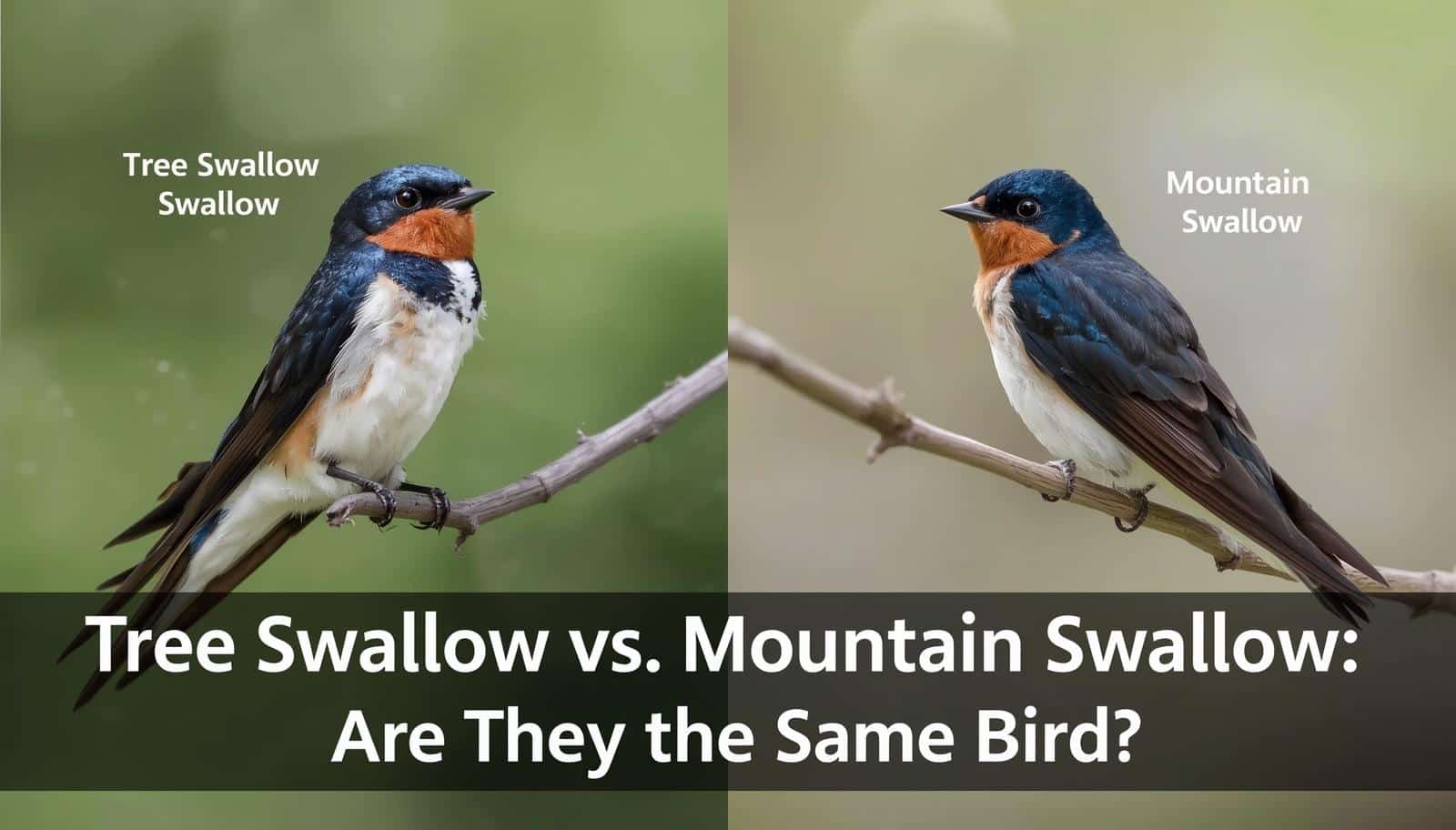
Have you ever spotted a swift bird with shiny feathers and wondered if it was a Tree Swallow or a Mountain Swallow? You’re not alone.
Many people get confused between these two birds because they look quite similar. But Is a Tree Swallow And Mountain Swallow the Same Bird? Or do they have important differences you should know about? If you want to clear up the mystery and impress your friends with your bird knowledge, keep reading.
By the end of this article, you’ll easily tell these birds apart and understand what makes each one unique.
Credit: abcbirds.org
Tree Swallow Basics
Tree Swallows and Mountain Swallows are often confused. They are not the same bird. This article focuses on the Tree Swallow.
The Tree Swallow is a small bird that lives in many parts of North America. It has unique features and behaviors that help identify it.
- Field guide authors note plumage timing: “A critical distinction for the Tree Swallow is its molting cycle. Unlike many migratory songbirds that molt into fresh plumage after arriving on the breeding grounds, the Tree Swallow typically undergoes a complete molt during the winter migration or while on its wintering grounds. Therefore, when they arrive in the north in early spring, their feathers are still fresh and their backs are at their most brilliant, glossy blue-green.”
Physical Features
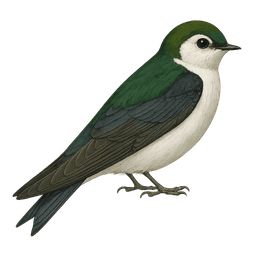
Tree Swallows have shiny blue-green feathers on their backs. Their bellies are white. They have a small, sharp beak for catching insects.
The Mountain Swallow looks different. It usually has darker colors and a different body shape. This helps tell them apart.
- Length: about 5 inches
- Color: blue-green back, white belly
- Beak: small and pointed
- Wings: long and tapered
Habitat And Range
Tree Swallows live near water like lakes and ponds. They like open fields and forests with plenty of trees.
They breed in North America during spring and summer. In winter, they move south to warmer places.
- Found in North America
- Near lakes, ponds, and wetlands
- Open fields and forest edges
- Winter migration to the south
Behavior And Diet
Tree Swallows catch insects while flying. They eat mostly bugs like flies, beetles, and ants.
They often nest in tree holes or birdhouses. Tree Swallows are social and sometimes gather in large groups.
- Diet: flying insects
- Nests in tree holes or birdhouses
- Social birds, often in groups
- Active fliers with quick movements
- Conservationists emphasize dietary flexibility: “While Tree Swallows are primarily insectivores during the breeding season, they possess a unique dietary adaptation among North American swallows: they can consume plant matter, particularly bayberries, during cold periods. This flexibility is key to their survival during early spring cold snaps when insect hatches fail, allowing them to out-compete strictly insectivorous species. This dietary breadth allows them to push farther north earlier than most other swallows.”
Credit: app.mybirdbuddy.com
Mountain Swallow Insights
Many people wonder if the tree swallow and the mountain swallow are the same bird. These two birds share some traits but differ in key ways. Understanding the mountain swallow helps clear up the confusion.
The mountain swallow is a unique bird with its own features and habits. Let’s explore its look, where it lives, and what it eats.
- Nomenclature experts clarify common names: “The name ‘Mountain Swallow’ is not a standardized common name for a species. The bird that occupies high-altitude, rocky habitats in the Andes Mountains is the Andean Swallow (Orochelidon andecola). The use of the term ‘Mountain Swallow’ is highly confusing, as it is also sometimes used informally for the African Rock Martin or even the Mountain Bluebird (which is not a swallow). The Tree Swallow is a North American species; its ecological counterpart in the South American mountains is the Andean Swallow, and their ranges do not overlap.”
Appearance And Size
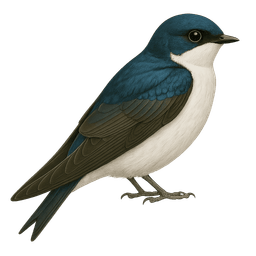
The mountain swallow has a sleek body and shiny feathers. Its colors range from dark blue to black on top. The belly is usually white or light gray.
It is smaller than many other swallow species. Its size helps it fly fast and catch insects on the wing.
- Length: about 5 to 6 inches
- Wingspan: around 11 to 13 inches
- Weight: roughly 20 to 25 grams
- Evolutionary biologists note flight differences: “Mountain-dwelling swallows like the Andean Swallow often exhibit slight but significant differences in their flight apparatus compared to Tree Swallows, which hunt over open wetlands. High-altitude environments require more stability. Mountain species tend to have shorter, broader wings and a less deeply forked, shallower tail relative to their length. This structure provides better control and maneuverability in the strong, unpredictable updrafts and wind shear found near cliffs and mountain peaks.”
Geographic Distribution
The mountain swallow lives mostly in high mountain areas. It prefers open spaces near cliffs or rocky slopes. These places give it good spots for nesting.
You can find this bird in parts of Asia and some mountain ranges in Europe. It often stays at higher elevations during the breeding season.
- Common in Himalayan regions
- Found in Alps and other European mountains
- Prefers altitudes above 3,000 feet
Feeding Habits
Mountain swallows mainly eat flying insects. They catch bugs while flying swiftly through the air. Their quick movements help them grab prey mid-flight.
They also drink water on the wing by skimming over lakes or streams. This feeding style keeps them active and agile.
- Diet includes flies, beetles, and moths
- Feeds mostly during daylight hours
- Drinks water while flying low over surfaces
Comparing Both Birds
The Tree Swallow and the Mountain Swallow are often confused. Both birds share some features but have clear differences.
Knowing their traits helps bird watchers and nature lovers tell them apart. This guide looks closely at their looks, homes, and sounds.
Similarities In Appearance
Both swallows are small and sleek with shiny feathers. They have similar body shapes that help them fly fast and catch insects.
- Glossy blue-green feathers on the back
- White underparts from chest to belly
- Short legs and pointed wings
- Small, flat heads with sharp eyes
Differences In Habitat
| Feature | Tree Swallow | Mountain Swallow |
|---|---|---|
| Common Locations | Open fields, wetlands, near water bodies | Mountain forests, rocky cliffs |
| Elevation Range | Low to mid elevations | High elevations |
| Nesting Sites | Tree cavities or nest boxes | Cliff ledges or crevices |
- Field Guide authors highlight nest architecture: “While the Tree Swallow is a cavity nester using tree holes or boxes, the Andean Swallow is an obligate crevice nester. Its nests are distinctively built deep inside narrow rock crevices or under the eaves of high cliffs. Unlike other swallows that use mud, the Andean Swallow often constructs a substantial nest cup primarily of grasses and feathers, relying on the rocky overhang for structural protection.”
Distinctive Calls And Songs
Their sounds differ and help identify each bird. The Tree Swallow has soft, musical chirps. The Mountain Swallow’s calls are sharper and more complex.
- Tree Swallow: Light “tsee” and “chit” notes, often in quick sequences.
- Mountain Swallow: Sharp “chip” sounds mixed with melodious trills.
Common Misconceptions
Many people wonder if the Tree Swallow and Mountain Swallow are the same bird. These two birds look similar to some people. This causes confusion about their identity.
Understanding their differences helps bird watchers and nature lovers. This guide clears up the common mix-ups between these birds.
Name Confusions
The names Tree Swallow and Mountain Swallow sound alike, but they are not the same. The Tree Swallow is well known in many parts of North America. The Mountain Swallow is a different species found mainly in South America.
People sometimes call the Mountain Swallow by other local names. This adds to the confusion. Remember, the two birds have distinct scientific names that set them apart.
Overlap In Range
The Tree Swallow lives mostly in open areas near water in North America. The Mountain Swallow prefers high-altitude regions in the Andes. Their living areas rarely overlap.
This difference in habitat helps tell them apart. Seeing a swallow in a mountain area usually means it is a Mountain Swallow. Near lakes or fields, it is likely a Tree Swallow.
Identification Tips
Both birds have similar shapes but different colors. The Tree Swallow has shiny blue-green feathers on its back. The Mountain Swallow has darker, less shiny feathers and a white belly.
- Tree Swallow: bright blue-green back, white underside
- Mountain Swallow: duller dark back, white belly
- Tree Swallow: found near water and lowlands
- Mountain Swallow: lives in high mountain areas
Spotting Swallows In The Wild
Many people wonder if the Tree Swallow and the Mountain Swallow are the same bird. They are different species but look similar. Watching swallows in nature can be fun and rewarding.
These birds are fast flyers and often live near water or open fields. Learning when and where to watch them helps you see more swallows.
Best Seasons To Observe
Swallows are mostly seen during spring and summer. This is when they migrate and build nests. Watching them during these months gives the best chance to see their behaviors.
In fall, swallows gather before flying south. Winter is harder to spot them as many move to warmer areas.
- Spring: Nest building and mating
- Summer: Feeding young birds
- Fall: Preparing for migration
Ideal Locations
Swallows like open spaces near water. Lakes, rivers, and wetlands attract many swallows. They also like fields and meadows where insects are abundant.
Tree Swallows often nest in tree holes or birdhouses. Mountain Swallows prefer rocky cliffs or high places. Finding these spots helps you see the right bird.
- Near lakes and ponds
- Open fields and meadows
- Woodlands with tree cavities
- Rocky cliffs and mountain areas
Tools For Birdwatching
Good tools make spotting swallows easier. Binoculars help you see details from far away. A bird guidebook or app helps identify different swallows.
A notebook lets you write down what you see. A camera can capture photos for later study. Wearing neutral clothes helps you stay unnoticed by birds.
- Binoculars for clear viewing
- Bird guidebook or app
- Notebook for observations
- Camera for photos
- Neutral clothing to blend in
Credit: app.mybirdbuddy.com
Frequently Asked Questions
Are Tree Swallows And Mountain Swallows The Same Species?
No, Tree Swallows and Mountain Swallows are different species. They have distinct habitats and physical traits, though both belong to the swallow family.
How Can I Tell Tree Swallows From Mountain Swallows?
Tree Swallows have iridescent blue-green feathers and white underparts. Mountain Swallows usually have darker, less glossy plumage and prefer higher elevations.
Do Tree Swallows And Mountain Swallows Share The Same Habitat?
Tree Swallows favor open wetlands and fields, while Mountain Swallows live mostly in mountainous regions. Their habitats rarely overlap.
What Are The Main Behavioral Differences Between These Swallows?
Tree Swallows are highly social and often nest in colonies. Mountain Swallows are less gregarious and prefer solitary nesting in cliffs or rocky areas.
Conclusion
Tree Swallows and Mountain Swallows are different birds. Both have unique habitats and behaviors. Tree Swallows favor open fields near water. Mountain Swallows prefer rocky areas and high elevations. Their plumage and nesting habits also differ. Recognizing these differences helps bird enthusiasts.
It enriches birdwatching experiences. It also fosters appreciation for diverse bird species. Understanding nature’s diversity is truly rewarding. So next time, spot the differences. Enjoy observing these fascinating creatures in their own worlds. Keep exploring and learning about birds. It’s a journey worth taking.
Happy birdwatching!