What Bird Chirps Loudly at Night?
Has a loud bird woken you up at night? That sharp sound is both a mystery and a bother. You might ask, “What bird chirps loudly at night, and why do these Bird Chirps sound so intense after dark?”
Understanding nighttime Bird Chirps can change your view of the darkness. We will uncover the surprising answers. You will learn how to identify that noisy bird. Keep reading. Your nights may never feel the same again.

Credit: bernalwood.com
Calls Birds Make at Night
Many birds make sounds after dark. Some chirp loudly to talk to others. Nighttime calls are often clear and loud.
These sounds help birds find mates. They also warn of danger. Some birds are more active at night.
Why They Chirp When It’s Dark
Birds chirp at night for several reasons. They use calls to mark their space. They also attract a mate. Night sounds help them stay safe, too.
Some birds are nocturnal. This means they are awake at night. They use sound to find food. They communicate well in the dark.
-
They mark their territory to keep birds away.
-
They attract a mate by singing.
-
They warn others about danger.
-
They find and talk to family members.
Urban Ecologists have pinpointed the specific cause of late-night chirping in cities: “If you hear a loud, complex, and endless string of chirps from a rooftop at 2:00 AM, it is almost certainly a Northern Mockingbird. Research shows that these night singers are typically unmated males. Desperate to find a partner before the breeding season ends, they sing through the night, often fueled by the artificial light of streetlamps which they mistake for moonlight or early dawn.”
Common Noisy Birds at Night
Many birds make unique night sounds. Some calls are loud chirps or whistles. Owls hoot, and nightjars click.
The noisiest birds at night are owls, nighthawks, and some songbirds. Each has a special sound in the dark.
-
Owls hoot to find mates and mark their area.
-
Nighthawks make a clicking or churring sound.
-
Mockingbirds and thrushes sing softly at night.
-
Crows may call or caw after it gets dark.
Field Biologists warn of a common identification error: “Many people searching for a ‘loud chirping bird’ are actually hearing insects or amphibians. The Spring Peeper (a tiny frog) and the Katydid (an insect) produce loud, rhythmic chirps that can easily be mistaken for avian calls. Authority Tip: If the sound is a continuous, unbroken drone for minutes on end without a breath, it is likely an insect. If it has distinct pauses and changing patterns, it is a bird.”
Meet the Loud Night Chirper
Many birds sing at night. Some chirp very loudly and clearly. Knowing this bird helps us understand nature. This guide helps you spot the loud bird. We look at their looks and where they live. You can identify the bird by both sight and sound.
What the Bird Looks Like
The loud night chirper has unique features. Look for these signs if you see the bird.
-
It is a medium size, about 7 to 9 inches long.
-
It has dark eyes with a bright white ring.
-
Its feathers are brownish or gray with some streaks.
-
Strong legs and feet help it perch.
-
A short, pointed beak helps it catch insects.
Where This Bird Lives
This bird likes warm areas. It lives near trees or bushes. It is common in many parts of North America and Asia.
The Famous Nightingale
The nightingale is known worldwide for its loud and beautiful Bird Chirps at night. Its song is rich, complex, and easy to recognize.
The bird uses repeated phrases, whistles, and trills. These Bird Chirps are often louder after dark than during the day.
-
It changes pitch and volume a lot.
-
It uses repetitive phrases with changes.
-
Its notes are clear and loud.
-
It uses whistles and trills.
Other Loud Night Chirping Birds
Many other birds make loud night sounds. Their calls help them talk or mark their space. Some birds are very loud after dark.
Several birds rely on loud Bird Chirps to communicate after sunset.
Owls and Their Calls
Owls are famous for their hoots and screeches. These sounds can be very loud. Each owl species has a different call. They use calls to find mates or warn others.
-
Great Horned Owls have deep, loud hoots.
-
Barred Owls hoot in a series. It sounds like “Who cooks for you?”
-
Screech Owls make high-pitched trills.
Nightjars and Whip-poor-wills
Nightjars and whip-poor-wills are active at night. They make loud, repeated calls. The Whip-poor-will gets its name from its call. Nightjars make buzzing or churring sounds.
-
Whip-poor-wills call loudly to mark their space.
-
Nightjars use calls to attract mates.
-
Both birds hide well. They are hard to see.
Quick ID Guide: Who is Making that Noise?
Use this table to diagnose the sound outside your window.
| Sound Description | Likely Culprit | Location |
| Complex, changing songs | Northern Mockingbird | Rooftops, telephone poles in suburbs. |
| “Whip-poor-will” repeat | Eastern Whip-poor-will | Deep woods, near ground level. |
| Sharp, singular “Peent!” | Common Nighthawk | Flying high overhead in the sky. |
| High-pitched “Peep-peep” | Spring Peeper (Frog) | Near wet grass or ponds (March–May). |
Why They Sing Loudly
Some birds make loud sounds at night. This behavior helps them in several ways. Night singing is useful for certain species.
Birds use loud calls to find mates. They also protect their space. Night singing helps them avoid daytime danger.
Mating and Territory
Birds sing loudly at night to attract a mate. The calls show their health and strength. Singing helps male birds mark their area. It tells other males to stay away.
-
Loud songs attract female birds.
-
They show strength and fitness.
-
They mark and defend their area.
-
They communicate with other birds.
Avoiding Danger
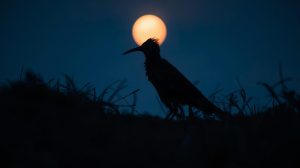
Singing at night keeps birds safe. Many animals hunt during the day. Night singing lowers the chance of attack. Birds can talk without being seen.
Credit: www.yahoo.com
Tips for Night Birdwatching
Loud night chirps give a unique chance. You can enjoy nature differently. Watching these night birds is exciting and peaceful.
You need to know when and where to look. Right tools and safety are also important.
Conservationists emphasize the importance of darkness: “To help night birds (and get a better night’s sleep yourself), consider joining the ‘Dark Sky’ movement. Pointing outdoor security lights downward rather than outward reduces the ‘light spill’ that confuses birds like the Mockingbird. This simple change restores the natural rhythm of the night, allowing birds to rest and reducing the likelihood of them singing outside your window at 3:00 AM.”
When and Where to Go
The best time is right after sunset. It is also good before sunrise. Birds are most active during these times.
-
Look near wetlands and rivers. Night birds gather there.
-
Forests with thick trees have more night activity.
-
Quiet parks away from city lights are great spots.
-
Check local groups for known night bird areas.
Safety and Tools
Bring the right tools to see and hear birds better. Safety is very important.
Always bring a friend. Tell someone where you go. Stay on marked paths to avoid getting lost. Dress warmly. Carry a phone for emergencies.

Credit: www.star-telegram.com
Frequently Asked Questions
What bird chirps loudly at night?
The Eastern Whip-poor-will is famous for loud night chirps. It calls over and over at dusk and night. This sound helps it talk and mark its area.
Why do some birds chirp loudly at night?
Birds chirp loudly to attract mates and set up territory. Night calls are clearer without daytime noise. This helps them talk better. It increases their chance of having babies.
Are night chirping birds found everywhere?
Yes, many bird species chirp at night globally. Owls, nightjars, and some thrushes do this. These birds live actively at night. This makes night chirping a common behavior.
Can bird chirping at night bother humans?
Yes, loud bird chirping can interrupt sleep. Birds like the Eastern Whip-poor-will call non-stop. This natural sound is usually seasonal. It may stop after the breeding period.
Conclusion
Finding the birds that chirp at night is interesting. These singers bring mystery to the dark. Owls, nightingales, and mockingbirds sing after dark. Each has unique calls. Their songs give clues about who they are. Listen closely to recognize these sounds.
You might enjoy discovering their world. Night birds remind us of nature’s wonders. A quiet night is often not silent. Nature plays its own music. Listen closely next time. The night holds secrets you can hear.